MOLECULAR MODELING PRACTICUM - FUNCTIONAL GROUPS, FATS, PROTEINS, AND CARBS
 Call Kai
 Learn
Learn Practice Test
 Spaced Repetition
 Match
Match Flashcards
 Knowt Play
1/45

Earn XP
Description and Tags
hai gl guys
Name | Mastery | Learn | Test | Matching | Spaced | Call with Kai | Chat |
|---|
No analytics yet
Send a link to your students to track their progress
46 Terms

Alcohol or Hydroxyl
-OH (an oxygen bonded to a hydrogen attached to a carbon)
Polar. Found highly in carbohydrates.

Amine
-NH2 (a nitrogen bonded to two hydrogens attached to a carbon)
Polar & basic & in amino acids
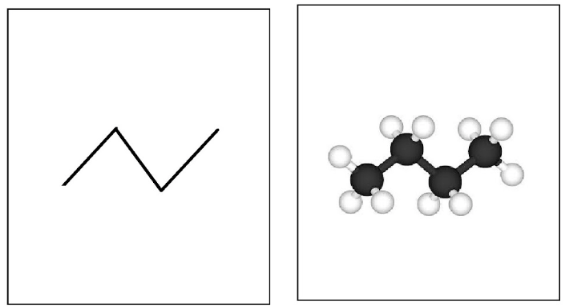
Alkane
Carbon chain with only single C-C bonds the rest of the bonds have hydrogens (C-C and C-H)
Nonpolar

Alkene
Carbon chain with at least one C=C double bond
Nonpolar

Alkyne
Carbon chain with at least one C≡C triple bond
Nonpolar

Aldehyde (elbow lookin double bond o)
-CHO (a carbon double bonded to an oxygen and single bonded to a hydrogen at the end of a carbon chain)
Polar

Ester (oo)
-COO- (a carbon double bonded to one oxygen and single bonded to another oxygen which connects to a second carbon chain)
Polar, however minimally, when in triglycerides, fats and oil molecules

Ether (cute spider one)
C-O-C (an oxygen single bonded between two carbon chains)
Polar

Ketone
C=O in the middle of a carbon chain (a carbon double bonded to an oxygen with carbon chains on both sides)
Polar

Carboxyl (ooh)
-COOH (a carbon double bonded to one oxygen and single bonded to a hydroxyl group attached to an R group)
Acidic, found in amino acids and all organic acids

Phenyl or Aromatic Ring
A six-carbon ring with alternating double bonds (benzene ring) attached to an R group
Nonpolar

Phosphate
-PO4 (a phosphorus atom bonded to four oxygens, one O has a hydrogen)
Polar, can be acidic or basic. Found in all nucleic acids

Sulfhydryl or Thiol
-SH (a sulfur bonded to a hydrogen attached to a carbon)
Polar, stabilizes tertiary polypeptide structure
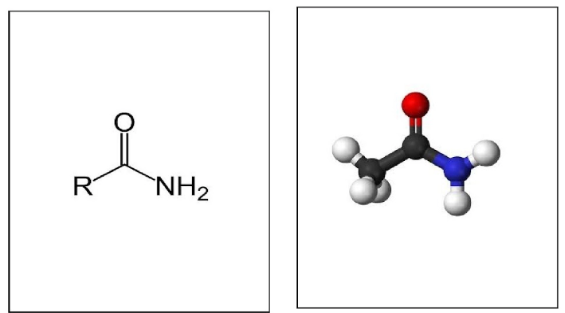
Amide
-CONH2 (a carbon double bonded to an oxygen and single bonded to a nitrogen attached to an R group)
Polar, in peptide bonds

Thioether (cute spider thing with an S this time)
C-S-C (a sulfur single bonded between two carbon chains)
Polar (moderately). Note: Found in methionine

Phosphoester (phosphate group in a bigger molecule)
R-O-P (a phosphate group bonded to an R group through an oxygen)
Acidic and present in all DNA/RNA polymers, when in "phosphodiester" bonds.
CPK COLORS
carbon = black
hydrogen = white
oxygen = red
nitrogen = blue
phosphorus = orange
sulfur = yellow
What makes a functional group polar?
PONS

PENTANE
Fats
C5H12, five carbons in a chain with only C-C and C-H single bonds
Nonpolar throughout, neutral
1 alkane (the whole molecule), no other listed groups
3 isomers: n-pentane, isopentane, neopentane
Hydrophobic, LDF only (guys i put this in gpt it has some random info)
More branching means a lower boiling point
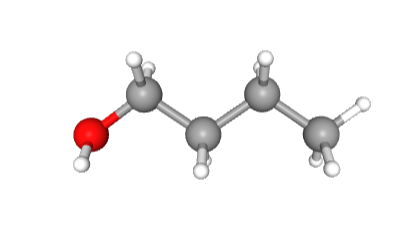
BUTANOL
Fats
C4H10O, four-carbon chain with one -OH
-OH end is polar, carbon chain is nonpolar, overall neutral
1 alcohol/hydroxyl, 1 alkane (the carbon chain)
4 alcohol isomers: 1-butanol, 2-butanol, isobutanol, tert-butanol
7 total isomers if you count the 3 ethers
2-butanol is chiral (2 mirror-image forms)
Only partly water soluble, and less so as the chain gets longer
Classified as primary, secondary, or tertiary by the -OH carbon

BUTYRIC ACID
Fats
CH3CH2CH2COOH, C4H8O2
Propane chain plus a carboxyl group (the carboxyl carbon is the 4th carbon)
Carboxyl head is polar and acidic, propyl tail is nonpolar
Loses H+ to become butyrate (COO-)
1 carboxyl, 1 alkane (the propyl tail), no separate ketone or alcohol
2 acid isomers: butanoic acid and isobutyric acid
Esters like ethyl acetate share the formula but have a different functional group
Much more water soluble than long-chain fatty acids
Geometric isomers
Molecules that have the same chemical formula and bond connectivity, but a different 3d arrangement (ie. cis and trans double bonds in fatty acids)
Structural isomers
Aka constitutional isomers, share the same molecular formula but different bond connectivity or arrangement of atoms (ie. glucose / fructose / galactose)
CIS VS. TRANS DOUBLE BONDS
Fats
Same formula either way
Carboxyl head is polar and acidic, hydrocarbon tail is nonpolar
Cis vs. trans does not change polarity
1 alkene per C=C, 1 carboxyl, alkane in the saturated stretches of the tail
Cis and trans are geometric isomers (2 forms per double bond)
Double bond position can also vary
Cis: H's on the same side, tail kinks, loose packing, low melting point, liquid (oils)
Trans: H's on opposite sides, tail stays straight, tight packing, higher melting point
Trans fats come from partial hydrogenation (adding h2)
TRIGLYCERIDE
Fats
1 glycerol (C3H8O3) plus 3 fatty acids, joined by dehydration synthesis (3 H2O released)
Overall nonpolar and hydrophobic, neutral
Tails are strongly nonpolar, ester bonds and glycerol core are slightly polar
No free carboxyls or hydroxyls remain, so no acidic or basic parts
3 esters, 3 alkane tails
Alkenes only if a tail is unsaturated (1 or more per unsaturated tail)
0 carboxyl, 0 alcohol
1 form if all 3 fatty acids match
If all 3 differ: 3 arrangements, 6 counting mirror images
Cis/trans tails add more
Stores energy (about 9 kcal/g), insulates, cushions
Fats are mostly saturated and solid, oils mostly unsaturated and liquid
Broken down by hydrolysis
Not a phospholipid, which swaps one fatty acid for a phosphate group
Dehydration synthesis
delete dat hoh the water will flow the polymer grows when you delete dat hoh
one gives up h one gives up oh
What does chiral mean?
A molecule has a mirror image
Isomers
Molecules that share the exact same chemical formula but have different arrangements or connections of their atoms
Enantiomers
A specific pair of isomers (stereoisomers???) that are non-superimposable mirror images of each other. Every chiral center in one molecule is inverted in its enantiomer
Chiral center
Carbon atom bonded to 4 diff groups
Chiral centers for each macromolecule
A chiral center is a carbon bonded to 4 different groups
A carbon with a double bond can never be chiral, triple bond, ch3 or ch2, or any carbon with 2 identical grps attached
The “candidates” or wtv have 4 single bonds at one H AT MOST
If all 4 attached grps are diff, it’s a chiral center
Chiral molecules come as enantiomers
FATTY ACIDS (IN GENERAL)
Long unbranched hydrocarbon tail (usually 12-24 carbons, most often 16 or 18) with a carboxyl group on one end
Saturated fatty acids follow CnH2nO2
Each C=C removes 2 hydrogens
Amphipathic: carboxyl head is polar and acidic, hydrocarbon tail is nonpolar
Acidic
Overall hydrophobic, since the long tail
1 carboxyl
Alkane in the saturated parts of the tail
0 alkene if saturated, 1 or more if unsaturated (1 per C=C)
Isomers vary by tail length, double bond position, and cis vs. trans at each C=C
Saturated: no C=C, straight tail, packs tightly, higher melting point, usually solid (fats)
Unsaturated: 1 or more C=C, cis bonds kink the tail, packs loosely, lower melting point, usually liquid (oils)
Monounsaturated = 1 C=C, polyunsaturated = 2 or more
Longer tail raises melting point, more double bonds lower it
Building block of triglycerides (via ester bonds with glycerol) and phospholipids
ALKANE NAMES
meth/eth/prop, but, pent, hex, hept, oct (don toliver), non, dec
Proteins
Made mostly of C, H, O, and N (sulfur in cysteine and methionine)
Nitrogen is what sets them apart from carbs and fats
Monomer: amino acid (20 types)
Each has an amine, carboxyl, H, and R group on a central carbon
Joined by peptide bonds or amide links via dehydration synthesis
R group decides polarity and acid/base behavior
Functions: enzymes, structure, transport, defense, signaling
ok sum random helpful stuff
Backbone: amine is basic, carboxyl is acidic, peptide bond is polar
R groups vary: nonpolar, polar, acidic (negative), or basic (positive)
Fats/lipids
Made mostly of C, H, and O, with far more H than carbs have
Little oxygen compared to the amount of carbon, which makes them nonpolar
Phospholipids add phosphorus (and sometimes nitrogen)
Not true polymers, so there is no repeating monomer
Building blocks: glycerol and fatty acids
Triglyceride = 1 glycerol + 3 fatty acids, joined by ester bonds via dehydration synthesis
Nonpolar and hydrophobic, so they do not dissolve in water
energy storage, insulation, membranes, hormones
Carbs
Made of C, H, and O, usually in a 1:2:1 ratio (CH2O)n
Monomer: monosaccharide (glucose, fructose, galactose)
Joined by glycosidic bonds via dehydration synthesis
Disaccharides: sucrose, lactose, maltose
Polysaccharides: starch, glycogen, cellulose, chitin
Polar and hydrophilic, because of all the hydroxyl groups
Functions: quick energy, energy storage, structure (cellulose, chitin)
Donates H+ ions
ACID ph < 7
Receives H+ ions
BASE ph > 7
Proteins: Functional Grps
functional grps
Amine (-NH2): in every amino acid, basic
Carboxyl (-COOH): in every amino acid, acidic
Amide: the peptide bond between amino acids
Alkane: nonpolar R groups (alanine, valine, leucine, isoleucine)
Alcohol/hydroxyl (-OH): serine, threonine, tyrosine, polar
Sulfhydryl/thiol (-SH): cysteine, forms disulfide bonds
Thioether (C-S-C): methionine
Phenyl/aromatic ring: phenylalanine, tyrosine, tryptophan, nonpolar
Extra carboxyl: aspartate, glutamate (acidic R groups)
Extra amine: lysine, arginine, histidine (basic R groups)
Extra amide: asparagine, glutamine (polar R groups)
Phosphate/phosphoester: not built in, but added to serine, threonine, and tyrosine
Not found in proteins: aldehyde, ketone, ester, ether, alkene, alkyne
Fats: Functional grps
Alkane: the hydrocarbon tails
Alkene: C=C in unsaturated tails
Carboxyl: head of a free fatty acid, acidic
Alcohol/hydroxyl: glycerol (3 of them), also on cholesterol
Ester: links fatty acids to glycerol in triglycerides
Phosphate: head of phospholipids, negative charge
Phosphoester: links phosphate to glycerol in phospholipids
Amine: in some phospholipid heads (phosphatidylethanolamine, phosphatidylserine)
Not typically found in fats: aldehyde, ketone, amide, ether, sulfhydryl, thioether, alkyne
Carbs: Functional grps
Alcohol/hydroxyl: on nearly every carbon, makes sugars polar
Aldehyde: in aldose sugars like glucose (open chain)
Ketone: in ketose sugars like fructose (open chain)
Ether: the ring oxygen in cyclic sugars
Amine and amide: in modified sugars like chitin (N-acetylglucosamine)
Phosphate/phosphoester: in sugar phosphates like glucose-6-phosphate and in ribose of nucleotides
Not typically found in carbs: alkene, alkyne, carboxyl, ester, phenyl, sulfhydryl, thioether
Alkane Alkene Alkyne equations
alkane = Cn H2(n+2)
alkene = Cn H2n
alkyne = Cn H2(n-2)
hydrogen bonds
weak bond between hydrogen and another atom

Glycerol
C3H8O3, three-carbon chain with one -OH on each carbon
Polar and hydrophilic, neutral (the -OH groups do not donate H+ in water)
3 alcohol/hydroxyl, 1 alkane backbone (3 sp3 carbons)
0 chiral centers (C2 has two identical CH2OH groups)
No stereoisomers
Backbone of triglycerides and phospholipids
dissolves fully in water


GLYCERALDEHYDE
C3H6O3, HOCH2-CHOH-CHO
Polar, neutral
1 aldehyde, 2 alcohol/hydroxyl
Simplest aldose (an aldotriose)
1 chiral center (C2), so 2 enantiomers: D-glyceraldehyde and L-glyceraldehyde
look at what side the OH group is on: IF OH IS IN LINE WITH UPPER O, then its D-, if OH is in line with upper H, then its L
D-glyceraldehyde is the reference that defines D and L for all sugars
Structural isomer: dihydroxyacetone (a ketone, 0 chiral centers)
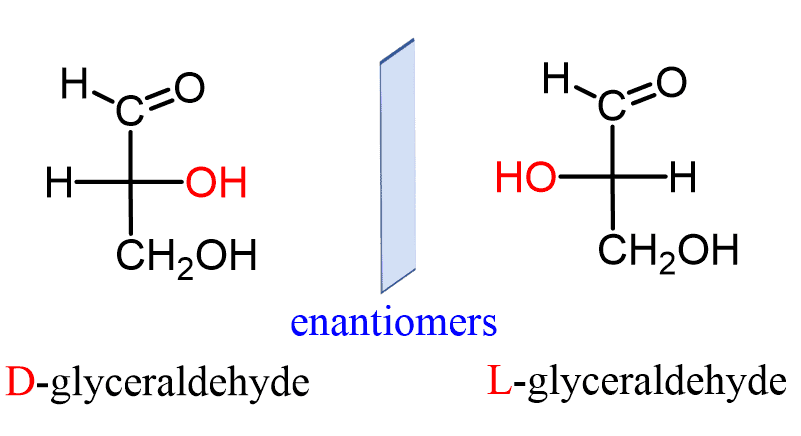

this is the d-enantiomer
RIBOSE
C5H10O5, five-carbon sugar (pentose)
Ring form is a furanose (5-membered ring: 4 carbons + 1 oxygen) (what is this who knows)
Polar, neutral
4 alcohol/hydroxyl (C1, C2, C3, and the CH2OH on C5), 1 ether (the ring oxygen)
4 chiral centers in the ring (C1, C2, C3, C4), 3 in the open chain
Open-chain isomers: 8 aldopentose stereoisomers (ribose, arabinose, xylose, lyxose, each with D and L) (lowkey no clue what this means ok ignore it)
Found in RNA (backbone), ATP, NADH, FAD
