ECON 2200 Slide 7
 Call Kai
 Learn
 Practice Test
 Spaced Repetition
 Match
 Flashcards
 Knowt Play
1/83

There's no tags or description
Looks like no tags are added yet.
84 Terms


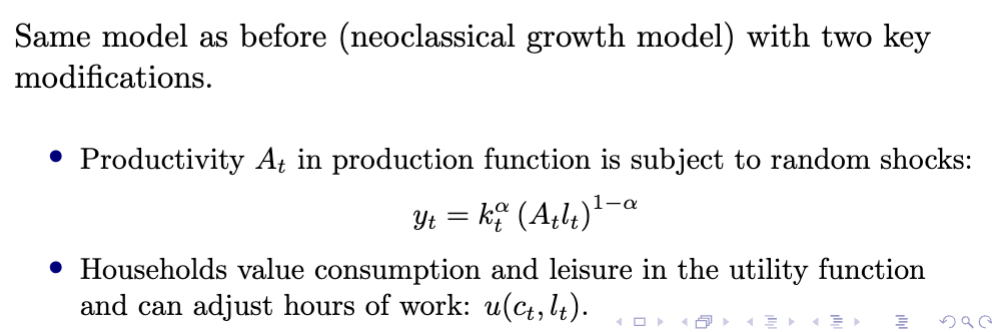

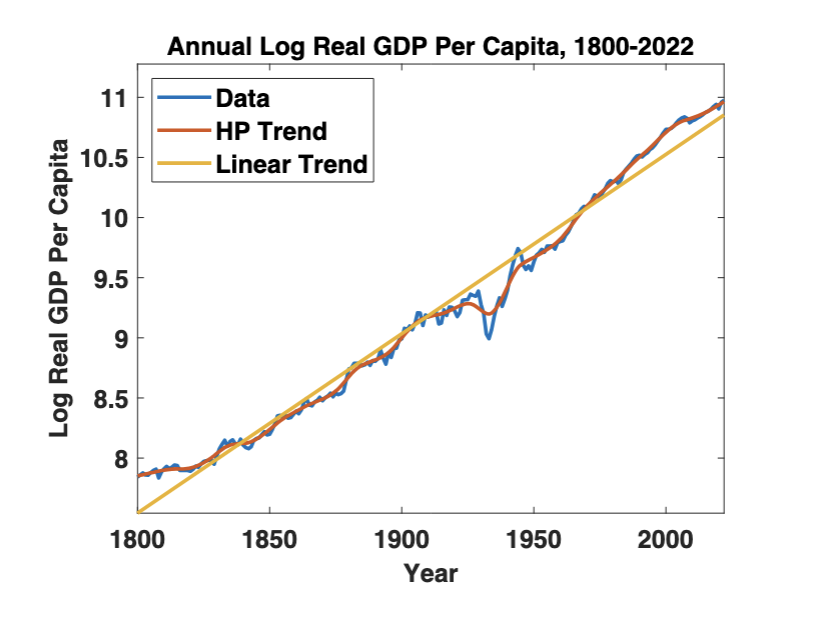

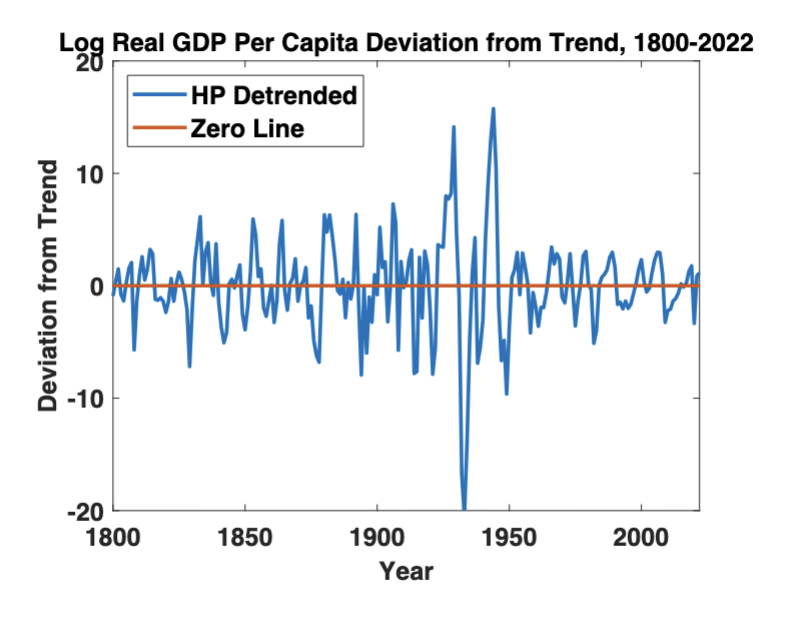

comovement, volatility, persistence, timing
comovement

volatility, persistence, timing


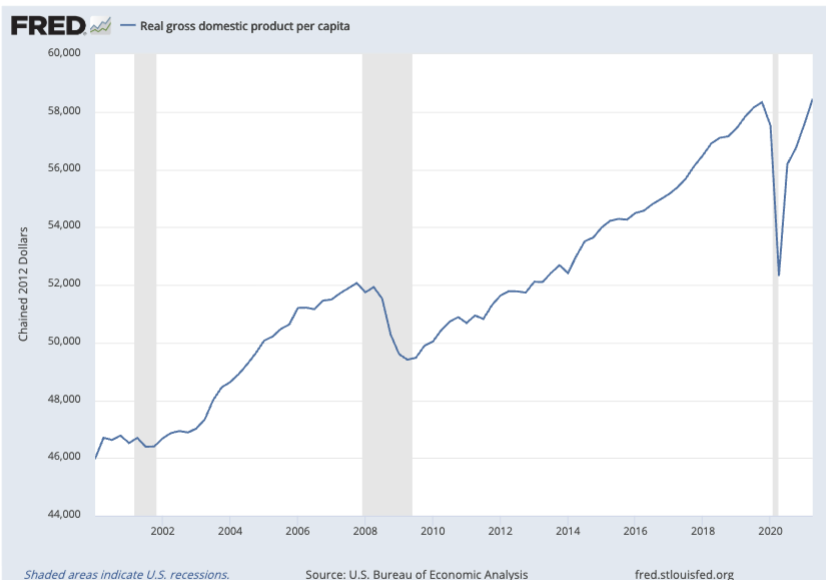


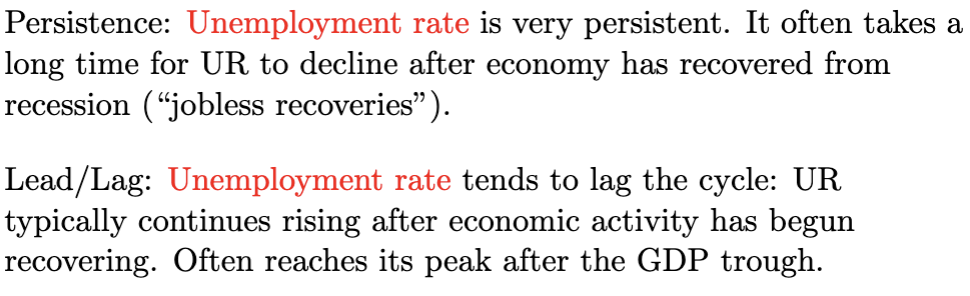
unemployment rate in cyclicality, volatility, persistence, lead/lag
cyclicality, volatility

persistence, lead/lag


Drivers of Business Cycles: Towards a Theory
We want to use the same model with a slightly different focus.


basic idea

Suppose production function is given as before:


household labor supply choice and period utility

household key property

household Alternative utility function (with wealth effects):

technology production function

technology


technology properties

social planner problem

social planner problem notes

optimality conditions

optimality conditions euler


Derivation of Intratemporal Optimality Condition
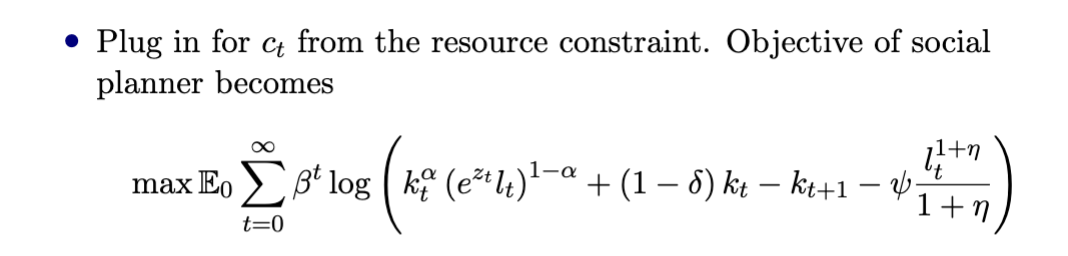
Derivation of Intratemporal Optimality Condition FOC

optimal labor choice


Labor Market Equilibrium and Welfare Theorems
Equilibrium wages and interest rates (from the firm’s FOC’s):

labor supply household maximization

Labor Supply: Household Maximization — plug in budget constraint into utility function

Labor Supply: Household Maximization solve for epsilonl, w
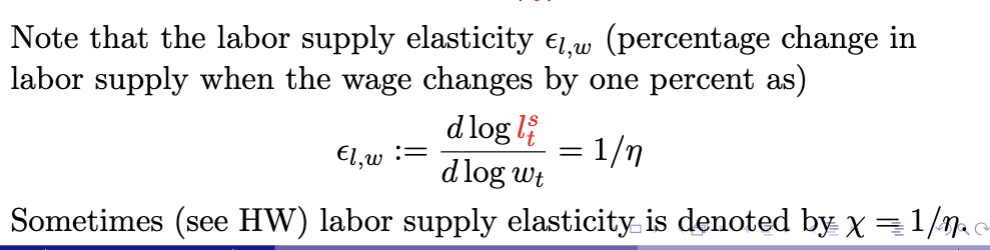


Business Cycles and the Labor Market labor demand firms

Business Cycles and the Labor Market labor supply households

Business Cycles and the Labor Market market clearing
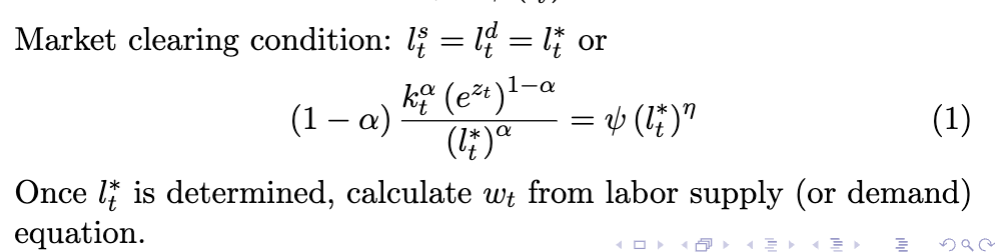


Graphical Analysis of Labor Market Equilibrium
Labor demand function strictly

Graphical Analysis of Labor Market Equilibrium notes

Complete Dynamic Solution of Model: Guess and Verify

Complete Dynamic Solution of the Model
exogenous process

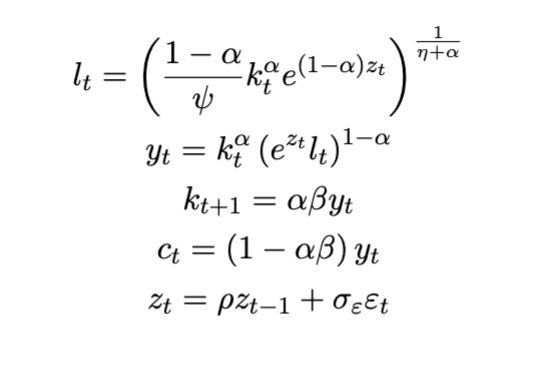
Complete Dynamic Solution of the Model full solution

Complete Dynamic Solution of the Model tracing out labor, output, capital, consumption

How Does Model Create Business Cycles?

How Does Model Create Business Cycles? (II)
shock raises technology
labor rises
output rises
consumption and investment rises
tomorrow? idk!
How Does Model Create Business Cycles? (II)
part 1

How Does Model Create Business Cycles? (II)
part 2

How Does Model Create Business Cycles? (II)
part 3

How Does Model Create Business Cycles? (II)
part 4 and 5

How Does Model Create Business Cycles? (III)
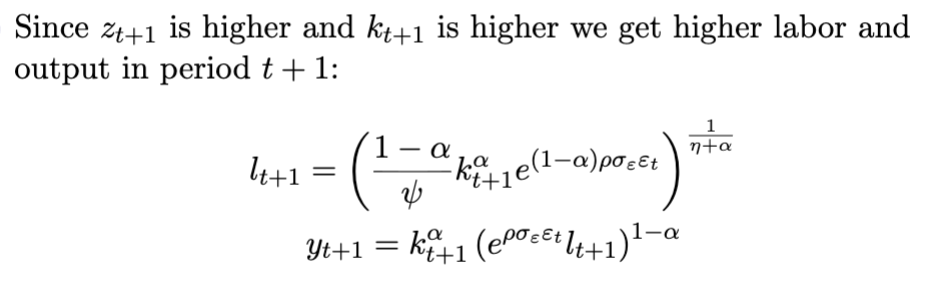
tomorrow technology persistence shocks itself
persistence through capital accumulation
higher labor output
higher investment and capital output
How Does Model Create Business Cycles? (III)
part 1

How Does Model Create Business Cycles? (III)
part 2

How Does Model Create Business Cycles? (III)
part 3
How Does Model Create Business Cycles? (III)
part 4

Loose End: Verify that Guess Satisfies Euler Equation
From labor optimality condition
Intertemporal Euler equation can be written as
Substitute the first equation and the guess for kt+1 to obtain
loose end: Verify that Guess Satisfies Euler Equation
part 1 and 2

Loose End: Verify that Guess Satisfies Euler Equation
part 3

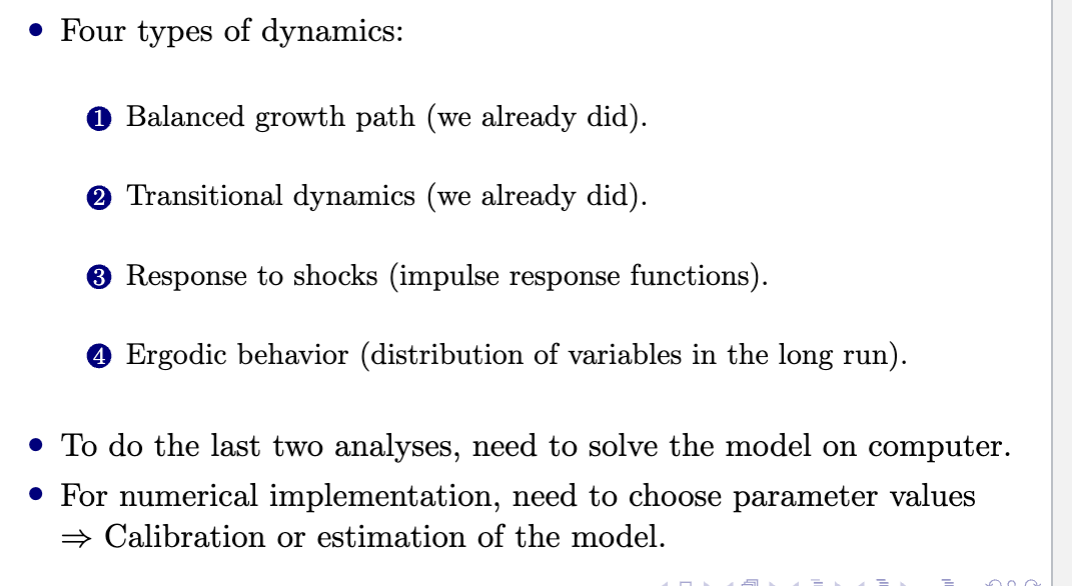
behavior of model: 4 types of dynamics
calibration 1
calibration I cont

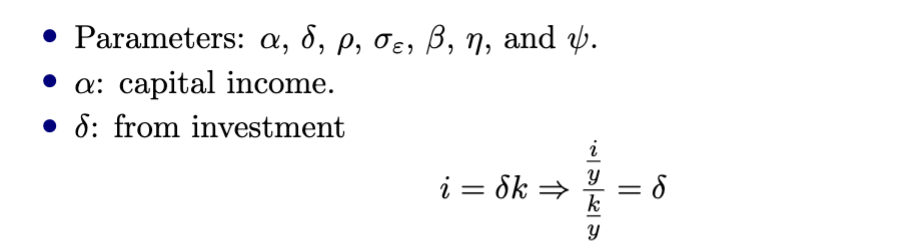
calibration I continued continued

calibration II
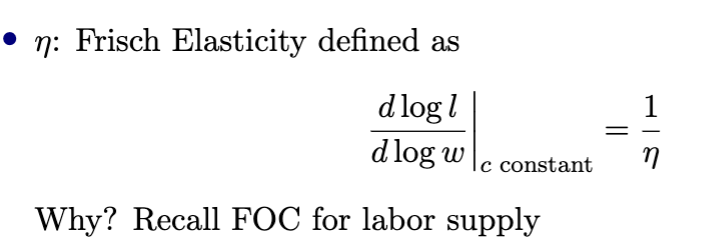
Why? Recall FOC for labor supply

calibration II evidence
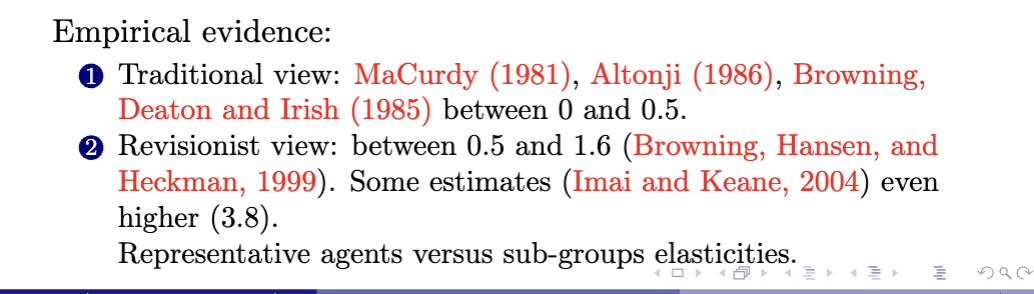
calibration III

stochastic behavior

impulse response function I

impulse response function II

impulse response function II cont

Impulse Response Function III
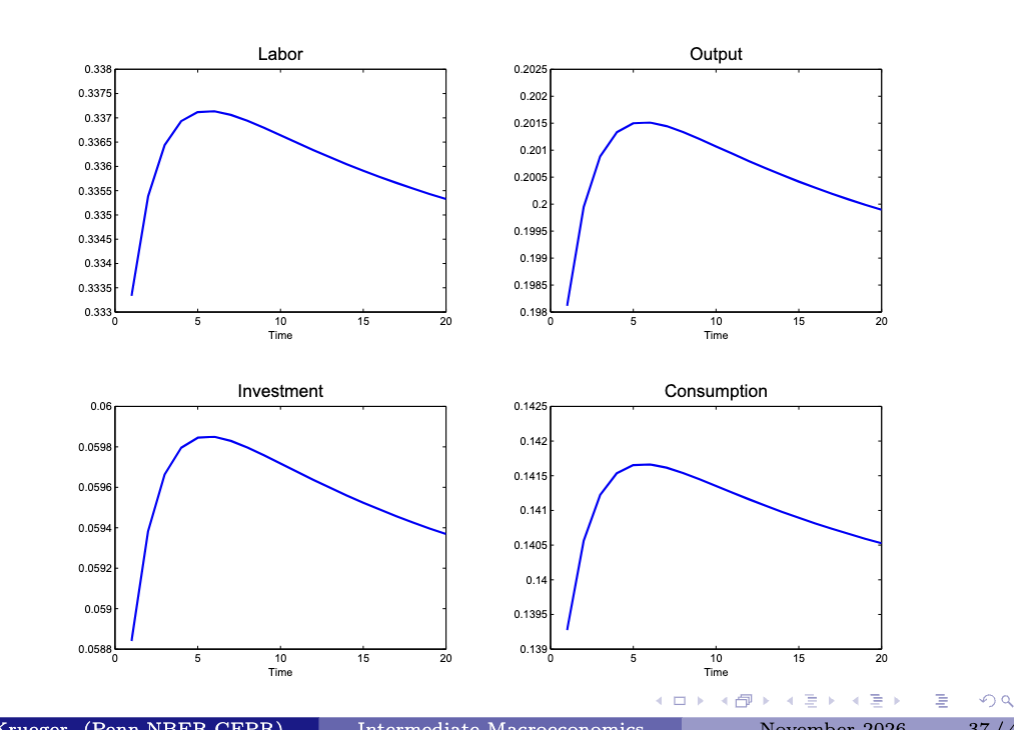
simulation

simulation graph

Table 2: Moments of the Simulated Data
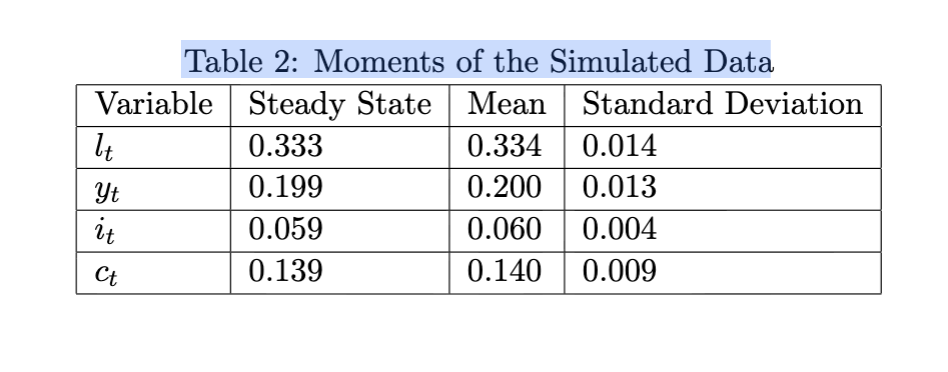
Comparison with US economy
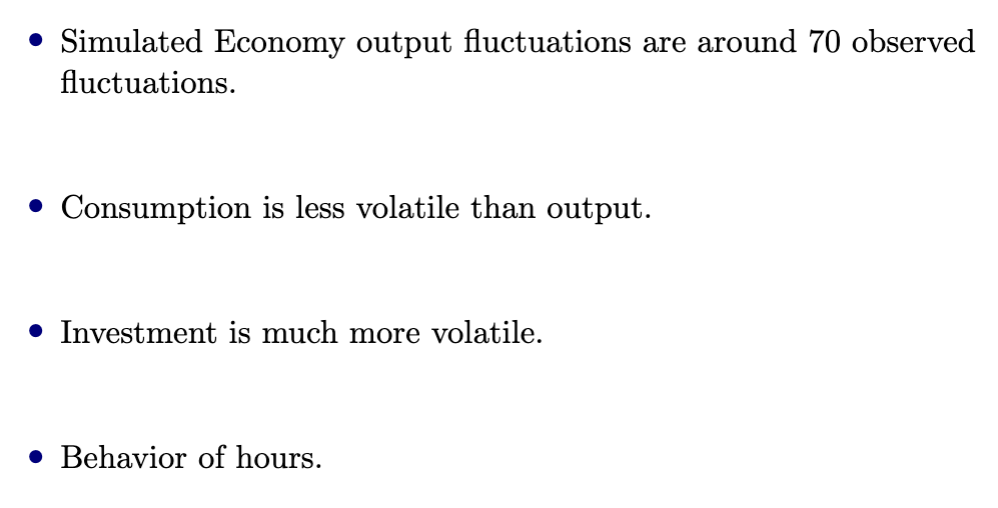
Assessment of the Basic Model

Negative Productivity Shocks

Negative Productivity Shocks cont

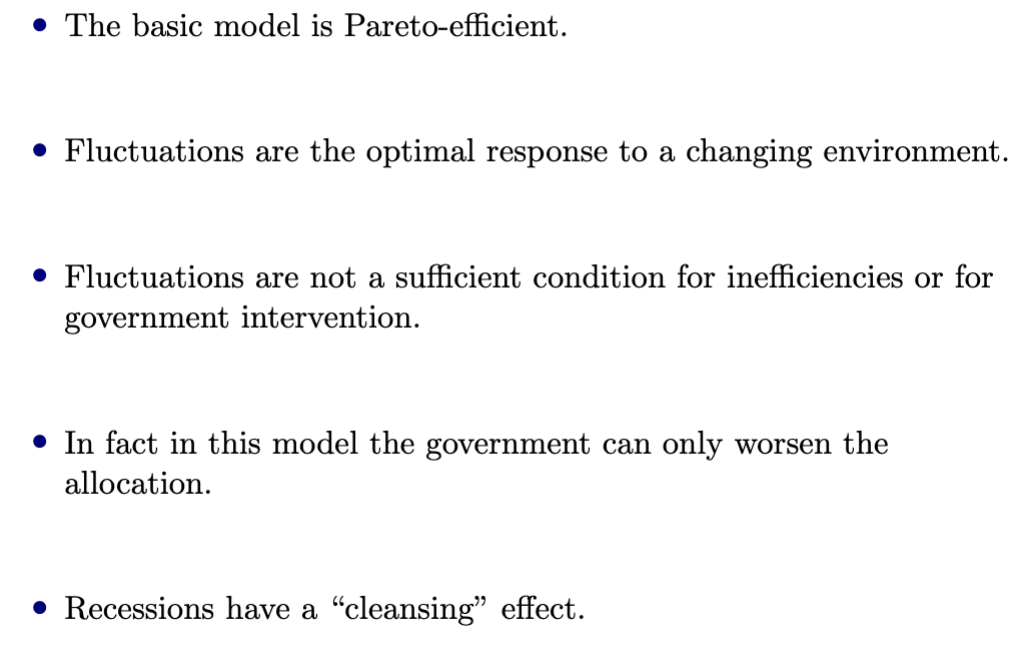
Some Policy Implications
extensions
