BIO LAB
 Call Kai
 Learn
 Practice Test
 Spaced Repetition
 Match
 Flashcards
 Knowt Play
1/83

There's no tags or description
Looks like no tags are added yet.
84 Terms

What is #1
Soma
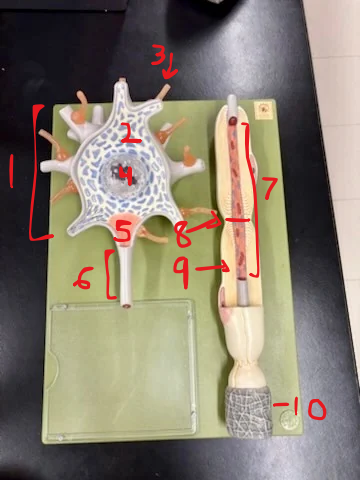
What is #2
Nissel Bodies

What is #3
Other axon terminal attatchments

What is #4
Nucleus/Nucleolus

What is #5
Axon Hillock

What is #6
Axon

What is #7
Axon

What is #8
Node of Ranvier
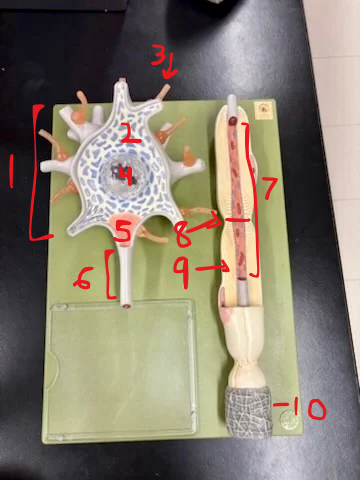
What is #9
Myelin Sheath

What is #10
Endoneurium
Describe a multipolar neuron, and what it aids in
Neuron with 3+ projections coming off soma. Aids in motor function
Describe a bipolar neuron, what it aids in, and where its found
One axon, one dendrite. Sensory stuff. Found in eyes and nose
What are the three nerve layers, proximal to deep?
Epinerium, perineurium(nerves in fascicles), endoneurium
What are the ridges in the brain called?
Gyri/Gyrus
What are shallow grooves in the brain called?
Sulcus/Sulci
What are shallow grooves in the brain called?
What are deep grooves in the brain called?
Fissures
Functions of the Frontal Lobe:
Memory, higher-learning, critical thinking
Functions of the Parietal Lobe:
Sensory and motor function(Motor in front, sensory in back)
Functions of the Occipital Lobe:
Visual Processing Center
Functions of the Temporal Lobe:
Hearing and Balance
Function of the Cerebellum:
Coordination

What is #1
Corpus Callosum

What is #2
Septum Pellucidum

What is #3
Fornix

What is #4
Interthalamic Adhesion

What is #5
Thalamus

What is #6
Hypothalamus

What is #7
Pituitary Gland

What is #8
Pineal Gland

What is #9
Corpora quadrigema

What is #10
Arbor Vitae

What is #11
Midbrain

What is #12
Pons

What is #13
Medulla Oblagonta
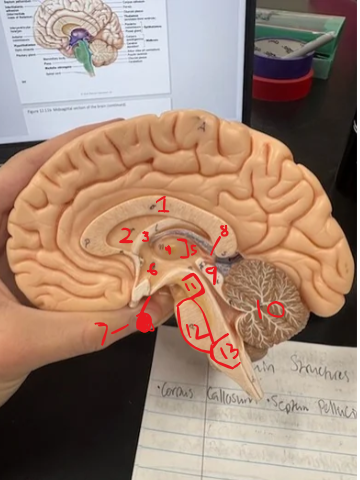
What is the Culmination of #11, #12, and #13
Brain Stem
What Number is Olfactory Nerve
1
What Number is Optic Nerve
II
What Number is Oculo Motor Nerve
III
What Number is Trochlear Nerve
IV
What Number is Trygeminal Nerve
V
What Number is Abducines Nerve
VI
What Number is Facial Nerve
VII
What Number is Vestibulocochlear Nerve
VIII
What Number is Glossopharyngeal Nerve
IX
What Number is Vagus Nerve
X
What Number is Accessory Nerve
XI
What Number is Hypoglossal Nerve
XII

What is I
Olfactory Nerve

What is II
Optic Nerve

What is III
Oculo Motor Nerve

What is IV
Trochlear Nerve

What is V
Trygeminal Nerve
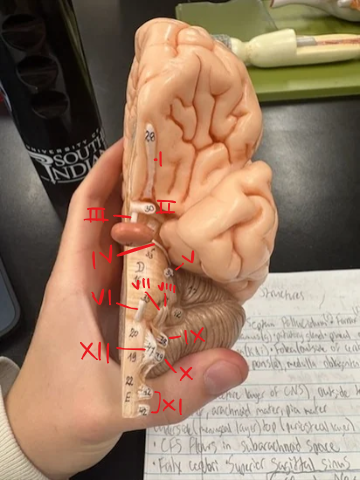
What is VI
Abducines Nerve
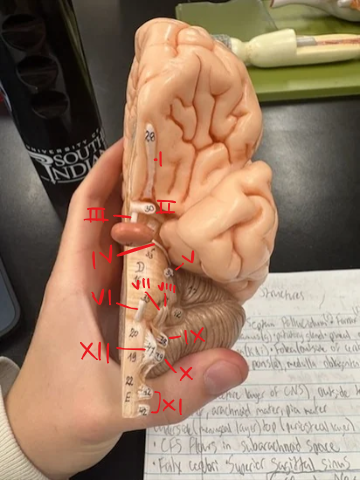
What is VII
Facial Nerve
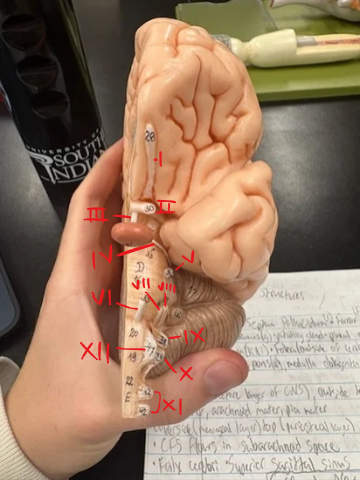
What is VIII
Vestibulocochlear Nerve

What is IX
Glossopharyngeal Nerve

What is X
Vagus Nerve

What is XI
Accessory Nerve
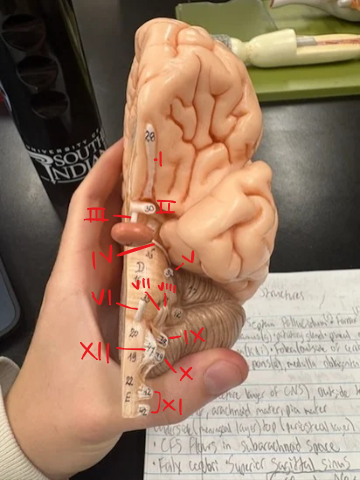
What is XII
Hypoglossal Nerve

What part of the sheep brain is #1
Thalamus

What part of the sheep brain is #2
Arbor Vitae
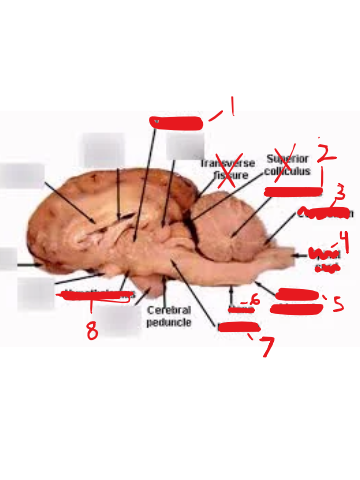
What part of the sheep brain is #3
Cerebellum

What part of the sheep brain is #4
Spinal Cord
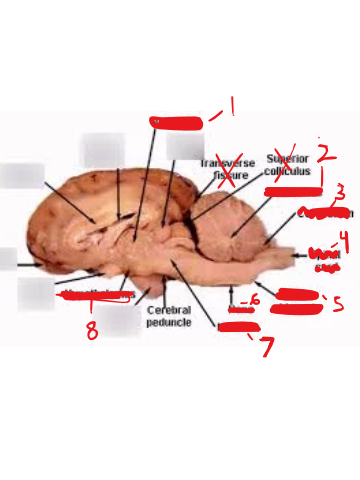
What part of the sheep brain is #5
Medulla Oblongata

What part of the sheep brain is #6
Pons

What part of the sheep brain is #7
Midbrain

What part of the sheep brain is #8(fornix, corpus callosum, and setpum pellucidum were not covered
Hypothalamus

What is #1
Arachnoid Mater

What is #2
Longitudinal Fissure

What is #3(might not have to know)
Arachnoid Granulations
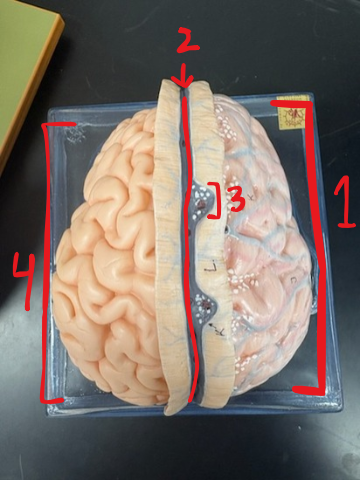
What is #4
Pia Mater

What is #1
Superior Sagittal Sinus

What is #2
Falx Cerebri
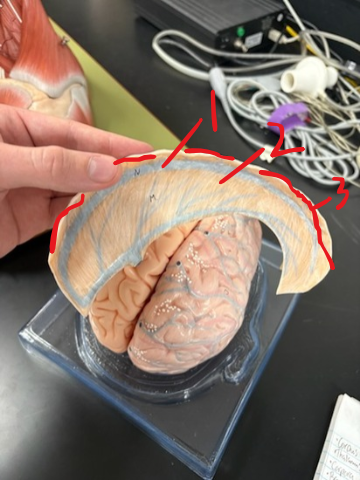
What is #3
Dura Mater

What is #1
Lateral Ventricles

What is #2
Ventricular Foramen

What is #3
Third Ventricle
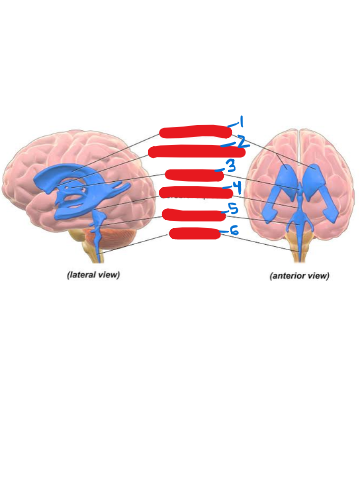
What is #4
Cerebral Aquedcut

What is #5
Fourth Ventricle
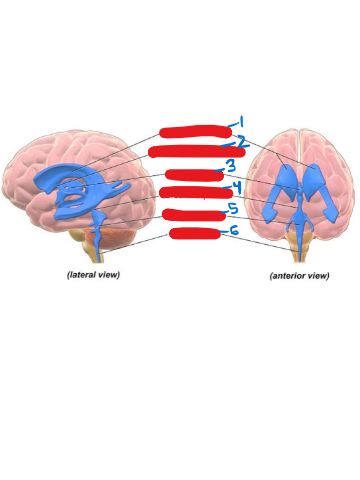
What is #6
Central Canal
What is the order of Cerebrospinal Fluid Flow
Lateral ventricles—>3rd Ventricle—>Cerebral Aqueduct—>Fourth Ventricle—>Apetures
What does the Transverese Fissure Seperate?
The Cerebellum and Cerebrum
What are the differences between gray and white matter regarding their orientation and what they contain?
Gray matter is the superficial layer containing all the cell bodies, and white matter is the deeper layer full of axons