PALS #3
 Call Kai
 Learn
 Practice Test
 Spaced Repetition
 Match
 Flashcards
 Knowt Play
1/74

There's no tags or description
Looks like no tags are added yet.
75 Terms
What is the correct CPR compression to ventilation ratio for an infant or child?
Two Healthcare Providers: 15:2
One Healthcare Provider: • 30:2
What is considered the 1 line medication to be used for the treatment of severe bradycardia in a pediatric patient?
Epi 1:10,000
What is the correct dose of Epi 1:10,000
0.01 mg/kg (0.1 mL’s/kg)
What is the first line medication for the treatment of severe bradycardia from a suspected beta blocker overdose?
–Glucagon
What is the dose of Glucagon?
0.05 0.15 mg/kg
0.05 0.1 mg/kg infusion
When would you think about administering Atropine to a pediatric patient who is bradycardic?
When there is reason to believe there is a severe increase parasympathetic response
Organophosphate poisoning
What is the dose for atropine in a pediatric for bradycardia?
0.02 mg/kg?
Atropine is what type of medication
Anticholonergic Antimuscarinic agent that inhibits the effects of acetylcholine.
When would you think about attempting transcutaneous pacing on a pediatric patient?
20
Is the way that you pace a pediatric different from that of an adult?
How much IV fluid should you administer to a 2 year old pediatric patient who is suffering from non hemorrhagic hypovolemia?
20 mL’s/kg IV/IO over 5 10 minutes ageX3+7 pull push pull push
3 administrations then consult medical control.
In reference to maintenance fluid therapy, what is the 4/2/1 rule?
Use after shock treatment. This rule is used to calculate the maintenance fluid requirement for pediatric patients based on their weight. For the first 10 kg, administer 4 mL/kg, for the next 10 kg, 2 mL/kg, and for any additional kg, 1 mL/kg. how many mL’s per hour…
4 mL’s/kg for the 1 10 kilograms
2 mL’s/kg for the next 10 kilograms
1 mL/kg for any kilogram remaining
What is the dose of Albuterol for a 5 year-- old patient suffering from a severe asthma attack?
2.5mg/3mL’s B2 agonist
What is the dose of Atrovent for a 5 year old patient suffering from a severe asthma attack?
500mcg/2.5mL’s for drying condensation (0.5mg)
What is the IM dose of Epi 1:1,000 for the treatment of a severe asthma attack in a pediatric patient?
0.01 mg/kg (max of 0.3 mg) PRN (0.5 MAX) stronger B2 agonist
Are you able to use Mag Sulfate for a pediatric patient suffering from a severe asthma attack that is refractory to Epi?
Yes
What is the correct dose Mag Sulfate for a pediatric patient suffering from a severe asthma attack that is refractory to Epi??
25-50mg/kg IV/IO (max of 2G) over 15-30 minutes.
What two corticoid steroids do you have to choose from for a pediatric patient?
Dexamethasone & Solu Medrol
What is the correct dose of Dex?
0.5 0.6 mg/kg up to a max of 16 mg IV/IO/PO (superseed adult dose)
What is the correct dose of Solu Medrol?
2mg/kg up to a max dose of 60 mg (125-adult)
suppresses immune systemto reduce inflammation and aid in treating severe asthma attacks.
If your pediatric patient was suffering from an allergic reaction, in addition to the Epi IM and DuoNeb that we just talked about for the treatment of asthma, what other medication would you administer to deal with the histamine problem?
Diphenhydramine (Benadryl) for allergic reactions and histamine antagonists blocker relief.
Can you use mag for severe allergic reaction?
NOOOOOOOOOOOOOOOOOOOOOOOOO
What is the dose of Diphenhydramine for pediatrics
1-2mg/kg (max 50mg)
You arrive on scene with a pediatric patient that you suspect is having a complete foreign body airway obstruction. The child is conscious but not able to breathe. • What is your immediate treatment?
5 abdominal thrusts (Heimlich maneuver) to dislodge the obstruction.
5 back blows
You arrive on scene with a pediatric patient that you suspect is having a complete foreign body airway obstruction. The child is conscious but not able to breathe. What do you do if they go unconscious?
Start CPR
Magill forceps
You arrive on scene with a pediatric patient that you suspect is having a complete foreign body airway obstruction. The child is conscious but not able to breathe. What if the patient was an infant?
5 back blows
5 chest compressions
When should you check a blood glucose level on a pediatric patient?
AMS
When blood is drawn
Prolonged hyperventilation**
How much Dextrose would you administer to the following age groups: Birth to 2 months/ 2 months to 2 years/ Greater than 2 years.
Birth to 2 months: • 5-10 mL’s/kg D10/100mL
2 months to 2 years: 2-4 mL’s/kg D25/100mL or D10g/100mL
>2years: • 1-2 mL’s/kg D50/100mL
Neonate less than 45mg/dL
Child-adult 70mg/dL
What is considered the heart rate threshold for SVT versus Sinus Tach in an infant?
220 bpm Most but not always
What is considered the heart rate threshold for SVT versus Sinus Tach in a Child?
180 most but not all
SVT is usually sudden onset.
What is the initial dose of Adenosine for a pediatric patient that presents with SVT?
0.1mg/kg Max 6mg flsuh
0.2 mg/kg (max of 12 mg) flush
Wh at size/age of patient would you use pediatric cardioversion/defib pads on?
Any patient less than 1 year and/or less than 10 kg–Any patient greater than 1 year and/or 10 kg, you would use the adult sized pads! 1 inch between the pads
What would be your 1st joule setting for cardioversion of a pediatric patient?
0.5-1 J/kg
What would be your second joule setting for cardioversion of a pediatric patient? Synchronized countershock.
2 J/Kg (Max)
What is the most common initial ECG rhythm in a pediatric cardiac arrest? What is your initial treatment for this rhythm? What medication would you administer?
Asystole
CPR
Airway-o2
IV/IO-Epi 0.01mg/kg 0.1 mL/kg

What are the H’s and T’s that you should consider for a pediatric patient in cardiac arrest?
The H's include hypovolemia, hypoxia, hydrogen ion (acidosis), hyper/hypokalemia, and hypothermia, Hypoglycemia.
The T's consist of tension pneumothorax, cardiac tamponade, toxins, and thrombosis (pulmonary or coronary).

What is your initial treatment for the following ECG?
V-fib = D-fib
D-fib 2 j/kg 4j/kg 10 j/kg
What is your initial joule setting for defibrillation?
2 J/Kg
What is your second joules setting for pediatric defibrillation?
4 J/Kg
What is you 3rd and all subsequent joule setting for pediatric defibrillation?
10 J/Kg
What is the 1 st line IV/IO medication to be used for the treatment of V Fib/pVT??
Oxygen
IV/IO Epi 1:10,000
What is the correct dose of Epi 1:10,000
0.01mg/kg (0.1mL’s/Kg)
What is the dose of Amiodarone for the treatment of a pediatric patient that presents with V Fib/pVT?
5 mg/kg IV/IO fast RIVP
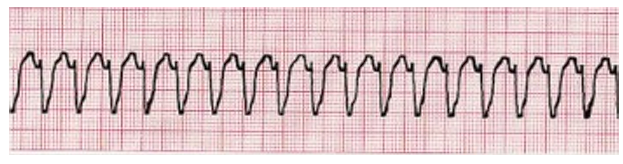
What is your analysis of the following ECG? The patient has a pulse and is symptomatic and stable What antiarrhythmics do you have to choose from?
V-tack
Amio
Lidocaine
no mix
What is the dose of Lidocaine for the treatment of a pediatric patient that presents with V Tach with a pulse?
1 mg/kg IV/IO administered over 1-2 minutes. 0.5mg?
What is the maintenance infusion? • 20 50 mcg/kg/min
What is the dose of Amiodarone for the treatment of a pediatric patient that presents with V-tach with a pulse?
5 mg/kg IV/IO administered over 20-60 minutes slowwwwwwwwwwwwwwwwwwwwwww infusion.
When do we administer Sodium Bicarb to a pediatric patient in cardiac arrest?
Hyperkalemia Peak-T wave
1meq/kg
after ventilation and acidosis. It can help in cases of metabolic acidosis or severe hyperkalemia, especially when related to renal failure or certain drug overdoses.
When would we use Sodium Bicarb to a pediatric patient in cardiac arrest?
What is the dose of Sodium Bicard for pediatric patients in cardiac arrest?

5 year old found unresponsive after being left alone to watch Paw Patrol while the parent did the laundry • Vital Signs: R: Apneic P: 50 bpm. What is your treatment?
BVM -bag complience
CPR- Magill
IV/IO- 0.01mg/kg
No pace BGL
Epi Epi Epi

8 year old presents with an AMS and pale/cool/diaphoretic skin. • Vital Signs: R: 24 P: 130 bpm BP: 92/40. What is your treatment?
Hypoglycemia, Hypovolemia, AgeX2+70, Sinus tach, Sick w/ Diarrhea = Fluid
low BGL= Dextrose

2 year old c/o chest discomfort after sticking a fork into an electrical outlet • • Vital Signs: R: 24 P: 170 bpm BP: 80/50 What is your treatment?
What type 110/220 Symptomatic and stable Age X 2 = 70, monomorphic V-tach
IV/IO - antiarrhythmic
Amio 65mg
OR
Lido 0.65mL
Unstable cardiovert w/ bigpads anterior posterior

20 month old presents with respiratory distress, a high fever, and sialorrhea. • Vital Signs: R: 30 P: 140 bpm BP: 78/50 What is your treatment?
Epiglottitis, Sinus tach,
Positions of comfort,
Chill
Blow by o2
Epi ned
Unstable= Intubation (smaller ETT) Age/4+4
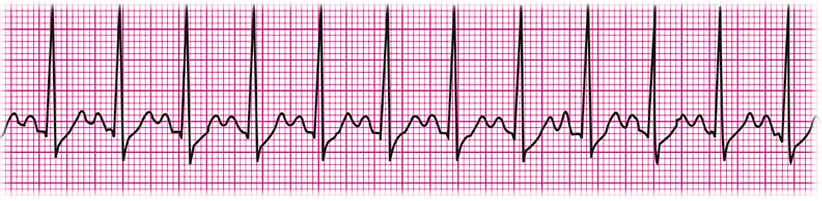
3 year old child has a severe allergic reaction to a bee that she swallowed while drinking a can of soda that was left unattended on a picnic table • Vital Signs: R: 35 P: 120 bpm BP: 60/40 What is your treatment?
Symptomatic and unstable Sinus tach
Hi flow o2
IV/IO Epi 0.01 mg/kg IM (0.16 mg)
Diphenhydramine 1-2 mg/kg max 50mg in 2mL 0.64-1.28
IM epi
Fluids 20mL/kg
Dex 0.5-0.6mg/kg
Duo Neb 2.5mg 500mcg ipratropium/atrovent

2 year old found unconscious in his bed. The patient has been sick with an upper respiratory infection for the past four days. • Vital Signs: R: 0 P: 0 bpm BP: N/A What is your treatment?
Asystolie, Unstable, Validity?
CPR
Vent
IVIO
Epi 0.01 mg/kg IM,
Epi
Epi

18 month old found semiconscious. Family states the patient has been sick with the flu (vomiting and diarrhea) for the last two days. • Vital Signs: R: 30 P: 170 bpm BP: 72/40 What is your treatment?
Hypovolemia, Hypotensive?,
20ml/kg fluid x1 ×2 ×3

6 month old with complaints that the infant just isn’t acting right. Family denies any recent trauma, fever, or illness. tal Signs: R: 38 P: 280 bpm BP: 76/42 What is your treatment?
SVT, Symptomatic and stable, acute onset
Vaglmanuvers- memiler diver reflex
IV/IO adenosine 0.5mg 0.17mL
2nd dose 0.34mL’s
Unstable? Cardiovert 0.5-1j/kg small pads

7 year old child found with an altered mental status. The family states the patient has been sick for the last couple of days with general body aches and has been severely thirsty and hungry. • Vital Signs: R: 30 (deep Ventilations) P: 170 bpm BP: 68/44 What is your treatment?
Hyperglycemia = Type 1 Diabetes DKD + hyperventilations Symptomatic unstable. 180 glycosuria osmotic diareses
Fluid 20mL/kg
20-30 breaths per minute

10 year old unconscious/unresponsive after being struck in the middle of his chest while playing baseball • Vital Signs: R: 33 P: 180 bpm BP: UTO What is your treatment?
Cardiac arrest, possible commotio cordis. Immediate CPR and defibrillation if indicated. Relative refectory
Cardiovert 1j 2j 2j 2j 2j 2j
No Bp no amio

6 year old child presents with dyspnea and tachypnea from an asthma attack • Vital Signs: R: 30 P: 120 bpm BP: 94/54 What is your treatment?
Symptomatic and stable, Sinus tach,
Hi flow O2
Epi IM or Duoneb
Mag sulfate 2-4mg?

8 year old suddenly collapses while at recess. Vital Signs: R: 0 P: 0 bpm BP: N/A What is your treatment?
Congenital heart disease coronary occlusion V-fib=D-fib prinzmetal angina cocaine dowregulates sodium channel blockers andminister sodium bicarb
CPR
Vent
Epi
Shock
antiarrhythmic
shock
epi
shock 2j 4j 10j/kg
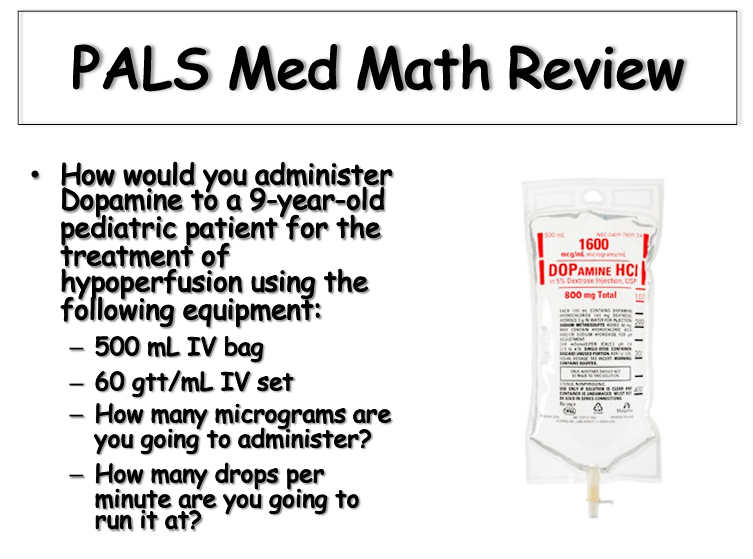
How would you administer Amiodarone to a 3 patient in V-- year Tach with a old pulse using the following equipment:
100 mL IV bag
10 gtt/mL IV set
–– How many mL’s of Amiodarone are you going to add to the bag? How many drops per minute are you going to run it at?

1000ml bag or 100ml bag @ mL in the bag
1mg in the bag
10drops = 1ml
20gtt/min
How many milligrams are you going to administer? Amiodarone to a 3 patient in V-- year Tach with a old pulse
– How many mL’s of Amiodarone are you going to add to the bag? Amiodarone to a 3 patient in V-- year Tach with a old pulse
When administering Amiodarone to a 3 year old patient in V-Tach with a pulse how many drops per minute are you going to run it at?
How would you administer an IV Epi Infusion to a 7 year old pediatric patient for the treatment of hypotension from a severe allergic reaction using the following equipment:
1mg EpiAdminister 1 mg of Epi from the IV bag, setting the IV drip to deliver the appropriate rate according to the child's weight and condition, typically starting with a dose of 0.1-1 mcg/kg/min.
1,000 mL IV bag
10 gtt/mL IV set

5g/100ml
1,540/30.8ml
10gtt/min
T A V
15min 10gtt/min 100mL = 67gtt/min