Apologia Biology Module 1

0.0(0)
Studied by 0 people
call kaiCall Kai
learnLearn
examPractice Test
spaced repetitionSpaced Repetition
heart puzzleMatch
flashcardsFlashcards
GameKnowt Play
Card Sorting

1/49

encourage image

There's no tags or description

Looks like no tags are added yet.

50 Terms

1
New cards

The 1st Criteria of Life

All life forms contain deoxyribonucleic acid, aka DNA

<p>All life forms contain deoxyribonucleic acid, aka DNA</p>
2
New cards

The 2nd Criteria of Life

All life forms have a method by which they extract energy from the surroundings and respond to those changes

<p>All life forms have a method by which they extract energy from the surroundings and respond to those changes</p>
3
New cards

The 3rd Criteria of Life

All life forms can sense changes in their surroundings and respond to those changes

<p>All life forms can sense changes in their surroundings and respond to those changes</p>
4
New cards

The 4th Criteria of Life

All life forms reproduce

<p>All life forms reproduce</p>
5
New cards

Metabolism

The sum total of all processes in an organism

<p>The sum total of all processes in an organism</p>
6
New cards

Anabolism

When an organism uses energy and simple chemical building blocks to produce large chemicals and structures necessary for life

<p>When an organism uses energy and simple chemical building blocks to produce large chemicals and structures necessary for life</p>
7
New cards

Catabolism

When an organism breaks down chemicals to produce energy and simple chemical building blocks
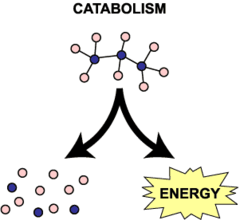
<p>When an organism breaks down chemicals to produce energy and simple chemical building blocks</p>
8
New cards

Photosynthesis

The process by which green plants and some other organisms use the energy of sunlight and simple chemicals to produce their own food

<p>The process by which green plants and some other organisms use the energy of sunlight and simple chemicals to produce their own food</p>
9
New cards

Herbivores

Organisms that eat only plants
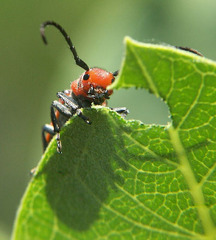
<p>Organisms that eat only plants</p>
10
New cards

Carnivores

Organisms that eat only other organisms rather than plants

<p>Organisms that eat only other organisms rather than plants</p>
11
New cards

Omnivores

Organisms that both plants and other organisms

12
New cards

Classification

The process by which we take a lot of data and organize it into groups and sub-groups

<p>The process by which we take a lot of data and organize it into groups and sub-groups</p>
13
New cards

Producers

Organisms that produce their own food

<p>Organisms that produce their own food</p>
14
New cards

Consumers

Organisms that eat living producers and/or other consumers for food

<p>Organisms that eat living producers and/or other consumers for food</p>
15
New cards

Decomposers

Organisms that break down the dead remains of other organisms

<p>Organisms that break down the dead remains of other organisms</p>
16
New cards

Autotrophs

Organisms that are able to make their own food

<p>Organisms that are able to make their own food</p>
17
New cards

Heterotrophs

Organisms that depend on other organisms for food

<p>Organisms that depend on other organisms for food</p>
18
New cards

Receptors

Special structures that allow living organisms to sense the conditions of their internal or external environment

<p>Special structures that allow living organisms to sense the conditions of their internal or external environment</p>
19
New cards

Asexual Reproduction

Reproduction accomplished by a single organism

<p>Reproduction accomplished by a single organism</p>
20
New cards

Sexual Reproduction

Reproduction that requires two organisms

<p>Reproduction that requires two organisms</p>
21
New cards

Inheritance

The process by which physical and biological characteristics are transmitted from the parents to the offspring

<p>The process by which physical and biological characteristics are transmitted from the parents to the offspring</p>
22
New cards

Mutation

An abrupt and marked change in the DNA of an organism compared to that of its parents

<p>An abrupt and marked change in the DNA of an organism compared to that of its parents</p>
23
New cards

Hypothesis

An educated guess that attempts to explain an observation or answer a question

<p>An educated guess that attempts to explain an observation or answer a question</p>
24
New cards

Theory

A hypothesis that has been tested with a significant amount of data

<p>A hypothesis that has been tested with a significant amount of data</p>
25
New cards

Scientific Law

A theory that has been texted by and is consistent with generations of data

<p>A theory that has been texted by and is consistent with generations of data</p>
26
New cards

Spontaneous Generation

The idea that something living can form from something non-living

<p>The idea that something living can form from something non-living</p>
27
New cards

Microorganisms

Living creatures that are too small to see with the naked eye
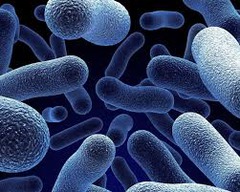
<p>Living creatures that are too small to see with the naked eye</p>
28
New cards

Abiogenesis

The idea that long ago, very simple life forms spontaneously appeared through chemical reactions

<p>The idea that long ago, very simple life forms spontaneously appeared through chemical reactions</p>
29
New cards

Kingdoms

all organisms are split into 5 different groups, called __________

<p>all organisms are split into 5 different groups, called __________</p>
30
New cards

Phyla

The organisms within each kingdom are split into 5 more groups, called __________, the singular of which is phylum

<p>The organisms within each kingdom are split into 5 more groups, called __________, the singular of which is phylum</p>
31
New cards

Classes

Each phylum is further divided into __________

32
New cards

Orders

Each class is further divided into __________

<p>Each class is further divided into __________</p>
33
New cards

Families

Within an order, organisms are divided into __________

<p>Within an order, organisms are divided into __________</p>
34
New cards

Genera

Families are further divided into __________, the singular of which is genus

<p>Families are further divided into __________, the singular of which is genus</p>
35
New cards

Species

Genera is broken down into __________

<p>Genera is broken down into __________</p>
36
New cards

Names of the Kingdoms

Monera, Protista, Fungi, Plantae, Animalia

<p>Monera, Protista, Fungi, Plantae, Animalia</p>
37
New cards

Prokaryotic Cell

A cell that has no distinct, membrane-bounded organelles

<p>A cell that has no distinct, membrane-bounded organelles</p>
38
New cards

Eukaryotic Cell

A cell with distinct, membrane-bounded organelles
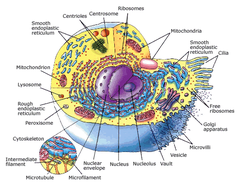
<p>A cell with distinct, membrane-bounded organelles</p>
39
New cards

Species Definition

A unit of one or more populations of individuals that can reproduce under normal conditions, produce fertile offspring, and are reproductively isolated from other such units

<p>A unit of one or more populations of individuals that can reproduce under normal conditions, produce fertile offspring, and are reproductively isolated from other such units</p>
40
New cards

Taxonomy

The science of classifying organisms

<p>The science of classifying organisms</p>
41
New cards

Binomial Nomenclature

Naming an organism with its genus and species name

<p>Naming an organism with its genus and species name</p>
42
New cards

3-Domain System

The system classifies all organisms into 3 large domains: Archaea, Bacteria, Eukarya

<p>The system classifies all organisms into 3 large domains: Archaea, Bacteria, Eukarya</p>
43
New cards

Evolution

The theory that all life on earth descended from one or two simple life forms, that lived on earth billions of years ago and were formed through abiogenesis.

<p>The theory that all life on earth descended from one or two simple life forms, that lived on earth billions of years ago and were formed through abiogenesis.</p>
44
New cards

Baraminology

A creation-based classification system

<p>A creation-based classification system</p>
45
New cards

Kingdom Monera

Monera contains all organisms that are composed of either one prokaryotic cell or a simple association of prokaryotic cells. Some examples could be bacteria and Blue-green algae

<p>Monera contains all organisms that are composed of either one prokaryotic cell or a simple association of prokaryotic cells. Some examples could be bacteria and Blue-green algae</p>
46
New cards

Kingdom Protista

Protista contains organisms composed of only one eukaryotic cell or a simple association of eukaryotic cells. Examples being amoebae, paramecia, and algae.

<p>Protista contains organisms composed of only one eukaryotic cell or a simple association of eukaryotic cells. Examples being amoebae, paramecia, and algae.</p>
47
New cards

Kingdom Fungi

Fungi is made up of decomposers, with eukaryotic cells. Mushrooms and bread molds are in Kingdom Fungi

<p>Fungi is made up of decomposers, with eukaryotic cells. Mushrooms and bread molds are in Kingdom Fungi</p>
48
New cards

Kingdom Plantae

Plantae is composed of organisms that can produce their own foods, mainly, but not limited to, plants
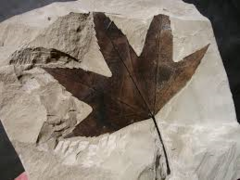
<p>Plantae is composed of organisms that can produce their own foods, mainly, but not limited to, plants</p>
49
New cards

Kingdom Animalia

Animalia contains multicellular organisms with eukaryotic cells. The organisms are heterotrophic but are not decomposers. All members are animals (duh)
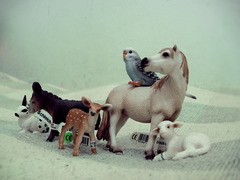
<p>Animalia contains multicellular organisms with eukaryotic cells. The organisms are heterotrophic but are not decomposers. All members are animals (duh)</p>
50
New cards

Louis Pasteur

His swan-necked flask experiment disproved spontaneous generation.



