Forensics Unit 1: Biometrics and Fingerprints
 Call Kai
 Learn
 Practice Test
 Spaced Repetition
 Match
 Flashcards
 Knowt Play
1/19

There's no tags or description
Looks like no tags are added yet.
20 Terms
Biometrics
Identifying people using physical or behavioral characteristics.
Physiological Biometrics
Physical traits such as fingerprints, facial features, iris, and retina.
Behavioral Biometrics
Actions such as handwriting, voice, typing patterns, and walking style.
Three Principles of Fingerprints
1) Fingerprints are unique to individuals; 2) Fingerprints do not change over a person's lifetime; 3) Fingerprints can be classified into patterns for identification.
Arch Fingerprint
Ridges enter one side and exit the other, forming a hill shape.

Plain Arch (Fingerprint)
A type of arch fingerprint that has no core or delta and consists of ridges that rise smoothly in the center, with no significant upward thrust.

Tented Arch (Fingerprint)
A type of arch fingerprint characterized by a sharp upward thrust at the center and at least one delta, giving it a tent-like appearance.
Loop Fingerprint
A type of fingerprint where ridges enter from one side, curve around, and exit from the same side, often characterized by one delta.
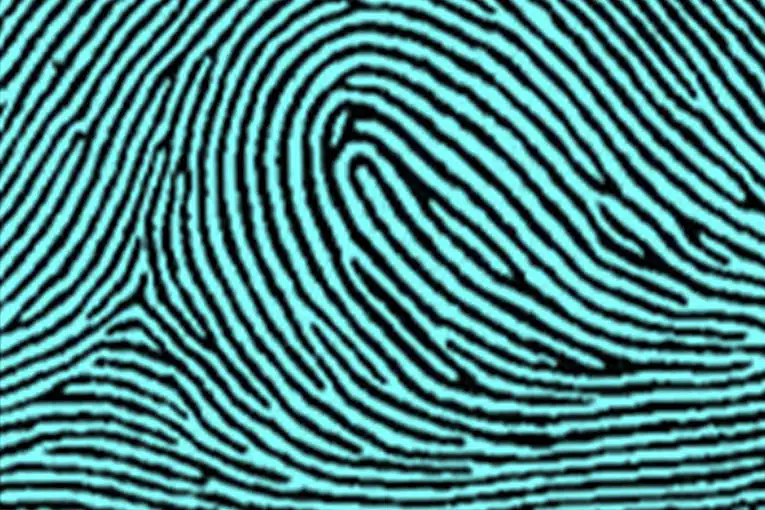
Radial Loop (Fingerprint)
A type of loop fingerprint in which the ridges flow in a loop toward the thumb (radial side), with one delta.
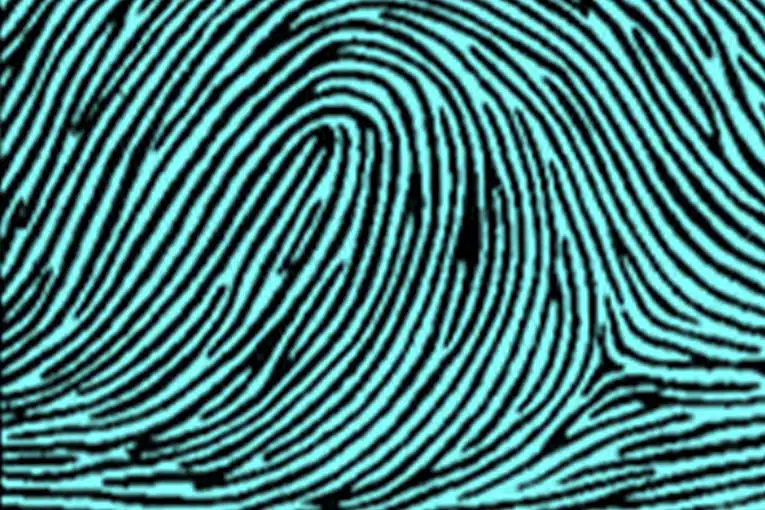
Ulnar Loop
A type of loop fingerprint in which the ridges flow in a loop toward the little finger (ulnar side), featuring one delta.
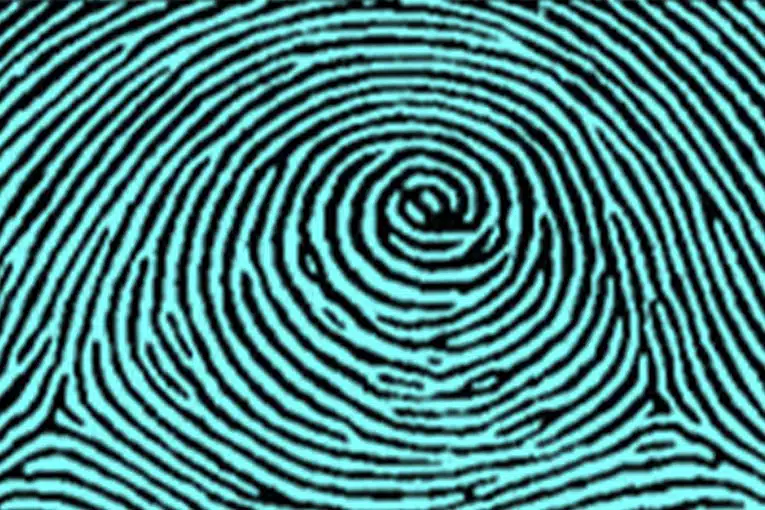
Whorl Fingerprint
A type of fingerprint characterized by ridges that form circular or spiral patterns with at least two deltas.
Henry Classification System
For categorizing fingerprints based on the presence and arrangement of whorls and loops, which helps in organizing fingerprint records for identification purposes.
AFIS
Automated Fingerprint Identification System used for fingerprint matching and identification.
Minutiae
The specific ridge features in a fingerprint, such as bifurcations and ridge endings, are used for individual identification and comparison.
Ridge Ending
A type of minutiae in a fingerprint where a ridge comes to an abrupt end, significant for identifying and matching fingerprints.
Bifurcation
A type of minutiae in a fingerprint where a single ridge splits into two, important for fingerprint analysis and identification.
Visible prints
Fingerprint impressions that are clearly seen, usually formed from substances like ink, blood, or dirt, and can be left on surfaces during physical contact.
Latent Prints
Faint fingerprints that are not visible to the naked eye and require enhancement techniques to be seen, often left by the natural oils and sweat from fingers.
Plastic Prints
Visible impressions made in a soft material, such as clay or wax, that retain the unique ridge patterns of a fingerprint.
Fingerprint collection
Photograph, develop if necessary, lift or preserve, document evidence.