Lecture 3.4: Fates of Pyruvate
 Call Kai
 Learn
Learn Practice Test
 Spaced Repetition
 Match
Match Flashcards
 Knowt Play
1/92

There's no tags or description
Looks like no tags are added yet.
Name | Mastery | Learn | Test | Matching | Spaced | Call with Kai | Chat |
|---|
No analytics yet
Send a link to your students to track their progress
93 Terms
In our bodies, what is the fate of pyruvate under anaerobic conditions?
a) It’s reduced to lactate.
b) It’s oxidized to lactate.
c) It’s fermented to ethanol and CO2.
d) It’s oxidized to acetyl CoA
e) It’s reduced to acetyl CoA
a) It’s reduced to lactate.
What is the purpose of fermentation?
a) To produce lactate.
b) To reduce O2.
c) To produce CO2.
d) To reduce NAD+.
e) To oxidize NADH.
e) To oxidize NADH.
Which enzyme in glycolysis catalyzes the reaction that requires NAD+?
a) Hexokinase
b) Phosphoglucoisomerase
c) Phosphofructokinase-1
d) Aldolase
e) Triose Phosphate Isomerase
f) Glyceraldehyde-3-phosphate dehydrogenase
g) Phosphoglycerate Kinase
h) Phosphoglycerate Mutase
i) Enolase
j) Pyruvate Kinase
f) Glyceraldehyde-3-phosphate dehydrogenase
What are the 3 ways pyruvate can be metabolized
Fermentation, Citrate Cycle, Cori Cycle
When O2 is present what process for ATP synthesis occurs
Citrate Cycle

When cells oxidize pyruvate, they capture energy to make ____ and they regenerate _____
ATP; NAH+
How is NAD+ regenerated under anaerobic conditions
NAD+ is regenerated through fermentation

Explain the mechanism of pyruvate to lactate
The conversion of pyruvate to lactate is catalyzed by lactate dehydrogenase, which is activated by NADH, to create more NAD+ for glycolysis and lactate which can be used in the cori cycle
What are 3 ways lactate fermentation is regulated
1) When aerobic pathways are shut —> increased NADH build up —→ increased fermentation
2) Increased [pyruvate] = increased fermentation
3) Hypoxia increases activity of lactate dehydrogenase
What is the cost in ATP equivalents of the cori cycle
4 ATP equivalents
The ______ coordinates ______ in muscle and _____ in liver during muscle concentrations
Cori Cycle; glycolysis; gluconeogenesis
What enzyme reversibly catalyzes the reaction of pyruvate to lactate
Lactase dehydrogenase
Explain the mechanism of lactate fermentation
Within the muscles, glycolysis uses glucose is used to create pyruvate. When no oxygen is present pyruvate is converted into lactate which then is shuttled to the liver via the blood stream. There lactate is converted back into pyruvate which is made into glucose via gluconeogenesis. The glucose is then shuttled back to the muscle/other tissue to restart the cycle
In _______ environments, pyruvate is converted to _______, which enters the citrate cycle
aerobic; acetyl-CoA
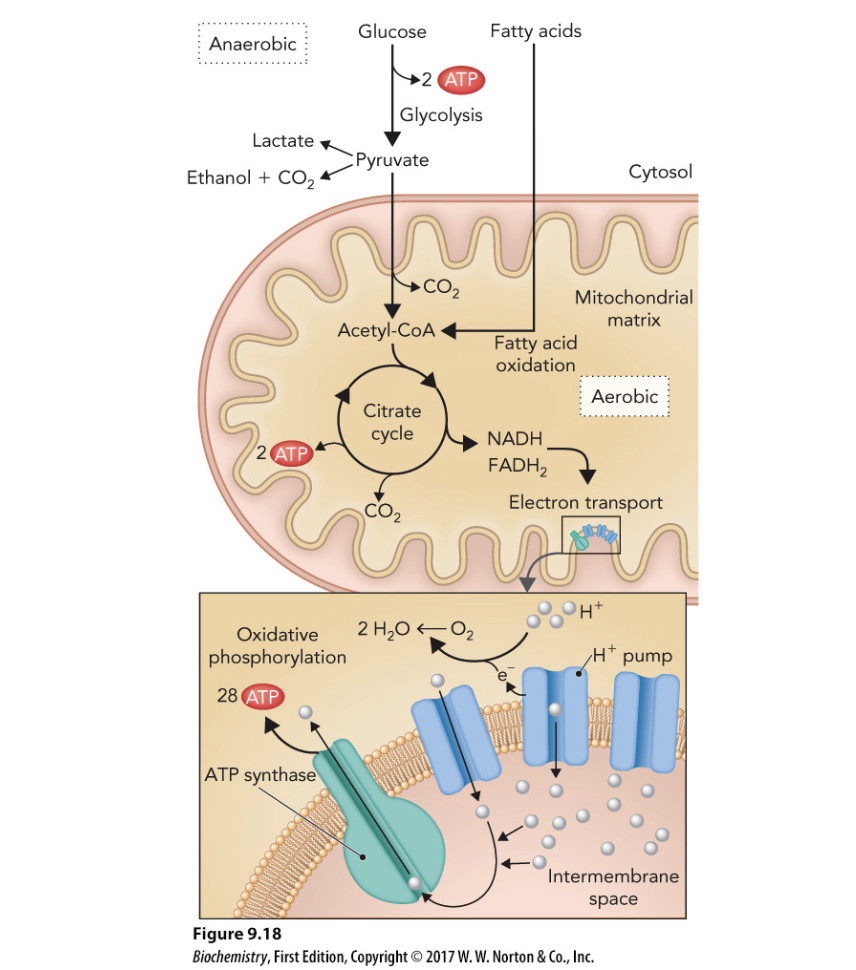
Where does the citrate cycle occur
The mitochondria
____ complex catalyzes the _____ oxidative decarboxylation of pyruvate to acetyl-coa
PDH; irreversible
How many cofactors are required for PDH and what are they
5 — CoA-SH, NAD+, TPP, Lipoate, FAD
What are the 3 prosthetic groups for PDH
TPP, Lipoate, and FAD
PDH stands for
Pyruvate dehydrogenase complex
How many enzymes make up PDH
3 enzymes — E1, E2, E3
(T/F) The reaction catalyzed by the PDH complex is endergonic
False — the ΔGo’ is -33.4 kJ/mol
What are the products of the reaction catalyzed by the PDH complex
Acetyl-CoA + CO2 + NADH + H
What is the full name for E1 of PDH
E1 = Pyruvate dehydrogenase
What is the full name for E2 of PDH
E2 = Dihydrolipoyl transacetylase
What is the full name for E3 of PDH
E3 = Dihydrolipoyl dehydrogenase
Match each of the PDH cofactors listed below to the enzyme that uses it.
TPP uses _____
E1
Match each of the PDH cofactors listed below to the enzyme that uses it.
FAD uses _____
E3
Match each of the PDH cofactors listed below to the enzyme that uses it.
Lipoate uses _____
E2
Which PDH cofactors are prosthetic groups? Select all that apply.
a) TPP
b) Lipoate
c) Coenzyme A
d) FAD
e) NAD+
a) TPP
b) Lipoate
d) FAD
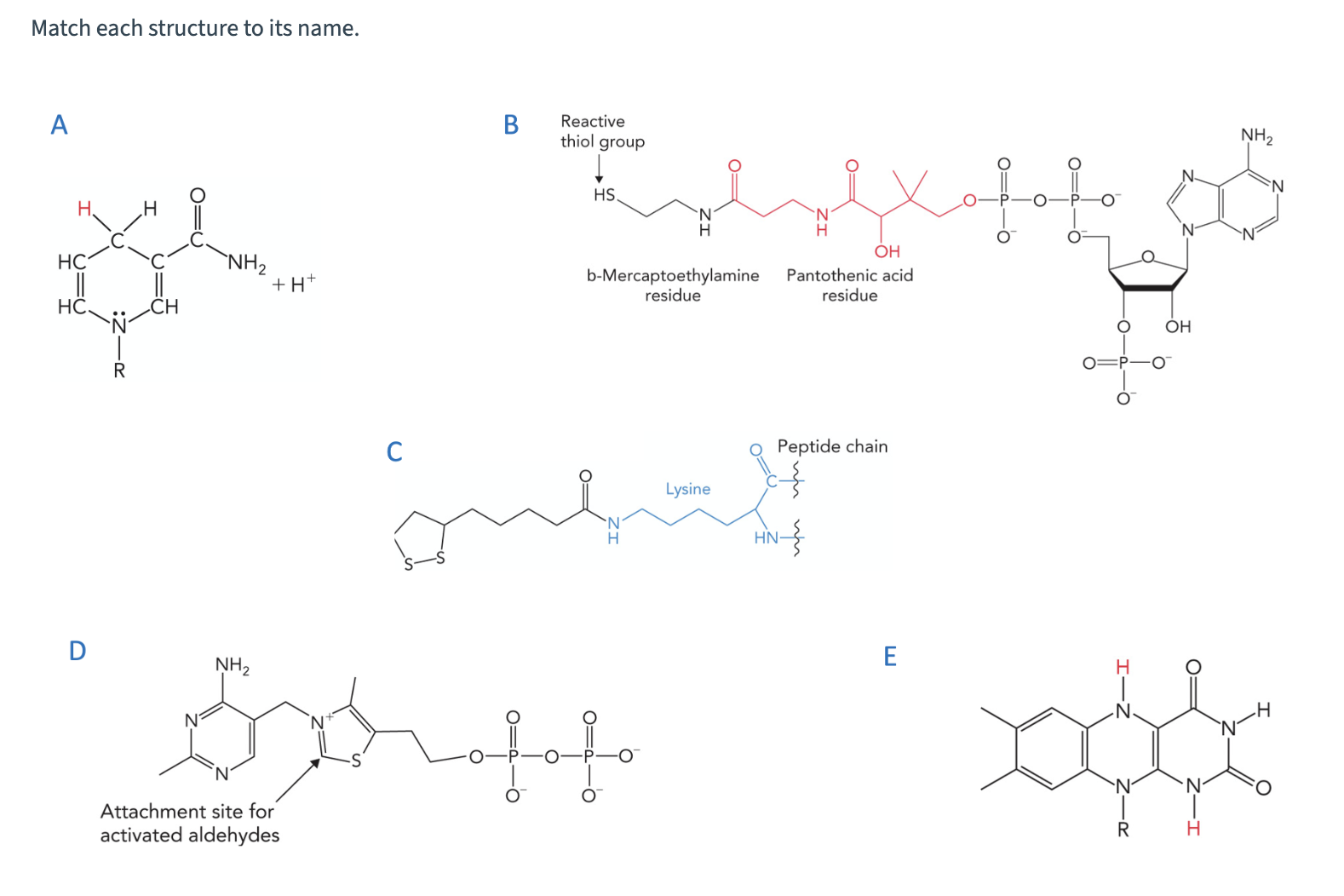
A = NADH (reduced nicotinamide adenine dinucleotide)
B = Coenzyme A (CoA-SH)
C = Lipoamide (lipoic acid attached to a lysine residue)
D = Thiamine pyrophosphate (TPP)
E = FADH₂ (reduced flavin adenine dinucleotide)
What are the advantages of multi-enzyme complexes
short distance between catalytic sites allows channeling of substrates from one catalytic site to another
Channeling minimizes side reactions
regulation of activity of one subunit affects the entire couples
PDH cofactors are derived from ______
B vitamins
Of the 5 cofactors match each one to its enzyme
TPP = E1
Lipoate = E2
Coenzyme A = E2
FAD = E3
NAD+ = E3
Explain the mechanism of TPP
TPP binds and decarboxylates pyruvate
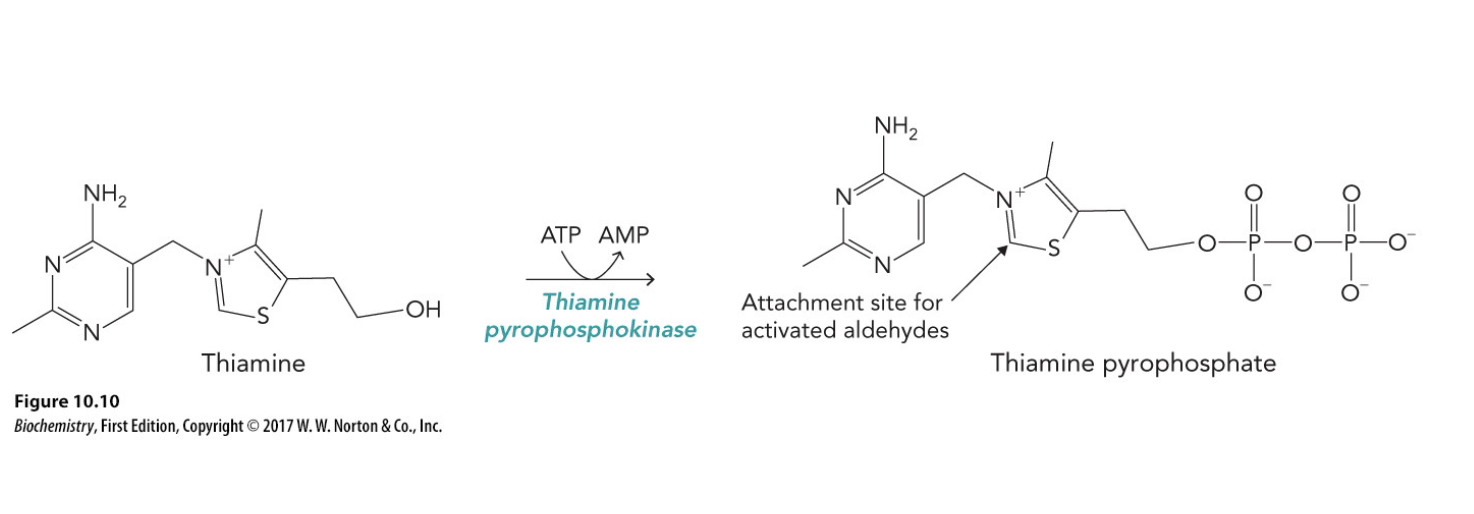
What enzyme catalyzes Thiamine to TPP
Thiamine pyrophosphokinase
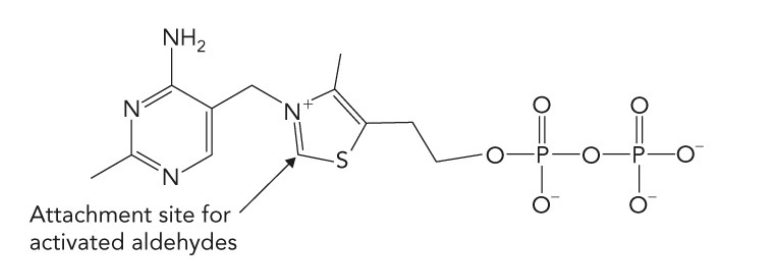
What is the name of this molecule
TPP

What is the name of this molecule
Acetyl-dihydrolipoamide
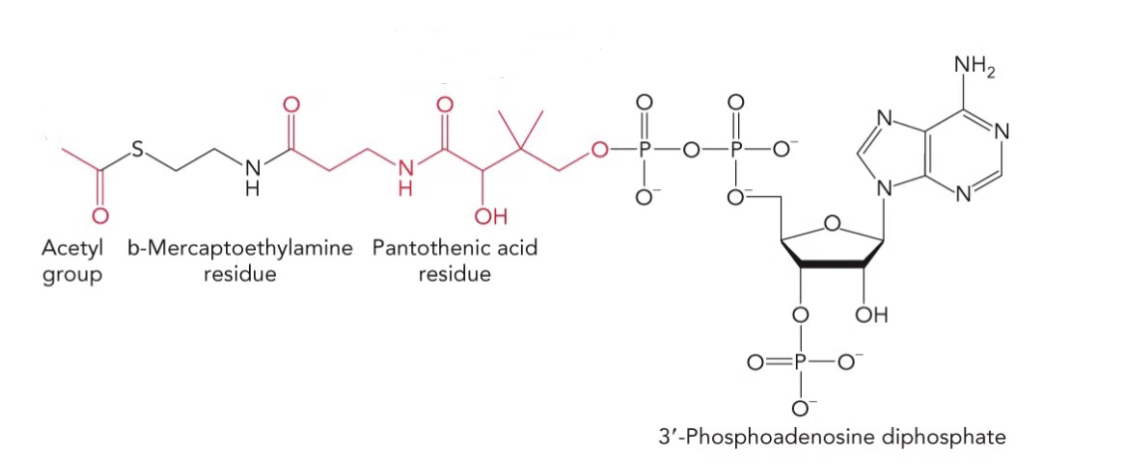
What is the name of this molecule
Acetyl CoA
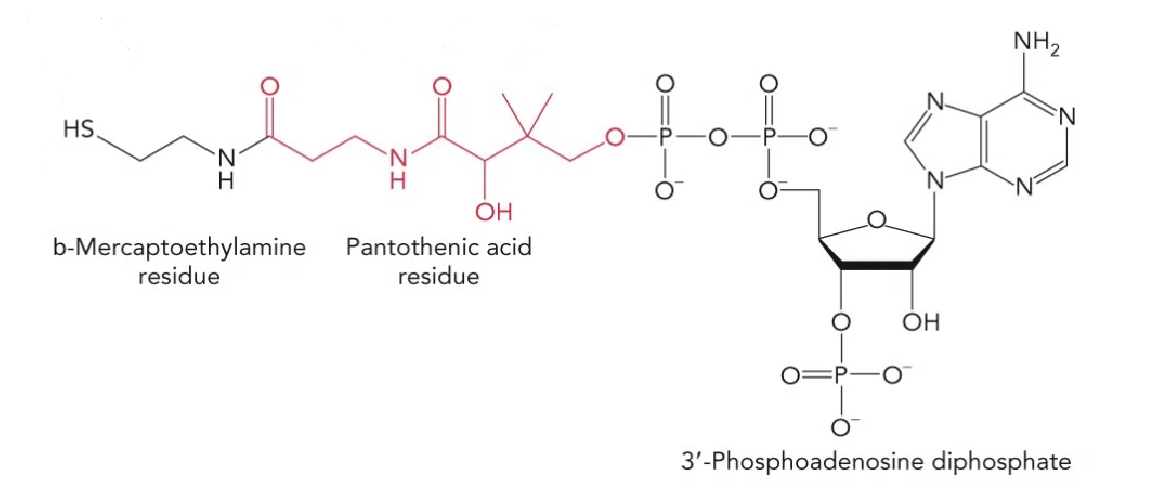
What is the name of this molecule
CoA
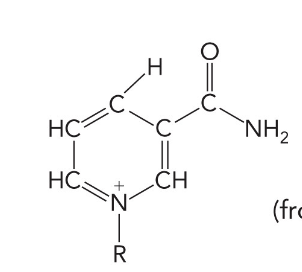
What is the name of this molecule
NAD+

What is the name of this molecule
NADH

What is the name of this molecule
FAD
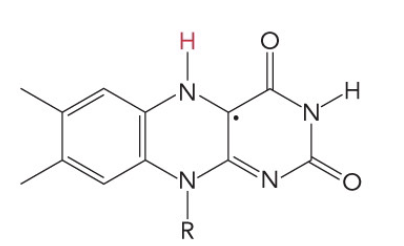
What is the name of this molecule
FADH
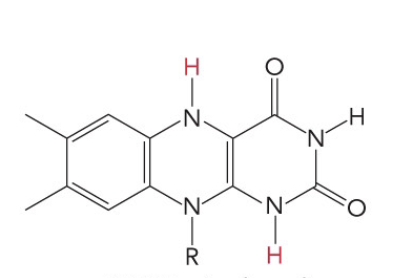
What is the name of this molecule
FADH2
In step 1 of the PDH reaction, _________. Select all that apply. There may be only one answer or more than one answer.
a) NAD+ is reduced to NADH.
b) Acetyl-CoA is produced and released from the enzyme.
c) Hydroxyethyl TPP is formed.
d) Acyl lipoyllysine is formed.
e) CO2 is produced and released from the enzyme.
f) Fully reduced lipoyllysine is formed.
g) FAD is reduced to FADH2.
h) Pyruvate is decarboxylated.
i) Coenzyme A enters the enzyme's active site.
j) FADH2 is re-oxidized back to FAD
c) Hydroxyethyl TPP is formed.
e) CO2 is produced and released from the enzyme.
h) Pyruvate is decarboxylated.
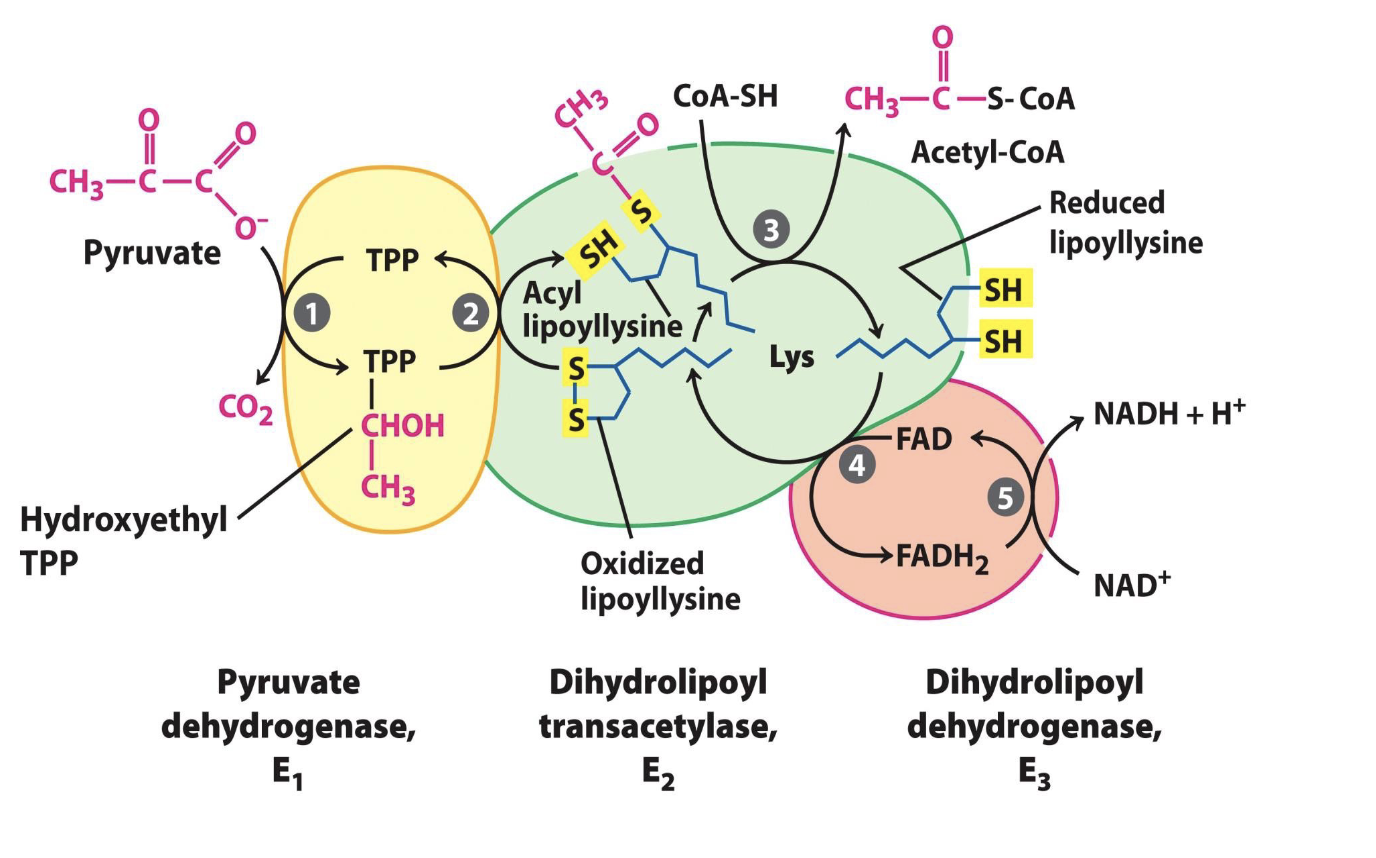
In step 2 of the PDH reaction, _________. Select all that apply. There may be only one answer or more than one answer.
a) NAD+ is reduced to NADH.
b) Acetyl-CoA is produced and released from the enzyme.
c) Hydroxyethyl TPP is formed.
d) Acyl lipoyllysine is formed.
e) CO2 is produced and released from the enzyme.
f) Fully reduced lipoyllysine is formed.
g) FAD is reduced to FADH2.
h) Pyruvate is decarboxylated.
i) Coenzyme A enters the enzyme's active site.
j) FADH2 is re-oxidized back to FAD
d) Acyl lipoyllysine is formed.
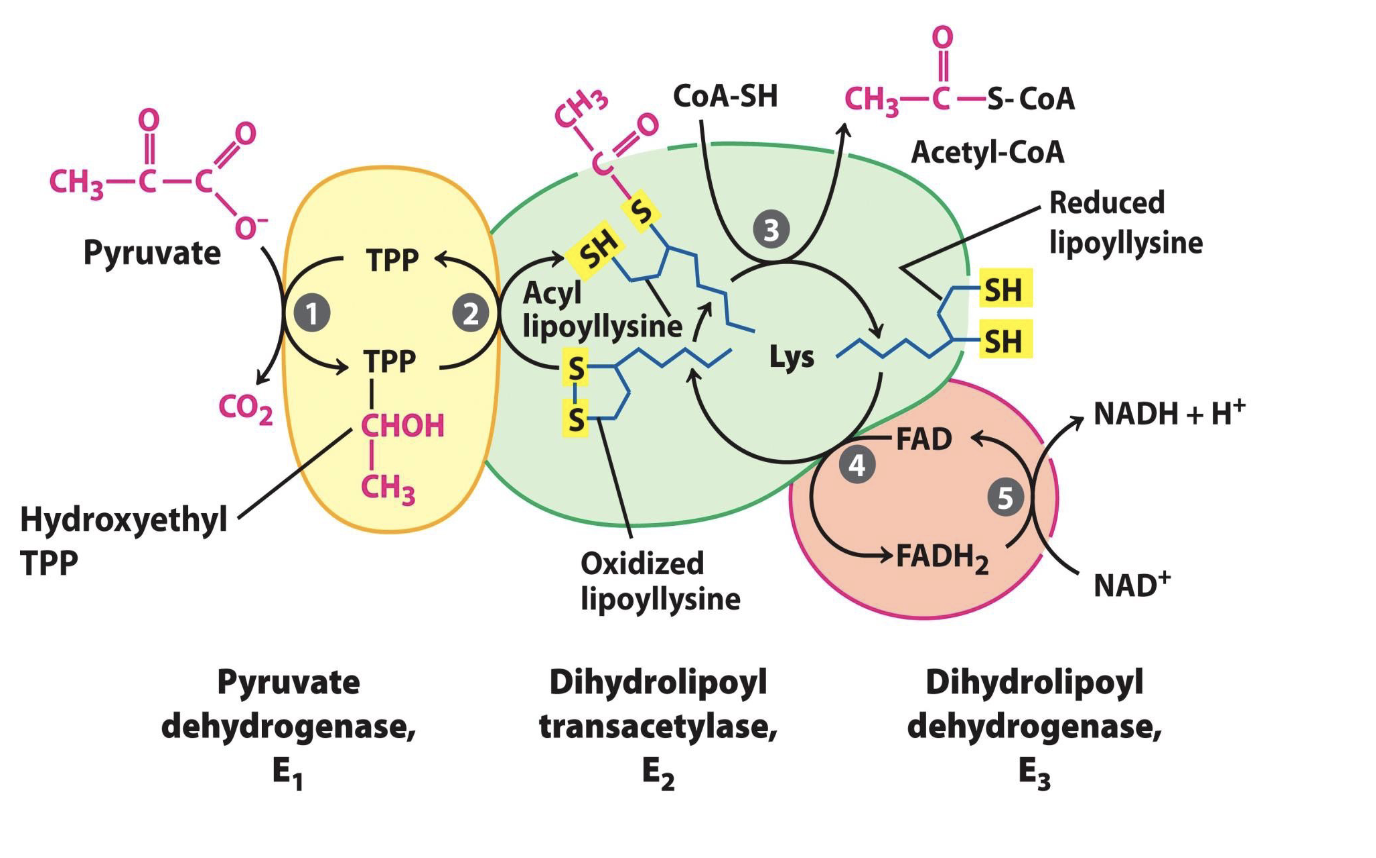
In step 3 of the PDH reaction, _________. Select all that apply. There may be only one answer or more than one answer.
a) NAD+ is reduced to NADH.
b) Acetyl-CoA is produced and released from the enzyme.
c) Hydroxyethyl TPP is formed.
d) Acyl lipoyllysine is formed.
e) CO2 is produced and released from the enzyme.
f) Fully reduced lipoyllysine is formed.
g) FAD is reduced to FADH2.
h) Pyruvate is decarboxylated.
i) Coenzyme A enters the enzyme's active site.
j) FADH2 is re-oxidized back to FAD
b) Acetyl-CoA is produced and released from the enzyme.
f) Fully reduced lipoyllysine is formed.
i) Coenzyme A enters the enzyme's active site.

In step 4 of the PDH reaction, _________. Select all that apply. There may be only one answer or more than one answer.
a) NAD+ is reduced to NADH.
b) Acetyl-CoA is produced and released from the enzyme.
c) Hydroxyethyl TPP is formed.
d) Acyl lipoyllysine is formed.
e) CO2 is produced and released from the enzyme.
f) Fully reduced lipoyllysine is formed.
g) FAD is reduced to FADH2.
h) Pyruvate is decarboxylated.
i) Coenzyme A enters the enzyme's active site.
j) FADH2 is re-oxidized back to FAD
g) FAD is reduced to FADH2.
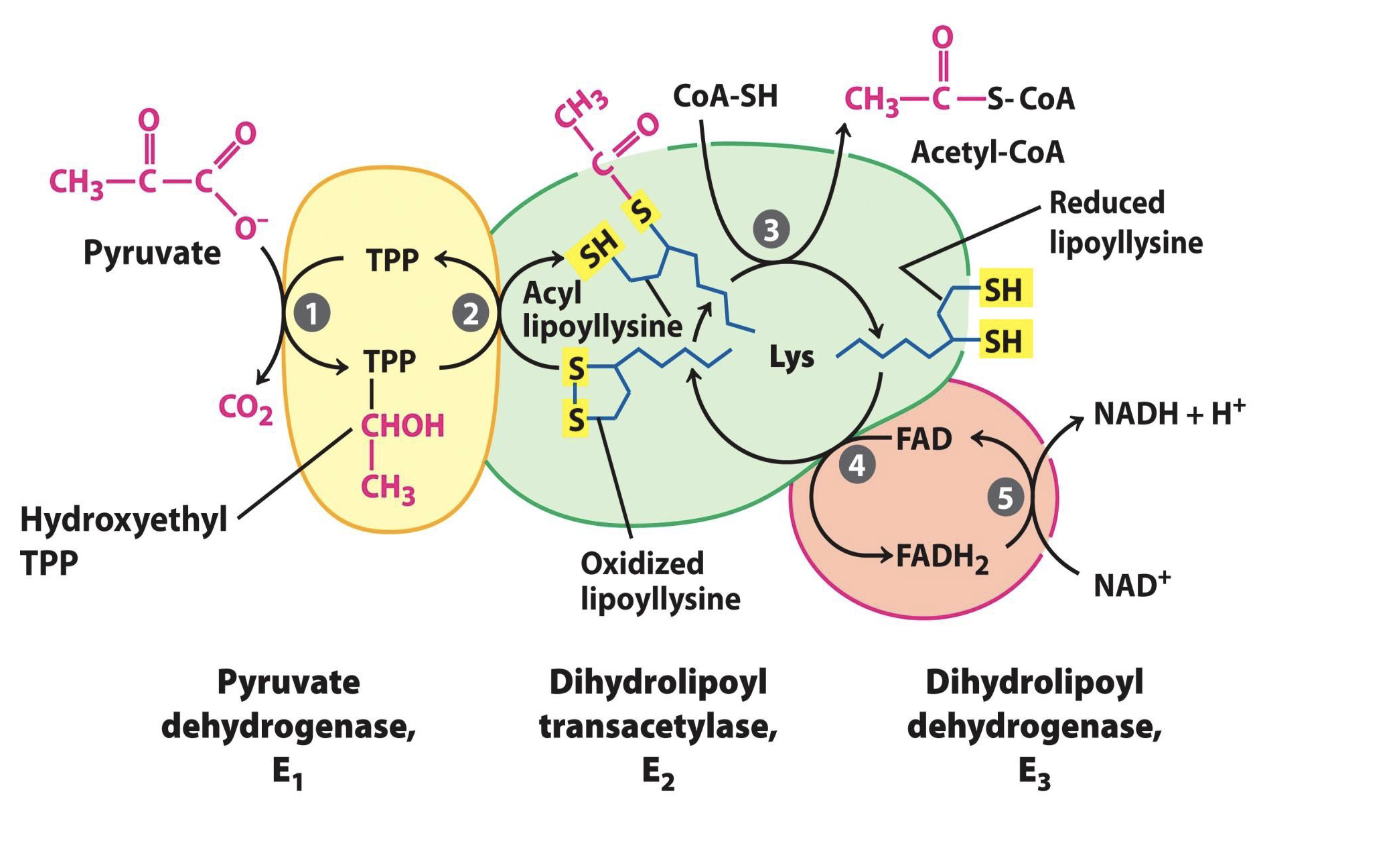
In step 5 of the PDH reaction, _________. Select all that apply. There may be only one answer or more than one answer.
a) NAD+ is reduced to NADH.
b) Acetyl-CoA is produced and released from the enzyme.
c) Hydroxyethyl TPP is formed.
d) Acyl lipoyllysine is formed.
e) CO2 is produced and released from the enzyme.
f) Fully reduced lipoyllysine is formed.
g) FAD is reduced to FADH2.
h) Pyruvate is decarboxylated.
i) Coenzyme A enters the enzyme's active site.
j) FADH2 is re-oxidized back to FAD
a) NAD+ is reduced to NADH.
j) FADH2 is re-oxidized back to FAD

What occurs in E1 of PDH
E1 oxidizes & decarboxylates pyruvate creating hydroxyethyl-TPP
What happens in E2 of PDH
E2 oxidizes the hydroxyethyl to acetate & transfers it to Coenzyme A using energy released by oxidation
What happens in E3 of PDH
E3 oxidizes the lipoamide of E2 and reduces the E3 bound FAD. NAD+ is reduced to create high energy NADH
What is the purpose of the acetyl-lipoyllysine
To swing around E2 and connect E1 to E3. This swinging motion is the reason how Acetyl-CoA and FADH2 can be formed

In E2 what is the electron acceptor
lipoyllysine

Describe the strcuture of lipoyllysine
lipoyllysine is lipoate covalently bound to a specific lysine residue on mitochondrial enzyme proteins

FADH2 transfer electrons to ____ in E3
NAD+
In E1 the ______ group is transferred to _____ acceptor of E2
hydroxyethyl; lipoyllysine
What effect do these enzymes have on PDH.
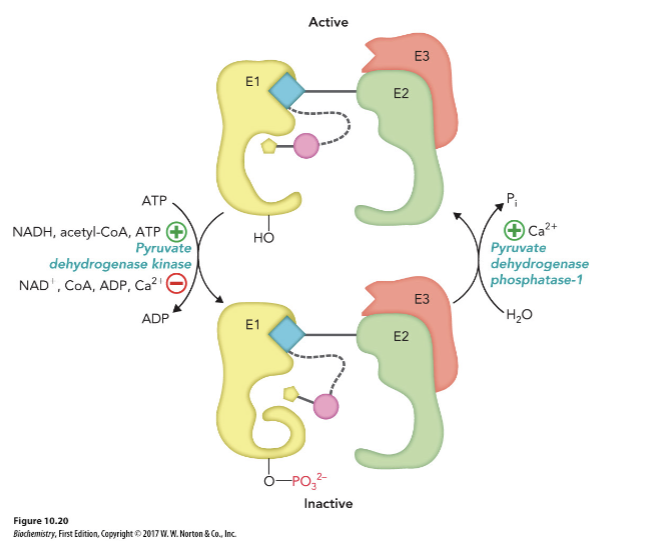
PDH kinase
PDH phosphatase-1
PDH kinase = inhibitor
PDH phosphatase-1 = activator
When E1 of PDH is phosphorylated it is ______
Inactive
Under what conditions is PDH most active in muscle cells?
a) high energy state under aerobic conditions
b) low energy state under aerobic conditions
c) high energy state under anaerobic conditions
d) low energy state under anaerobic conditions
b) low energy state under aerobic conditions
What molecules activate PDH kinase
NADH, Acetyl-CoA, ATP
What molecules inhibit PDH kinase
NAD+, CoA, ADP, Ca2+
What molecules activate PDH phosphatase
Ca2+
What energy state is PDH kinase activated in
High energy state
What energy state is PDH kinase inhibited in
Low energy state
What is the role of PDH kinase
To phosphorylate E1 of PDH, deactivating it
What is the role of PDH phosphatase
To dephosphorylate E1 of PDH, activating it
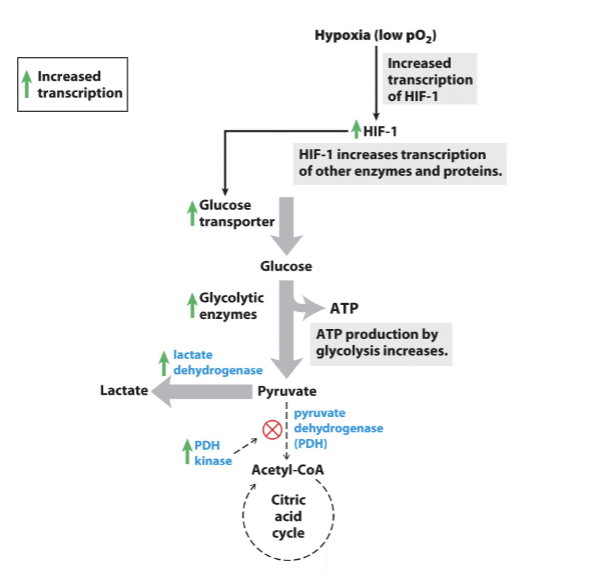
Explain the effects of hypoxia on PDH
PDH kinase is increased during hypoxia which decreases the activity of PDH which stops the citric acid acycle

Explain the effects of hypoxia on lactate fermentation
Inhibited citric acid cycle causes a build up of pyruvate which increases the amount of lactate dehydrogenase activity, increasing the amount of lactate fermentation

Explain the effects of hypoxia on glucose breakdown
Hypoxia increased the transcription of HIF-1, HIF-1 increases transcription of other enzymes and proteins that aide in glucose transport. Increased glucose transport allows for glucose to be taken in by the cell which increases the amount of ATP created via glycolysis and lactate fermentation.
When PDH kinase is inhibited that means PDH is _____
Active — energy being cerated
When PDH kinase is activated that means PDH is _____
Inactive — additional energy not being created
When PDH phosphatase is activated that means PDH is _____
Active — energy being created
In muscle cells, which of the following are produced at higher levels in response to low O2? Select all that apply.
a) glucose transporter proteins
b) glycolytic enzymes
c) gluconeogenic enzymes
d) lactate dehydrogenase
e) pyruvate dehydrogenase
f) pyruvate dehydrogenase kinase
g) pyruvate dehydrogenase phosphatase
a) glucose transporter proteins
b) glycolytic enzymes
d) lactate dehydrogenase
f) pyruvate dehydrogenase kinase
In the redox reaction catalyzed by lactate dehydrogenase, the oxidizing agent is ___________ and the reducing agent is ___________.
a) NADH ; NAD+
b) NAD+ ; NADH
c) NADH ; pyruvate
d) NAD+ ; pyruvate
e) pyruvate ; NADH
f) pyruvate ; NAD+
g) lactate ; NADH
h) lactate ; NAD+
i) NADH ; lactate
j) NAD+ ; lactate
e) pyruvate ; NADH
Pyruvate is an important intermediate in carbohydrate metabolism. Which of the following is true regarding the fate of pyruvate in muscle cells?
a) Pyruvate will be oxidized to acetyl-CoA in the absence of oxygen or reduced to lactate in the presence of oxygen.
b) Pyruvate will be oxidized to acetyl-CoA in the presence of oxygen or reduced to lactate in the absence of oxygen.
c) Pyruvate will be reduced to acetyl-CoA in the absence of oxygen or oxidized to lactate in the presence of oxygen.
d) Pyruvate will be oxidized to acetyl-CoA in the presence or absence of oxygen.
e) Pyruvate will be reduced to acetyl-CoA in the presence of oxygen or oxidized to lactate in the absence of oxygen
b) Pyruvate will be oxidized to acetyl-CoA in the presence of oxygen or reduced to lactate in the absence of oxygen.
The fermentation of pyruvate to lactate allows glycolysis to continue in the absence of O2 because this reaction _____________
a) produces H2O .
b) is coupled to the oxidation of NADH to NAD+.
c) is coupled to ATP hydrolysis.
d) is coupled to the formation of ATP.
e) is coupled to the reduction of NAD+ to NADH.
b) is coupled to the oxidation of NADH to NAD+
The anaerobic conversion of 2 glucose to 4 lactate is accompanied by a net gain of:
a) 2 NADH and 2 ATP.
b) 0 NADH and 4 ATP.
c) 0 NADH and 2 ATP.
d) 4 NADH and 4 ATP.
e) 2 NADH and 4 ATP.
b) 0 NADH and 4 ATP.
Which of the following statements about the Cori Cycle and its physiological consequences are correct? Select all that apply.
a) it involves the synthesis of glucose in muscle.
b) it involves the release of lactate by muscle.
c) it involves lactate synthesis in the liver.
d) it involves ATP synthesis in muscle.
e) it involves the release of glucose by the liver.
f) it produces a net of 4 ATP.
g) it prevents the accumulation of lactate.
h) it replenishes glucose in the muscle.
b) it involves the release of lactate by muscle.
d) it involves ATP synthesis in muscle.
e) it involves the release of glucose by the liver.
g) it prevents the accumulation of lactate.
h) it replenishes glucose in the muscle.
Q6. Glycerol is a 3-carbon molecule that can be oxidized by your cells by a two-step pathway that converts glycerol to the glycolytic intermediate dihydroxyacetone phosphate (DHAP). This two-step pathway is pictured below. The DHAP generated from glycerol feeds into the remaining steps of glycolysis (the payoff phase).
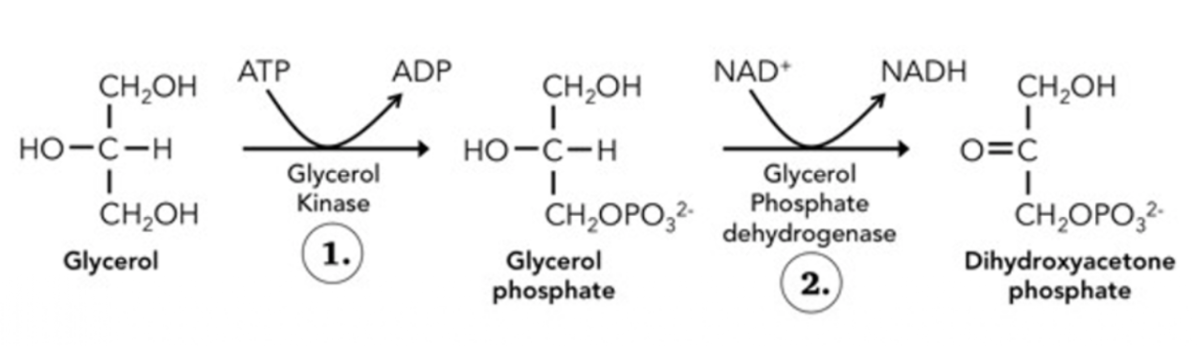
Metabolic disorders often arise from enzyme deficiencies in which a key metabolic enzyme is produced in lower levels than usual. Many of these metabolic disorders have similar symptoms because of the connections between pathways.
For example, Lactate dehydrogenase deficiency and phosphofructokinase (PFK) deficiency in muscle both have symptoms of exercise intolerance, including fatigue and muscle pain during strenuous exercise. Both deficiencies can also result in reduced lactate levels during exercise. Treatment for both individuals includes avoidance of high-intensity exercise.
In order to distinguish between these two disorders, a physician could test the patient's lactate levels during exercise before and after administering glycerol. What would be the expected results if this test were performed? Select all that apply.
Multiple answers:Multiple answers are accepted for this question
a) Lactate levels would be low after intense exercise and would not increase after glycerol was administered if the patient has a deficiency in lactate dehydrogenase.
b) Lactate levels would be low after intense exercise and would increase after glycerol was administered if the patient has a deficiency in muscle PFK.
c) Lactate levels would be low after intense exercise and would not increase after glycerol was administered if the patient has a deficiency in muscle PFK.
d) Lactate levels would be low after intense exercise and would increase after glycerol was administered if the patient has a deficiency in lactate dehydrogenase.
a) Lactate levels would be low after intense exercise and would not increase after glycerol was administered if the patient has a deficiency in lactate dehydrogenase.
b) Lactate levels would be low after intense exercise and would increase after glycerol was administered if the patient has a deficiency in muscle PFK.
In eukaryotic cells, the pyruvate dehydrogenase complex is located in the ___________.
a) cytoplasm
b) mitochondrial intermembrane space
c) mitochondrial inner membrane
d) mitochondrial matrix
e) mitochondrial cristae
d) mitochondrial matrix
The reaction catalyzed by the PDH complex generates __________ per molecule of glucose.
a) 1 acetyl CoA, 1 carbon dioxide, and 1 NADH.
b) 1 lactate, 1 carbon dioxide, and 1 NADH.
c) 2 acetyl CoA, 2 carbon dioxide, and 2 ATP.
d) 1 pyruvate, 1 acetyl CoA, and 1 ATP.
e) 2 acetyl CoA, 2 NADH, and 2 ATP.
f) 2 acetyl CoA, 2 carbon dioxide, and 2 NADH.
g) 1 ethanol, 1 carbon dioxide, and 1 NADH.
h) 2 coenzyme A, 2 carbon dioxide, and 2 NADH.
i) 2 lactate and 2 NADH.
j) 2 acetyl CoA and 2 NADH.
f) 2 acetyl CoA, 2 carbon dioxide, and 2 NADH.
In muscle cells, when ATP levels are high:
a) Pyruvate Oxidation is inhibited, Glycolysis is stimulated.
b) Pyruvate Oxidation is stimulated, Glycolysis is inhibited.
c) Both Pyruvate Oxidation and Glycolysis are stimulated.
d) Both Pyruvate Oxidation and Glycolysis are inhibited.
d) Both Pyruvate Oxidation and Glycolysis are inhibited.
In muscle cells, when O2 levels are low,
a) The rate of pyruvate oxidation increases, whereas the rate of glycolysis decreases.
b) The rate of pyruvate oxidation decreases, whereas the rate of glycolysis increases.
c) The rates of both pyruvate oxidation and glycolysis increase.
d) The rates of both pyruvate oxidation and glycolysis decrease.
b) The rate of pyruvate oxidation decreases, whereas the rate of glycolysis increases.
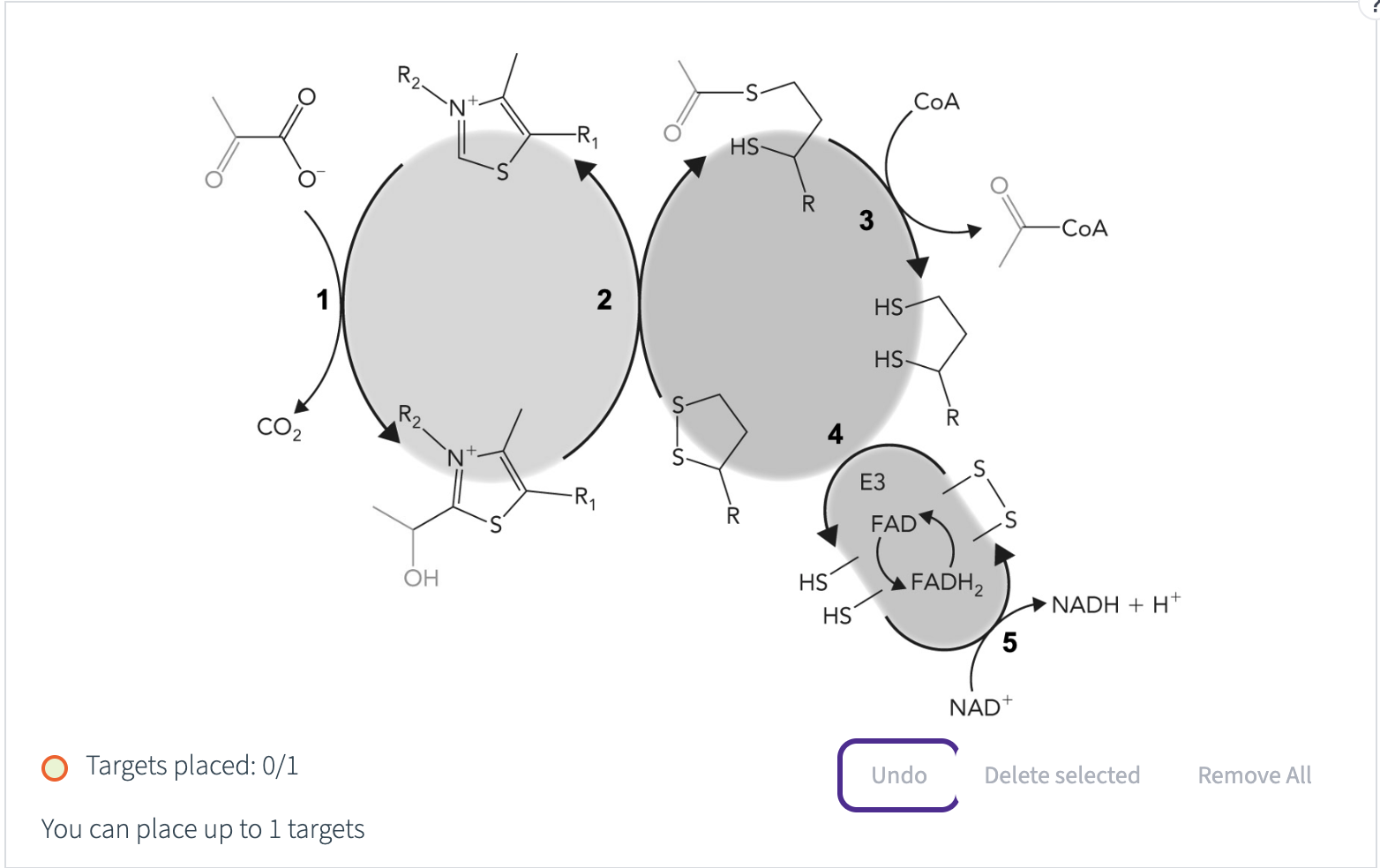
In this diagram of the pyruvate dehydrogenase complex reaction, mark the product that will enter the citrate cycle.

Suppose you have prepared a mitochondrial extract that contains all of the soluble enzymes of the mitochondrial matrix but has lost (by dialysis) all the low molecular weight soluble cofactors. What must you add to the extract so that the preparation will oxidize pyruvate to acetyl CoA? Select all that apply.
Multiple answers:Multiple answers are accepted for this question
a) GDP
b) Pi
c) Coenzyme A
d) NAD+
e) Lipoate
f) TPP
g) FAD
h) ADP
i) NADH
j) FADH2
c) Coenzyme A
d) NAD+
Dialysis only removes small molecules that are freely diffusible — i.e., cofactors that bind and release from the enzyme during each catalytic cycle, like a co-substrate. It does not strip away cofactors that are essentially permanent parts of the enzyme's structure.
TPP — bound very tightly (though noncovalently) in the active site of E1
Lipoate — is covalently attached to a lysine side chain on E2
FAD — bound very tightly (essentially permanently) to E3
CoA and NAD⁺ act as true diffusible co-substrates — they bind, participate in one round of catalysis, and are released as CoA-SH becomes acetyl-CoA and NAD⁺ becomes NADH
Which of the following statements does NOT correctly describe the role of cofactors in the pyruvate dehydrogenase complex reaction?
a) Coenzyme A donates the acetyl group to reduced lipoate
b) Thiamine pyrophosphate (TPP) attacks and attaches to the central carbon in pyruvate.
c) NAD+ oxidizes FADH2
d) FAD oxidizes the reduced form of lipoate
e) Lipoate serves as the initial electron acceptor in the oxidation of pyruvate
a) Coenzyme A donates the acetyl group to reduced lipoate
Two of the steps in the oxidative decarboxylation of pyruvate (steps 4 and 5) do not involve any of the three carbons of pyruvate yet they are essential to the operation of the PDH complex. Explain why these two steps are necessary.
Within Steps 4 and 5 they are responsible for regenerating the enzyme's oxidized cofactors. These steps create lipoamide and FAD which help continue the reaction. Additionally, step 5 allows for the export of the harnessed electrons as NADH to go on to create ATP in the ETC.
Many cancers show an increase in the transcription factors c-Myc and HIF-1α (hypoxia inducible factor 1, alpha subunit). What effect does increased expression of HIF-1 have on cancer ells and why is this beneficial to cancer cells?
An increase in HIF-1 leads to the increase in glucose transporters and nearly all glycolytic enzymes which will increase the amount of glucose brought into the cell and shift the cell toward the production of ATP through glycolysis. If cancer cells thrive off glycolysis, having a increased amount of glucose in the cell will only enhance the rates of glycolysis therefore increasing the tumor size
Data shown in the two graphs below are from experiments carried out on the Pyruvate Dehydrogenase Complex (PDH). In the experiments, extracts of mitochondria were incubated for 6 minutes with high concentrations of ATP where the phosphates are labeled with the radioactive isotope 32P. At various times, samples were removed and tested for PDH activity (left graph) and incorporation of the 32P label into PDH (right graph). (Blue: No ATP, Green: With ATP)
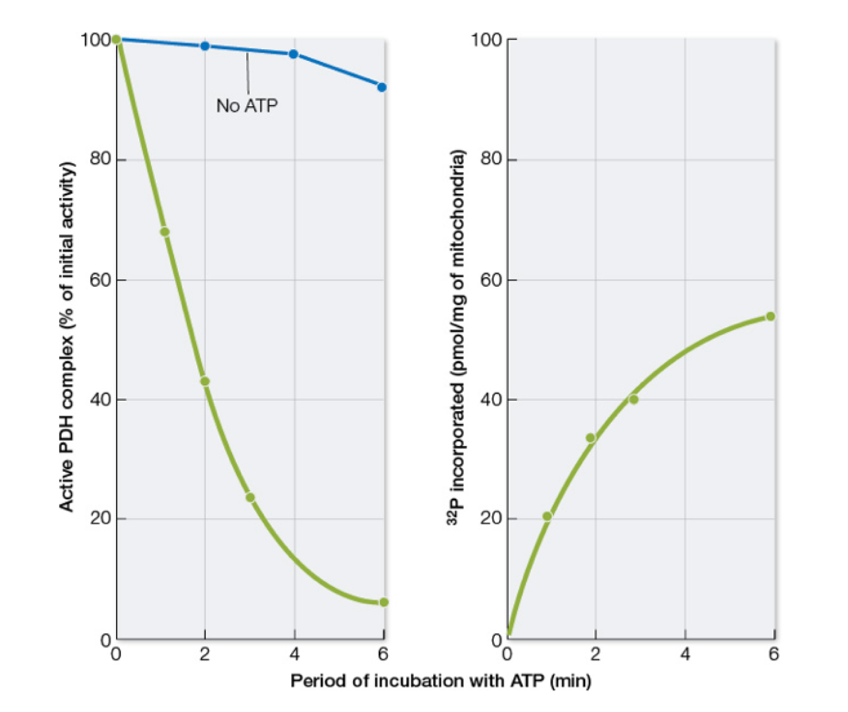
What do these data suggest? Select all that apply.
Multiple answers:Multiple answers are accepted for this question
a) As PDH becomes phosphorylated the activity increases.
b) As PDH becomes phosphorylated the activity decreases.
c) PDH activity is unaffected by the phosphorylation.
d) ATP is used for the phosphorylation of PDH.
e) ATP acts as a positive allosteric effector.
f) ATP binds to the active site.
b) As PDH becomes phosphorylated the activity decreases.
d) ATP is used for the phosphorylation of PDH.
Which of the following would increase the activity of PDH? Select all that apply.
Multiple answers:Multiple answers are accepted for this question
a) A mutation in the active site of pyruvate dehydrogenase phosphatase that blocks its catalytic activity.
b) A mutation in the active site of pyruvate dehydrogenase kinase that blocks its catalytic activity.
c) A mutation in the allosteric site of pyruvate dehydrogenase kinase that blocks ATP binding.
d) A mutation in the active site of Enzyme 1 of the PDH that blocks its catalytic activity.
b) A mutation in the active site of pyruvate dehydrogenase kinase that blocks its catalytic activity.
c) A mutation in the allosteric site of pyruvate dehydrogenase kinase that blocks ATP binding.
How do cells ensure that pyruvate is fermented/reduced rather than oxidized when O2 is unavailable? Select all that apply.
Multiple answers:Multiple answers are accepted for this question
a) By increasing the transcription & translation of pyruvate dehydrogenase kinase.
b) By increasing the transcription & translation of pyruvate dehydrogenase phosphatase.
c) By increasing the transcription & translation of the PDH complex.
d) By increasing the transcription & translation of lactate dehydrogenase.
e) By allosterically activating pyruvate dehydrogenase kinase.
a) By increasing the transcription & translation of pyruvate dehydrogenase kinase.
d) By increasing the transcription & translation of lactate dehydrogenase.
A congenital defect in the liver enzyme fructose 1,6-bisphosphatase results in abnormally high levels of lactate in the blood plasma, especially during strenuous exercise. Explain why a deficiency in the liver enzyme fructose 1,6-bisphosphatase would result in increased blood lactate levels.
During strenuous exercise, muscle relies on anaerobic glycolysis, converting pyruvate to lactate to regenerate NAD⁺. This lactate is released into the blood and taken up by the liver, where it is normally converted back into glucose via gluconeogenesis and returned to the muscle for energy. If fructose 1,6BPase is not functional this will bottleneck gluconeogenesis and halt its process. This will cause a down stream effect of a build up of lactate since it is no longer being run through the cori cycle