BIOS 255 Exam 3 Chamberlain with expert curated questions and answers-Chamberlain
 Call Kai
 Learn
 Practice Test
 Spaced Repetition
 Match
 Flashcards
 Knowt Play
1/84

There's no tags or description
Looks like no tags are added yet.
85 Terms
Non-Specific Resistance (Innate Immunity)
Immune defense mechanisms you are born with.
physical and chemical barriers (1st line of defense)4
Skin, mucus membranes, sebum, perspiration
Internal Defenses (2nd line of defense) 6
Inflammation, interferon, compliment, fever, NK cells (immunological surveillance), phagocytosis
Specific Resistance (Adaptive Immunity)
Develops over time and forms a memory for specific antigens.
3rd line of defense 2
Cell mediated immunity and antibody mediated immunity
Non phagocytic killing 3
Granulocytes like neutrophils and eosinophils and NK cells
Granulocytes release what
chemical granzymes to attack local pathogens
Neutrophils attack
bacteria
Eosinophils attack 3
parasitic worms, allegies, and inflammation
NK Cells function 2
Recognition and attachment
secretion of perforins and granzymes
lysis and detachment
Interferons function
Interfere with viral replication
Complement function
cascade of proteins join to form a membrane attack complex that lyses the membrane of the pathogen.
Pyrogen
causes a fever, exogenous from outside the cell, endogenous by releasing from body cells like neutrophils and macrophages (Ex: Interleukin I).
4 cardinal signs of inflammation
Redness (rubor)
Swelling (tumor)
Heat (calor)
Pain (dolor)
Clonal deletion (self tolerance)
lymphocytes that attack self antigens are destroyed.
Cell mediated immunity is carried out by
T cell lymphocytes
Cell mediated immunity is triggered by
endogenous antigens
MCH I triggers activation of
cytotoxic T cells
MCH II triggers activation of
Helper T cells
Helper T Cells (CD4 cells) recruit what 3 things to the area of infection
Recruit other WBC's (B cells, cytotoxic T cells, Macrophages) to the area of infection
Cytotoxic T cells (CD8 cells) secrete what 2 things to destroy what
Secrete perforin and granzymes to destroy cells infected with a pathogen
Memory T cells live for ___ to do what?
Live for years to create future immunity
Antibody mediated immunity (humoral) is carried out by
B cell lymphocytes
Antibody mediated immunity is triggered by
exogenous antigens
Activated B cells differentiate into
plasma cells
Plasma cells create what and are activated by?
antibodies; activated by MHC I
Antigens are molecules that the body reacts with to elicit what and how do they present themselves?
a response from the immune system. Present themselves as proteins in a cell membrane.
Epitope definition and does it stimulate an immune response?
Regions on the outer part of the membrane or outer surface of an antigen that our immune system recognizes. Stimulates an immune response
Lymphatic system functions 3
digestion, restore fluid from blood back to the cardiovascular system, immunity
lymph
fluid that has escaped into interstitial space from the blood. Very similar to plasma except location and lack of rbc in plasma
Organs of the immune system 5
spleen, lymph nodes, bone marrow, thymus, MALT
Pulmonary ventilation definition and what is it driven by
the act of breathing, the physical movement of bringing air into and out of the lungs. Driven by a simple pressure gradient.
External respiration
exchange of gases between the lungs and blood
Internal respiration
exchange of gases between the blood and tissues
Upper Respiratory system 4
nose, nasal cavity, pharynx, larynx
Lower Respiratory system 3
trachea, bronchi, lungs
conducting zone is
cavities and tubes inside and outside of the lungs that distributes, warms, filters, conducts air into lungs, nose, nasal cavity, pharynx, larynx, trachea, bronchi, bronchioles
respiratory zone is what and consists of what 4
tubes and tissues inside the lungs where gas exchange occurs, terminal bronchioles, respiratory bronchioles, alveolar ducts, alveoli
Type 1 cells of alveolus are what type of epithelium, what is it the site of, and it covers what percentage of surface?
simple squamous epithelium, sites of gas exchange, covers 95% of surface
Type 2 cells (great alveolar cells) of alveolus repair what and secrete what?
repair the alveolar epithelium when damaged, secret pulmonary surfactant
Alveolar macrophages keep alveoli free of debris by
Keep alveoli free of debris by phagocytizing dust particles that escape entrapment by mucus
Boyle's Law
The pressure of a given quantity of gas is inversely proportional to its volume. inverse relationship between pressure and volume. Pressure flows from high to low. increase volume=decrease pressure and vice versa
External Respiration is O2 ___ and CO2 ___
O2 loading and CO2 unloading
Internal Respiration is O2 ___ and CO2 ___
O2 unloading and CO2 loading
Muscles of inhalation and exhalation

Factors affecting pulmonary ventilation 2
Lung compliance and airway resistance
lung compliance definition and is it negatively or positively affected by surface tension?
the ease with which the lungs can be stretched, larger lung compliance=easier to inspire, negatively affected by surface tension
how does surface tension affect pulmonary ventilation (what does it do to the alveoli?)
the force causes the alveoli to resist expansion and potentially collapse
how does surfactant affect pulmonary ventilation and what is it secreted by?
secreted by type II cells, acts as detergent that decreases surface tension, increases lung compliance, makes inspiration easier and more efficient
What happens when air way resistance increases
increase pressure, making breathing more difficult
how does contractile activity of smooth muscle affect pulmonary ventilation 2
decreases bronchiole radius, and ultimately increases resistance
how does mucus secretion affect pulmonary ventilation
conditions will stimulate mucus secretions which increase the resistance to air flow ex: allergic reactions
Tidal volume
volume of air inhaled and exhaled in one cycle of breathing (~500mL)
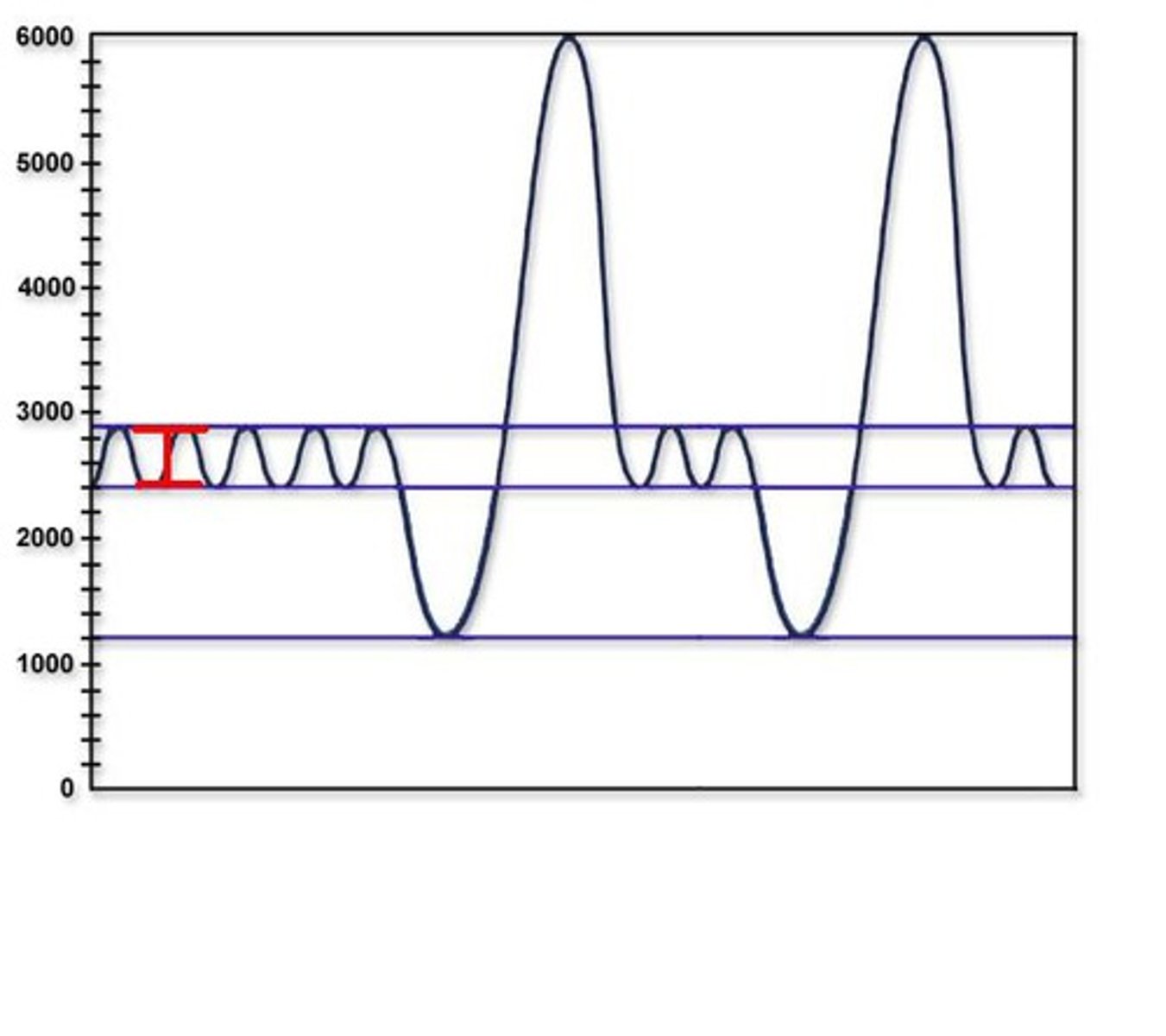
Inspiratory Reserve Volume
Air in excess of tidal volume that can be inhaled with maximum effort

Expiratory Reserve Volume
Air in excess of tidal volume that can be exhaled with maximum effort

Residual Volume
Air remaining in lungs after maximum expiration

Inspiratory Capacity
Maximum amount of air that can be inhaled after a normal tidal expiration

Vital Capacity
Total amount of air that can be inhaled then exhaled with maximum effort

Total Lung Capacity
Maximum amount of air the lungs can contain

Minute Respiratory Volume MVR equation
Tidal Volume x Respiratory Rate
Ex: 500mL/breath x 12 breaths/min=6,000 mL/min=6L/min
Answer should always be in L/min
Eupnea
relaxed, quiet breathing
Apnea
temporary cessation of breathing
Dyspnea
labored, gasping breathing; shortness of breath
Tachypnea
accelerated respiration; rapid breathing
Hyperventilation
increased pulmonary ventilation in excess of metabolic demand
Hypoventilation
reduced pulmonary ventilation leading to an increase in blood CO2
Partial pressure of a gas
proportion of pressure of the entire gas that is due to presence of the individual gas. Depends on fractional concentration of gas. Dalton's Law
Ptotal=P1+P2+P3...Pn
Total pressure of gas mixture equation
Pgas=%gas x Ptotal
Composition of Air ___% nitrogen and ___%oxygen
79% nitrogen and 21% oxygen
Sea level air pressure is how many mm Hg?
760 mm Hg
Air pressure how to calculate
P air=760 mmHG=Pn2 + Po2
Pn2=0.79 x 760 mmHg=600 mmHg
Po2=0.21 x 760 mmHg=160 mmHg
Percentage of oxygen transported 2
98.5% bound to hemoglobin
1.5% dissolved in plasma
Percentage of carbon dioxide transported 3
7% dissolved in plasma
23% carried by Hb as carbaminohemoglobin
70% transported at bicarobnate ions HCO3-
1 hemoglobin contains how many heme groups
4 heme groups
Each heme group can bind up to how many oxygen molecules
1 oxygen molecule
Hb + O2
oxyhemoglobin
Saturation of hemoglobin is the measure of
measure of how much oxygen is bound to hemoglobin.
100% saturation=all 4 binding sites have oxygen bound
In arterial blood how saturated is Hb in %
98% saturated
In mixed venous blood, PO2 is at how many mm Hg and what percentage of hemoglobin is saturated
40 mmHg, Hemoglobin is 75% saturated meaning 3 out of 4 binding sites are occupied by oxygen
Oxyhemoglobin dissociation curve
relationship between PO2 and Hb saturation. Any shift in the curve denotes a change in binding affinity.
Right shift of dissociation curve
Decrease in affinity, O2 is more easily released from Hb, more unloading of O2 at the tissues
Left shift of dissociation curve
Increase in affinity, O2 is more tightly bound to Hb, less unloading of O2 at the tissues
Higher temp effects on dissociation curve
active tissues (tissue metabolism increases), shifts right, decrease affinity, more O2 unloading in tissues, more O2 delivery to tissues
pH effects on dissociation curve
Bohr Effect=decrease affinity, lower pH increase O2 unloading at the tissues, active tissues produce more H+ ions (more acidic) which decreases pH in active tissues and causes shift to the right
CO2 (Carbamino Effect) effects on dissociation curve
CO2 reacts with hemoglobin to form carbaminohemoglobin, HbCO2 decreases affinity of Hb for oxygen, increased metabolic activity increase O2 and more increased O2 unloading in active tissues