Comm Studies - Communication
 Call Kai
 Learn
 Practice Test
 Spaced Repetition
 Match
 Flashcards
 Knowt Play
1/14

Earn XP
Description and Tags
includes traditional vs. new media, levels of comprehension. organizational strategies, literary techniques
15 Terms
what is communication
the process of exchanging information, ideas, thoughts, feelings, and meaning between a sender and a recipient

label the communication process
it begins with context, after considering the context the sender conceptualizing an idea and chooses a medium
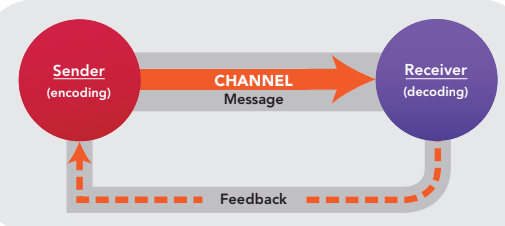
Who is the sender?
This is the person or entity from which the message or information flows.
What is the channel/medium?
means used to transmit a message from a sender to a receiver
e.x: letter, social media, copper wires
what is encoding?
representing the idea in a way that enables it to be conveyed.
e.x: example, if you wanted to describe the colour of your new shirt to your friend, you would probably not think of doing so through actions. However, either a colour picture or a description in words would be effective.
what are barriers/Noise?
Whatever affects the understanding of the message
barriers to decoding are otherwise known as noise
What are the four types of barrier?
1) psychological - mental block
2) Physiological - occurring in the body
3) Semantic - having to do with language
4) environmental/physical
what are facilitators?
anything that enhances or aids communication
tangible facilitators: graphs, charts, manuals
intangible: positive attitude
What are the key differences between traditional and new media?
traditional media: physical, scheduled, minimally interactive, slow lead times
new media: digital, highly interactive, real-time updates
What are the 3 levels of comprehension?
1) Literal Level
2) Interpretive Level
3) Applied Level
What is the literal level of comprehension
understanding what was actually stated and requires surface understanding of facts and details.
asks “who, what, when, where”
memorization
What is the interpretive level of comprehension
the understanding of what is implied or meant, rather than what is actually stated.
need to be able to make inferences and logical deductions. open-ended questions like why, how, what and if
What is the applied level of comprehension
all the information you have gathered at the first two levels is used to extend the concepts or ideas beyond the immediate situation in the text.
analysing and synthesising information and applying it to other information or contexts.
List some organizational strategies and provide examples
cause and effect, addition, compare, contrast, illustrator/example, sequencing, Call to Action, statistics, Authoritative Evidence, Testimonial evidence, Counter Argument, Definition of key terms, Headings and Subheadings
What is hypophora?
a rhetorical device where a speaker or writer asks a question and immediately provides the answer themselves