Cardiovascular diseases
 Call Kai
 Learn
Learn Practice Test
 Spaced Repetition
 Match
Match Flashcards
 Knowt Play
1/67

There's no tags or description
Looks like no tags are added yet.
Name | Mastery | Learn | Test | Matching | Spaced | Call with Kai | Chat |
|---|
No analytics yet
Send a link to your students to track their progress
68 Terms
What is the leading cause of death in industrialized nations
heart disease
prevalence of heart disease in america
1 in 3
risk factors of heart disease
advancing age (>45)
HTN
obesity
sedentary lifestyle
excessive alcohol
oral contraceptive
family history tobacco use
abnormal cholesterol
race
What is the most common symptom of CV disease
chest pain/discomfort
What symptoms is typically accompanied by chest pain
radiation to neck, jaw, upper trap, upper back, or arms (L)
define palpitation
irregular heartbeat
description of palpitation
jump, pound, flop, flutter, or racing sensation
common symptoms accompanied by palpitation
lightheadedness
syncope
at what point is palpitation no longer considered normal and should be refered
>6 mins and pain, SOB, fainting, lightheadedness
what can cause dyspnea
cardiac or pulmonary pathology
examples of extreme dyspnea
paroxysmal nocturnal dyspnea
orthopnea
when should a patient be referred for dyspnea
cannot climb single flight of stairs without feeling mod-severe winded
awakens at night or experiences SOB when laying down
know cardia issue
What causes cardiac syncope
reduced oxygen to the brain
When should patient be referred for cardiac syncope
immediately due to risk of sudden cardiac death
When should fatigue be closely monitored
goes beyond expectations during/after exercise
why might patient report cough as symptom
pulmonary complication of CV pathology (backup of fluid)
define cyanosis
bluish discoloration of lips and nail beds due to inadequate blood O2 levels
When is edema a concern for CV disease
3 lb or greater weight gain
cardiac diseases involving heart muscle
CAD
MI
pericarditis
CHF
aneurysm
cardiac diseases involving heart valves
rheumatic fever
endocarditis
mitral valve prolapse
congenital deformities
cardiac diseases involving cardiac NS
arrythmias
tachycardia
bradycardia
describe CAD
artery carrying oxygenated blood to the myocardium becomes narrowed/blocked leading to ischemia
What can CAD lead to
angina or MI
at what point does CAD start to present symptoms
75% blockage
describe angina
acute pain in the chest due to imbalance between cardiac workload and O2 supply to myocardial tissue
What pathos often accompany angina
HTN and PVD
s/s of angina
hold clenched fist to sternum (levine’s sign)
radiates to shoulder/arm
indigestion
squeezing/burning/pressing/choking/aching/bursting
1-3 mins long
When should patient go to ED with angina
not relieved by rest or 3 nitro
When does chest pain screening become a red flag
when MSK findings dont align
define MI
occlusion of a coronary artery that has caused ischemia and necrosis of myocardial tissue
classic warming signs of MI
severe unrelenting chest pain describes as “crushing”, lasting 30 mins or more and not relieved by rest or nitro
define pericarditis
inflammation of the pericardium (protective sac over heart)
s/s of pericarditis
chest pain, SOB, tachycardia, fever, fatigue, substernal pain, cough
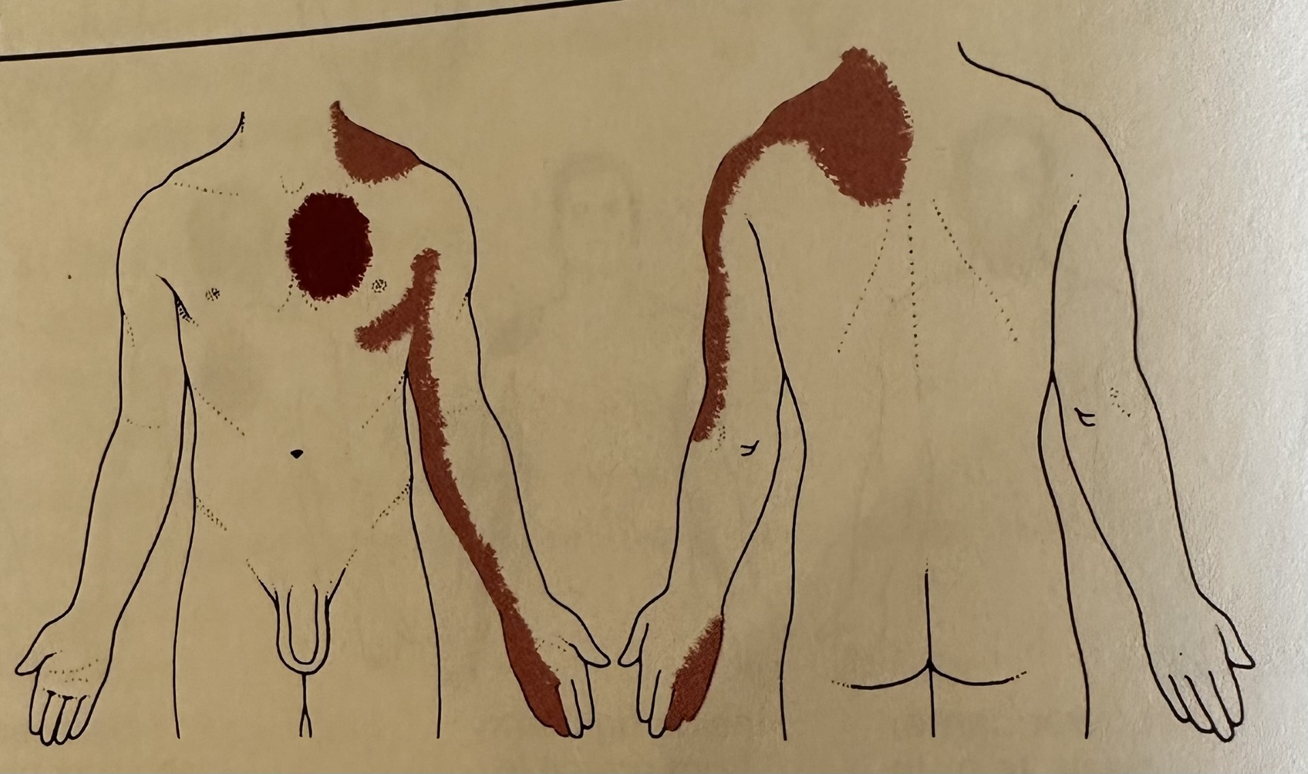
referral for pericarditis
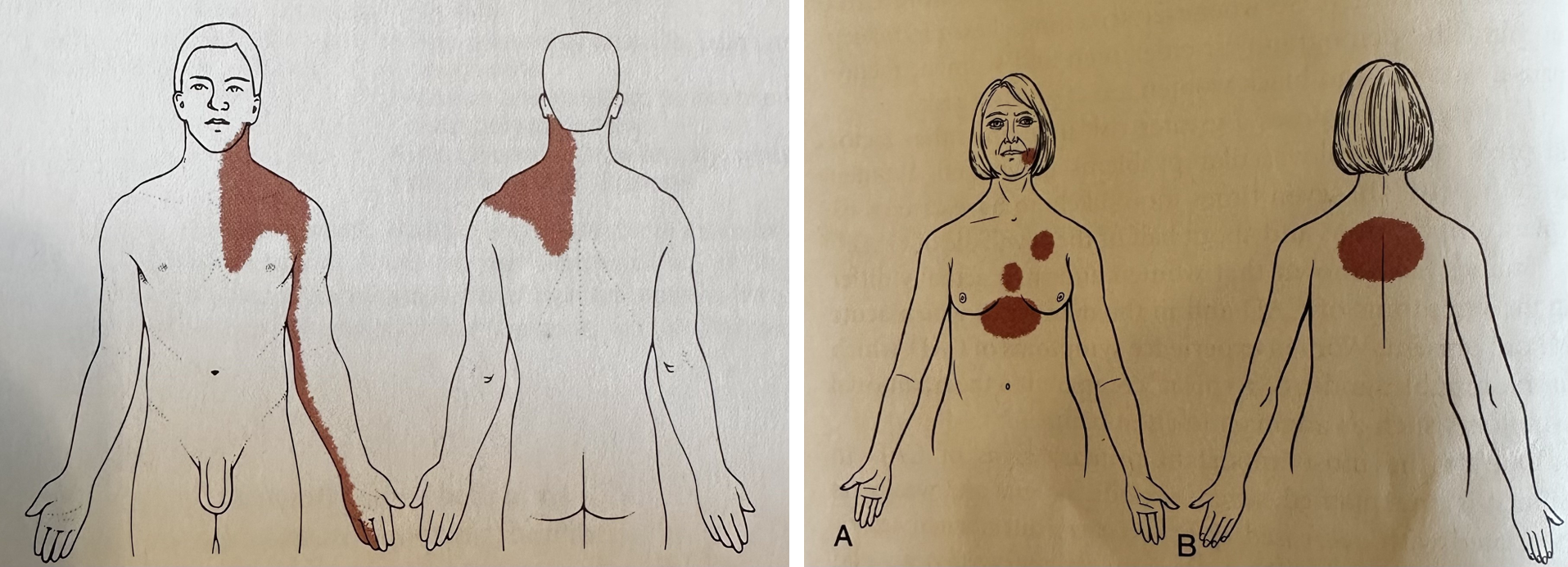
cardiac referral
how is MI different than pericarditis
P: symptoms change with position,
MI: unaffected by breathing, position, or movement
define heart failure
heart is unable to pump enough blood to meet metabolic needs of body
results of right sided heart failure
congestion in peripheral tissues and viscera
s/s of right sided HF
swelling
liver enlargment
ascites
fatigue
right upper quadrant pain
cyanosis of nail beds
results of L ventricular HF
pulmonary congestion
HF typically starts on which side
L →R
When is HF dxed
EF <40%
s/s of L sided HF
fatigue
dyspnea
spasmodic cough
paroxysmal nocturnal dyspnea
orthopnea
define aneurysm
abnormal dilation due to weakening in wall of an arter, vein, or heart
what divides thoracic vs abdominal aneurysms
diaphragm
What is the most common aneurysm
abdomina aortic
s/s of an aneurysm
CP
palpable, pulsating mass
dull ache in flank
abdominal heartbeat when laying down
hip, groin, scrotal, butt, and/or leg pain
weakness/transient paralysis of legs
s/s of aneurysm rupture
sudden, sever chest pain
pain radiating to MI distribution
tearing/ripping pain
pulsating abdominal mass
cold, pulseless LE
BP changes
HR >100
ecchymoses in flank/perineal area
lightheaded and nauseas

AAA rupture referrao
symptoms of valve issues
fatigue
dyspnea
palpitations
CP
pitting edema
dizziness or syncope
orthopnea
types of valve issues
stenosis
insufficiency
prolapse
describe rheumatic fever
infection cause by strep that damages the heart valves
most common symptom of rheumatic fever
fever and joint pain
Who is most likely to contrac rheumatic fever
young children (5-15)
describe endocarditis
bacterial infection of the innerlining of the heart
where does damage occur for endocarditis
tricuspid, aortic, or mitral valves
types of congenital heart defects
ventricular septal defect (VSD)
atrial septal defect (ASD)
L→ R shunts
acyanotic
describe coarctation of the aorta
congenital narrowing of the aorta after the UE branches
describe tetrolagy of fallot
combination of VSD, PA stenosis, overriding aorta, and R ventricular hypertrophy leading to R→L shunt
s/s associated with patent ductus arteriosus
fast breathing
poor feeding habits
rapid pulse
SOB
seating while feeding
tires very easily
poor growth
When is patent ductus arteriosus typically discovered
infants, when having difficulty feeding
s/s bradycardia
syncope
s/s of tachycardia
palpitation, restlessness, chest discomfort, agitation, axiety, apprehension
msot common type of arrhythmia
A-Fib
normal range for K
3.5-5.0 mm/L
normal range for Mg
1.3-2.1mmol/L
normal range for Ca
9.0-10.5 mg/dL
normal range fofr Na
136-145 mmol/L