Clinical Chemistry Exam 2
 Call Kai
 Learn
 Practice Test
 Spaced Repetition
 Match
 Flashcards
 Knowt Play
1/143

There's no tags or description
Looks like no tags are added yet.
144 Terms
What do carbohydrates contain?
Carbon, Hydrogen, & Oxygen
What are the properties for classification for carbohydrates?
1.) Size of carbon chain
2.) Location of carboxyl functional group
3.) Number of sugars
4.) Stereochemistry (Arrangement)
What type of carbonyl group does Aldose have?
Terminal (aldehyde)
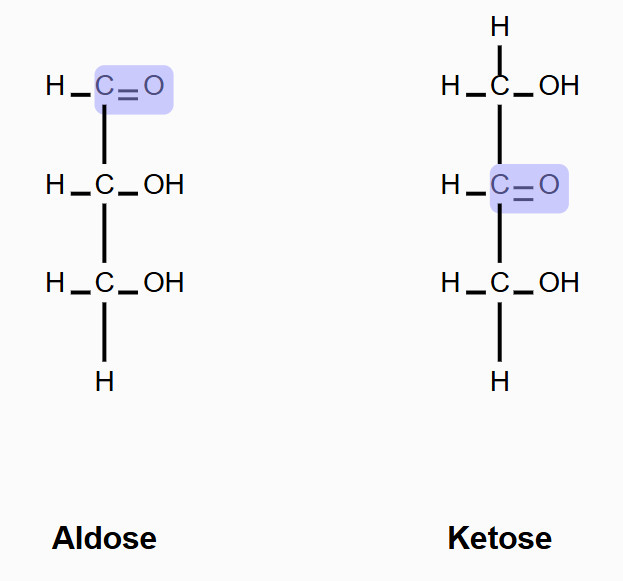
What type of carbonyl group does Ketose have?
Middle liked with 2 other carbon atoms

How many sugars do monosaccharide have?
1
Name two examples of a monosaccharide
Glucose & Fructose
How many sugars does a disaccharide have?
2
Name two examples of disaccharides
Maltose & Lactose
How many sugars do oligosaccharides have?
3-10
Name an example of an oligosaccharides
Raffinose
How many sugars do polysaccharides have?
10 or more
Name 2 examples of a polysaccharide
Starch & Cellulose
What type of bonds do saccarchrides have?
Glycosidic bonds (1,4)
Where is D-Glucose located?
Right

Where is L-Glucose located?
Left

What type of bonds does glucose (simple) have?
1,4 glycolic bond
Where does the digestion of glucose begin?
The mouth (alpha amylase)
What type of bond does starch (complex) have?
1,6 glycosidic bond
What is GLUT (glucose transporters)?
Channel that allows glucose to enter cell
What is Glut 3?
The brain
What is Glut 4?
Fatty tissue (adipose tissue), Skeletal muscle, & Heart
Why is Glut 4 important?
It is the only one that is insulin dependent
What is Glut 5?
Jejunum & Kidney
What is Glut 1?
Erythrocytes (Red blood cells)
What is Glut 2?
Liver, Pancreatic beta cells, & Intestine
What is glycolysis?
The break down of glucose into pyruvate or lactate
What is gluconeogenesis?
Formation of glucose-6-phosphate from noncarbohydrate
What is glycogenolysis?
Breakdown of glycogen to glucose
What is glycogenesis?
Conversion of glucose to glycogen for storage in the liver
What is lipogenesis?
Conversion of carbohydrates to fatty acids (lipids)
What is lipolysis?
The breakdown of fatty acids (lipids)
What phase is step 1 of glucose metabolism known as?
Investment phase
Is step 1 of glucose metabolism irreversible or reversible?
Irreversible (uses ATP)
What happens during step 1 of glucose metabolism?
Glucose is phosphorylated in order to form glucose-6-phosphate

What are hexokinases?
Enzymes in every cell except the liver and pancreases
What are glucokinases?
Enzymes located in the liver and pancreases
What is the purpose of kinase in relation to glucose?
1.) Prevents glucose from coming back out of the cells
2.) Transfers phosphate from 1 molecule to another
What phase is step 2 of glucose metabolism called?
Investment phase
Is step 2 of glucose metabolism irreversible or reversible?
Reversible (doesn’t use ATP)
What happens during step 2 of glucose metabolism?
Glucose-6-phosphate becomes fructose-6-phosphate via phosphoglucose isomerase
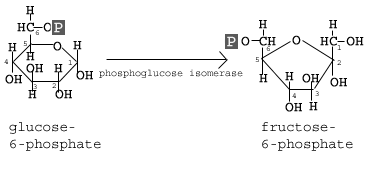
Comparing glucose-6-phosphate & fructose-6-phosphate, which one is aldose and which one is ketose?
Glucose-6-phosphate: Aldose
Fructose-6-phosphate: Ketose
This is caused by the carbonyl oxygen
What does bisphosphate attach to?
Different carbons that have intermediate carbons
Is step 3 of glucose metabolism irreversible or reversible?
Irreversible (Uses ATP)
What is the phase of step 3 during glucose metabolism called?
Investment phase
What happens during step 3 of glucose metabolism?
Fructose-6-phosphate becomes Fructose-1,6-bisphosphaye via phosphofructokinase-1
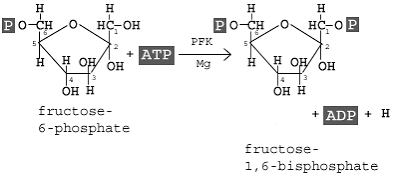
What gets added during step 3 of glucose metabolism?
Another phosphate group to C1
What is the phase called during step 4 of glucose metabolism?
Splitting phase
Is step 4 of glucose metabolism irreversible or reversible?
Reversible (Doesn’t use ATP)
What happens during step 4 of glucose metabolism?
Fructose 1,6-biophosphate splits into Fructose bisphosphate aldose and turns into Dihydroxyacetone phosphate & Glyceraldehyde-3-phospahte by aldolase
Is step 5 of glucose metabolism irreversible or reversible?
Reversible (doesn’t use ATP)
What happens during step 5 of glucose metabolism?
Dihydroxyacetone phosphate becomes TWO Glyceraldehyde 3-phosphate via Triose phosphate isomerase
What is the phase called during step 6 of glucose metabolism?
Energy yielding phase
Is step 6 of glucose metabolism irreversible or reversible?
Reversible (Doesn’t use ATP)
What happens during step 6 of glucose metabolism?
Both Glyceraldeheyde-3-phosphate molecules become oxidized to biphosphoglycerate via Glyceraldehyde-3-phosphate dehydrogenase
What happen during the oxidation of step 6 in glucose metabolism?
NAD (coenzyme) converts to NADH + H
What is the phase of step 7 in glucose metabolism called?
Energy yielding phase
Is step 7 of glucose metabolism irreversible or reversible?
Reversible (Doesn’t use ATP)
What does kinase do during step 7 of glucose metabolism?
Moves the phosphate group
What happens during step 7 of glucose metabolism?
Formation of #-Phosphoglycerate from phosphoglycerate kinase
What happens to the enzyme during step 7 of glucose metabolism?
It transfers PO4 group from 1,3BPG to ADP to synthesize 2 molecules of ATP
What is the phase called for step 8 of glucose metabolism?
Energy yielding phase
Is step 8 of glucose metabolism reversible or irreversible?
Reversible (Doesn’t use ATP)
What happens during step 8 of glucose metabolism?
3-phosphoglycerate is converted into 2-phosphoglycerate via phosphoglycerate mutase
Where does the PO4 in step 8 of glucose metabolism move to and from?
PO4 moves from C-3 to C-2
What is the phase called for step 9 of glucose metabolism?
Energy yielding phase
What happens during step 9 of glucose metabolism?
2-phosphoglycerate is dehydrated to form phosphoenolpyruvate via enolase
What is the phase called for step 10 of glucose metabolism?
Energy yielding phase
What happens during step 10 of glucose metabolism?
Pyruvate is formed by pyruvate kinase
What are the final products of glucose metabolism?
2 pyruvate
2 ATP
What is the net and gross value of ATP during glucose metabolsim?
Net: 2
Gross: 4
How many ATP molecules are used during steps 1-5 of glucose metabolism?
2
How many ATP molecules are generated during steps 6-10 of glucose metabolism?
4
What is the insulin hormone in charge of?
Lowers blood sugar (decrease serum glucose) & stimulates glucose uptake
What is the glucagon hormone in charge of?
Raises blood sugar (increase glucose) & stimulates glycogenolysis
What do hormones and enzymes have in common?
They are both similar in function & structure
What are the two most important hormones?
Insulin & glucagon
What is diabetes mellitus?
The inability of the body to move glucose from the blood to the cells
What does insulin do?
Binds to the insulin receptor & causes glucose transporters inside the cell to fuse to the surface
What does glucagon do?
Raises blood glucose & stimulates the production of glucose from new molecules and transfers it into the blood
What is the government body of diabetes mellitus?
American Diabetes Association
What percent of the world population has diabetes mellitus?
10%
How many people have prediabetes?
96 million (1/3 of people)
True or False: Diabetes mellitus causes more deaths than breast cancer and AIDS combined.
True
What is the end stage of diabetes mellitus?
Renal disease
What are the risk factors for diabetes mellitus?
Obesity, Ethnicity, Heredity (main cause), & viral infections
What two conditions are caused by inadequate or ineffective insulin production and/or resistance to insulin?
Hyperglycemia & glycosuria
What percent of people have type 1 diabetes?
10%
What percent of people have type 2 diabetes?
90%
What is type 1 diabetes?
The inability to produce insulin & glucose just sits in the bloodstream
What is type 2 diabetes?
Insulin is produced normally, but the body doesn’t respond, so it sits in the bloodstream.
Why is type 1 diabetes also known as autoimmune diabetes?
T-cells attack their own pancreatic cells (cells that produce insulin)
How do you get type 1 diabetes?
Typically genetic
Can type 1 diabetes be reversed?
No, but it can be managed
What are the symptoms of type 1 diabetes?
Polydipsia, Polyuria, Polyphagia, Glycosuria, & death
What is polydipsia?
Excess thirst (sensed in the brain)
What is polyuria?
Excess urine
What is polyphagia?
Excess eating
What is glycosuria?
Excess glucose in urine (symptoms used to diagnose)
When does death happen in type 1 diabetes are present?
When all symptoms are present (Polydipsia, Polyuria, Polyphagia, & Glycosuria)
What happens first, polyuria or polydipsia?
Polyuria happens first, then polydipsia