Physiology 2.3: Motor systems part 1
 Call Kai
 Learn
Learn Practice Test
 Spaced Repetition
 Match
Match Flashcards
 Knowt Play
1/38

There's no tags or description
Looks like no tags are added yet.
Name | Mastery | Learn | Test | Matching | Spaced | Call with Kai | Chat |
|---|
No analytics yet
Send a link to your students to track their progress
39 Terms
what are the 3 classes of motor movements
reflexes
voluntary
rhythmic motor patterns
describe reflexes
simple
involuntary
rapid
ex: sneezing, knee-jerk, flexor withdrawal
describe voluntary movements
goal-directed and purposeful
initiated based on response to external stimuli or will
learned and improved with practice
ex: playing piano, writing, etc
describe rhythmic motor patterns
starting and stopping is voluntary
sequence of stereotype, repetitive movements formed in reflex manner
ex: walking, running

what does it mean for motor behaviors existing on the voluntary ←→ involuntary continuum
almost all motor behaviors have voluntary and involuntary components
reflexes can be consciously modified or overridden
learning can be previously consciously directed behaviors automatic (almost reflexive)
what are the basic tasks of the motor system
muscle contraction and relaxation
precision and timing
timed commands to several different muscles and joints
postural adjustments
preparation of movement
dynamic feedback
continuously modify motor commands during active movement for real-time changes
what are the two core features that allow for the motor system to perform
continuous sensory feedback
sensory information on body and surrounding environment
hierarchical organization
motor system is structured as clear hierarchy with different responsibilities
sensory integration
lower levels (reflexes)
autonomic movement
higher levels (strategy)
dynamic voluntary movement
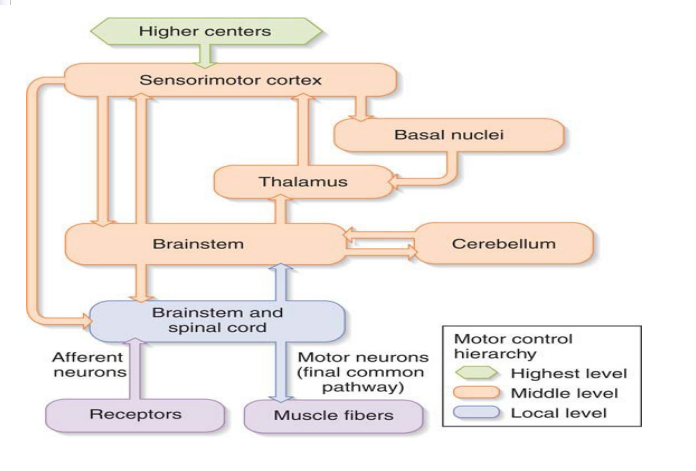
describe this
motor control hierarchy
describe the higher levels of the motor hierarchy
creates general intention to move
includes areas involved in memory and emotion/motivation
communicates with middle level of hierarchy with command neurons
describe the middle level of motor hierarchy
specifies posture and movements to execute intended action
sensory information and command signals from higher order generates motor programs to achieve movement
what is the motor program generated by middle level
sequence of muscle contractions needed to achieve the movement
what are the components of the middle level of motor hierarchy
consists of
sensorimotor cortex
cerebellum
subcortical and brainstem nuclei
describe interneurons in the motor program transmission pathway
synapses on interneurons can be inhibitory or excitatory
higher centers can use interneurons to turn movement on or off
allows override of spinal reflexes
what percent of spinal cord neurons are interneurons
90%
what are the final pathways in motor functions
motor neurons
describe motor neurons
innervate skeletal muscles
action potential leads to muscle contraction
what is a motor nucleus
a group of motor neurons that innervate a particular group of muscles

where are the cell bodies of somatic motor neurons
ventral horn of spinal cord


what is this
medial motor nucleus


what is this
lateral motor nucleus


describe the medial motor nuclei
controls axial muscles concerned with posture and balance

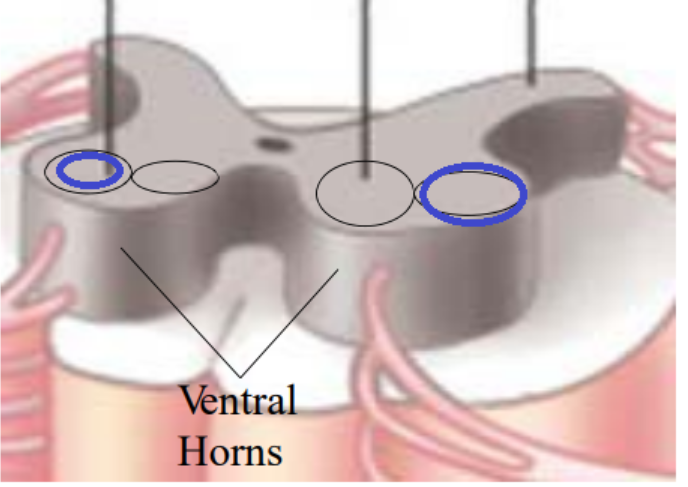
describe the lateral motor nuclei
found in only cervical and lumbar enlargements
control muscles of arms and legs

describe the reflex arc
sensory neuron in PNS → interneuron in CNS → motor neuron in PNS affecting target cell


describe the muscle spindle
specialized sensory receptors inside skeletal muscles that detect changes in muscle length
encapsulated
parallel to regular muscle cells

how do muscle spindles work in myotatic reflex
when stretched
afferent neuron fires more action potentials to contract
prevent overstretching (injury)
when contracted
afferent neurons fires less action potentials to prevent over-contraction (injury)

what are the two muscle pairings
agonist
opens joints
extensor
antagonist
closes joints
flexor

what is reciprocal innervation
coordination of opposing muscles so that when one contracts, the other relaxes

breakdown how the stretch reflex works for postural adjustment
automatically corrects body’s posture for balance
path A
when muscle stretches, stretch receptor activated and afferent neuron branch fires more rapidly
motor neuron excited
contraction of agonist
path B
another afferent branch activates inhibitory interneuron that inhibits of motor neurons that go to antagonist
relaxation of antagonist

describe how the patellar reflex is an example of the stretch reflex
physician stretches the patellar ligament
quadriceps muscles are stretched
path A
afferent neuron fires AP in agonist quadricep muscle to contract it
path B
afferent neuron inhibits AP in antagonist hamstring muscle to relax it

what are the 3rd and 4th branches of the myotatic reflex arc
3rd branch
activates synergistic muscles to assist agonist muscle
4th branch
up to brain to carry information about adjustment

what is the golgi tendon reflex
specialized sensory receptor inside tendons to detect muscle force
prevents muscles from tearing under tension
adjusts muscle contraction
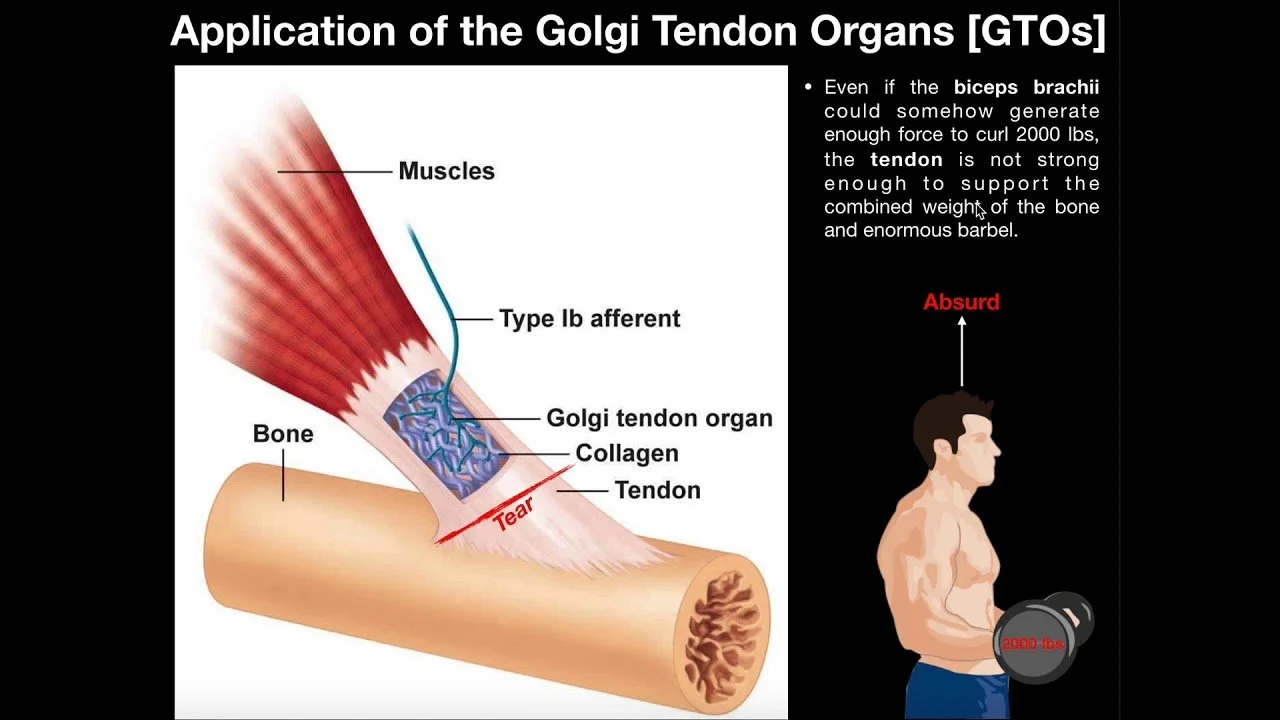
describe the mechanism of the golgi tendon organ
if contraction too high
sensory neurons on GTO fires frequent signals
SC tells muscle to relax to prevent injury
if too relaxed
sensory neurons fires less signals

what is the inverse stretch reflex
over-contraction of the muscle and the correction of it via golgi tendon organs
what is the stretch reflex
over-relaxation of the muscle and the correction of it via muscle spindles
differentiate which protective mechanisms are used in over-stretching and over-contraction
overstretching
muscle spindles: detect muscle length
contract agonist
relax antagonist
over contraction
golgi tendon organ: detect muscle force
relax muscle to prevent excessive force
describe path A and B of golgi tendon organ (inverse myotatic reflex)
muscle is over-contracted
sensory receptors in golgi tendon organfire rapidly
inhibition of motor neuron to contracted agonist muscle
relaxation
excitation of motor neuron antagonist muscle
contract
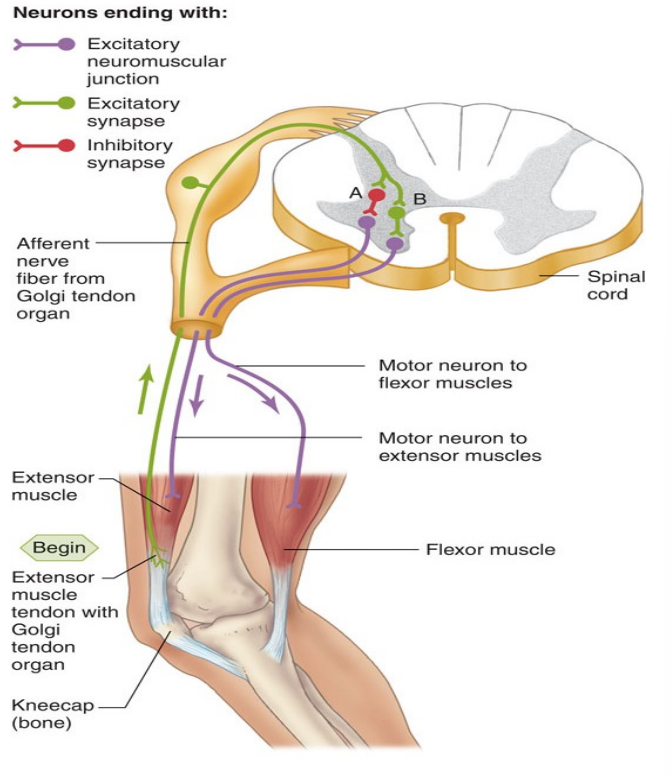
describe flexor withdrawl reflect
contact with painful stimuli causes…
flexor muscles to contract (pull away
inhibit extensor muscles
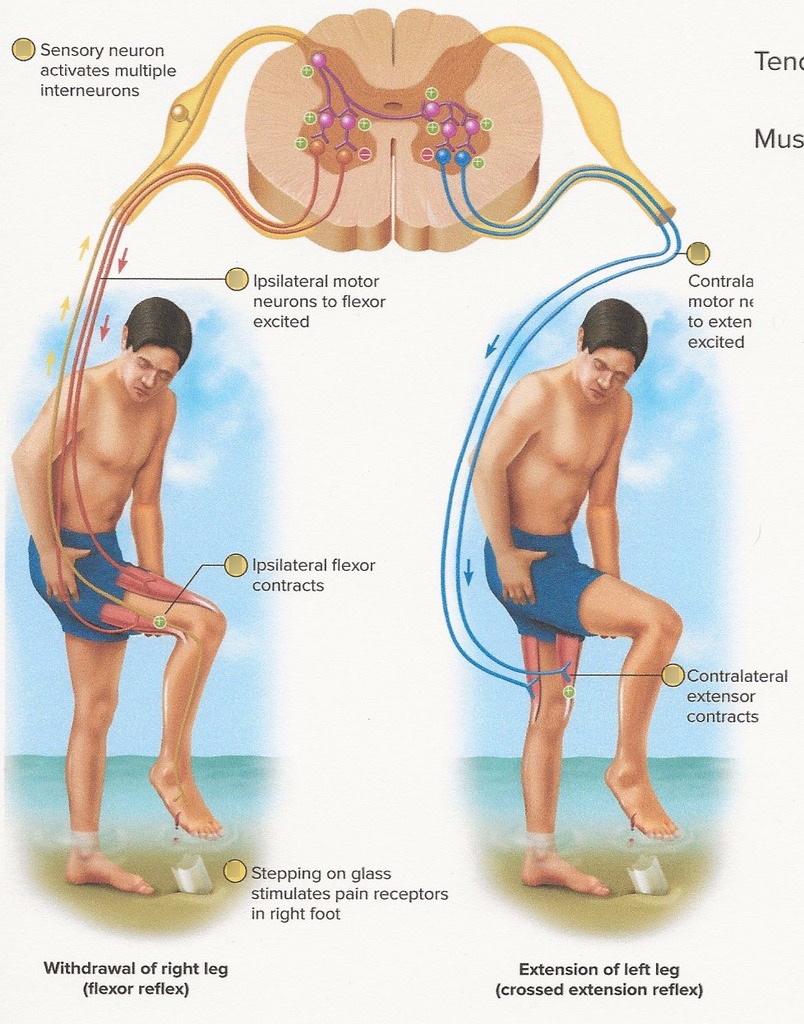
describe crossed extensor reflex
injured
contraction of flexor muscles
uninjured leg
contraction of extensor muscles

Briefly explain the importance of the spinal and supraspinal postural reflexes to voluntary movement.
Spinal and supraspinal postural reflexes provide the stable foundation and background muscle tone necessary for voluntary movements to occur smoothly and accurately.
coordinated actions and balance