BU-X REVIEWER 1
 Call Kai
 Learn
 Practice Test
 Spaced Repetition
 Match
 Flashcards
 Knowt Play
1/123

There's no tags or description
Looks like no tags are added yet.
124 Terms
A type of water closet where the flushing action is started by a whirlpool motion followed by a complete flush down.
Siphon vortex water closet
A plumbing fixture that is used for cleaning private parts.
Bidet
These are used for control, isolation and repair of the water distribution system.
Control and valves
Flowing back of used, contaminated or polluted water from a plumbing fixture or vessel into a water supply pipe due to a negative pressure in such pipe.
Back siphonage
Pipe that conveys only waste water or liquid waste free of fecal matter.
Waste pipe
Used for ensuring the circulation of air in a plumbing system and for relieving the negative pressure exerted on trap seals.
Vent pipe
A fitting or device designed and constructed to provide, when properly vented, a liquid seal which prevents the backflow of foul air or methane gas without materially affecting the flow of sewage or wastewater through it.
Trap
The vertical main of a system of soil, waste or vent pipings extending through one or more stories and extended through the roof.
Stack
Part of the lowest horizontal piping of a plumbing system which receives the discharges from the soil, waste and other drainage pipes inside of a building and conveys it to the house sewer outside of the building.
House drain
Extends from the house drain at a point 0.60 meters from the outside face of the foundation wall of a building to the junction with the street sewer or to any point of discharge, and conveying the drainage of one building site.
House sewer
A device designed and installed to separate and retain deleterious, hazardous or undesirable matters from normal wastes and permits normal sewage or liquid wastes to discharge into the disposal terminal by gravity.
Interceptor
Portion of the drainage pipe installation intended to maintain a balanced atmospheric pressure inside the system.
Ventilation
The extension of a soil or waste stack above the highest horizontal drain connected to the stack.
Stack vent
The vertical vent pipe installed primarily for providing circulation of air to and from any part of the soil, waste or drainage system.
Vent stack
The uppermost end of vent stack above the roof has traditionally been referred to as
Vent stack through roof
Pipe that does not connect directly with the drainage system but conveys liquid wastes by discharging into a plumbing fixture, interceptor or receptacle directly connected to the drainage system.
Indirect waste pipe
Used in house drain to prevent the unlikely occurrence of back flows.
Backflow valve
Pumps the wastes up from the sump pit to the sewers (which are usually higher than basement levels).
Sewage ejectors
Used for fixtures where grease may be introduced into the drainage or sewer system in quantities that can affect line stoppage or hinder sewage treatment or private sewage disposal.
Grease trap
Direct effect of the Minus & Plus Pressure inside the system due to inadequate ventilation of traps.
Trap seal loss
That portion of a vent pipe through which wastewater also flows through.
Wet vent
A vent that does not carry liquid or water-borne wastes
dry vent
A vertical vent connection on a horizontal soil or waste pipe branch at a point downstream of the last fixture connection and turning to a horizontal line above the highest overflow level of the highest fixture connected there. Used in spaces without partitions.
Looped vent
A group vent pipe which starts in front of the extreme (highest) fixture connection on a horizontal branch and connects to the vent stack.
Circuit vent
A vertical vent line that provides additional circulation of air between the drainage and vent systems or to act as an auxiliary vent on a specially designed system such as a “yoke vent” connection between the soil and vent stacks.
Relief vent
An arrangement of venting so installed that one vent pipe serve two (2) traps.
Unit vent
A pipe fitting containing a removable plug that provides access for repair or inspection of a pipe.
Cleanout
The principal artery of the venting system to which vent branches are connected.
Main vent
Used in pipe plumbing systems to connect straight pipe or tubing sections, to adapt to different sizes or shapes, and for other purposes, such as regulating or measuring fluid flow.
Fitting
The art and technique of installing pipes, fixtures, and other apparatuses in buildings for bringing in the supply of liquids, substances and/or ingredients and removing them.
Plumbing
The most common type of well, usually dug manually and around 15 meters deep.
Shallow well
A type of pump that is designed to be fully immersible within a tank or other media storage receptacle.
Submersible pump
A type of valve that is used mainly to completely close or completely open the water line (does not control flow of water).
Gate valve
A type of valve that is used to prevent reversal of flow in the line.
Check valve
A water supply pipe extending vertically to one full story or more to convey water into pipe branches or plumbing fixtures.
Riser
The pipe from the street water main or other source of water supply to the building served.
Service pipe
A device used to measure in liters or gallons the amount of water that passes through the water service.
Water meter
A type of water closet that flushes through a simple wash down action and discharges waste into a trapway located at the front of the bowl.
Washdown water closet
A type of water closet that flushes through a siphon action created in the trapway.
Reverse trap water closet
A watertight covered receptacle designed and constructed to receive the discharge of sewage from a building sewer, separate solids from the liquid, digest organic matter and store digested solids through a period of detention, and allow the clarified liquids to discharge for final disposal.
Septic tank
Waste water with the exception of human wastes.
Grey water
Water plus solid and liquid human wastes.
Black water
What do you call rain water?
Storm water
A loosely lined excavation in the ground, which receives the discharge of a septic tank; designed to permit effluent to seep through pit bottom and sides.
Seepage pit
What do you call a non-watertight lined excavation in the ground which receives the discharge of a sanitary drainage system, designed to retain the organic matter but permitting the liquid to seep through the pit bottom and sides?
cesspool
A pipe installed in buildings not as part of the water supply or waste disposal system but primarily for use as water conveyor in case of fire.
Standpipe
How it works: a standpipe is connected to the building exterior (max ht. = 1.20 M) for connection to fire department.
Dry standpipe
How it works: a piping network (line is directly connected to the main water line) connects to all levels of a building (at least 1 standpipe on each level).
Wet standpipe
As much as possible, standpipes should be located in
Stairway landings
The number of wet standpipes shall be determined so that all portions of the building are within ______ meters of a nozzle attached to a hose ______ meters long.
6 m; 23 m
Distance of sprinkler pipes.
3 to 6 m
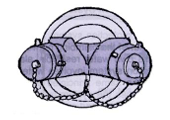
This is a
Siamese twin

In the above drawing, Figure a is
Upright

In the above drawing, Figure b is
Pendent
For basement parking what type of sprinkler is suitable to use?
Dry
Type of sprinkler system that are installed in spaces in which the ambient temperature may be cold enough to freeze the water, rendering the system inoperable.
Dry
For offices what type of sprinkler head is best to use?
Pendent
Which of the following storm water system does not use gutter or downspout?
Natural system
Which of the following storm water system brings collected water directly to the reservoir?
Independent system
Which of the following storm water system combines storm water with sanitary waste?
Combined system
Roofing element usually located along the entire perimeter of the roof used for collecting rainwater
Gutter
The minimum diameter for a wet standpipe is ________ for those less than 15 meters from the fire service connection.
51 mm
The minimum diameter for a wet standpipe more than 15 meters from the fire service connection is
63 mm
How it works: a piping network directly connected to the main water line, connects to all levels of a building; additionally, a Siamese Connection is located outside the building for additional water supply.
Wet standpipe with Siamese connection
Spacing of sprinkler heads for light hazard occupancy.
20 sqm
Spacing of sprinkler heads for extra hazard occupancy.
10 sqm
Type of sprinkler head that is used when there is no ceiling and piping is exposed.
Upright
Type of sprinkler head that projects through a finished ceiling.
Pendent
An active fire protection measure where a glass bulb type head will spray water into the room if sufficient heat reaches the bulb and causes it to shatter.
Sprinkler system
What is a manually operated alarm-initiating device that may be equipped to generate a continuous signal or a series of coded pulses?
fire alarm station
What is the common term which refers to the circuit arrangements in fire alarm system that indicate a malfunction in the wiring of alarm devices by sounding a trouble bell?
Circuit supervision
Which type of heat detector is applied to long, narrow elements, and applied typically in cable trays, cable bundle of all sorts, conveyors and large long equipment?
Linear heat detector
Which type of flame detector is long range and very sensitive which react in milliseconds and react to most types of fires?
Ultraviolet radiation detector
Which signal device is consisting of an electromagnetic coil that, when electric power is applied to it will cause a thin metal piece to vibrate?
Buzzer
signal device is consisting of an electric motor that produces a continuous high-pitched sound (100dB max) and can be used only in a place with normally high ambient sound?
siren
Which intrusion detection device operates on the simple principle of beam interruption, which is quite effective indoors, but outdoors, dusts, insects and birds can show the location of the beam, permitting it to be circumvented?
Photoelectric device
Which intrusion detection device is basically a spring mounted contact suspended inside a second contact surface which is very sensitive and can be activated by sonic booms, wind and even a heavy truck passing by?
Mechanical motion detector
Which of the following systems is interconnected to all electrical equipment to provide a direct path to earth in order to protect people and equipment from fault currents?
Grounding
What do you call the unit of measurement of the movement of electric charge known as an electric current?
Amperes
Which of the following types of wires has a galvanized steel spiral metal sheath and may be installed in dry, indoor locations with product designation BX?
Armored cable
What is referred as the entire course an electric current travels, from the source of power, through an electrical device, and back to the source?
Circuit
Which of the following materials is a good conductor and most commonly used for electrical wires?
Copper
Which of the following types of wiring includes several light fixtures or receptacles that operate on the same circuit with the hot and neutral wires running together from one housing box to another and wires to individual devices branch off from them?
Parallel wiring
What is an automatically operated electrical switch designed to protect an electrical circuit from damage caused by overload or short circuit and its basic function is to detect a fault condition and interrupt current flow?
Circuit breaker
What do you call a safety device designed to stop an elevator car automatically before the car’s speed becomes excessive?
Governor
What do you call a safety device usually placed in the elevator pit and the main purpose is not to stop a falling car but to bring it to a partially cushioned stop if it would over travel the lower terminal?
Buffers
What do you call the equipment, which is also known as ejection lift because of the method of delivery, and this device is ideally suited for delivery of food carts, linens, dishes and bulk-liquid containers?
automated dumbwaiter
What is a vertical shaft for the travel of one or more elevator which includes the pit and terminates at the underside of the overhang machinery space floor for electric elevators, or at the underside of the roof over the hoistway of a hydraulic elevator?
Hoistway
What is normally located near the base of the hoistway containing hydraulic pump unit and electronic controls of hydraulic type elevators?
Machine room
Which of the following escalator components is a welded steel frame that supports the entire apparatus and the tracks are steel angles attached to this component, which the step rollers are guided, thus controlling the motion of the steps?
Truss
Which of the following conveying systems uses a flattened pallet in place of a step where the drive mechanism, safeties, brake, handrails, and so on—the unit is similar to an escalator?
Moving walk
Which of the following structural fire protection in buildings includes manual and automatic detection and suppression of fires, like using and installing a fire sprinkler system or finding the fire alarm and/or extinguishing it?
Active fire protection
What is a key selection criterion for elevators that is considered as the average time spent by passengers from the moment they arrive in the lobby to the moment they leave the car at an upper floor?
Average trip time
Which of the given HVAC systems is in one place that distributes the equipment’s function to a specific floor or zone?
Centralized system
Which of the following HVAC systems has the disadvantages of demanding maintenance, many potential threats to the occupied spaces and regular cleaning to maintain air quality?
Local system
Which HVAC system type eliminates the distribution trees of air and water, relying instead on heat/cooling device adjacent to or within the space to be served?
Direct refrigerant
Which of the following HVAC equipment carries air to and from conditioned space and contains dampers to direct and modulate air flow?
Duct
Which of the following HVAC equipment includes condensers and evaporators in refrigeration equipment, water and steam coils in air handlers?
Heat exchanger
Which of the following HVAC design process considers the most general combinations of comfort needs and climate characteristics?
Preliminary design phase
Which of the given HVAC components are valves that allow some or all of the airflow through a duct to be cut off that can be manually operated by building occupants, or automatically operated by centralized control systems?
Dampers