IMM Week 3 (IMM 6-8)
 Call Kai
 Learn
 Practice Test
 Spaced Repetition
 Match
 Flashcards
 Knowt Play
1/249

There's no tags or description
Looks like no tags are added yet.
250 Terms
IMM 6 - Intro to physical assessment
.
clinical assessment meaning
evaluation of a patients physical condition based on information gathered from physical examination, lab and diagnostic test results, and pt health hx
when is physical assessment used in the pt care process
gathering pt information in the pt assessment phase
monitoring and follow up in the evaluation phase
what is physical assessment
the act of evaluating the body and its functions from head to toe
what type of data does physical assessment give us and what is that data used for
objective data that is required to make informed decisions about a pts health related probelms
why do pharmacists learn about physical assessment
evolution of the profession and demand for cognitive services - some regualrly use in practice
all pharmacists should have a basic understanding - all have to interpret data
pharmacists share the responsibility for patient outcomes
barriers for pharmacists in relation to physical assessment
need for adequate training - nonconsensus in canadian curricula
increased workload and lack of infrastructure (eg. renumeration, lack of time, physical layout of pharmacy) - needs to be a mechanism to allow for time and space to preform physical assessment
distraction to traditional pharmacist roles - pt concerns abt wait time for Rx’s
infrequent use of skills to maintian competency - needs to be a mechanism to monitor skill competency
conflicts with other health care providers
benefits of physical assessment training for pharmacists

general approach of physical assessment

bedside manners (6)
do info gatehring BEFORE seeing pt
respect mask guidelines/infection control precautions
practice hand hygeine before AND after
introduce yourself
confirm ID of pt (name, DOB, etc)
ensure pt is comfortable through the exam (privacy, observe bdy language, communicate throughout!)
4 fundamental physical assessment techniques
inspection
palpation
percussion
auscultation
inspection
observation fo physical signs, behavior, and movement displayed by pt
inspection stimuli can be
visual, olfactory, or auditory
percussion
tapping of fingers on body surfaces to assess density of underlying structures (4-5 cm below skin surface)
using fingers to indirectly strike the body surface to elicit sounds that vary in quality according to density of the underlying tissues
percussional sounds are described as (from least to most dense)
tympanic - percussion of a hollow air filled structure as example
hyperresonant
resonant
dull
flat - percussion of thigh as example
lung vs liver percussion sounds
lungs - resonant = healthy
liver - dull = healthy
palpation
using sense of touch and tactile pressure to feel areas that cannot be seen
what parts of hands to use for what aspects of palpation
pads of fingers - to distinguish hard and soft areas (eg for eval of mass)
palm of hand - to detect presence or absence of vibrations (eg lungs)
backside fo finegrs - to eval temp (eg demarcating limits of superifical cellulitis)
auscultation
listening to sounds originating from within an organ or body cavity by use of a stethoscope
ausculatory findings usually generated by
substances (like fluid or air) moving through body systems
what does auscultation identify
presence or absence of sounds
effectiveness of auscultatory exam is determined by
quality of the stethoscope and skill of examiner

what technique would get these example findings
percussion

what technique would get these example findings
auscultation

what technique would get these example findings
inspeciton
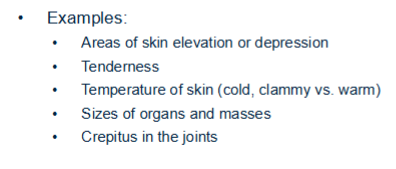
what method would get these example findings
palpation
t or f - the order in which PA techniques are performed is the same for all areas of body being examined
FALSE - varies depending on what part fo the body you’re examining
what body system follows this order
inspection > auscultation > percussion > palpation
abdomen - bc palpation can activate the activity of the GI tract and skew your ascultatory results
what body system follows this order
inspection > palpation > percussion > auscultation
most body areas
the scope of the pharmacist physical exam is determined by
pt hx
previous knowledge of the pt
magnitude and severity of the pt problem
need for thoroughness
clinical settinf (inpatient vs outpatient)
time
what is a good level of understanding for PA is suffieicnt for phamracists
for most - a general understanding is enough (some need extensive but this is dependent on the practice setting and the pharmacist role within that setting)
vital signs includes the measurement of
HR
RR
BP
temp
Ht
Wt
what does VS data provide
critical information that may influence the remainder of your physical examination and clinical assessment
order of ROS
VS
CNS (NEURO and PSYCH)
DERM
HEENTRESP
CV
GI
GU
MSK
PVS
what method/s do we use for PSYCH
inspection ONLY
majority of information for PA assessment is captured by
observation
what does psych PA involve
conducting an MSE
MSE stands for
mental status exam
MSE parts
appearance and behavior
speech and language
mood
thoughts and perceptions
cognition

NEURO exam involves what method/s
inspection
palpation
what does neuro exam involve the examination of (5)
MSE
cranial nerve function
motor function
sensory function
reflexes
how to determine the amount of detail appropriate for the pt when conducting neuro exam
varies widely, depends on the pt
neuro is often integrated with the PA of other systems like:
HEENT - may assess CN relating to head and neck
PVS and MSK - may assess motor/sensory function and reflexes
DERM assessed with what method/s
inspection
palpation

these are exmples of what system and what method
inspection, DERM

rhse are exmaple sof what system and method
palpation derm
HEENT includes what body parts
structures of the head and neck (ie skull, sclap, face, neck, nose, sinuses, ears, mouth, pharynx, eyes)
what methods we use for HEENT
inspection
palpation

what system and method
HEENT inspection

system method
HEENT AGAIN HAHAHAHAHAHA inspection

method system
HEENT LMFAOOOOO inspection

method system
HEENT palpation this time tho omg did you get pranked dummy
methods used for RESP assessment
inspection
palpation
percussion
auscultation
RESP inspection
through on insp-exp cycle
shape and movement fo chest, use of accessory muscles, body position
RESP palpation
test chest expansion and tactile fremitus
tactile fremitus
vibrations
RESP percussion
assesses underlying tissues to see if they are filled with air or fluid
RESP auscultation
assesses air flow through trachobronchial tree
assesses for breath sounds and adventitous sounds
CV methods
inspection
palpation
auscultation

what method and system
CV inspection

method and system
palpation CV
auscultation CV looking for what

method for GI
inspection
auscultation
percussion
palpation

method system
GI inspection
auscultation GI

percussion GI

GI palpation

GU inspected by what method/s
inpection
palpation

method system
inspection GU

method system
palpation GU
MSK inspected by what method/s
inspection
palpation

method and system
inspection MSK

method system
MSK palpation
PVS includes assessment of what
arteries, veins, lymphatic system and lymph nodes
what method/s for PVS
inspection
palpation
auscultation
method system

PVS palpation


method system
PVS auscultation

system
PVS

system
MSK

system
GI

system
GI

system
CV haha

system
CV (bonus points if ou thought inspection)

system
RESP

system
HEENT

system
HEENT

system
HEENT

system
HEENT

system
DERM

system
DERM
what physical assessment techniques you perform or consider as part of pt assessment should be based on
pt hx
things to consider when doing physical assessment from ehad to toe

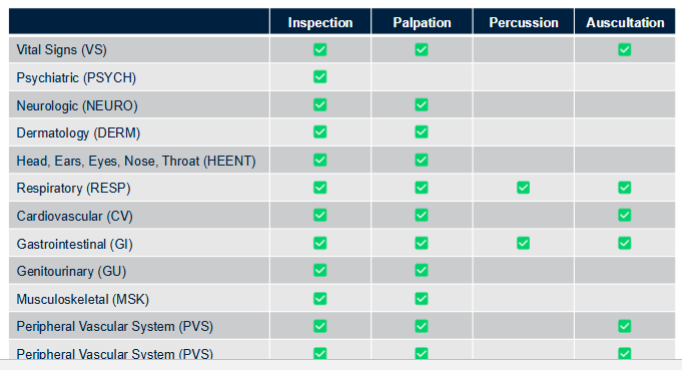
summary of fundamental techniques and systems
.
temporal pulse
above anf towards outside the eye
brachial pulse
inner side of biceps
radial pulse
inner wrist under the line of thumb
carotid pulse
side of neck
apical pulse
apex of heart
dorsalis pedis pulse
over the instep of the foot