IPHY 3410 - Chapter 12: Nervous System
 Call Kai
 Learn
 Practice Test
 Spaced Repetition
 Match
 Flashcards
 Knowt Play
1/47

There's no tags or description
Looks like no tags are added yet.
48 Terms
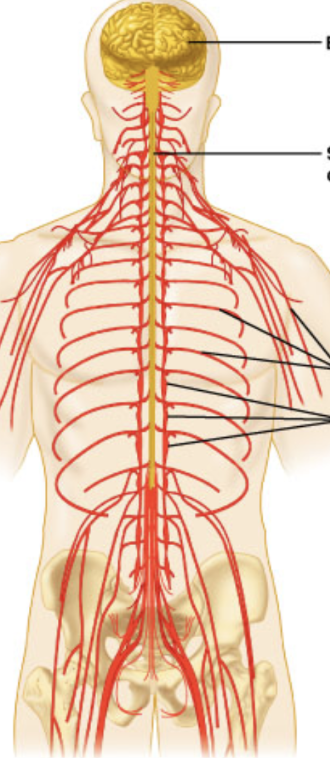
CNS (central nervous system)
brain and spinal cord
integration and interpretation
sensory input
dictates motor response
PNS (peripheral nervous system)
cranial nerves/branches, spinal nerves/branches
neurons transport sensory input toward CNS and motor output away from CNS
sensory input
sensory receptors monitor internal and external changes
gathered stimuli send to CNS for processing
integration of information
processes information from multiple receptors and dictates a response
motor output
initiation and activation of motor response
interneurons
processing of sensory input activation of motor output ALWAYS CNS CONTAINED
afferent
to brain
efferent
to body
neurons
able to respond to stimulus & carry an electrical impulse
Excitable cells (carry electrical impulse)
supporting cells
help neurons to function more efficiently
Non-excitable cells (cannot carry electrical impulse)

cell body (soma)
single nucleus and organelles of neuron

dendrite
receptive regions, carry info toward cell body, none to multiple

axon
carry info away from cell body, one per neuron, can be short or long, end at axon terminals, surrounded by myelin sheath
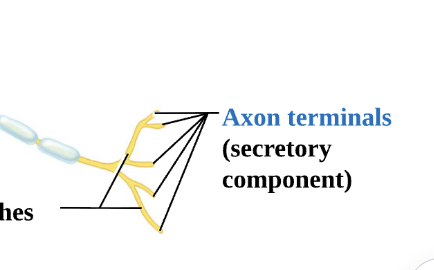
axon terminals
end of neuron, synapse

schwann cell
surrounds axon
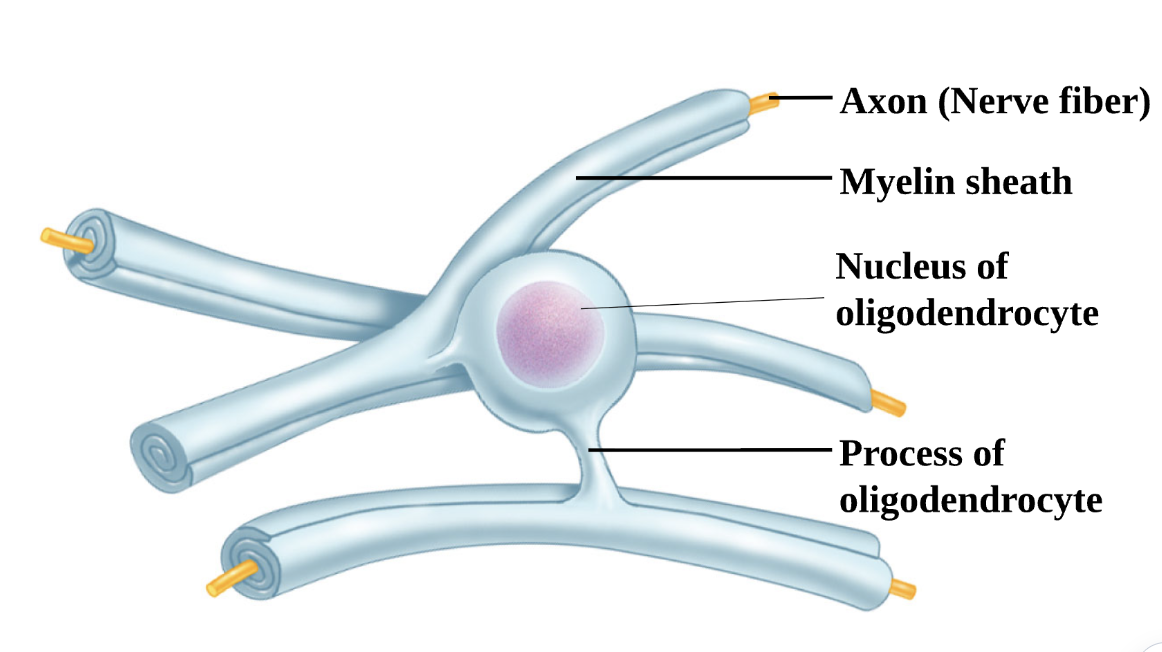
myelin sheath
insulates axon so action potential can travel quickly
myelinated axon
fastest signal
schwann cell wraps around single axon

unmyelinated axon
schwann cell surrounds multiple axons
slower conduction

oligodendrocyte
cell that forms myelin sheath in CNS.
multiple sclerosis
Gradual destruction of myelin in CNS (oligodendrocytes)
Plaques develop when myelin is damaged —> disrupts action potential
Motor and sensory problems develop over time
autoimmune, unk cause
neuron vs nerve
neuron: cell that carries electrical impulse
nerve: collection of many neurons
nerve
collection of axons in PNS (motor and sensory)

tract
collection of axons in CNS (interneurons)
multipolar neuron
most common
axon and multiple dendrites (2+)
motor neurons and interneurons

bipolar neuron
found in a few locations (but in abundance): retina
axon and single dendrite
special sensory
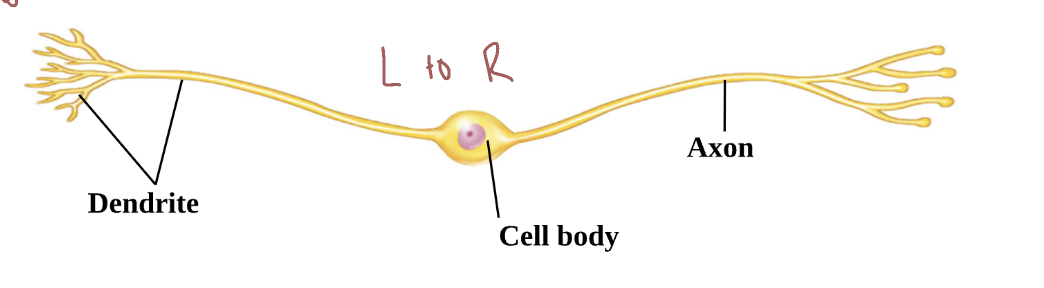
unipolar (pseudo-unipolar) neuron
typical sensory neuron (afferent)
single axon connected via short process to cell body.
no dendrites!
sensory neurons (PNS)
afferent
cell bodies clustered in ganglia
unipolar
motor neurons (PNS)
efferent
cell bodies within CNS
multipolar
interneurons
neurons of the CNS
multipolar
endoneurium
surrounds axon
thin reticular CT

perineurium
surrounds fascicle of axons
fibrous CT

epineurium
surrounds whole nerve
dense irreg CT


synapse
site wehre neurons communicate w each other or w other cells
presynaptic neuron
carries impulse toward synapse
postsynaptic neuron
carries impulse away from synapse
end at axon terminals
synaptic vesicles
vesicles in the axon terminal containing neurotransmitters
synaptic cleft
where neurotransmitters are released in the synapse of two neurons

axodendritic synapse
pre axon attached to post dendrite
most common

axosomatic synapse
pre axon attached to post cell body
axoaxonic synapse
pre axon to post axon
more common in brain

CNS supporting cells
astrocytes, microglia, ependymal cells, oligodendrocytes
PNS supporting cells
satellite cells, schwann cells

astrocytes
most abundant supporting cell
nourish neurons (transfer glucose)
take up excess neurotransmitters from EC space

microglia
smallest and least abundant
protect brain from pathogens
also remove dead/dmg neural tissue

ependymal cells
make up ciliated simple cuboidal epithelium of the CNS.
ventricles of brain
canal of spinal cord
cilia circulate cerebral spinal fluid (CSF)
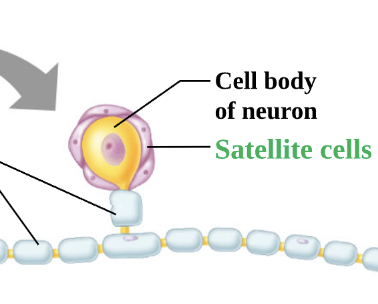
satellite cells
surround cell body, prevent info “crossover”
ganglia
clusters of neuronal cell bodies
Tic Douloureux (trigeminal neuralgia)
nerve disorder that causes sensation or stabbing pain or shock in regions of the face