Pediatrics: Mental Health and Psychosocial Disorders
 Call Kai
 Learn
 Practice Test
 Spaced Repetition
 Match
 Flashcards
 Knowt Play
1/26

There's no tags or description
Looks like no tags are added yet.
27 Terms
tier I
universal= high-quailty classroom instruction with support for all students
socialization
provide whole-school programs to improve social and emotional skills
create and support after-school programs that incorporate social skills-based goals
address bullying and victimization with preventative programs
educate on problem-solving skills to improve coping with mental health symptoms associated with socialization
educate on problem-solving skills to improve peer interactions
collaborate with and educate parents to improve child compliance
partner with parents to prevent aggressive behaviors using a multi-component school program
health management
provide school-based stress management programs to improve self-efficacy
use mental health literacy programs for adolescents to improve knowldge and attutides about mental illness, e.g., stigma
reduce physical stress from carrying backpacks and lifting heavy objects with programs for elementary school children
incorporate yoga to improve physical fitness and cardiopulmonary health
play and leisure
use skill-based activity groups to improve mental health behavioral outcomes
use performing arts programs to improve social interaction and skills
use recreational after-school programs that promote physical activity
incorporate team-building activities to improve self-concept
teach cooperation and reduce competitive behaviors in elementary school children
tier II
target support for children in smaller groups or as part of the whole classroom
socialization
provide social skills training for at-risk children and adolescents to improve social interaction, peer acceptance, and social standing
provide social skills programming for at-risk, aggressive, or antisocial children and adolescents to improve task attention, peer interaction, prosocial behaviors, and reduce aggression and undesired social behaviors
provide social skills programming for children with learning disabilities and ADHD to improve communication, functioning, and reduce problem behaviors
provide social and life skills programs for clients with intellectual impairments and developmental delays to improve behaviors and skills (e.g., life skills, conversational turn-taking, initiation of social interactions)
partner with parents and parenting programs for teenage mothers to improve mother-infant interactions
address teenage mothers and their children’s interactions, attitudes, knowledge, communication, confidence, and identity
health management
incorporate yoga for adolescents with physical symptoms from other conditions
program in yoga, massage, and relaxation for clients with behavioral difficulties to improve self-confidence and communication
use a guided imagery program in combination with coping strategies to withdrawn first-graders to increase socialization
utilize a multicomponent program that trains clients with asthma to realize their internal locus of control
educate and use programs to decrease days missed from school due to physical symptoms
play and leisure
utilize playgroups for abused or neglected children to improve their play skills and self-image and to reduce problem behaviors
use play and music for clients with intellectual and language impairments to improve social skills
use recreation, leisure, and physical education programs for clients with intellectual disabilities to improve social interactions
provide structured programs for children with shyness to increase extraversion
tier III
intensive 1:1 or small-group support for short periods for identified students who need assistance that would unduly impact classroom activities
socialization
incorporate self-management strategies to reduce challenging behaviors
use social skills training for clients with ASD to improve their social behavior and self-management
utilize social skills interventions for clients diagnosed with mental illness and behavioral disorders to improve social behaviors
use of friendship skills group for children with ASD may improve their socialization skills
CBT may help children with ASD have decreased symptoms of anxiety
use interventions that include joint attention for preschoolers with autism to improve their language and adaptive behaviors
play and leisure
use play for school-aged children with ASD to increase play participation and promote cooperation
use music-related activities for children with ASD to improve their communication skills and reduce problem behaviors
anxiety
an internalizing mental disorder that often starts during childhood (and persists into adulthood) and is characterized by excessive fear or worry; it frequently occurs together with depression and is associated with risks of co-occurring conditions (e.g., ASD), lower income, and earlier mortality
types of pediatric anxieties
separation anxiety
phobias (e.g., dogs, insects, dentist)
social anxiety
general anxiety— being worried about the future or bad things happening in general
panic disorder— repeated episodes of sudden and unexpected fear with symptoms of heart-pounding, dyspnea, feeling dizzy, shaky, or sweaty
causes
biology vs temperament vs environment
trauma/traumatic birth
violence
stress
being maltreated (e.g., bullied, rejected)
symptoms
fear
excessive worry
irritability/restlessness
anger
difficulty sleeping/sleep disturbances
fatigue/tiring easily
headaches
stomachaches
effect on cognitive skills (attention, sequencing, problem-solving, concentration)
muscle tension
low self-esteem
distorted self-image
disrupted habits, roles, and routines
decreased quality of life and well-being
outcome measures
Patient Health Questionnaire (PHQ)
depression
classified as a mood disorder with cyclical syndromes (disappear and reappear) that can interfere with thoughts, feelings, and behaviors; it is considered a serious illness due to its impact on functioning, mental health, and risk for suicide
risks
family history: depression, dysthymia (chronic, low-grade form of depression in adults that lasts for at least 2 years), bipolar disorder
unstable situations/environment
financial uncertainty
poverty
substance use/abuse
high levels of conflict
frequent moving
symptoms
loss of enjoyment or interest in activities or people
difficulty with cognitive tasks such as concentration or decision-making
sudden changes in affect and behavior
changes in sleep patterns
changes in sleep, activity levels, or energy
changes in appetite
increased feelings of incompetence, hopelessness, and worthlessness
outcome measures
Patient Health Questionnaire (PHQ)
anxiety and depression treatment
OT
levels of intervention
tier 1= universal, e.g., school
tier 2= targeted groups
tier 3= individual— recommended schedule modifications to reduce anxiety
promotion: mental and physical health at the universal level
educate about the value of enjoyable activities and encourage children to share their feelings through social interactions and creative expression
prevention: for at-risk groups
with self-esteem, sensory modulation, socializing, and social skill-building
intensive intervention: for those with a diagnosis or symptoms with targeted needs and education
modification of school demands and schedules may be necessary
settings
home: develop a low-stress home environment and provide education about the impact of symptoms; focus on favorite activities and enhance social participation
school: collaborate with stakeholders and modify as necessary to reduce stress and create a positive learning environment; address sleep and schedules
commnuity: set realistic functional goals and offer opportunities for low-stress social situations and activities
use occupation-based and/or occupation-focused interventions to promote self-care, productivity, and leisure/play
school-based and general Cognitive Behavioral Therapy (CBT) targets symptoms of depression and can have a positive effect on changing behavior and self-esteem
create a sensory modulation kit
create a sensory diet
use CBT and Social and Emotional Learning (SEL) to help clients develop the skills to recognize their thoughts, emotions, and behaviors
help clients practice strategies of positive self-talk in different environments
teach relaxation techniques
promote participation in meaningful leisure activities
support the child’s healthy eating plan with the team
collaborate with parents to use strategies such as…
having open discussions,
providing encouragement without pressure,
slowing down thoughts and the body to minimize symptoms, and
discussing potential situations while acknowledging emotions that may accompany anxiety
EBP
mindfulness-based interventions
promising for improving cognitive performance and resilience to stress
may have long-term effects on stress levels and the psychological well-being of parents of children with ASD
there are benefits to using CBT-based technology-derived interventions when access to traditional psychotherapies is limited or delayed
physical activity is associated with lower depression and improved physical self-concept in children and youth
yoga that was provided at higher freqeuncies (2-3x/week) was associated with a significant reduction in anxiety
limiting screen time, as screen time may be a risk factor for anxiety and depression in adolescents
Conduct Disorder (CD)
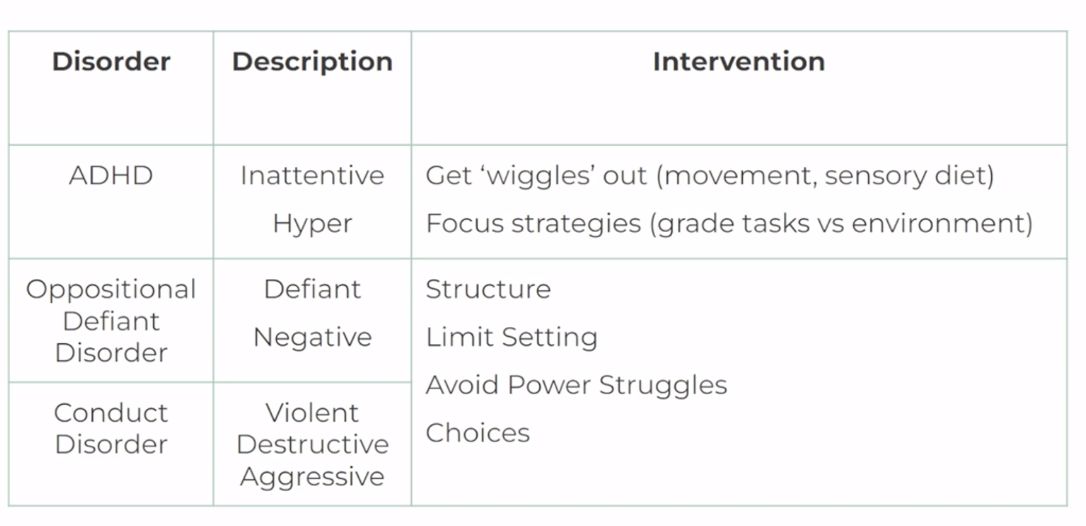
1 of the most common mental and behavioral problems in children and young people, CD is characterized by a repetitive and persistent pattern of dissocial, aggressive, or defiant conduct; associated behaviors fall outside of socially accepted norms and result in persistent violations of age-appropriate social expectations (e.g., violence, destructiveness, aggression)
associated with a significant decline in educational performance, with an increased risk of social isolation and substance abuse
interventions: structure, limit setting, avoid power struggles, give choices

Oppositional Defiant Disorder (ODD)
condition that involves recognizable and negative behavior problems that include an overall defiant, negative, agitated mood; they may be quarrelsome and vengeful
etiology and risk factors
likely not due to a single cause
likely arises from a mix of risk and protective biopsychosocial factors
symptoms and diagnosis
recurring patterns of negativistic, hostile, or defiant behaviors lasting at least 6 months; the presentation also refers to angry and vindictive behavior and problems with control of temper
behaviors include…
stealing,
lying,
physical and verbal aggression,
rule-breaking,
violence,
frequent temper tantrums,
excessive arguments with adults,
actively refusing to comply with requests and rules,
frequent questioning of rules,
deliberately annoying and upsetting others,
often being touchy or annoyed by others,
blaming others for their mistakes,
frequent outbursts of anger and resentment, and
spiteful attitude and revenge-seeking
girls may show symptoms of ODD differently than boys (e.g., showing aggressiveness indirectly or through words > actions)
behaviors occur more frequently than typically observed in individuals of comparable age and developmental level and cause significant impairment in functioning
symptoms appear before the age of 8 years
ODD may precede the development of conduct disorder; at risk for developing CD
ODD is conceptualized as a milder form of CD where rights are not violated
persistence of these behaviors into adulthood leads to antisocial personality disorder (ASPD)
differnetial diagnosis
ADHD
conduct disorder
mood disorders
learning and developmental disabiltiies
adjustment disorders
relational disorders
depression
anxiety
substance abuse
outcome measures (multidisciplinary)
Short Sensory Profile (parent report)
Eyberg Child Behavior Inventory
Strengths and Difficulties Questionnaire
Aggression Scale Questionnaire
Connors Rating Scale
Barratt Aggressive Acts Questionnaire
Child Behavior Checklist
Youth Self-Report
Overt Aggression Scale
Life History of Aggression
Children’s Aggression Scale
Parent Daily Report
Interview for Antisocial Behavior
Oppositional Defiant Disorder (ODD): Team and OT Treatment
structure, limit setting, avoid power struggles, give choices
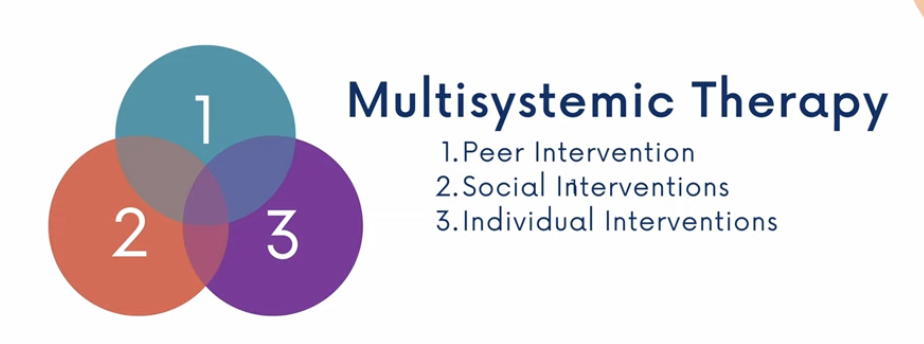
tiers: intervention can be universal, targeted, or intensive
building a therapeutic relationship may aid treatment and engagement
validate the client’s feelings and behaviors
set goals through collaboration
orient the client to their role in the treatment process
establish credibility by providing a rationale for treatment
adapt treatment in response to individual differences
facilitate the completion of homework assignments
provide consistency through structure and routines, e.g., family, school
family therapy
child-based therapies focus on problem-solving skills
parent training programs w/ a focus on how to respond to the child’s behavior
medication for symptom management (often the same for coexisting conditions, e.g., ADHD)
e.g., Ritalin, Strattera, Clonidine, Risperdal
Behavioral and Cognitive Behavioral Therapy (CBT) is effective in improving…
child conduct problems,
group CBT has been found to decrease peer-related aggressive behaviors in boys aged 6-12 years
parental mental health, and
parenting skills in the short term
prevention interventions in schools, clinics, or community locations
cognitive interventions and skills training, vocational training, academic preparation
should be interdisciplinary and include physicians, teachers, and other professionals
target social skills, conflict resolution, and anger management
address bullying, antisocial behavior, and peer group influences
consider cultural issues
conduct a thorough assessment and evaluation (including the degree of functional impairment)
use specific questionnaires and rating scales to evaluate and track progress
develop an individualized treatment plan with a family-centered approach
consider assessing and providing management for potential sensory processing difficulties— client, environment, activity
provide simple and clear instructions
using time-out may help
decide which rules are negotiable in accordance with the team
provide praise for reinforcement, but keep it brief and don’t bring attention to the client; consider leaving a note instead of verbal praises
in general, praise is negatively associated with problem behaviors, and high amounts of reinforcement are needed to learn positive behaviors
give praise when client exhibits even simple behaviors
positive reinforcement alone is not effective for clients with ODD
videotape vignettes and modeling parent skills may be effective in improving parent-child interactions and reducing child conduct problems
communication skills
problem-solving skills
self-care
socialization
address parent self-care and client relapse prevention
use strategies to de-escalate and encourage compliance
give precise warnings for poor behaviors
ensure consistency across settings to reinforce positive behavior; a behavior chart may help
music programs may provide protective factors to students who are at-risk for behavior disorders
group drumming may be an effective intervention for reducing aggression among adolescent girls diagnosed with CD
art therapy has been shown to reduce symptoms of ODD in elementary school boys
media-based parent training, e.g., videos, is effective
have a progression of sequences or back-up plan
avoid:
conflict/confrontation,
emotional responses,
yelling,
sarcasm,
frustration,
threats,
responding too quickly,
bribes,
power struggles, and
ineffective therapies: one-time or short-duration therapies, e.g., boot camp, tough-love camps, scare tactics
ODD vs CD
ODD
symptoms involve losing temper, expressing anger, being argumentative, disobedient, and/or disruptive
CD
symptoms are more severe in terms of social conduct + laws
e.g., bullying, initiating fights, using weapons to injure others/animals, stealing, being an arsonist, destroying property, breaking in
ODD more so precedes CD, e.g., when untreated; this can then develop into Antisocial Personality Disorder in adulthood

Attention Deficit Hyperactivity Disorder (ADHD)
a behavioral disorder with an unknown cause, with differing signs, challenges, and interventions varying per 3 subtypes; though the condition is generally characterized by attention-deficit and disruptive behavior disorders (hyperactivity and impulsivity) + is most commonly diagnosed in young people
subtypes
impulsive/hyperactive
inattentive and distractible
combined
cause= runs in families + there is a genetic risk for parents passing it down; potential environmental risks also include:
maternal smoking,
maternal alcohol and substance abuse,
maternal stress,
lower birth weight and prematurity,
pesticides,
lead,
nutritional deficiencies or surpluses,
family socioeconomic status,
parent-child conflict, and
severe early deprivation
comorbidities
lower IQ
ID
developmental problems
speech and language problems
motor coordination difficulties
ASD
symptoms
inattention
wandering off task
lacking persistence
difficulty sustaining focus (attention)
being disorganized
hyperactivity
moving about constantly
fidgeting, tapping, or talking excessively
being restless or wearing others out with excessive activity
impulsivity
making hasty actions without first thinking about them or their consequences
desiring immediate awards
having difficulty delaying gratification
being socially intrusive
interrupting others excessively
outcome measures
observation
interview
general considerations
current medications (if indicated) and their potential side effects
behavior across settings and times
types of behavior (inattentive, classic, focused, hyperactive, etc.)
evaluation should consider
1. executive function
2. sensory processing/sensory integration concerns
3. motor challenges (motor skills are often a strength)
perceptual-motor tests
Strengths and Limitations Inventory (SLI)
Perceived Efficacy and Goal Setting System (PEGS)
School Function Assessment (SFA)
School Assessment of Motor and Process Skills (School AMPS)
Sensory Profile
ADHD Rating Scale

Attention Deficit Hyperactivity Disorder (ADHD): Interventions
covered by Disabiltiies Education Act (IDEA)
1st line of interventions— non-pharmacological
parent-led behavioral interventions
classroom-led behavioral interventions
cognitive behavioral therapy
OT: get "‘wiggles’ out (movement breaks, sensory diet) + focus strategies (grade tasks vs environment)
help promote task selection of meaningful tasks at the just-right challenge
provide func. skills training
provide education and training for teachers
provide neurological interventions (sensory integrative therapy, sensory diet, Alert MORE, Therapeutic Listening) with clear outcome measures
provide direct attention and impulse control training
provide treatment of executive functions
educating parents about ADHD and how it may affect the family
providing behavioral therapy as a team to teach monitoring of behavior and giving praise or rewards in a desired way
providing positive or negative feedback
establishing clear rules and structured routines
teaching social skills appropriate for age level
teaching social skills to read facial expressions, tone of voice, and responding appropriately
use CBT combined with mindfulness and meditation to teach thinking before acting or to avoid taking necessary risks
providing classroom management interventions and environmental adaptations
implementing systems and strategies with teachers such as reward programs or point systems with daily report cards for parents
provide stress management and coping techniques
referring to support groups
provide tools to manage routines and to maintain organization, e.g., notebooks, calendars
having a special place for belongings and reducing clutter
EBP
the Cog-Fun was found to be effective for cognitive/executive functioning
focuses on executive function impairments…
memory
planning
emotional regulation
highlights the dynamic interaction of…when addressing problems in performance
person
task
environment
uses metacognition strategies (awareness of your own thoughts, “thinking about thinking”)
self-monitoring
self-evaluation of thoughts
uses parental approaches, i.e., has parents attending therapy too so they can implement strategies at home; e.g.,
providing positive verbal praise, daily planners, timers, checklists,
preparing materials in advance,
reducing clutter and distractions in the home environment
progressively increase the cognitive and behavioral demands during games/playful settings, as children master skills (e.g., skills including inhibition, monitoring, planning)
the Cognitive Orientation to Daily Occupational Performance (CO-OP) was shown to be effective for improving motor performance
family-centered OT that focused on neurological, psychological, and behavioral domains resulted in behavioral improvements in ADHD symptoms in over half of the participants
Interactive Metronome training appears to facilitate attention, visual-motor control, and selected academic skills in boys with ADHD
Theraplay intervention was found to be effective in decreasing ADHD symptoms
the use of play, video feed-forward and feedback, modeling, and parental involvement is effective for developing social play skills of children aged 5-11 years in a small-scale research study
weighted vests may improve attention and on-task behaviors
stability balls may help with on-task behavior in children with ADHD

Tourette Syndrome (TS) and Tic Disorders
a neurological disorder characterized by sudden, repetitive, rapid, and unwanted movements or vocal sounds (tics); there is no cure, but treatments can help to manage symptoms
causes
unknown, but may be linked to the part of the brain that regulates body movements
also likely involves gene variations + environmental factors
boys > more likely to be affected than girls
co-occurring conditions
ADHD
OCD
anxiety
learning disabilities
behavioral issues
insomnia
social functioning difficulties
sensory processing issues related to touch, taste, smells, sounds, or movement
tics
can come and go
are not degenerative
vary in type, frequency, location, and severity
first experienced symptoms from 5-10 years
progression is often from the head —> to the trunk —> then arms and legs
are often worse in the early teens
can last into adulthood
may worsen in adulthood
treatment is not needed if symptoms don’t interfere with daily life
simple tics
sudden, brief, repetitive movements of muscle groups
more common
eye blinking
face grimacing
shoulder shrugging
head or shoulder jerking
vocal: repetitive throat clearing, sniffing, barking, grunting
complex tics
distinct coordinated patterns of movement involving several muscle groups
less common
face grimacing combined with head twists and shoulder shrugs
sniffing or touching objects
hopping, jumping, bending, twisting
vocal:
echolalia (repeating own or other’s words/phrases);
coprolalia (vulgar, obscene, or swear words)— rare
tic triggers
excitement
anxiety
physical factors, e.g., too tight a collar
environmental factors, e.g., hearing another person sniff or clear their throat
diagnosis
presence of both motor and vocal tics that occur several times a day, every day, or intermittently for at least 1 year
onset of tics before age 18
not caused by medications, other substances, or medical conditions
outcome measures
Yale Global Tic Severity Scale
occupational impact
may have learning difficulties and low grades in school
children with TS were rated by teachers as having ‘major’ learning difficulties
children in a study experienced impaired concentration and attention
delays in academic skills, e.g., handwriting, word retrieval, visual image memory, and grammar
behavior problems may exacerbate learning difficulties in school and affect peer interactions negatively
Tourette Syndrome (TS) and Tic Disorders: treatment
OT
most will treat children with tics using a sensory approach, but a sensory approach may be slower at producing results compared to other behavioral therapies
in conjunction with medications, clients may receive non-pharmacological treatments
collaborative models and tools such as a daily report card system or token economies can enhance learning and improve behavioral strategies
Habit Reversal Training (HRT)
may lead to a reduction in tic severity in children 9-13 yo
clients develop an awareness of when tics are about to occur and then develop a behavior to stop the tic when the urge to tic arises
HRT has been developed into a Comprehensive Behavioral Intervention for Tics (CBIT)
Comprehensive Behavioral Intervention for Tics (CBIT)= an 8-10 week treatment program 1x/week
shown to reduce the number of tic expressions, severity, and psychological level of distress associated with tics
improved children’s self-perception of their competence in performing everyday activities
as tics may be sensitive to the environment, people can use CBIT to learn to become more aware of + factors that trigger their tics and learn to calm their tics
children develop and practice “competing” behaviors when feeling the urge to tic
children learn new strategies and responses to better manage their tic disorder in their daily activities
requires practice outside of the treatment in other environments
Exposure with Response Prevention (ERP)= s clients suppressing their tics for prolonged periods of time and beginning to habituate to them and reduce the urges to produce tics
found to be equally as effective as HRT/CBIT, but long-term effects are not established in 1 study
ERP clients may receive 2x the therapy as HRT
supportive psychotherapy/CBT/Assertiveness training may serve as complementary therapies but are not as effective by themselves
address anxiety and emotional symptoms
classroom strategies and accommodations
educate teachers and parents about the syndrome
promote a school environment that is safe, with rules and expectations that are predictable, but flexible to adjust to specific learning problems
change tasks frequently
use color coding and highlighting with small manageable sections for school work
assist educators and families to determine which strategies are most likely to be successful academically
avoid expressing frustration, anger, or negative reactions
consider providing students with breaks for short periods to release the tics they have been suppressing
educate peers about the syndrome so that they become more tolerant and supportive, as well as ignoring possible tic disturbances
group work may help children with TS to understand and manage their condition by practicing social interactions with peers
AT, e.g., computers, calculators, and spell-checkers for schoolwork
accommodations such as…may result in reduced anxiety
extra time in class,
not having too much HW,
not having too many written work assignments,
headsets to increase attention span,
preferential seating (e.g., allow students to sit on the side of the classroom),
testing in a separate location,
receiving feedback for improvement,
permission to leave the room,
permission to leave class early to avoid hallway congestion,
permission to eat lunch somewhere else, and
not being punished for their TS behaviors
Obsessive Compulsive Disorder (OCD)
type of anxiety disorder, characterized by disturbing thoughts or impulses (obsessions) and repetitive or ritualistic behaviors (compulsions), eg., excessive hand washing, preventing bad things from happening, counting things, and repeating actions
obsessions e.g.,
fear of being contaminated (e.g., by bugs or other people)
repetitive doubts (e.g., if their locker was locked)
need for order: anxiety if something is out of order or cluttererd
aggressive, horrific, fearful impulses: to hurt themselves or others, to shout, break, or steal something
compulsions (a need to act on obsessions ^) e.g.,
repetitive behaviors: handwashing, bathing, toothbrushing, checking doors, checking supplies, need to touch certain objects, rewriting assignments, ordering or organizing behaviors, asking the same thing over and over (reassurance)
repetitive mental acts: praying, counting
repeating words or numbers silently
causes and risk factors
risk factors
genetics
family history
enabling behaviors by family members,
complications of pregnancy,
tic disorders, and
autoimmune diseases
OCD does run in families and can be passed down through genes
also caused by a chemical imbalance in the brain
outcome measures
Children’s Yale— Brown Obsessive Compulsive Scale
gold standard and most widely used for measuring OCD for children and adults
Child Obsessive Compulsive Impact Scale
Sensory Profile
Anxiety Disorders Interview Schedules for Children and for Parents
Brief Symptom Inventory
McMaster Family Assessment Device
Coping Response Inventory
Obsessive Compulsive Disorder (OCD): treatment
OT
obtain detailed evaluation, including symptoms
educate family members about reducing critical emotions and how to be supportive
establish short-term and long-term goals to…
manage symptoms
achieve recovery
restore functioning
enhance the quality of life
prevent relapses
educate the client and family members about expectations for quick recovery vs what to expect, including the lag of medications reaching therapeutic levels
improve chances of success with motivation, homework compliance, and tolerance for symptoms with graded activities
therapy
most effective: Cognitive Behavioral Therapy (CBT) with Exposure Response Prevention (ERP)
ERP exposes the child to something that may make them anxious
the child is encouraged to resist the urge to do the ritual
the child then becomes used to the anxious feeling and learns to get slowly better over time by changing their rituals
educate child and parent on OCD conceptualization, maintenance, and treatment
provide symptom reduction through exposure, response prevention, and habituation to feared stimuli
train parents to plan and coach children through exposures
psychoeducational
medication
use a family-centered approach with collaboration, as parents of children may feel burdened and struggle with the child’s symptoms
the child may potentially view their tendencies as a strength and be interpreted as giftedness
promote or modify the environment for students with OCD to feel comfortable and be able to contribute to the classroom
Sensory Processing: strong reactions to sensory stimuli were found to be highly correlated with ritualism in children and adolescents
minimize oral and tactile hypersensitivity to reduce ritualism with activities, the environment, e.g., certain foods, smells, textures, or social situations
keep stress levels low; never threaten or punish a child with OCD for their tardiness, forgetfulnes, or procrastination
provide the child with a partner to ensure the child has peers to accompany them
reduce factors that may contribute to feelings of claustrophobia— away from windows and doorways (distractions) and provide an unobstructed view of the teacher or board
allow the child to take breaks to ritualize
whole-class interventions can be effective for addressing student anxiety
incorporate emotional learning to encourage emotional expression
maintain a level of expectation, set clear limits, and establish consequences for behavior
children who do better at school should be encouraged to spend more time in school-related activities
Strategies for Students
address and prevent anxiety-provoking situations
reduce the chances or impact of failure during learning in school
model how to accept making mistakes
provide social support for who to talk to when feeling anxious
praise on-task behaviors in the classroom
ignore reassurance requests that bring attention to what the student is doing (OCD symptoms)
allow the student to determine why worrying is unnecessary
provide alternative tasks to complete with encouragement to stay on-task
allow students to take short breaks when they feel overwhelmed or anxious
provide students with structure, e.g., an outline
allow students to type their responses on a computer
give clear and simple directions and break down complex tasks
teach strategies for effective learning
create social constructs for longer-term assignments with time expectations and estimation
provide extra time or alternative locations as accommodations
allow the students to demonstrate knowledge of subjects with alternative assignments
OCD vs OCPD (Obsessive Compulsive Personality Disorder)
people with OCPD believe their actions have an aim and a purpose; their behavior, values, and feelings are acceptable and consistent with their identity
vs people with OCD, who often feel distressed by the nature of their behaviors and thoughts
OCPD (Obsessive Compulsive Personality Disorder)
OCPD is not diagnosed until adulthood and is based on a pattern of behaviors and personality traits that get in the way of a balanced life and getting things done efficiently, like perfectionism, extreme orderliness, working way too hard, overthinking things, and being really controlling; i.e., it is a pervasive preoccupation with orderliness, perfectionism, and control with no room for flexibility that ultimately slows or interferes with completing a task
DSM criteria (must have 4/8)
excessive devotion to work at the expense of family and friends
extreme need for perfection and relentless control over your environment and interpersonal relationships
inability to be generous to others
inability to delegate tasks
inability to get rid of worthless items, even those without sentimental value
over-conscientiousness
preoccupation with details, rules, lists, and order, which can result in missing the major objective of an activity
rigidity and inflexibility concerning morals, ethics, values, and the adherence to rules
symptoms
act restrained or restricted with their emotions
adhere to rules in an inflexible, rigid way
create order and lists for tasks
desire to control their relationship with others
have difficulty emphasizing with others and/or maintaining intimate relationships
have extreme dedication to their work
have trouble giving things to others, i.e., hoarding
have a need for perfection
have problems with self-identity or self-direction
have trouble giving up control and delegating tasks
causes
unsure, but likely…
nature
biological component— associated with family member risk
nurture
childhood experience with overprotective parents who are not as caring
immature emotional and empathy development
inability to develop secure attachment with parents
OCPD (Obsessive Compulsive Personality Disorder): treatment
medication
SSRIs
meditation
stress management
self-care
understanding the condition
psychotherapy
CBT
OT
help the patient understand their symptoms and personality traits in an empathetic and non-judgmental way
address completion of ADLs (without the need of having to address other things, e.g., messes in their environment, resulting in the delayed completion of their original goal)
address IADLs that are outside of their comfort zone
address leisure (e.g., scheduling leisure!) + pursuing interests for…
self-care
relaxation
stress management
support use of medications + staying on them
practice symptoms management
talk and work out their thoughts with them!
refer to other professionals if applicable
Post-Traumatic Stress Disorder (PTSD)
causes
physical, sexual, and/or emotional abuse
being a victim or witness to a violent crime or war
serious illness or death of a family member or friend
natural or manmade disasters
car accidents
symptoms: can look different in children than in adults; children are more likely to show signs of PTSD during play and teenagers may be more impulsive
reliving an event over and over
nightmares
sleep difficulty
becoming very upset when something causes memories of the event
lack of positive emotions
intense ongoing fear of sadness
irritability
angry outburst
constantly looking for possible threats
easily startled
acting helpless, hopeless, withdrawn
denying that an event happened
feeling numb
avoiding places or people associated with an event
diminished interest or participation in play
rule-out
ADHD— due to symptoms of restlessness, being fidgety or having trouble paying attention
outcome measures
Canadian Occupational Performance Measure (COPM)
Sensory Profile— participants with PTS symptoms may have sensory sensitivity with hypersensitivity, be sensation-avoiding, or have low registration
Post-Traumatic Stress Disorder (PTSD): treatment
individual, group, or family
medication to deal with agitation, anxiety, or depression
CBT— most effective; often involves training and caregivers as well
Trauma-Focused CBT (TF-CBT)— involves talking about the memory of the trauma and includes learning to change thoughts or beliefs about the trauma being correct or true
Psychological First Aid (PFA)/ Crisis Management— used in school-aged children and teens who have been through violence
can be used in schools and traditional settings
involves providing support and letting clients know their reactions are normal
learn calming and problem-solving skills
caregivers learn to deal with changes in the client’s feelings and behaviors
play therapy— used to treat younger children with PTSD who are not able to deal with the trauma directly
therapists can use games, drawings, and other techniques to help process the traumatic memories
other treatments:
eye movement desensitization and reprocessing (EDMR)
special treatments for sexual behaviors, extreme behavior, or drug and alcohol abuse
OT
FORs
Cognitive-Behavioral FOR
Coping FOR
Canadian Model of Occupational Performance and Engagement (CMOP-E)
Model of Human Occupation (MOHO)
restore habits and engagement in meaningful occupations through mastery and adaptation to life events
in school settings, the OT consults and collaborates with the multidisciplinary team, analyzes the environments, tasks, and routines, and may provide OT with a trauma-informed, sensory-based approach
observe the student for limitations to participation in school
perform a thorough evaluation of the student— sensory processing, triggers, dysregulation, strengths
determine participation-based goalsindividualize each plan to the student’s needs and strengths
work collaboratively with the team to guide a trauma-informed approach
help provide safety by creating structure
modify the environment, e.g., lighting, sound levels, other triggering stimuli
use outcome measures or monitor the effectiveness of interventions (e.g., sensory diet)
promote mastery and problem-solving skills
promote engagement in occupations, e.g., play
help to develop a positive self-image
provide a safe and secure environment for the client
develop a therapeutic relationship with the client, which may be challenging for particular ethnic and racial minority groups due to distrust associated with racism and poverty
address cognitive distortions related to trauma, e.g., self-blame
help develop an adaptive understanding and perception of the trauma
draw on existing strengths and resources of the child, their family, and community
address the impact of PTSD symptoms on everyday occupations, e.g., play
provide education about trauma reactions
provide hope for recovery
help children, families, and communities return to or create normal roles and routines
provide care that is consistent with the child’s level of need
follow and respect confidentiality and privacy issues
prevent and address burnout for the OT/COTA
develop and promote programs for prevention, e.g., bullying, child maltreatment, youth violence
EBP
Alert Program has been found to benefit children with social, emotional, and behavioral difficulties by monitoring, maintaining, and changing alertness levels that are appropriate to a situation or task
use of play and expressive occupational workshops demonstrates the power of occupation and the value of occupational therapy intervention in helping children to express and process traumatic emotions successfully
breathing or relaxation exercises
minimizing hyperarousal from PTSD symptoms with self-regulation, yoga, mindfulness meditation, and aerobic exercise may be helpful
storytelling using therapeutic stories and children’s stories may be used within group therapy to elicit discussion and possible role play
DONT’s of Trauma-Informed Care (TIC)
principles: safety, collaboration, empowerment, trustworthiness, transparency, peer support, culture/historical/gender issues, choice
ask “what is wrong with you”
assume pronouns based on name or appearance
assume that clients will be willing to do or say what you ask them to
provide training only for certain staff based on their role or title
ignore the pervasiveness of trauma
ignore trauma-related needs
ignore things you have no control over
automatically attribute challenging behaviors to static personality traits
diminish historical context
forget that clients may be re-traumatized by telling their story or providing information
assume that clients cannot change
give false hope
exhibit reactive or escapist behavior
blame the child
close off communication
Bipolar Disorder (BD)
also known as manic-depression, it is a mood disorder that is characterized by extreme changes in mood, energy levels, and behavior
prevalence
more common in adults; can occur in teens; is less common during childhood
affects males and females equally
if 1 or both parents have BD, there is an increased risk of their children developing BD
causes
genetics
brain structure and function
stress— modifiable
symptoms
manic episode= period of elevated (overly happy) mood, expansion, and irritability with increased energy at the same time
unrealistic highs in self-esteem
increase in energy
hyperverbosity (talking too much)
increased distractibility and poor attention
rapid thought process
repeated high-risk-taking behavior: alcohol, drugs, reckless driving, sexual promiscuity
depressive episode= involves experiencing periods of depression with low, depressed, or irritable mood
decreased enjoyment in favorite or meaningful activities
low energy level; fatigue
changes in sleeping patterns— oversleeping or difficulty falling asleep
poor concentration
complains of boredom
changes in eating habits, weight changes
complaints of physical illnesses, e.g., headaches, stomach aches
suicide ideation
mixed episode
clients simultaneously meet criteria for both mania and depression that co-occur for at least 1 week
women are more likely to experience
associated with a poor prognosis due to high risk of suicide
rapid cycling
clients experiencing more than 4 episodes per year
associated with an increased chance of treatment resistance and poorer prognosis
co-occuring conditions and disorders
drug abuse
ADHD
major depressive disorder
schizophrenia
anxiety disorders
impact on occupations
sleep, self-care, leisure, productivity, roles, communication, academic performance, family functioning, etc.
socially
affected peer networks
be victimized
have poor social skills
in family relationships
frequent parent/sibling conflict
lower levels of warmth
chronic stress in family life
low self-esteem
hopelessness
maladaptive coping strategies
outcome measures
Role Checklist
Occupational Performance Questionnaire
Canadian Occupational Performance Measure (COPM)
Goal Attainment Scale (GAS)
Assessment of Motor and Process Skills (AMPS)
Global Assessment of Functioning
Trail Making A and B: clients with BD are more likely to have impaired visual-motor sequencing, memory, and attention (cognitive impairments)
Bipolar Disorder (BD): treatment
effective interventions mentioned share common elements of using an adjunctive approach, incorporating psycho-educational about the nature and symptoms of BD in pediatrics, involvement of the family, focus on developing skills for coping with mood dysregualtion, and interpersonal functioning
individual or group therapy
Cognitive Behavioral Therapy (CBT)
Child-focused and family-focused (CFF-CBT)
The RAINBOW CFF-CBT program centers on
1. R: establishing routines
2. Affect Regulation: education about affective dysfunction and coping skills to manage triggers
3. I can do it: Improving self-esteem and self-efficacy
4. No negative thoughts and Live in the now
5. Be a good friend and Balance lifestyle for parents: promotes social skills and self-care for parents
6. Oh how do we solve this problem
7. Ways to get support: for the family, in school, and the community
Family-focused Therapy for Adolescents (FFT-A): designed for youth ages 12-17 with BD that involves 21 sessions of varying frequency; involves…
psycho-education
self-management
medication adherence
understanding symptoms
relapse prevention
communication enhancement training
problem-skills training
has been adapted for children and adolescents at risk for developing BD— FFT-HR
12 sessions over 4 months for youths ages 9-17 and their families
goal is to help families identify and intervene on BD symptoms and to improve family communication and problem-solving
Dialectical Behavioral Therapy (DBT) for adolescents
an evidence-based intervention that has demonstrated efficacy for adults with borderline personality and adapted for adolescents with BD
focus is on emotional dysregulation to improve symptoms
involves family skills training for the entire family on psycho-education and the skills of…for the youth on applications of skills to manage problem behaviors and mood state in daily life
mindfulness,
distress tolerance,
emotional regulation,
interpersonal effectiveness, and
therapy
Interpersonal and Social Rhythm Therapy for Adolescents (IPSRT-A)
based on biopsychology therapy that is supported for adults with BD
specifically targets biology of BD and the instability of…
circadian rhythms
neurotransmitter systems dysregulation
social routines that can affect circadian systems
16-18 session, individual-based treatment, with brief family psychotherapy
stabilizing social and sleep routines
addressing psychosocial stressors
interpersonal conflict
role transitions
interpersonal functioning deficits
medications— mood stabilizers
lithium, antipsychotics, antidepressants (less common)
e.g., Abilify, Wellbutrin, Prozac, Haldol, Lamictal, Zyprexa, Seroquel, Risperdal, Geodon
self-management strategies— education and recognition of an episode’s early symptoms
complementary health approaches, but not effective in isolation
aerobic exercise
meditation
religious support
OT considerations
child should be involved in making treatment decisions
early detection and intervention can help to stabilize children who are experiencing mood changes
provide interventions to support performance with IADL tasks
provide interventions for educators to support school participation associated with mania and depression
be flexible in education, planning, and interventions based on client’s fluctuations in mood and energy
provide flexible scheduling and additional time for assignments
minimize distraction and surprises
be mindful of fatigue, agitation, and frustration
provide feedback
use daily planners and visual organizers
picture schedule may be helpful
teach students to develop short-term and long-term goals
work with parents to develop consistent and structured routines in the home and school environment
break down assignments into smaller more manageable segments
provide short breaks as needed between assignments
set realistic timelines based on student’s progress
provide a smaller, secluded, comfortable, and more secluded testing environment
use scribes and technology to enhance performance
provide social skills groups or interventions
call 911 if the client is suicidal, homicidal, or delusional
place the client in the least restrictive environment and safe place
use positive reinforcement
use organizational strategies (notebooks, planners, color coding)
collaborate on behavior modification plan and sign a behavior contract
help clients manage sleep and stress
support clients to make healthy lifestyle changes
provide clients with access to support networks
address social skills performance and participation in school, family, and community as adolescents with BD lag behind their peers in social skills performance
promote programs that assess bullying
prevent relapse and provide strategies for maintenance
address parent’s feelings of guilt and self-blame from the misperception that BD is caused by ‘bad parenting’
untila child’s mood is stable, behavior-management skills typically are not effective
minimize communication. breakdown with parents and be a good listener
don’t assume sexual abuse when symptoms of hypersexuality arise
help clients develop a self-care plan and identify barriers to goal attainment
provide homework such as thought diaries for situations such as stressful interactions
address functional motor ability, e.g., handwriting
identify problem behaviors and performance skills that pose safety risks and provide alternatives or compensatory techniques to maintain participation
don’ts
talk about the child in front of the child
ignore mood
blame parents for lack of treatment sucess
parent education
be patient
listen and encourage conversation
pay attention to changes in moods
understand the triggers
encourage leisure activities
know that treatments can take time
trauma
the result of an intensely threatening event that exceeds the ability to protect one’s physical and psychic well-being and integrity
developmental trauma
trauma that has happened in early life or during critical developmental periods; it can have an impact on brain development
mental health and psychosocial evaluation considerations
practitioners often collaborate with other professionals (e.g., psychiatrists, social workers, physicians) for diagnosis; some psychiatric diagnoses are not made in young children
comorbidities may include diagnoses such as ADHD and developmental trauma
consider and address psychosocial factors (e.g., observe interactions with staff and others and monitor for signs and symptoms of depression, anxiety, aggression, and impulsivity)
consider executive function
consider any comorbid sensory needs
1. emotional regulation
2. sensory processing
address any needs specific to impulse control
consider functional performance in all areas of occupational performance
consider task completion, time on task, and attention to task
address roles, habits, and routines
behavior evaluation considerations
for most children, behavior is communication; some children have specific behavioral disabilities
work with a team to determine antecedents— this may include a functional behavioral analysis
a complete history is important to understand the child and why they are engaging in unwanted behavior
this history should include relevant medical information
an occupational profile should be developed
in schools, a pre-assessment checklist should be completed by the child’s teachers
observations should be made in the child’s natural environments with peers or family members