COMM101
 Call Kai
 Learn
 Practice Test
 Spaced Repetition
 Match
 Flashcards
 Knowt Play
1/38

There's no tags or description
Looks like no tags are added yet.
39 Terms
5 Stages + Creator
Tuckman’s 5 stages
Forming-Members explore info about one another
Storming-Disagreements about procedures and purposes, criticism and conflict arise
Norming-Agreement about goals, procedures, synergies explored and team becomes efficient
Performing-Group focuses its energies and attention on its goals, extreme efficiency, team is performing very well
Adjourning-Group project comes to end, bittersweet moments
What is a team
Team has at least 3 or more, 2 is a partnership.
Working towards a common objective,
Has a definable membership, group identity,
Interdependence/Reliance on one another
Members frequently interact
Sustainability: Members periodically review team’s effectiveness
Most importantly can work together
Different types of Conflict Resolutions
Competition - Push your way to your solution, flex your power to get your result
Avoidance - Push off the conflict, avoid it and do not focus
Accommodation - One party abandons their idea in order to support the other persons
Compromise - Both parties give up something in order to meet in the middle and achieve goals
Collaboration - Work together to achieve what your goals avoiding sacrificing too much
8 Steps to Managing Projects
Define project objectives and scope
Determine participants and stakeholders
Develop timeline/work plan
Establish checkpoints
Identify and obtain necessary resources
Determine project measurements standards
Develop Communication Systems
Debrief and Evaluate Project Performance
Gantt Chart
Create a list of tasks that must be done and in which order they must be completed, estimate the time necessary to complete the tasks and how one affects another

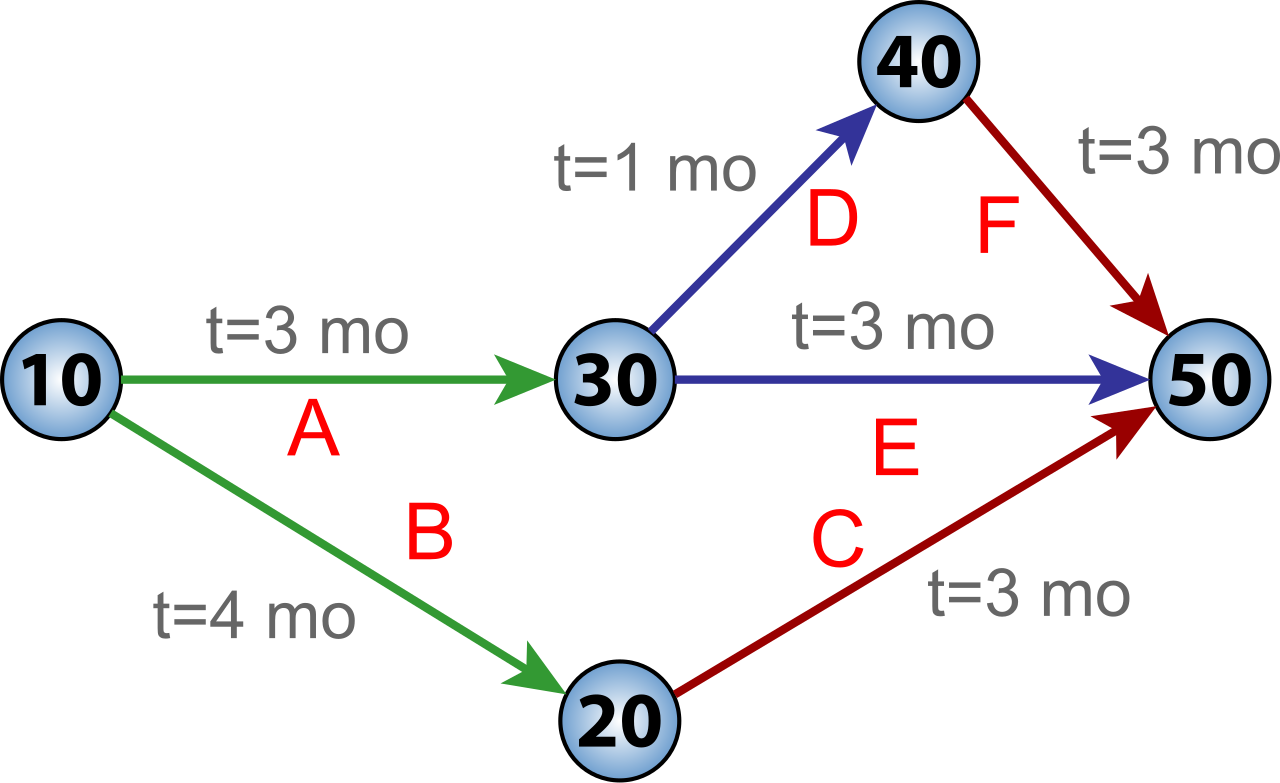
PERT Chart
Create a list of tasks and order in which they have to be completed. Do so in a horizontal rather than vertical manner, connect the dots between each task with longer tasks requiring longer lines
McKinsey Performance Program - 4 Areas Impacting Performance
Configuration: Focuses on team structure, ensuring clear roles/responsibilities, diverse range of perspectives and strong external focus
Alignment: Building a shared sense of purpose to common goal
Execution: Team is able to work efficiently and focus on delivering results
Renewal: Involves creating a positive and supportive work environment that encourages innovation and opportunities
McKinsey Practical Steps to Enhance Effectiveness
Conduct Team Diagnostics: Identify strength and weakness of team across the 4 areas impacting Performance (CAER)
Create a Team Charter; Develop a clear written team document to follow outlined norms
Embed Health in Organizational DNA: Recognise improving teams is a on going operation which requires particapation from both individuals and the broader organization
Empower and Support Leaders: Leaders must be open to change and culture should reflect that
Foster a Culture of Trust and Learning: Avoid a blame culture to one that promotes consistent learning and the acceptance of mistakes
Understand Team Archetype: Cycle, Relay, Rowing
Cyclists ride their own race but do so within a larger team, similarly work is done rather independently but impacts broader organization
Relay: Work is independent but has a high impact on others
Rowing: Team must consistently work in synch in order to achieve results, everyone relies on others
5 Dysfunctions of a team + Author
Lencioni
Absence of Trust: People are walled up, get them to open up
Fear of Conflict: All yes, no reflection or critical debates, take a pause and reflect, maybe ask for specific insights from some people
Lack of Commitment: Empty agreements, nodding heads no one cares, solution make solid decisions which carry weight
Avoidance of accountability: Missed goals, finger pointing, Create positive environment, clear standards and embrace feedback
Inattention to results: Personal agendas and team results are sidelined, create team focus celebrate collective wins and make team ambition high
Different Types of Teams
Cross functional: Develop new product or investigate company wide product. Includes people from multiple departments
Self managed team: Group of people given a task or objective by senior management and then left to their own discretion to accomplish such a goal. Typically requires significant prior experience working together to understand synergy.
Task Force: Temporary team designed to tackle a specific problem, create new design, develop a new product etc.
Process Improvement Team: Focus on one specific niche element and attempt to improve it significantly, typically only has individuals with extensive experience
Virtual Teams: A team which does not necessarily meet in person to conduct its operations and instead uses the internet
5 Destructive Emotions and Author
Shapiro
Vertigo: Team is consumed by a conflict
Repitition Compulsion: The repetitive subconscious usage of destructive techniques
Taboos: Unspoken social or cultural rules that prevent discourse which would resolve conflict
Assault on the Sacred: One party undermines a core value, creating a defensive stance and immediate opposition
Identity Politics: Using what the group resonates behind (politics, ethnics, etc) to gain allies. Worsens division and creates “us vs them” mentality
Tribes from Destructive Emotions
Adversarial: Seeing others as opponents
Self-Righteous: Thinking you are better
Closed: Not accepting outside information or members
Escaping Tribes
Autonomy vs Affiliation: Respect that others can make their own decisions independent of you
Acceptance vs Change: Acknowledging the other parties values rather than changing them
Redemption vs Revenge: Choosing constructive forms of growth rather than destructive forms of damage
3 aspects of Culture Code + Author
Coyle
Build Safety: People are comfortable within the team and can work at a higher level because of that
Share Vulnerabilities: Weaknesses are known and thus covered up, feedback is honest and leads to uncomfortable but needed growth
Establish Purpose: People know where to head their efforts and how to work at a higher level to achieve their goals
Case Method + Purpose
Real or Fictitious Business Problem which includes an educational message or some problem solving aspect. What would you do? Communication, critical thinking, and decision making must.
Base Case Analysis Framework
Step 1a: Read the Case briefly
Step 1b: Read the questions asked
Step 1c: Read Case thoroughly
Step 2: Extrapolate key info, main actors, key problems, etc
Step 3: Apply theories, numerical analysis, assumptions, etc
Step 4: Action and Implementations, Look at options, what is your preferred choice and what is the supporting evidence. How would you implement this?
Step 5: Reflect on learning
Short Cycle Case
Read case quickly
Who is the decision maker, what is their position/ responsibilities
What is the issue and what is its significance
Why has the issue arisen and why is the decision maker involved now
When does the decision maker have to come up with solution
Long Cycle
Done with more time
Define Issue
Generate alternatice
Select decision criteria
Analyze and evaluate alternatives through critieria
Selected preferred option
Develop action plan
Decision Matrix
ID options
Define criteria(what is important)
Rate options
Calculates scores
Select

Problems Facing Teams
Groupthink: Fear of conflict, maintain harmony instead of innovating or creating new ideas
Free riding: Certain members do essentially nothing to contribute to the project
Individualism/Group Hate: Individuals who hate working in groups and thus are reluctant to engage or contribute
Group Polarization: Idea which otherwise would not have been suggested due to its extremity is otherwise accepted due to the safety in numbers regarding a team
Efficient Teams Have
Small Size
Trusting
Supportive Leadership
Skilled in both technical and soft side
Clear roles
Common purpose
Thomas Killman Conflict Resolution
Competing: Push power, argument, and objective in order to have your way initiated
Avoiding: Avoid the issue
Compromising: Both elements give up something in order to meet in the middle
Collaborating: Both elements work together in order to find a solution which works for both
Accomodating: Give up your position in order to satisfy the other parties
RACI
Responsible: Who is doing what
Accountable: Person who is responsible for the work output and quality, they have the final say and authority to approve or deny work
Consulted: Stakeholders whos insight is valued and must be had before any major decision made, 2 way communication
Informed: People who need to be updated but do not require their own input
Project lifecycle
Defining: Project charter, consulting stakeholders, etc
Planning: Risk management, scheduling, estimating
Executing: Actual work being done
Delivering: Putting project results into action
Debrief: Reflect on what was learned, strengths and weaknesses, etc
3 Constraints Regarding Projects
Budget, Time, and Quality
Project Roles
Project manager: Defines, plans and controls project process
Project team: The group which undertakes the project under project managers lead
Sponsor: Mentor who provides legitimacy and support
Functional managers: Manager who is concerned with their own department who can provide insights and resources
Charter
Announcement to organization that a project is underway Includes,
Project Name
Strategic context
Purpose
Deliverables
Stakeholders
Team
Schedule + Milestone
Resources
Scope Statement
Key deliverables and process to manage scope, accept/reject rules and authority for scope changes. Helps manage scope creep, incremental addition of added work
Team Norms
Implicit ground rules, “the way things are”, developed through social influences
Answer: What are we going to accomplish, what type of team will we be, what do we value? acceptable vs unacceptable behaviours
What is Conflict, 3 Views
Incompatible goals, cognitions, or emotions leading to oppositional viewpoints
Traditional View: Lack of communication, trust, and inability to manage needs/wants
Human Relations view: Conflict natural and inevitable, just a part of group interactions,
Interactionist view: Inevitable, use it as a fuel to build the team forward. Keeps the group energized engaged and creative
Preventing conflict in Organizations
Create/Maintain openness
Involved employees affected
Ensure alignment of organizational systems
Provide trainings
Foster psychological safety and good work environment
SBI, for difficult conversations
Situation: Background context regarding where the behaviour took place
Behaviour: Impartial description of what occurred
Impact: What was the result of the behaviour
Situation: During our client meeting
Behaviour: You interrupted numerous people such as when Sarah was going over fiscal restraints
Impact: Shows a lack of respect towards team and absence of coordination to the shareholders
Once SBI has been laid out bring the other person in, hear their explanation, problem solve so issue does not arrise, thank them for understanding
Building Trust and Assessments of Trustworthiness
Trust: Willingness to rely on others
Developed through familiarity with others as well as social embeddedness and similarity
Trust is built through ability, can you do what you are supposed to,
Benevolence, are you a respectful, careful and compassionate person
Integrity, can you uphold the norms and values
I DEI AA
Indigenisation: Process/Action that focus on incorporating indigenous knowledge into approaches
Diversity: Refers to the variety of different demographic, cultural, and social differentiators which distinguish collectives of people from one another
Equity: Ensuring fair treatment, equality of opportunity, and fairness. Elimination of barriers that have prevented the participation of some
Inclusion: Creating an environment in which all are respected supported and valued
Anti Racism: Working to combat racism such that it is eradicated i.e. not being a bystander
Accessibility: Ensuring that people with disabilities are not under-represented or ignored
What is a Project
Temporary endeavour undertaken to produce a unique product, service, or result
What is Project Management
Application of knowledge, skills, tools and techniques to project activities that meet project requirements
5 Project Management Process Groups
Initiating
Planning
Executing
Monitoring and Controlling
Closing
Work Breakdown Structure
Uses project definition to identify tasks that need to be done
Groups and defines tasks that can be completed
Facilitates
Clarification of scope
Project communication
Cost estimates and schedule
Control and process monitoring
Effective Meetings
Before
Clarify purpose, decide on participants usually fewer better, choose communication method, develop a plan or agenda for meeting
During
Initial phase - Introduction of members, small talking session, purpose of meeting and agenda for the day
Conduct meeting - Fulfil the agenda/ meeting plan as necessary, make adjustments as necessary
Closing phase - Wrap up with summary of decisions made and key points discussed
After
Send summary of decisions made