Physics (the flashcards that got me into set 7)

0.0(0)
Studied by 1 person
call kaiCall Kai
learnLearn
examPractice Test
spaced repetitionSpaced Repetition
heart puzzleMatch
flashcardsFlashcards
GameKnowt Play
Card Sorting

1/393

encourage image

There's no tags or description

Looks like no tags are added yet.

394 Terms

1
New cards
What is the difference between Dalton's and Thomson's atomic models?
Dalton described atoms as solid, indivisible spheres; Thomson described atoms as positive spheres containing negatively charged electrons.
2
New cards

What is the equation for change in thermal energy?

Change in thermal energy = Mass x Specific heat capacity x change in temperature

3
New cards

Energy stored in a spring is an what type of energy?

Elastic.

4
New cards

What is temperature measured in?

Degrees Celsius or Kelvin (K)

5
New cards

What is specific heat capacity measured in?

J/kg °C

6
New cards

How do you calculate elastic potential energy (energy transferred in stretching)?

0.5 x Spring Constant x (Extension) squared

7
New cards

What do you measure spring constant in?

N / M

8
New cards

What do you measure extension in?

Metres (m)

9
New cards

How do you calculate Gravitational energy?

Mass x Gravitational field strength(10N/kg) x Height (m/s)

10
New cards

All objects with a non-zero temperature have a what energy?

Thermal Energy

11
New cards

What does the law of conservation of energy say?

Energy cannot be created or destroyed. Energy can only be transferred between stores.

12
New cards

How do you calculate Kinetic energy?

0.5 x mass(kg) x velocity(m/s) squared

13
New cards

What is an ion?

An electrically charged particle.

14
New cards

What is a Geiger Counter?

It is used up for detecting and measuring ionising radiation.

15
New cards

What does the ionising radiation produced from rocks and soil produce?

A background radiation reading on Geiger counters.

16
New cards

Alpha, Beta and Gamma are types of?

Ionising radiation.

17
New cards

What type of penetration power does alpha radiation have?

Low

18
New cards

What is alpha radiation stopped by?

1m of air. 1 sheet of paper

19
New cards

What is the penetration power of beta radiation?

Medium

20
New cards

What is beta radiation stopped by?

10m of air. 2-4mm of metal.

21
New cards

What is the penetration power of gamma radiation?

High

22
New cards

What is gamma radiation stopped by?

10m of air. 1m of concrete. 5cm of lead

23
New cards

What are most atomic nuclei?

Stable

24
New cards

If some nuclei are unstable what will they emit?

Unstable nuclei will emit radiation.

25
New cards

What is an alpha radiation and what type is it?

A helium nucleus and it’s type is a particle?

26
New cards

What is the symbol and equation symbol for Alpha radiation?

Symbol: a. Equation Symbol ⁴₂He

27
New cards

What is a beta radiation and what type is it?

A fast moving electron and it’s type is a particle.

28
New cards

What is the symbol and equation symbol for Beta radiation?

Symbol is B and equation symbol is ⁰₋₁e

29
New cards

What is a gamma radiation and what type is it?

A wave from electromagnetic spectrum

30
New cards

What is the symbol and equation symbol for Gamma radiation?

Symbol is γ and Equation Symbol is ⁰₀γ

31
New cards

What is a neutron radiation and what type is it?

A particle from the nucleus. It’s type is a particle.

32
New cards

What is the symbol and equation symbol for Neutron radiation?

Symbol is n and equation symbol is ¹₀n

33
New cards

What overall charge do atoms have?

Neutral.

34
New cards
<p>What component is this</p>

What component is this

Cell (Provides potential difference (voltage) to push electric charge around a circuit.)

35
New cards
<p>What component is this?</p>

What component is this?

Battery (Two or more cells joined together to provide a larger potential difference (voltage).)

36
New cards
<p>What component is this?</p>

What component is this?

Open switch (Breaks the circuit so that no electric current can flow.)

37
New cards
<p>What component is this?</p>

What component is this?

Closed switch (Completes the circuit so that electric current can flow.)

38
New cards
<p>What component is this?</p>

What component is this?

Filament Bulb (Converts electrical energy into light and thermal (heat) energy.)

39
New cards
<p>What component is this?</p>

What component is this?

Fixed Resistor (Limits or restricts the flow of electric current with a constant resistance.)

40
New cards
<p>What component is this?</p>

What component is this?

Variable resistor (Allows the resistance in a circuit to be changed manually to control the current.)

41
New cards
<p>What components are these?</p>

What components are these?

Voltmeter and Ammeter

42
New cards

Voltmeter vs ammeter?

Voltmeter: Measures the potential difference (voltage) across a component.

Ammeter: Measures the electric current flowing through a circuit.


43
New cards
<p>What component is this?</p>

What component is this?

Fuse (Contains a thin wire that melts and breaks the circuit if the current becomes too high)

44
New cards
<p>What component is this?</p>

What component is this?

Diode (Allows electric current to flow in only one direction.)

45
New cards
<p>What component is this?</p>

What component is this?

LED (light-emitting diode) (Emits light when an electric current flows through it in the forward direction.)

46
New cards
<p>What component is this?</p>

What component is this?

LDR (Light Dependent Resistor) (Its resistance decreases when the light intensity increases.)

47
New cards
<p>What component is this?</p>

What component is this?

Thermistor (Its resistance decreases when the temperature increases.)

48
New cards

Parallel vs series circuit?

In a series circuit, electricity flows along one single loop, meaning if one component breaks, the entire circuit stops working. In a parallel circuit, electricity splits across separate branches, so if one component breaks, the others keep working.

49
New cards

What should be on the x-axis on a graph? (horizontal side)

Independent variable (time, what you change/control)

50
New cards

What should be on the y-axis on a graph? (vertical side)

The result you measure (temperature)

51
New cards

Easy way to remember dependant and independent variable?

[Independent Variable/Time] causes a change in [Dependent Variable/Temperature.

52
New cards
What evidence led scientists to discover electrons?
Cathode ray experiments showed that atoms contain tiny negatively charged particles called electrons.
53
New cards
Why did the atomic model not develop between Democritus and Dalton?
There was no experimental evidence or technology available to test and improve the early ideas about atoms.
54
New cards
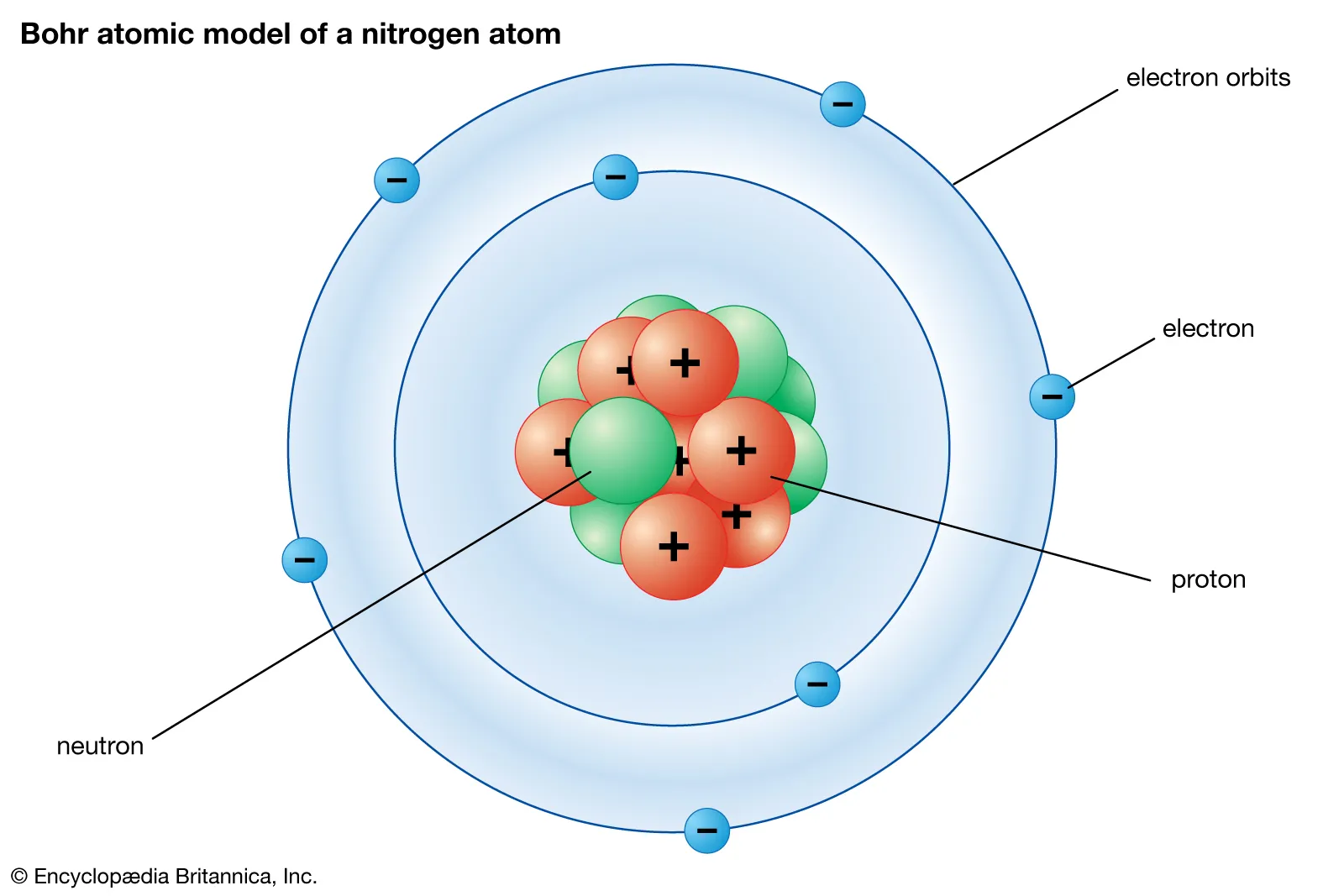
What was Bohr's model of the atom?
Electrons orbit a small, positively charged nucleus in fixed energy levels or shells.
55
New cards

What did Rutherford's alpha-scattering experiment show about the atom?`

Most alpha particles passed straight through, showing atoms are mostly empty space; a few were deflected, showing a small, dense, positively charged nucleus.
56
New cards
Why was Rutherford's model different from Thomson's model?
Rutherford's results showed that positive charge is concentrated in a tiny nucleus, not spread throughout the atom.
57
New cards
⭐ How would you draw a Bohr model of an atom?
Draw a central nucleus containing protons and neutrons, then draw electrons on fixed shells around it.
58
New cards
How can you estimate the size of a molecule using the size of an atom?
Estimate a molecule's size by comparing it with the known size of an atom and considering how many atoms fit across it.
59
New cards
What is density?
Density is mass per unit volume.
60
New cards
How do you calculate density?
Density = mass ÷ volume.
61
New cards
What is the equation triangle for density?
Mass = density × volume; density = mass ÷ volume; volume = mass ÷ density.
62
New cards
How can you calculate the volume of a regular solid?
Measure its dimensions and use the appropriate geometric formula, such as length × width × height for a cuboid.
63
New cards
⭐ How can you find the volume of an irregular solid?
Use water displacement: measure the starting volume, submerge the object, then calculate the increase in volume.
64
New cards
Why do solids, liquids and gases have different densities?
Their particles have different arrangements and distances apart, so the mass contained in the same volume differs.
65
New cards
What is a thermal energy store?
An energy store associated with the temperature of an object or substance.
66
New cards
What happens to a substance's thermal energy store when its temperature increases?
Its thermal energy store increases.
67
New cards
What is the difference between a physical change and a chemical change?
A physical change does not create a new substance; a chemical change produces one or more new substances.
68
New cards
How are atoms affected by a physical change?
The atoms are rearranged or change their movement and spacing, but the atoms themselves remain the same.
69
New cards
What is a results table used for in an experiment?
To record measurements clearly, including headings and units, so results can be compared and analysed.
70
New cards
What is specific heat capacity?
The energy needed to raise the temperature of 1 kg of a substance by 1°C.
71
New cards
How do you calculate energy transferred using specific heat capacity?
Energy transferred = mass × specific heat capacity × temperature change.
72
New cards

What is the equation for specific heat capacity?

Change in thermal energy = mass × specific heat capacity × temperature change (E = m × c × ΔT.)

73
New cards
What do the symbols mean in E = mcΔT?

E is energy in joules, m is mass in kilograms, c is specific heat capacity in J/kg°C, and ΔT is temperature change in °C.

Energy equals mass times specific heat capacity times change in temperature.

74
New cards
How can experimental results be compared with an accepted specific heat capacity?
Calculate the experimental value, compare it with the accepted value and consider measurement errors and energy losses.
75
New cards
What is specific latent heat?
The energy needed to change the state of 1 kg of a substance without changing its temperature.
76
New cards
What is the difference between latent heat of fusion and vaporisation?
Fusion changes a solid into a liquid; vaporisation changes a liquid into a gas.
77
New cards
How do you calculate energy transferred during a change of state?
Energy transferred = mass × specific latent heat.
78
New cards

What is the equation for specific latent heat?

Thermal energy = mass × specific latent heat (E = m × L.)

79
New cards
Why does temperature stay constant during a change of state?
Energy is used to change the arrangement and separation of particles rather than increase their average kinetic energy.
80
New cards
What is gas pressure caused by?
Gas particles colliding with the walls of their container and exerting a force.
81
New cards
How does increasing gas temperature affect pressure in a sealed container?
Particles move faster and collide with the walls more frequently and with greater force, increasing pressure.
82
New cards
Why does gas pressure increase when particles move faster?
The particles transfer more momentum to the container walls during collisions.
83
New cards
⭐ What should a pressure-temperature graph show for a gas at constant volume?
Pressure increases as temperature increases; the graph is directly proportional when temperature is measured in kelvin.
84
New cards
What is the relationship between gas pressure and temperature at constant volume?
For a fixed mass of gas at constant volume, pressure is proportional to its absolute temperature in kelvin.
85
New cards
What is speed?
Speed is the distance travelled per unit of time.
86
New cards
How do you calculate speed?
Speed = distance ÷ time.
87
New cards
What is the equation triangle for speed?
Distance = speed × time; speed = distance ÷ time; time = distance ÷ speed.
88
New cards
How do you convert metres per second into kilometres per hour?
Multiply the speed in m/s by 3.6.
89
New cards
How do you convert kilometres per hour into metres per second?
Divide the speed in km/h by 3.6.
90
New cards
What is a scalar quantity?
A quantity with magnitude only, such as distance, speed or mass.
91
New cards
What is a vector quantity?
A quantity with both magnitude and direction, such as displacement, velocity or force.
92
New cards
What is the difference between distance and displacement?
Distance is the total path travelled; displacement is the straight-line change in position in a specified direction.
93
New cards
What is the difference between speed and velocity?
Speed is distance travelled per time; velocity is speed in a specified direction.
94
New cards
How are positive and negative directions used with vectors?
One direction is chosen as positive; the opposite direction is negative.
95
New cards
What is acceleration?
The rate of change of velocity over time.
96
New cards
How do you calculate acceleration?
Acceleration = change in velocity ÷ time taken.
97
New cards

What is the equation for acceleration?

Acceleration = (Final velocity - Initial velocity) ÷ Time taken (a = (v - u) ÷ t.)
98
New cards
What do the symbols mean in a = (v - u) ÷ t?
a is acceleration, v is final velocity, u is initial velocity and t is time.
99
New cards
What does negative acceleration mean?
Acceleration acts in the negative direction; it does not always mean an object is slowing down.
100
New cards
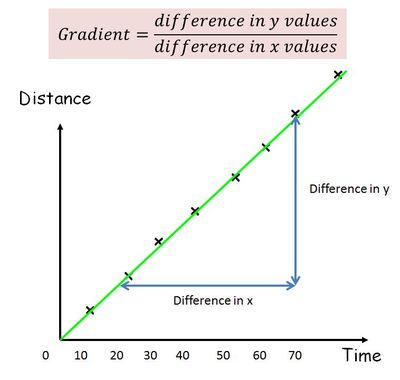
⭐ What does the gradient of a distance-time graph represent?
Speed.
Speed.



