Exotic animal integument, avain integument + practical SDL....
 Call Kai
 Learn
 Practice Test
 Spaced Repetition
 Match
 Flashcards
 Knowt Play
1/86

There's no tags or description
Looks like no tags are added yet.
87 Terms
What is the overview of the components of avain skin
skin
scales
beak
cere (bird nose)
feather
snails
foot pads
adapted apendages
What are the layers of avain skin.. (THIS)
Epidermis - 3 layers
dermis - FEather follicles
subcutanues..
Whole skin = much thinner than mammalian skin.
What are the 3 layers of the avain epidermis
Basal (germinative layer)
Intermediate layer
outer cornified layer
How does the skin move and what helps some avain skin appear ‘ scaly’
KEratinocytes may produce excess keratin
Strieted muscles in the epidermis will move the skin..
What is the different between mammalian and avain skin
Avain skin = no glands, feathers and is much thinner…
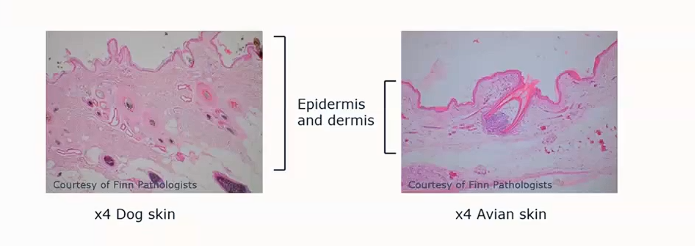
What are teh 2 layer sof the bird dermis..
Superficial layer = varying thickness of collagen interwoven bundles
Deep layer = fat feather follcielsm smooth mucles blood vessels and nerves supplying the dermis and epidermis
What is the subcutaneous bird layer formed of…
Mainly loose connective tisssue
containes fat as a layer + discrete fat bodies e.g. yellow dposits under the skin + can vary between speceies
e.g. fat is depositive d around the pec, cloaca and the back
Clinical note of limited dermal tissue in birds
doesnt close easly so cannot sutrie together as lack of intentino
as acian skin is thin the bird skin willl heal VERY VERY quickle
just must stay moist and clean…
What is podotheca
non feathered areas of the bird - highly keratinised epidermis…
What is the importance of pododermatisis…
birds = VERY PRONE no foot pads, have stages from 1 -5

what are birds missing and what replaces tehm
have NO sebaceous or sweat glands, skin is dry thin and inelasetic, expectiopise are uropygial gland, ear canal + pericloacal glands..
What is the uroygial gland..
also called the ‘preening gland’ and looks like a nipple..
helps to maintain feather contions
secretions and water proofing + cojntains pro vitamin D so that when the light hits it it can be converted into vitamin D…
not present in ALL species, can appear as a ‘nipple’

What is the significant of avian skin attatchent..
with overly head and extremeties attatched to underlying skeletal mucles
over rest ogf body = CAN be areas where skin is more loosly attatches.. this is refered too ‘ Patagia’ this is areas where Wings, legs neck and tail joins the body - this is in areas of movemnt
What are th 4 patagia on the bird for the purpose of subcutaneous fluids..
Propatagium= wing web
Postpatagium - caudal cangle of the carpus
metapatagium - caudal junction of the wing + thorax
Alular patagium — space between alula and carpi..
Can be sites of self induced ulcerative dermatitis

What is the anatomy of the bird beak
Bones of the upper maxilla + lower mandible with a horny covereing
beak is simil rtoo the skin, but has a modified epidermis, thick stratum corneium _ bound in calcium phosphate with layered crystals of hyroxyapatite + abundant keratin..
Harness of beak varies between psittacigorms raptors, it is soft in anseriformes…
What is a rhamphotheca
Horny covering over the beak
What is a bill tip organ
specialised sensory structure found aat the tip of the beak and allows sensitisation to heat cold pressure and pain due to the presence of mechanoreceptos (herbst corpuscle) Histologically recognisable as papillae + originates from teh dermis..
BIrds which are granivores where they feed by pecking do NOT have this orgen.
V?ERY developed in water feeding birds - high sensitivity is required…
What is an egg tooth..
hatch used too open the egg
used to penetrate air space…
some birds lack the tooth and use teeth instead
sometimes reptiles can have it too…

What is the cere
Where the beak and the head join, at the base of the upper beak and composed of keratinised skin..
where nostrils are located..
colour can be influenced by diet and hormones…
In most budgeies the male cere = blue + the female = brown..
In raptors high carotenoids will colour the cere more yellow..

What is brown hypertrophy of the cere in budgies..
can hav ehyperkeratoiss _ kin flacking (can be associated iwth mites)

What are the 3 core functions of feathers
Flight
Insulation
Water proofing
Fun additional uses of feathers..
courtship displays
Defence
aggressive territorial behaviour
What are the 2 types of key bird feathers..
Pterylae = feather tracts
Apteria = areas which do not have feather tracts, i.e. for more warmth
Lcation and number of tracts will vary between slecues, feathers can smoothly overlap and conform to the natural contors of the body
What are apteria feathers
Often in chicks, appear like spikes from new feathergrwoth
cab assess qaulity of underlying fur
no feathers over where the jugular vein should be
also used for intrademal skin testing
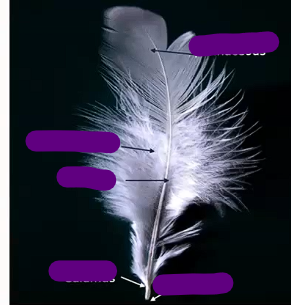
Tail Anatome - calamus, rachis, chaft, vane
Also have barbs + barbules which are over and interlocking allwing for flight

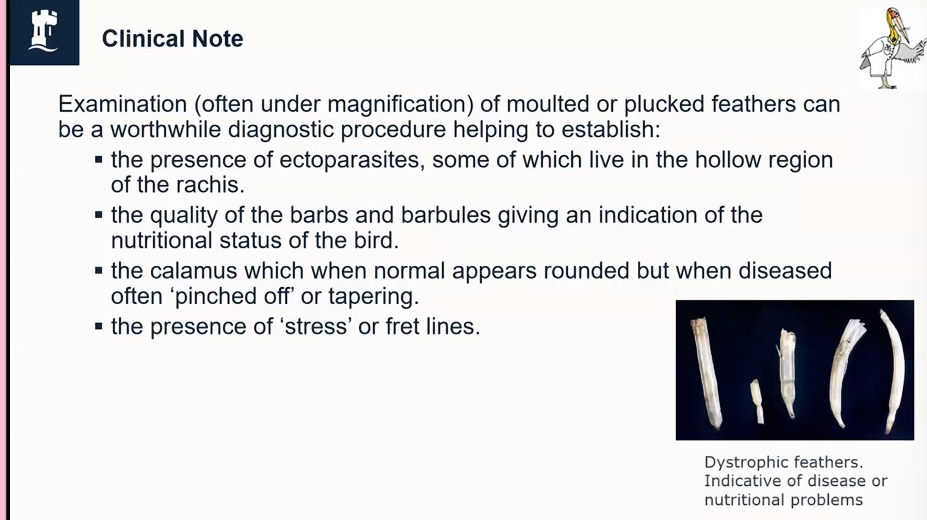
How can you examine a feather under a microscopeE
be careful when sampling as can be painful
What are the 5 key types of feather..
contour feather
coverts
remiges
retrices
and specialsed adapted feathers
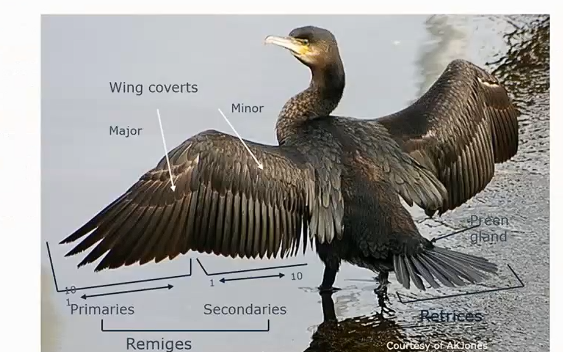
primary and secondary feathers
primary - take off and landing
secondary - gldings
What are your down feathers..
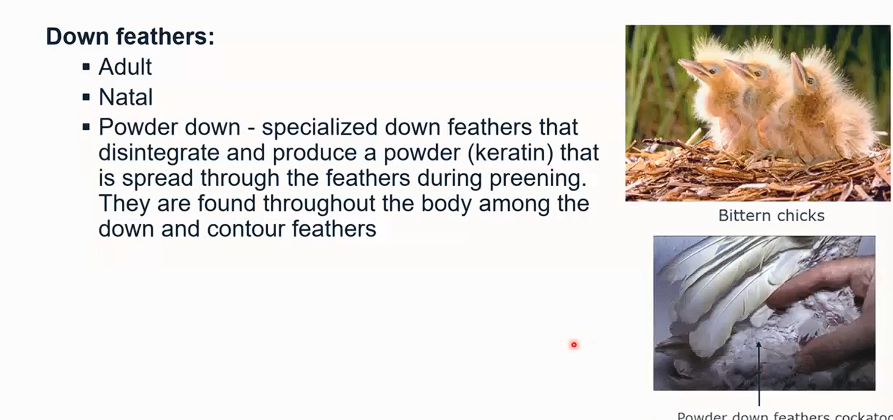
often powder down as can break down into powder down…
can be infections causes in more down
iff break is shiney can indicate a lack of powder down
powder sown finer than talcom powder and used for preesing. can be mistaked for excess skin production


What are retained feathers sheaths
can look like ‘ pin feathers’ indicate disease

What are blood feathers
feathers that contains blood in shaft, as they mature the blood will be there. Used too perform surgery.. do not remove unless under aneathesia

What factors influence colour of bfeathers
1) biochromes - e.g. melanins
2) Feather structure - as structue changes willl reflect the light differently, e.g. irridescent glow

What 3 ways can feather colours change..
moult (seasonal)
mutations
disease.. E,g, avian circovieus, psittacine beak and feather disease, essential amino acids. someitmes blue colour can be from vasoconstrction etc….
What are fret marks
clear breaks in feather colur, poorly, streesed of poor nutrition

What is moult
occours seasonally usually once a year
a new feather will come in from beneath
first chicken will occour at 18 months
may be gradual dramatic or continual

What 3 things control moutl
circannual rthys + changing photoperiod and temperalture
pineal fland and hypothalmic pituatory adnautonomic nervous system
hormonal influences (oestronge, progesterions, thyroid + catacholamies
WHat happensif there is a lack of keratinocytes
can repaire after 4 weeks and sometimes without a moult

ferret colour
Mouse , rat and gerbil official coat colour
Agouti
Chinchilla official coloure
blue grey
Ferret sweat glands?
none
Sweat glands rat
feet only
Ferret coat
short undercoat + long course gaurd hairs
skin = thick + sebaceous glands.. so very oily + strong smell..
NO skin sweat glands.. Prone too overheating
seasonal moults - coat thins + lightens in the spring…
What is the rabbits coat
Fur long and short gaurd hairs.. NO fur on feed 0 therefore feet are vulnerable to the ground..
Large ears for thermoregulation…
Scent glands = submental anal and inguinal
What is dewlap…
A fat pouch under the body, used too store fat before they give birth
can be a risk factor and makes the rabbits over weight..
What are some breed diposition issues of some common rabbit breeds…
Rex = short gaurd hairs - hock sores
Angora = Longer undercoat, therefore the coat will matt
GIANT BREEDS — > Skin fold dermatitsm pododermatitis…
Lops = Deformed ear canals, ear infections + ectropian…
Brachycephallic breeds are NOT a breed BUT BUT BUT certian rabbits will have breathing difficultites..
Where is the common sebaceous glands found on a guinie pig….
1 cm dorsal to anus…
OFten matted _ sticky in makes 0 IT IS NORMAL…
Normal skin variations in the guinea pig..
Thick foot pads - prone to urine scald + bumble food…
HAIRLESS areas behind ears….
What are the significance of chinchillas..
Dense soft coat - 60 hairs/ follicule
needs regular dust baths..
can have a FUR SLIP defence..
ears have a large bald patch..
What is hamster skin...
VERY loose skin which stretches…
Large flank + ventral sweat glands..
Glands are more prominenat in MATURE males..
Skin significanve in rates..
Zymbals glands at base of ear…
Tail = HAIRLESS surface… Thermoregulation..
Tail Slip…
Extensive mammary tissue
females = visible nipples
Where is the gerbil scent gland…
CAre tail slip + ventral scnet gland…

Sugar Gliders
Marsupial so females have a pouch + 4 teats…
CLoaca to an external orogice..
Scent glands = forehead makes + througt and paracloacal..
Makes = pendulous scrotum..
What is a patagium sugar glider..
patagium stretching, front an hind legs like a mini prarchute..
What do we need to know about African Pygmy hedgehog..
hair and sebaceous glands absent inthe spiny skin, many sweat and sebaceous glands in haired skin and feet + can get bumble foot
Reptile Skin
Dry skin + FEW galnds
femoral + pre cloacal pores..
The reptile skin:
display, protection, camougflage, thermoregulation, fluid homeostasis,
ALL reptiles = specific enviroment..
Difference between grass snake and bearded dragon
Grass Snakes —> Shed wHOLE body+
Bearded dragon —→ Spines for protection + will loose skin bit by bit
BOTH NEED A ROUGH SURFACE TOO RUB AGSINT..
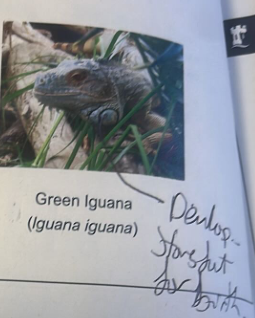
Where is the dewlap in the green the iguana
What is the significant of reptile dermis
contains pigment cells nerve and vessles
Has OSTERODERMS (skin in order to make bony plates)
+ chelionshell is mafe from approx 60 osteroderms… Shell = keratin nerves bones.. shelll —> /bone..
What is the significance of reptile skin colour…
Chromatophores = pigment containing cells (between dermis and epidermi
Influence by aytonomic nervous system, hormones light and temperature
used in camoflauge, display an dthermoregulation
PIGMENTS…
3 pigments that influence reptiel skin…
Chromotaphores - pigment containing cells.
lie between dermis and epidermi s
influenced by autonomic nervous system, hormonse ligth and temperature
What is the parietal eye…
3rd eye.. .connectedwith the pineal gland + thermoregulation and hormone production… isially on top pof head..
3 additonal adpations of reptile skin….
HEat sensory pits 0 in baos pythons and bvipers
Crests frills hrorns and gular pouches and spines,, used for display and or defence..
spectacles - clear scales over skies over some geckos..
3 additional adaptiosns of reptile skin…
cloacal spurs….
* Rattles for loosly fitting keratin
Adhesive toe pads… - rows of tine overlapping lamellae… tiny branchig hairs..
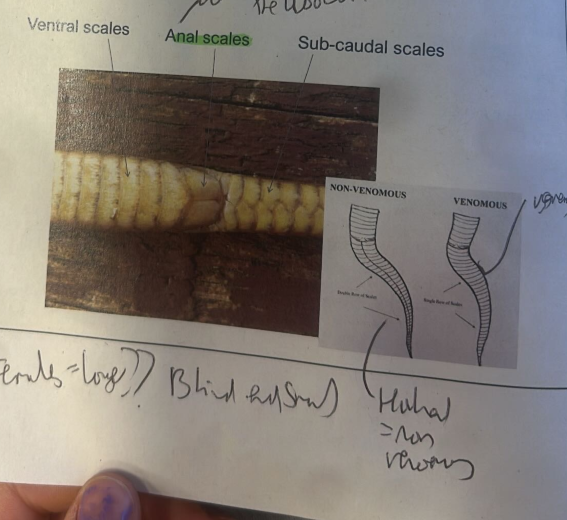
How to tell if a snake is venemous…
look downwards form the anal scales… IF a line down the midddl enon venomous no difference form the anal scales = veneomous…
Chelonian Shell
Carapace dorsally and flattened plastorn
osteoferms are fused + covered by epidermal scutes
osteoderms and scutes do NOT overlap…
scutes can show additon of new keratin…
Key points of Ecdysis…
shedding of skin under thyroud glands..
snakes and geckos shed whole skin…
Geckos will eat skin…
chelonians only shed legs tail and neck skin + aqauatic chelonia shefd INDIVIDUAL scutes
What are the stages of Ecdysis..
stratum intermediate - 3 layer epidermis
Lymph and enxymes diffuse + form a cleavafe zone
old skin is then shed, new skin hardens…
What happens to the skin during ecdysis…
DUring ecdysis skin becoms more permeable and vulnerable to parasites…
Absorption of topical medicines can be enriched..
SNAKES = 2 stage ecdysis … blue white discolouration… + snakes = aggressive + skittish..
Ecdysis conditions required..
Increased humidirty
Rough object rub object…
failure to humidity makes this difficult
What is the amphibian skin adaptions…
wholly or partially reliant on water..
Integument is very importnat for proetctions, sensory thermorefulation and fluid balance…Damage or disease = serious + life threatening…
Skin = VERY PERMEAVLE>.
Loos attatchement of dermis
many amphibians shed and eat skin on a regular basis
What are skin adaptions of Amphibian…
Anurans drunking patch/ pelvic patch..
galnds in the epidermis… produce mucous + waxy substances…
Galnds also producuce chemicals serve to prtect aggainst predators and infection..
How do frogs produce toxins..
poison arrow frogs = potent toxins
tocins = metabolised from their wild prey… captive contain litte if any toxins..
fire salamanders.. spray dorsal glands…
Examples of amphibian examples…
poision arrow frog s= tightly covered skin
vietnamese mossy frogs skin..
slimy salamander = thick skin too deter predators
What is the permeability of frog amphibian culture,…
use to apminister topical medications by shalllow water bathig….
even trace amounts of envrioemental toxins.. can cause illness and death
What are the adaptions of fish skin…
semi water proof to mainain fluid and salt balance…
Marine vs freshwater fish = different adaptions to cope
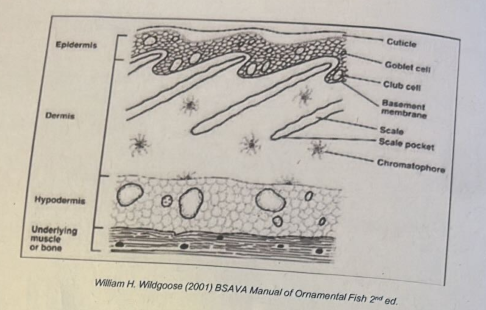
skin = epidermal cells + scales covered by a protective outer cuticel…
+ club cells serete alarm substances..
breeding ubercles in males.
3 things that make fish skin unique..
epidermal cells = can cell divide…
specialised derivatiees inc spines, stings, bony plates _ lateral line system
FINS = modified structures of skin, aid locomotion + balance
Fish fins labelled

What does the pineal gland do…
WIll release melatonin itself to control the regulationof circadian rthymns
bearded dragon back foot?
long and pointy
how do you bcs a bearded dragon
fat pads lateral and caudal too the ribs
What is in the 1st third of a snakes body
trachea oesophagys, heart
2nd - liver, lungs and stomach
3rd - intestines reprodcuetinve siges..
What is the tail slip
gerbil loosing ski n
what do chinchillas need to do
fur slip and dust bath
what do rex rabbits not have
no gaurd hairs