DAT Organic Chemistry Review
 Call Kai
 Learn
 Practice Test
 Spaced Repetition
 Match
 Flashcards
 Knowt Play
1/157

There's no tags or description
Looks like no tags are added yet.
158 Terms
Bond angles Tetrahedral
109.5
Bond angle Trigonal Planar
120
Bond angle strait
180
Lewis Acid
Electron pair acceptor
Lewis Base
Electron Pair donor
Molecular orbital order
Sigma, Sigma star, pi, Sigma 2s, sigma 2s star, Pistar
Acid Chloride
Carbon double bonded to an oxygen, and single bonded to a chloride and an R group

Alcohol
Oxygen with two lone pairs and a hydrogen attached to an R group, hydroxy group

Aldehyde
Carbon double bonded to an Oxygen and to a hydrogen and an R group, Carbonyl group

Alkane
single bonds with Hydrogens
Alkene
compound with double bonds
Alkyl halide
halide bonded to an R group, Halo group
Alkyne
triple bond between carbons
Amide
Carbon double bonded to oxygen and then to a nitrigen bonded with 2 hydrogen or R groups

Amine
R group or groups bonded to a Nitrogen and or hydrogens, Amino group
Anhydride
2 carbons double bonded to 2 oxygen and single bonded to one oxygen with R groups attached on both ends

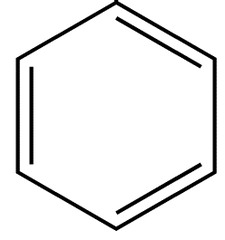
Aromatic compound
A ring, phenyl group
Carboxylic compound
Carbon double bonded to Oxygen and single bonded to an oxygen with another hydrogen

Ester
Carbon double bonded to Oxygen, and single bonded to another oxygen with an R group attached.

Ether
2 R groups separated by an oxygen, AKA alkoxy group

Ketone
2 R groups separated by a carbon double bonded to an oxygen. AKA carbonyl group

Nitrile
Carbon group triple bonded to Nitrogen and another R group AKA cyano Group

Sulfide
2 R groups separated by a Sulfur, AKA alkylthio group

Thiol
R group attached to a sulfur, which is connected to a hydrogen, AKA mercapto group

Thioester
R group connected to a Carbon double bonded to an Oxygen and another Sulfur with an R group

pka Hbr
-9
pka hcl
-7
pka h3O+
-2
pka Oh2
-2
pka COOH
5
pka nh4+
11
pka R nh3
11
pka h20
16
pka alcohol
16
pka alkyne
25
pka nh3
38
pka R nh2
38
pka alkene
43
pka alkane
50
Constitutional Isomer
Different compound with the same molecular formula. Structural Isomer. Differs in the way that they are connected
Stereoisomer
the same molecular formula, but different orientation in space. Comprises entantiomers and diasteriomers
achiral
superimposable, don't have stereoisomers
chiral
are not superimposable
Stereogenic Center
also known as chiral center, an element bonded to 4 distinct groups.
enantiomer
differs in the 3 dimensional arrangement. Contains chiral centers
Power rule of sterioisomers
2^n n is the number of stereoisomers
Meso Compound
A compound that contains chiral centers yet is superimposable on it's own image. Hint is to look for a plane of symmetry.
Determining Leaving group ability
the better leaving group is the weaker base
trends in basicity of the periodic table
left to right decreases, down the table decreases in basicity
determining strength of a nucleophile
The stronger the base, the more likely the nucleophile.
steric hindrance
large bulky groups prevent the mobility of a nucleophile
Polar Protic solvents
have a charge and connect to polar solutes through a SH or OH bond
Protic Solvents trends in nucleophilicity
increases down the periodic table because larger molecules are less likely to bind to the solvents and are
Aprotic Solvents
follows the rules for nucleophilicity
effect of increasing R number on rate of reaction
as more and more R groups are added, steric hindrance causes reaction rates to decrease because the energy of activation is increased
rate determination in an SN1 reaction
only by changing the concentration of the alkyl Halide is the rate changed
stability of a carbocation
increases as more R groups are attached to the positive charged carbon
aryl halide
halogen bonded to an aromatic ring
alkyl halide
halogen bonded to an sp3 carbon
Vinyl halide
halogen bonded to double bonded carbon
SN1 reaction
a two step process in which the carbocation is formed first through the breaking of bonds with the leaving group, and then a new bond is formed with the nucleophile
SN2 reaction
a one step process in which the reaction is concerted, both the bond breaking with the leaving group and the formation of bond wit nucleophile occur at the same time.
SN1 reaction degree of alkyl halide
3rd and second degree alkyl halides. Has to have some substitution in order hybridize and balance the charge.
SN2 reaction degrees of akyl halides
Steric Hindrance determines the speed. Less substituted goes faster
SN1 reaction nucleophile
wants a weak nucleophile
SN2 reaction nucleophile
wants a high concentration of a strong nucleophile
Ranking of leaving group ability for both SN1 and SN2 reactions
Most basic is best, increasing in basicity down the periodic table
SN1 preffered solvent
aprotic, meaning polar but containing no hydrogen bonds, so as to not dissolve the nucleophile
SN2 preffered Solvent
protic, which contains hydrogen bonds so as to solvate the cations that are formed through the reaction.
solvolysis
Using the solvent, or the solution in which the reaction is taking place, as the nucleophile
Good nucleophiles that are weak bases
Iodine anion, bromine anion, Chlorine anion, fluorine anion, cyanide, SCH3, and N3 anion Azide
leaving group ability
more acidic the better, down the periodic table is better
regioselective
a reaction yields predominantly one constitutional isomer over another when more than one is possible
stereoselective
a reaction yields more of one stereoisomer over another when more than one is possible
SN1, SN2, E1, E2 Chart

Nucleophile considerations when determining type of elimination or substitution
must be a weak nucleophile for a carbocation to form
Ranking of elements for leaving group ability
IBrCl
Dehydration of alcohols
primary carbons undergo E2 because they are so unstable as carbocations, Secondary and tertiary carbons undergo E1
Good nucleophiles good bases
O H negative, R O H negative, R 2 O H negative, Lithium, negatively charged alkyne
Good nucleophiles weak bases
Iodine anion, bromine anion, cyanide anion, Ch3coo, H S minus, R 2 N H, Azide, Sulfur with R group
DBU
weak nucleophile because it is a big molecule, but a good base
DBN
weak nucleophile because it is a big molecule, but a good base
LDA
Weak nucleophile because it is a big molecule, but a good base
rule for bases
weak base if conjugate acid is stronger than 12
HO-
Good nucleophile, Good base
H20
weak nucelophile, weak base
I-
good nucleophile, bad base
RS-
good Nucelophile, weak base
alkyne anion
strong nucleophile, strong base
methyl anion
strong base, strong nucleophile
Lithium cation
strong nucleophile, strong base
ROH
weak Nucleophile, weak base
RCOOH
weak Nucleophile, weak base
RCOO-
weak base, strong nucleophile. PKA carboxylic acid is 5
Azide anion
strong nucleophile, weak base
HS-
strong nucleophile, weak base
R2N-
strong nucleophile, strong base
Cyanide anion
weak base, strong nucleophile
Br-
weak base, strong nucleophile
R2NH
strong nucleophile, weak base