Outlet Obstruction
 Call Kai
 Learn
 Practice Test
 Spaced Repetition
 Match
 Flashcards
 Knowt Play
1/20

There's no tags or description
Looks like no tags are added yet.
21 Terms
Causes/Differential Dx of urinary obstruction
Congenital (UPJO, PUV), stones, ureteral strictures, extrinsic compression (tumor, pregnancy), retroperitoneal fibrosis, BPH, urethral strictures, dysfunctional bladder

Classic presentation of obstruction
Flank pain, suprapubic pain, UTI, overflow incontinence, anuria, incidental hydronephrosis on imaging.

Upper vs lower tract obstruction clues
Hydronephrosis on US/CT = upper
Distended bladder= lower

Key anatomic choke points
UPJ, pelvic inlet crossing over iliac vessels, UVJ.


Ureteral “water under the bridge” concept
Ureter passes UNDER uterine artery/vas deferens → injury risk during gynecologic surgery.


Unilateral Urethral Obstruction (UUO) early physiologic response
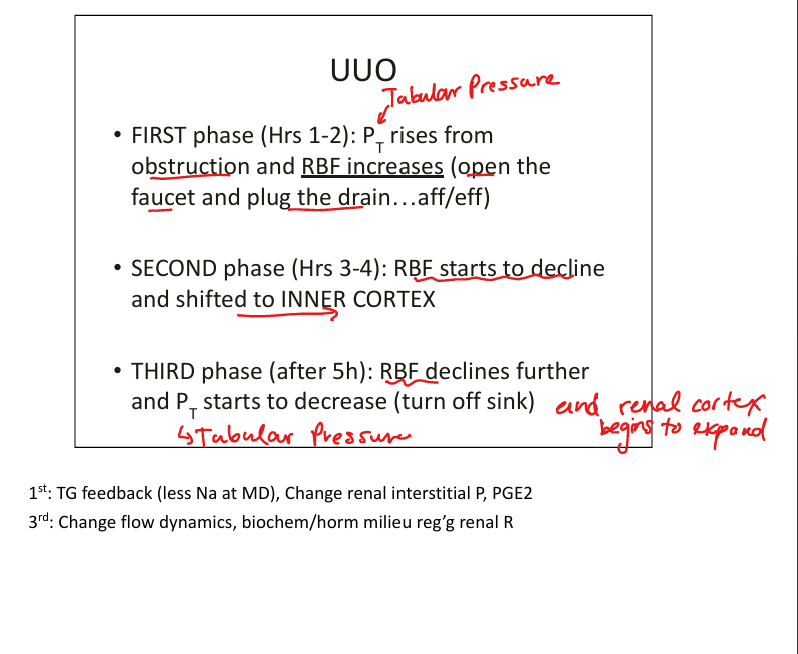
↑RBF via afferent vasodilation (PGE2, NO) + ↑tubular pressure → slight GFR drop. (open faucet, plug the drain (aff/eff)).
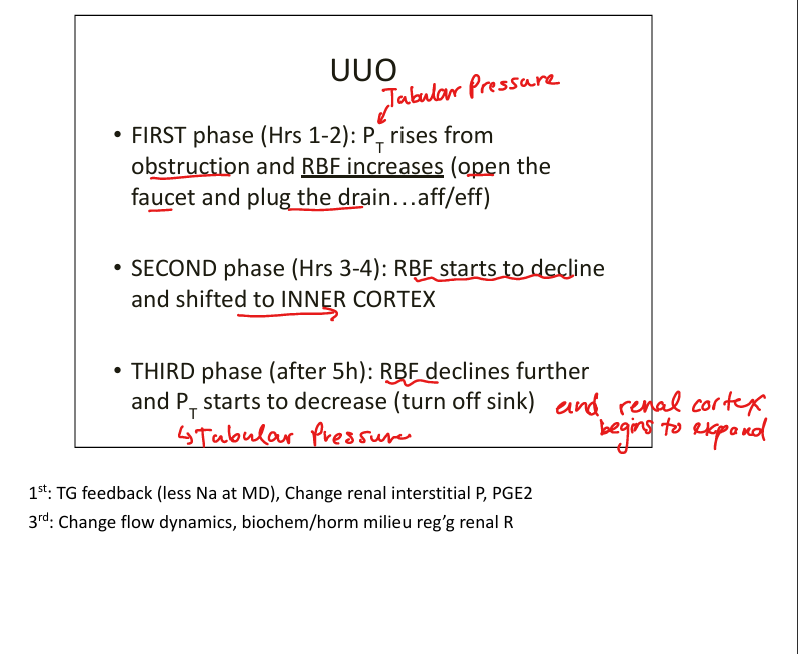

Unilateral Urethral Obstruction (UUO) second/third physiologic response
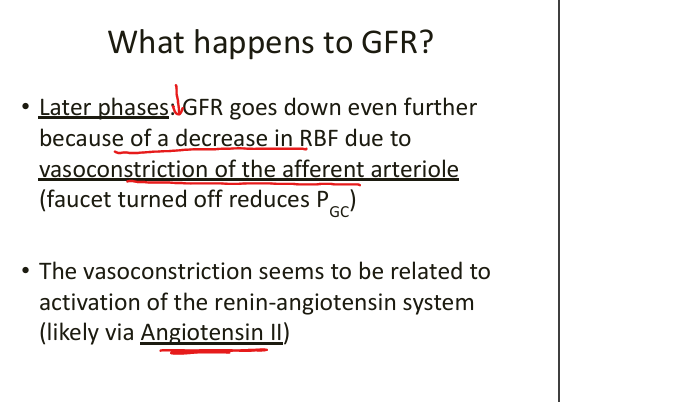
↓RBF from afferent vasoconstriction (RAAS/Ang II) →tubular pressure decreases (shut off sink)→ progressive GFR decline
Bilateral Urethral Obstruction (BUO) physiologic response
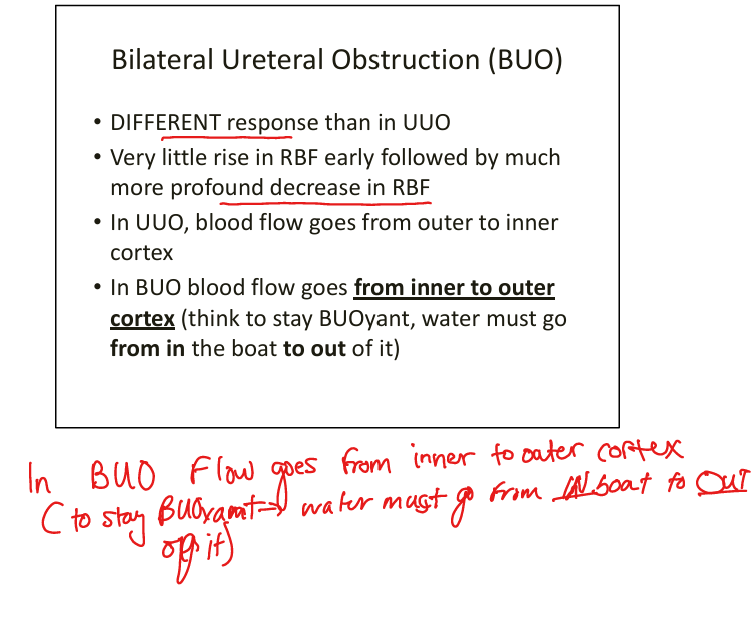
Minimal early vasodilation, profound later vasoconstriction, persistent ↑ureteral pressure, blood flow shifts inner → outer cortex (BUOyant boat where water goes from IN boat to OUT boat)

Why BUO causes worse physiology
No “escape route” for vasoactive mediators (because both ureters are obstructed)→ sustained pressure + severe post‑obstructive diuresis.

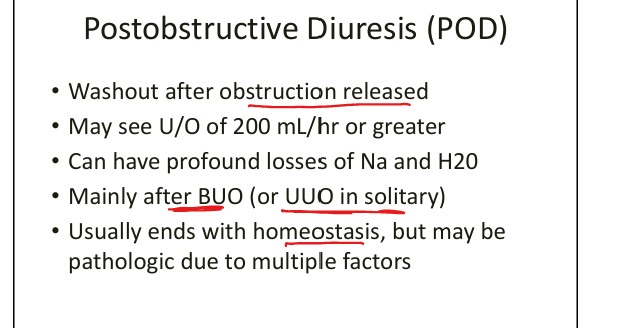
Post‑obstructive diuresis definition
Large urine output (>200 mL/hr) after relief of BUO or solitary‑kidney UUO→leads to profound loss of Na and water which can be pathologic
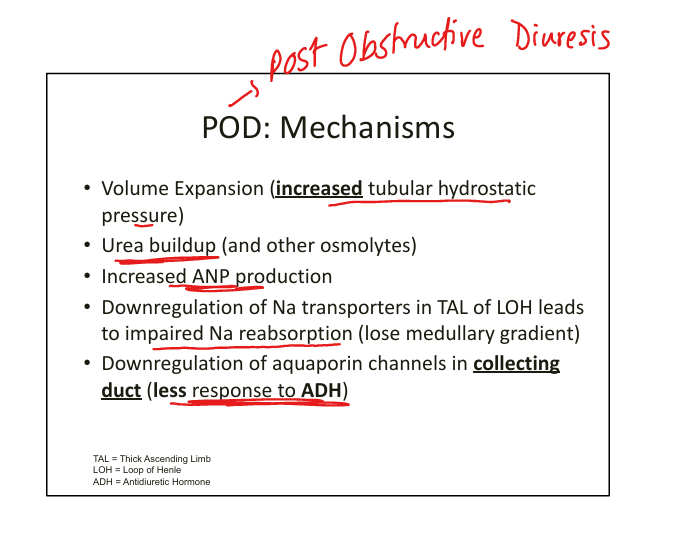
Mechanisms of post‑obstructive diuresis
↑ANP, urea washout, ↓Na transporters in TAL, ↓aquaporins(these all occur during obstruction to reduce water) → obstruction relieved→salt wasting then water diuresis without proper homeostasis and correction from body

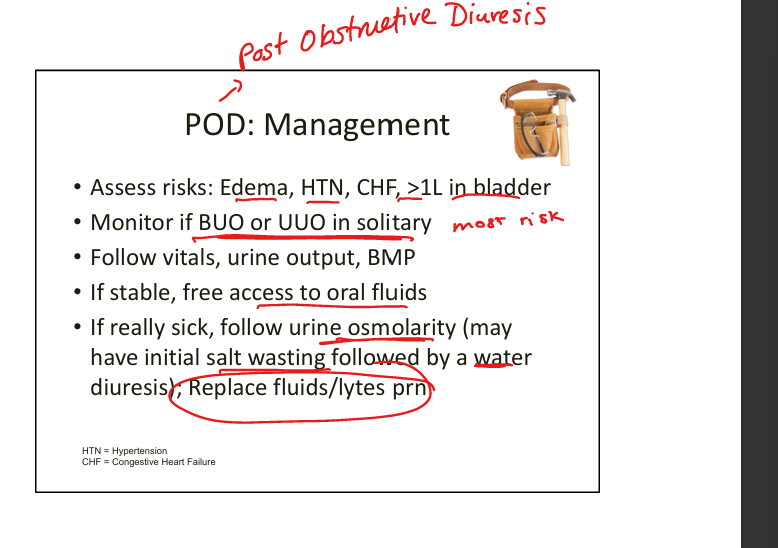
Risk factors for POD
BUO, solitary kidney obstruction, bladder retention >1 L.

Management of PostObstructive Diuresis
Monitor vitals, BMP, urine output→give fluids, replace electrolytes if depleted
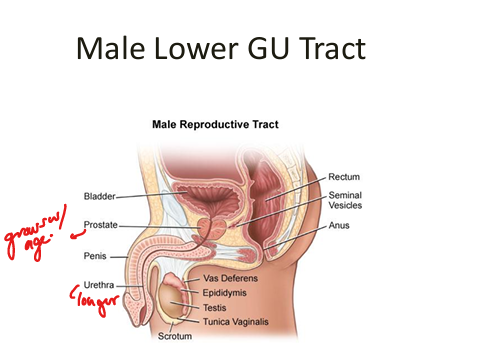
Male bladder outlet obstruction causes
BPH, urethral stricture, median lobe enlargement.
Female obstruction considerations
Ureter injury during pelvic surgery

Medications: alpha blockers
Tamsulosin, doxazosin, terazosin, prazosin, alfuzosin relax prostate smooth muscle → improve flow.

Medications contraindicated in outlet obstruction
Anticholinergics (oxybutynin) worsen retention → NOT first‑line in BPH with high PVR.

Most common cause of prenatal hydronephrosis
UretoPelvic Junction obstruction.

Posterior urethral valves
Congenital cause of severe male infant obstruction → bladder thickening + hydronephrosis.
Overflow incontinence mechanism
Chronic retention → bladder overdistension → dribbling despite obstruction.
UUO vs BUO Differences
UUO: blood flow out to in, early vasodilation via PGs and NO followed by prolonged vasoconstriction
BUO: blood flows from in to out (BUOyant boat), little early vasodilation, more profound vasoconstriction and Post Obstructive Diuresis (POD)
