Prehistory: Notable Art & Architecture
 Call Kai
 Learn
 Practice Test
 Spaced Repetition
 Match
 Flashcards
 Knowt Play
1/4

Earn XP
Description and Tags
Sources: Sister Wendy Beckett's "The Story of Painting"
5 Terms

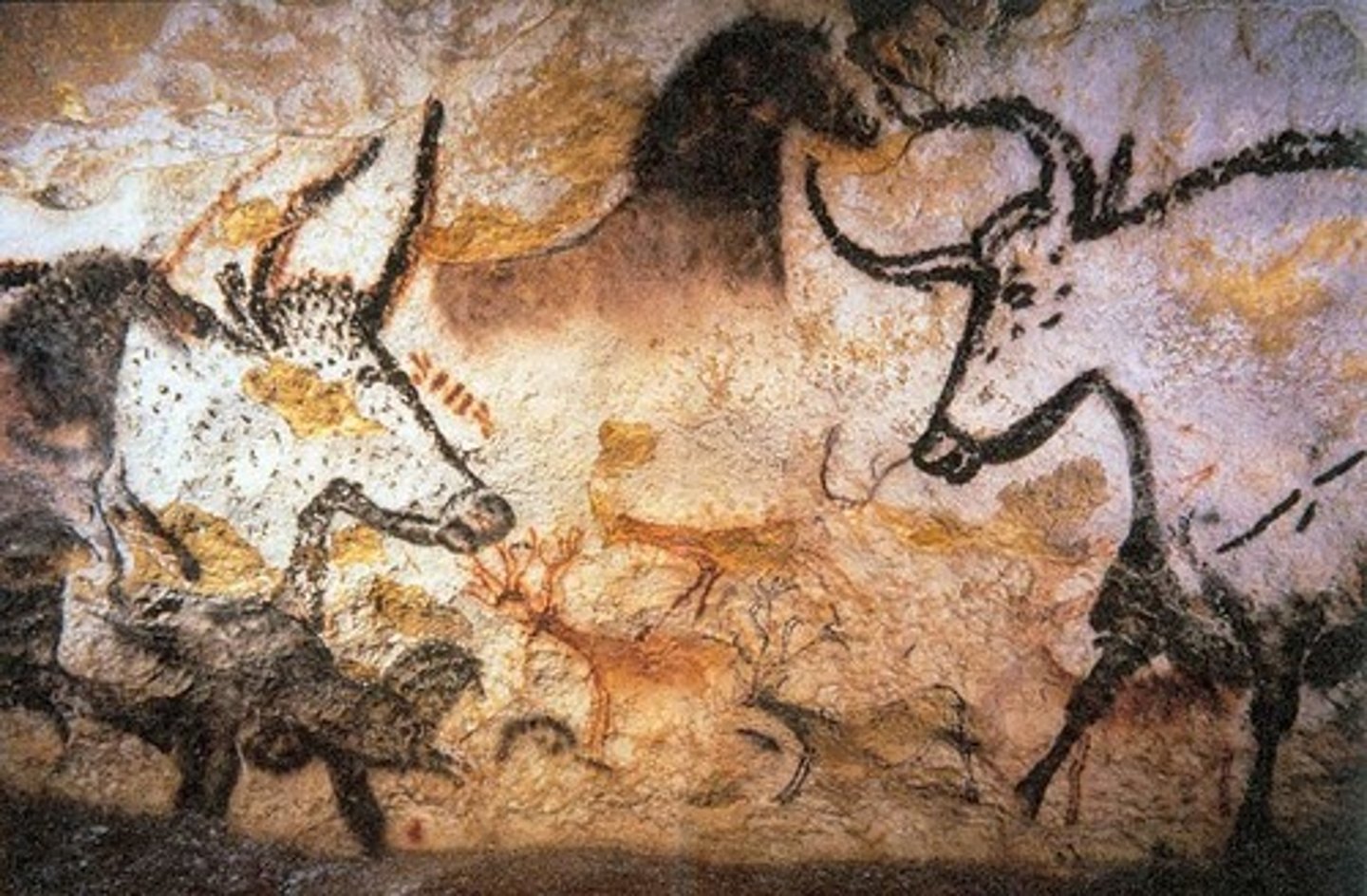
Prehistoric Cave Dwellers / Paleolithic / Stone Age Art (All Facts)
Art Movements whose artists
painted with the aid of small stone lamps, filled with animal fat or marrow
engraved their initial designs into soft rock
blew thin lines of paint onto cave walls through a hollow reed
made colored paints with ochre (a natural mineral that could be crushed to a powder that may have been made from powdered charcoal)
rubbed powdered pigments onto the wall with their hands, producing very delicate gradations of tone akin to soft pastel painting
mixed powdered pigments with some form of binding fluid, such as animal fat, and applied them to the wall with crude reed or bristle brushes
were themselves hunters, whose lives depended on the animals whose images they painted in the caves
It’s possible that these artists believed that by accurately depicting the animals’ power, strength, and speed, they would acquire magical powers with which they might be bale to take control of the animal’s spirit and remove its strength before the hunt
This could be because many of the works from this movement show animals wounded or pierced with arrows, and some even show evidence of actual physical attacks on the painted images themselves

Prehistoric Cave Dwellers / Paleolithic / Stone Age Art (All Characteristics)
Art Movements whose works are characterized by
extraordinary naturalism of animals
anatomical accuracy in the portrayal of animals (believed to be connected to the purpose they served)
lack of naturalism in the portrayal of humans
People are rarely represented, but when they are, it is by the crudest recognizably human shape, or more often by symbolic forms
17,000 - 12,000 BCE - Altamira Bison (All Facts)
Located in Santander (in northern Spain), it was painted on the ceiling of a long, narrow corridor leading from a subterranean cave in the namesake
It is accompanied by a whole herd which majestically surges across the roof, one animal overlapping another which includes horses, boards, mammoths, and other creatures, all the desired quarry of the Stone Age huntsman

15,000 BCE - 10,000 BCE - Lascaux Bison (All Facts)
Work in which
the sticklike man is lying in front of bristling, disemboweled bison
there is a bird or similar figure, possibly a totem or banner displaying the image of a bird