Female Reproductive System Diagram
 Call Kai
 Learn
 Practice Test
 Spaced Repetition
 Match
 Flashcards
 Knowt Play
1/40

There's no tags or description
Looks like no tags are added yet.
41 Terms
menstruation (mensus)
sloughing off of the endometrium that has been prepared to receive a fertilized ovum but it not needed
fallopian tube
tubes which carry eggs from the ovaries to the uterus and which provides the place where fertilization occurs

fimbriae
finger or fringe like projections at the end of the fallopian tubes that help draw in the ovulated ovum

broad ligament
The ligament extending from the lateral margins of the uterus to the pelvic wall; keeps the uterus centrally placed and provides stability within the pelvic cavity.
uterus
A hollow muscular organ in the pelvic cavity of the female, in which the embryo is nourished and develops before birth
follicle
the sac of cells in the ovary in which the egg develops, site where estrogen in produced

corpus luteum
empty ovarian follicle that secretes progesterone after ovulation of the egg cell

ovulation
The process of releasing a mature ovum into the fallopian tube each month as a result of a surge in LH secretion.
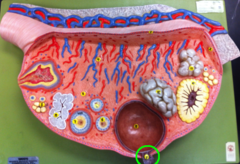
endometrium
inner, mucous membrane lining of the uterus

myometrium
thick muscular middle layer of the uterus

perimetrium
outer thin layer that covers the surface of the uterus
cervix
The interior opening to the uterus

vagina
A muscular, elastic passageway that extends from the uterus to the outside of the body
luteinizing hormone (LH)
secreted by the pituitary gland to promote ovulation
Follicular Stimulating Hormone (FSH)
stimulates the development of ovarian follicles and the production of estrogen by the follicular cells
progesterone
hormone produced by the corpus luteum in the ovary that functions to prepare and maintain the endometrium
human chorionic gonadotropin (hCG)
Human chorionic gonadotropin is a hormone produced by an embryo following implantation. The hormone helps maintain the uteral lining during pregnancy by maintaining the corpus luteum. Pregnancy tests detect this hormone when pregnant.
rugae
folds in the vagina

pituitary gland
endocrine gland at the base of the brain that produces LH and FSH

Hypothalamus
brain region controlling the pituitary gland by secreting gonadotropin releasing hormone

23
number of chromosomes in an ovum (egg)
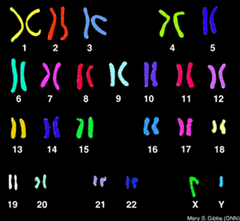
46
the number of chromosomes in a zygote

Estrogen
Female sex hormone produced by follicular cells. High levels of this hormone cause a surge in LH secretion.
menarche
the first menstrual period
luteal phase
period of the menstrual cycle activity (days 14-28)
follicular phase
the stage in which an immature egg completes its first meiotic division
Oogenesis

oogonium
A *precursor* cell that undergoes mitosis during fetal development to produce more stem cells.
oocyte
immature egg
meiosis I (in females)
Primary oocyte divides to produce 1 secondary oocyte and 1 polar body. Happens once per cycle before ovulation.
Meiosis II
the second round of division of the ovum that occurs only after fertilization takes place.
polar bodies
each of the small cells that bud off from an oocyte at the two meiotic divisions and do not develop into ova.
one
the number of eggs produced from one oogonium (egg stem cell)
clitoris
a small sensitive and erectile part of the female genitals at the anterior end of the vulva.

vulva
external female genitalia; includes the labia, hymen, clitoris, and vaginal orifice
hymen
mucous membrane partially or completely covering the opening to the vagina

labia majora
the larger outer folds of the vulva composed of dry keratinized skin

labia minora
Innermost smaller pair of non-keratinized skin folds that protect the vaginal opening
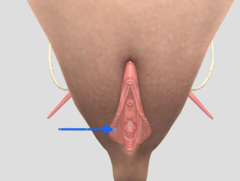
mon pubis
fatty tissue that covers and protects the symphysis pubis; developes pubic hair during puberty

before birth
When does oogenesis begin?
ovary
site where eggs develop
