man exam 1
 Call Kai
 Learn
Learn Practice Test
 Spaced Repetition
 Match
Match Flashcards
 Knowt Play
1/49

Earn XP
Description and Tags
4.1 5.1* 5.2 5.3
Name | Mastery | Learn | Test | Matching | Spaced | Call with Kai | Chat |
|---|
No analytics yet
Send a link to your students to track their progress
50 Terms
group
a group of employees who interact with each other so that one person’s actions impact the others
can have individual goals
can be on diff projects and teams
can be formal or informal interactions

groups: informal
two or more employees who interact with each other in ways not prescribed by the formal organization
groups: formal
two or more employees who interact with each other with specific timelines, agendas and supervision
factors that affect team conflict/cohesion
similarity
stability
size
support
satisfaction
social loafing
the tendency of individuals to put in less effort when working in a group or team context
as size of group grows, so does the magnitude
root cause is that the perception of one individual’s effort will not make a difference in the success or failure of the group or team - generally not because of laziness
five stages of a team
forming, storming, norming, performing, adjourning

how to avoid getting stuck in storming
normalize conflict, be inclusive, make sure everyone is heard, support all group members, remain positive, don’t rush group’s development
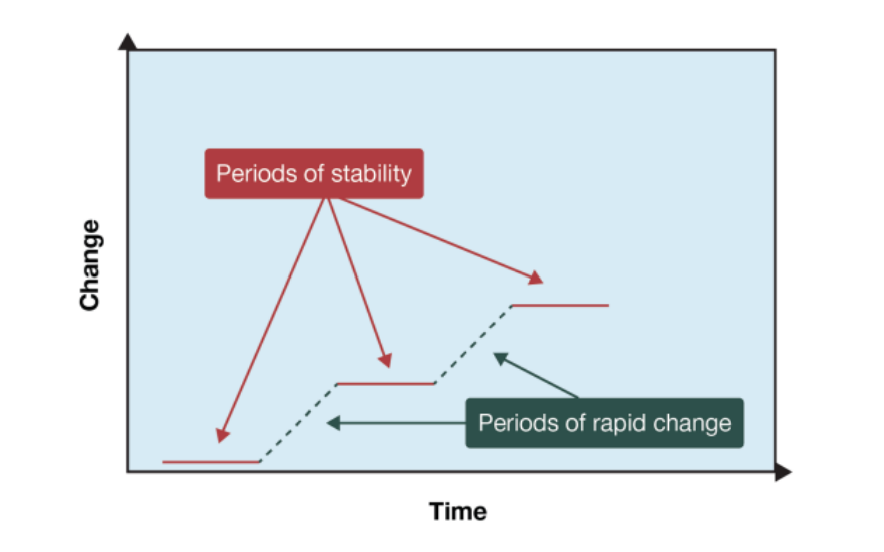
punctuated equilibrium model
change is constant, but not linear and often occurs in rapid, radical spurts!
conflict, disruption and chaos are inevitable and represent opportunities for innovation and creativity
key roles in a team
task-oriented roles: organizes/coordinates tasks, creates new visions, provides necessary info, etc.
social-oriented roles: creates new social norms, creates supportive env, etc.
boundary-spanning roles: manages outside interactions, coordinates with outside parties, reps team and goals favorably to outsiders
traditionally managed teams
manager is outside of the team
manager assigns work to the members
low level of autonomy
low level of independence
self managed teams
team members select their leader
rotating leadership role
medium level of autonomy
medium level of interdependence
self directed teams
team members select their individual roles
they select their timelines + resources
high level of autonomy
high level of interdependence
public vs. private personality and behavior styles
public personality and behavior reflect how employees present themselves in work settings
private personality and behavior include authentic traits shown in personal or less formal contexts
employees may adapt behavior styles based on audience and environment
what is management
coordinating resources, implementing processes, and achieving specific objectives more efficiently
strong management delivers strong current results for the org!
what is leadership
about setting vision, inspiring people and driving change
ensures a strong future for the org!
managing up vs. across
managing up: influencing your superiors while respecting their authority
managing across: influencing your peers while respecting their needs

goleman’s six leadership styles
visionary, coaching, affiliative, democratic, pacesetting, commanding
visionary
motivates people towards a vision
inspiration
coaching
developing people for the future
appreciation
affiliative
creates harmony and builds emotional bonds
belonging
democratic
forges consensus through participation
empowerment
pacesetting
sets high standards for performance
fairness
commanding
demands immediate compliance
compliance
situational leadership
adjusting your leadership style to fit the specific needs of the situation or task, based on the team’s readiness (competence x commitment)
teams readiness (abilities)
urgency/importance of task
situational leadership styles
delegate
support
coach
direct
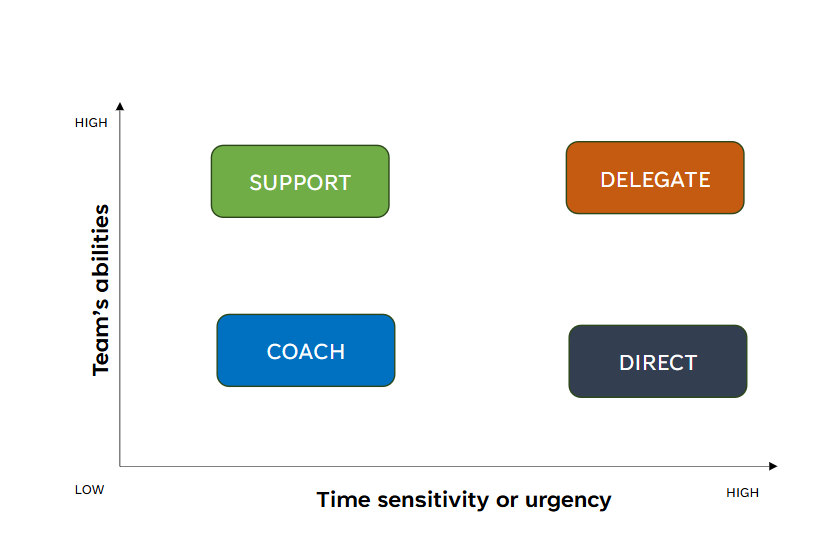
delegate style
leader turns over responsibility for decision making and problem solving to subordinates
support style
the leader facilitates and supports subordinates’ effort toward task accomplishment and shares responsibility for decision making with them
coach style
leader continues to direct and closely supervise task execution but also explains decisions, solicits suggestions, and supports progress
direct style
leader provides specific instructions and closely supervises task accomplishment
what is the inversion of value about
how soft skills are becoming increasingly important and can’t be replicated by any system/algorithm bc it is innately human
difficult conversations framework
prepare, execute, follow up
prepare
longest/most crucial step
get clear on: context and why the convo is necessary, understand the needs of each party, determine a few desired outcomes for the convo
go in with 2-3 solutions prepped
execute
most difficult step
make sure you express a desire to have a difficult convo, use ‘I’ statements, invite the other party to provide their reaction to what you shared
next: after expressing perspective, build alignment by providing a solution
also be prepared to mitigate misalignment, your solutions may not work for the other party
then close the convo - you’re here to solve the problem together not argue
follow up
accountability is the key driver in achieving desired results
check in and provide feedback
disc personality types
dominance, influence, steadiness, compliance
disc: dominance
Individuals with dominant traits tend to be assertive, decisive, and results-oriented. They are often seen as confident and competitive.
disc: influence
People with influential traits are typically sociable, outgoing, and enthusiastic. They excel in interpersonal relationships and communication.
disc: steadiness
Steadiness traits are associated with a calm, patient, and cooperative nature. Individuals with these traits value stability and are excellent team players.
disc: compliance
Those with Compliance traits are detail-oriented, systematic, and methodical. They focus on precision and quality in their work.
group definition
collection of individuals who interact with each other such that one person’s actions have an impact on the others’
forming
group comes together for the first time, meet each other, trial phase to understand rules of the dynamic, pick leader, short in duration
storming
participants focus less on keeping their guard up, become more authentic and argumentative, they explore power and influence, members may become defensive, jealous
norming
much more committed to each other and the group’s goal, ready to work, establish ground rules, ideal time to host team-building event
performing
ready to get into high gear, getting work done, pay attention to how they’re getting work done, leaders can move into coaching roles now to help members grow in skill and leadership
adjourning
final stage where group separates, end of project reviews time, after-action review, etc.
cohesion
degree of camaraderie within a group
more cohesive a group is, the more productive they are, feeling of belongingness
groupthink
group pressure phenomenon that increases the risk of teh group making flawed decisions by allowing reductions in mental efficiency, reality testing and moral judgement - often occurs in highly cohesive groups

collective efficacy
refers to a group’s perception of its ability to successfully perform well
influenced by watching others, verbal persuasion, how a person feels
relationship is higher when task interdependence is high rather than low
leadership vs. management
management is about efficiency in processes and people, leaders question those processes and goals in terms of if they are appropriate and ethical
management accepts status quo, leaders always looking to improve
managing sideways meaning
peers or coworkers influencing each other
no direct authority
understand peers individual needs, problems and styles of working