4 - Energy and Cellular Metabolism
 Call Kai
 Learn
 Practice Test
 Spaced Repetition
 Match
 Flashcards
 Knowt Play
1/31

There's no tags or description
Looks like no tags are added yet.
Name | Mastery | Learn | Test | Matching | Spaced | Call with Kai | Chat |
|---|
No analytics yet
Send a link to your students to track their progress
32 Terms
Energy is required for ______, _______, and ____________.
growth, renewal, reproduction
How do Animals gain energy
Through ingestion from food (either plants or other animals)
What is the key process for energy production (in both plants and animals)?
Respiration (consumes O2 + produces CO2)
What happens to the extra energy (calories) that isn’t used?
Gets stored in chemical bonds (such as triglycerides - lipids/adipose tissue)
Glycogen and lipids are the main energy stores
Available when an animal’s energy needs exceeds its food intake
Energy
The capacity to do work; consists of:
Chemical work (making/breaking chemical bonds)
Transport work (move ions, molecules, etc.)
Mechanical work (movement)
Kinetic energy
Energy of motion
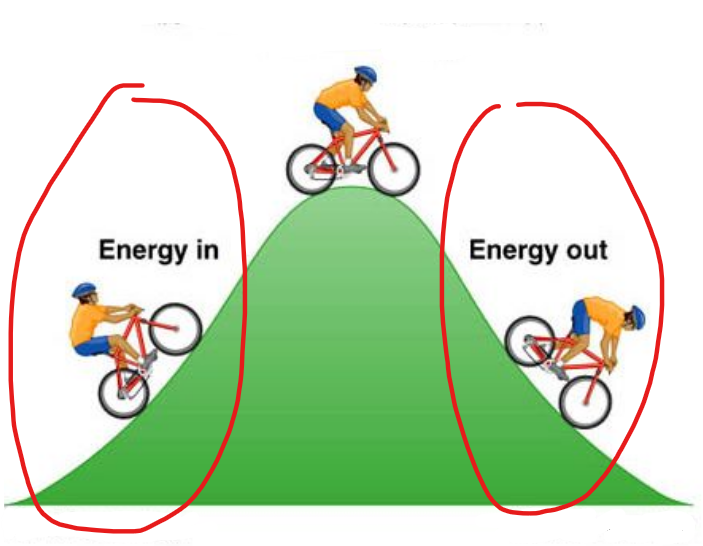
Potential energy
Stored energy
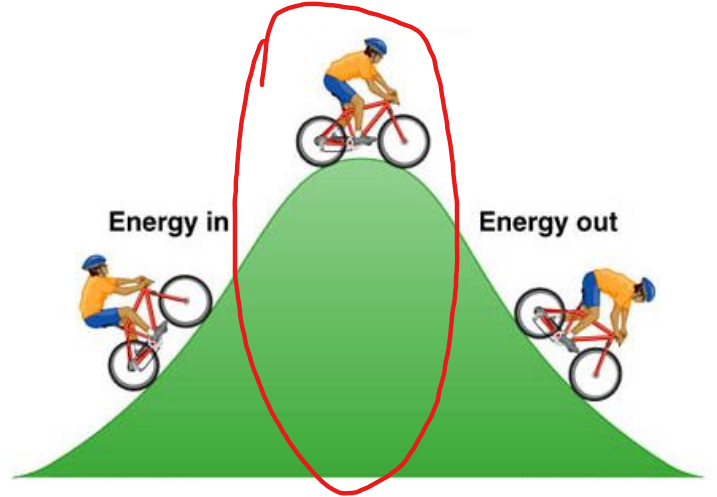
1st Law of Thermodynamics
Energy cannot be created nor destroyed, but can be converted to different forms
2nd Law of Thermodynamics
Natural spontaneous processes move from a state of order to a condition of randomness/disorder (entropy).
Creating + maintaining order in an open system requires the input of energy
Disorder occurs when open systems lose energy to their surroundings without regaining it
When this happens, we say that the entropy of the open system has increased
Purpose of chemical reactions in cells
To transfer energy from one molecule to another OR to use energy stored in reactant molecules (free energy) to do work
Generally, complex molecules have more chemical bonds and therefore higher free energies; T or F
True
Activation energy
The initial input of energy required to bring reactants into a position that allows them to react with one another
Low activation energy = reaction is spontaneous
High activation energy = reaction is very slow or doesn’t happen (not deemed useful)
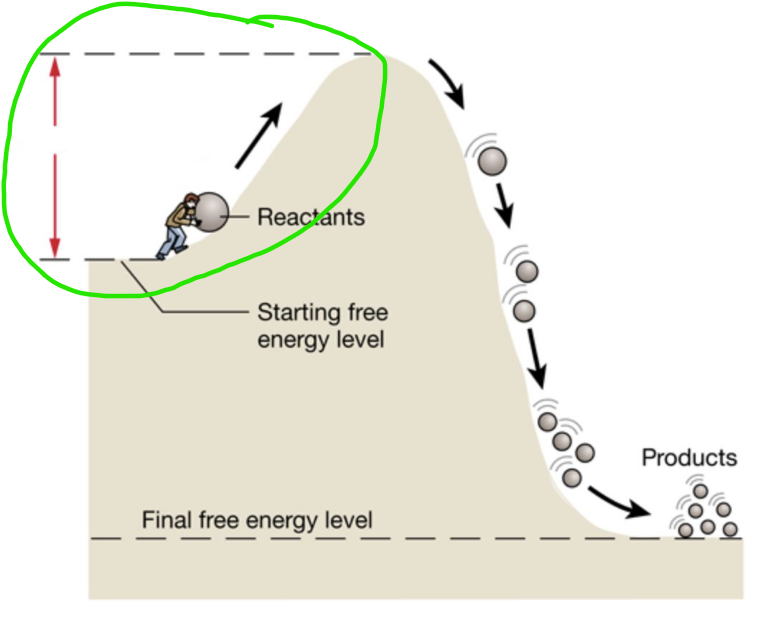
Exergonic reaction
Releases energy
Energy can be used by other molecules to do work or given off as heat
E.g. ATP (when converted to ADP + Pi —> 34 kJ released)
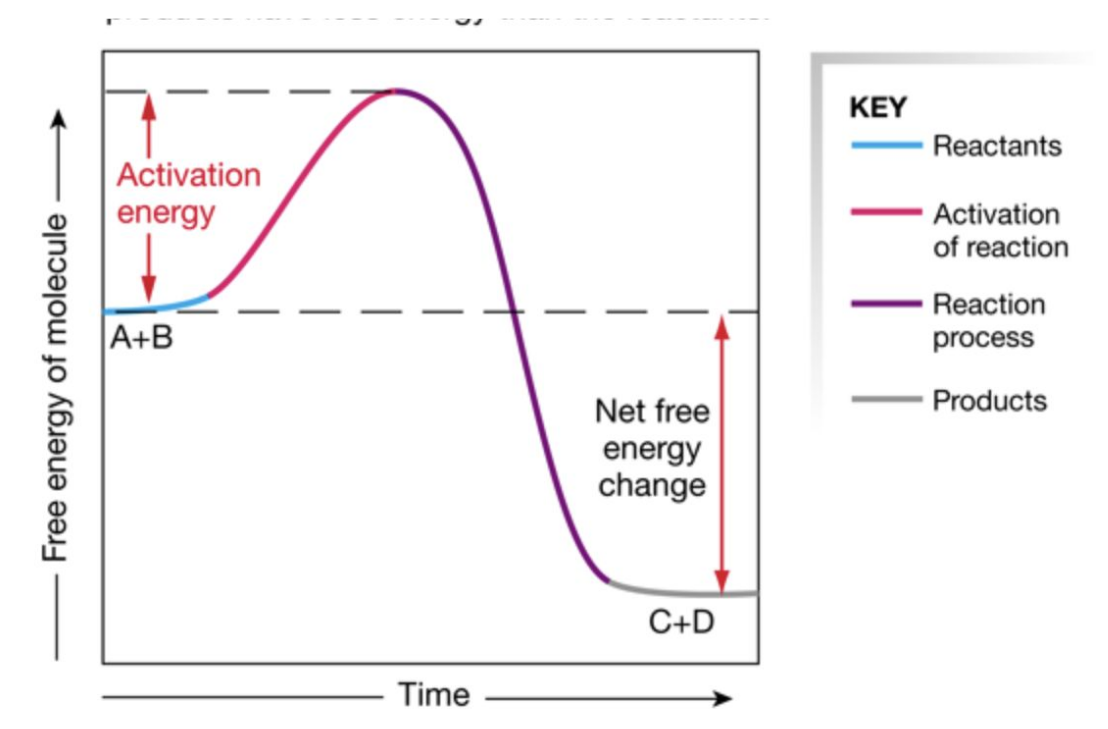
Endergonic reaction
Requires input of energy
Some energy stays trapped in the chemical bonds
Often synthesis reactions (forming a new or complex molecule)
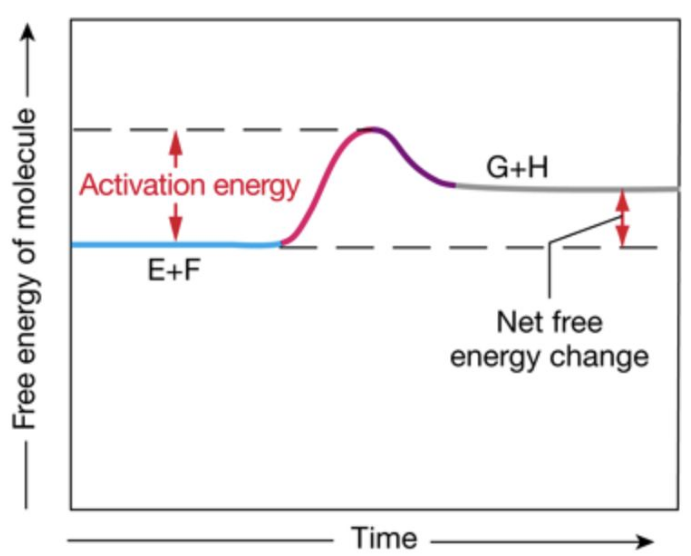
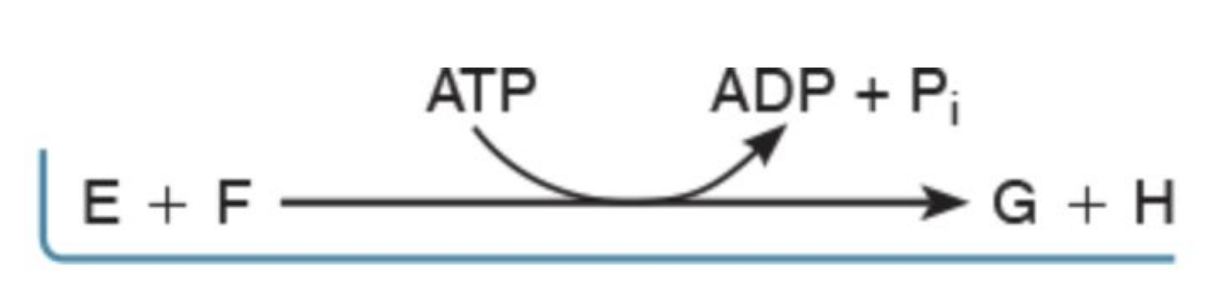
Reaction Coupling
Energy released from one reaction is used to drive another reaction
Enzymes
Proteins that speeds up the rate of chemical reactions (catalysts) without being used up within the reaction; allows for less activation energy to be utilized
Can be active, inactive, or modulated
Some produced as inactive and activated on demand
Some require co factors (Ca2+, Mg2+, etc.) for activation
Characteristics of Enzymes
Usually large proteins with 3D shapes
Exhibit specificity, competition, and saturation
Holds substrates in place so that they are in position to react with one another
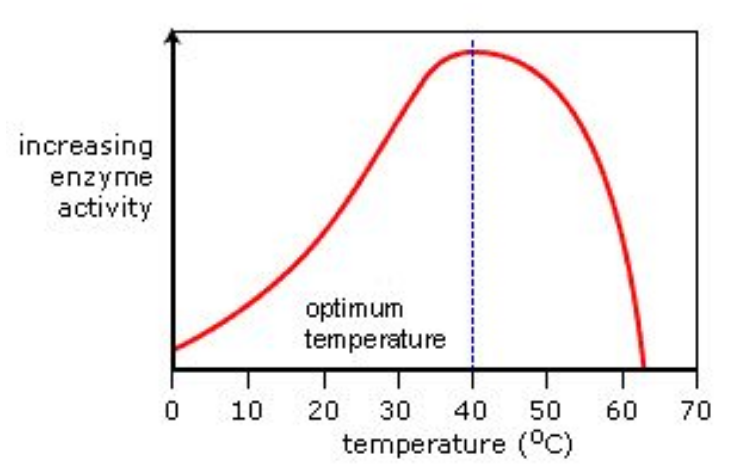
Reaction rate will depend on temp, amount of enzymes and amount of reactions
Cells control enzyme concentration to control reaction rate
All chemical reactions that take place in an organ makes up metabolism; T or F
True
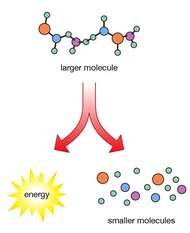
Catabolism
The break down of large biomolecules (energy released from high energy bonds)
The breakdown of glucose for energy production
(Cats destroy)
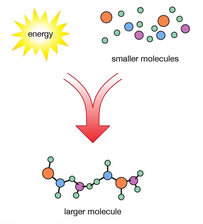
Anabolism
The creation of large biomolecules (transfer of energy into covalent bonds of macromolecules)
(Anabolic steroids build)
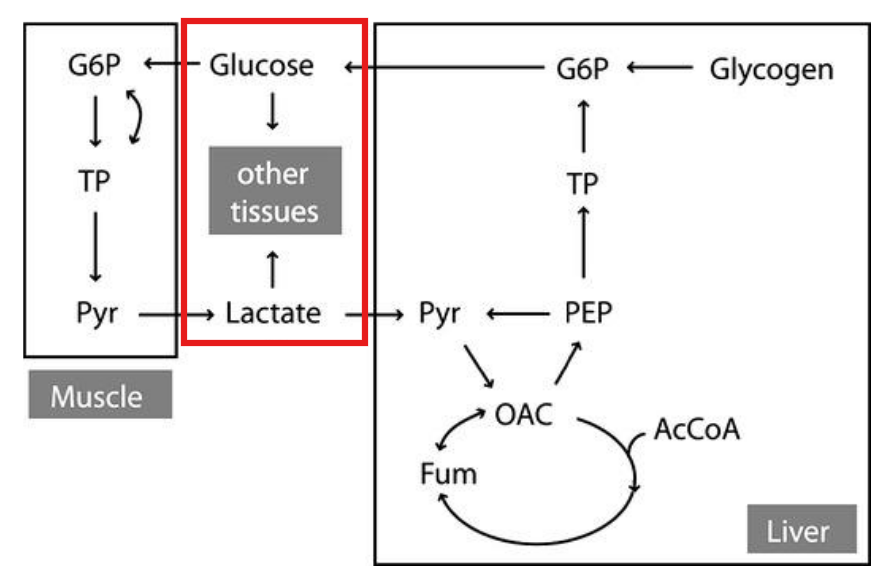
Intermediate metabolic reactions
The productions of one reaction (anabolic) that becomes substrates of another (catabolism)
E.g. krebs cycle
How cells regulate metabolism (5)
Controlling the enzyme concentration
Producing modulators that change reaction rates
usually controlled by hormones or other signals from outside the cell —> inhibition feedback
Using two different enzymes to catalyze reversible reactions
Compartmentalizing enzymes within cellular organelles
Digestive enzymes that could disrupt these processes are kept in separate lysosomes
Maintain an optimum ratio of ATP to ADP
Indicator of cellular energy status; if ATP is high, ATP production decreases / if ATP is low, ATP production increases
What is the end goal for catabolic pathways?
ATP production
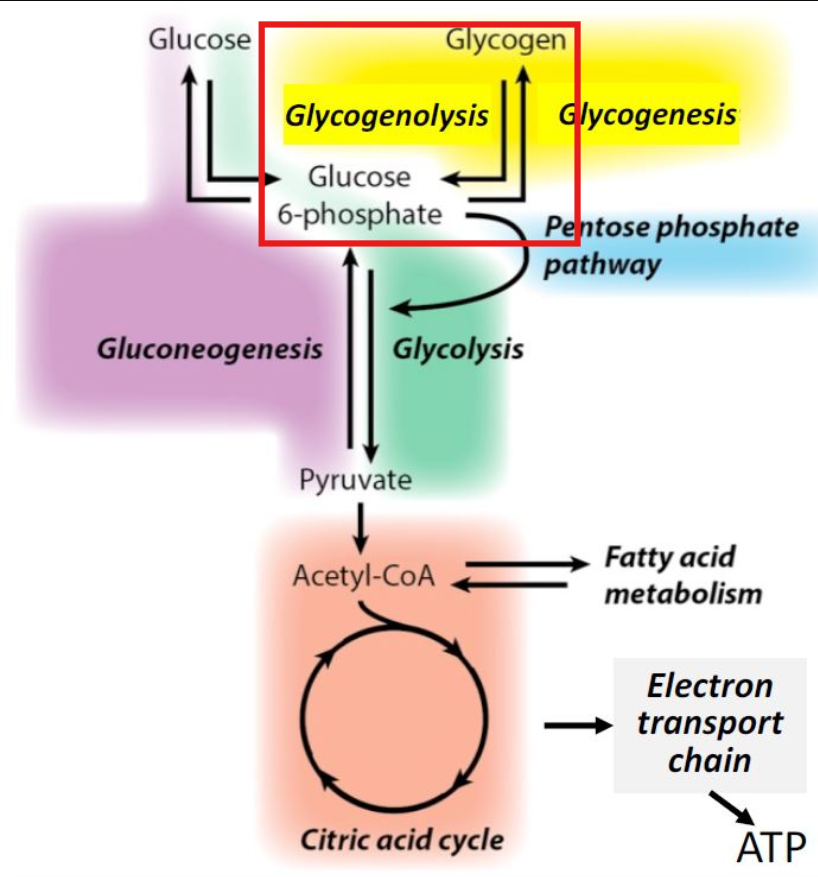
Glycogenolysis
Process where glycogen (readily available energy stored in the body) is broken down into glucose-1-phosphate to be used for energy production
Lysis = break down
Glycolysis
The breakdown of glucose (either anaerobic [no O2] or aerobic [O2])
Lysis = break down
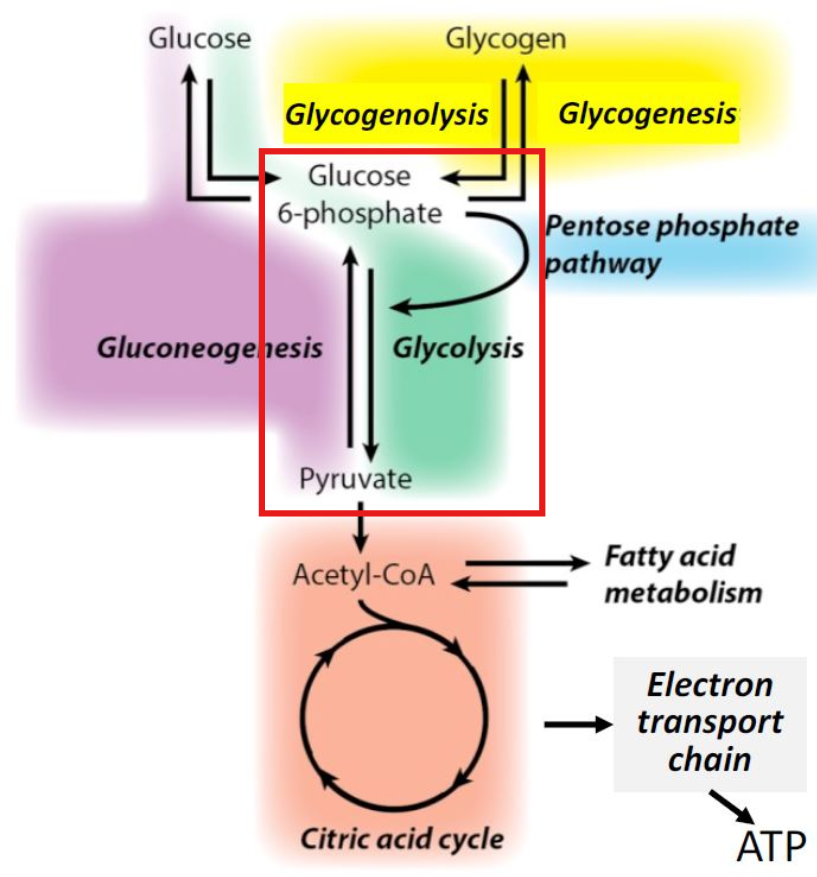
Glycogenesis
The process where glycogen is synthesized from glucose to be stored in the liver/muscle.
Genesis = building
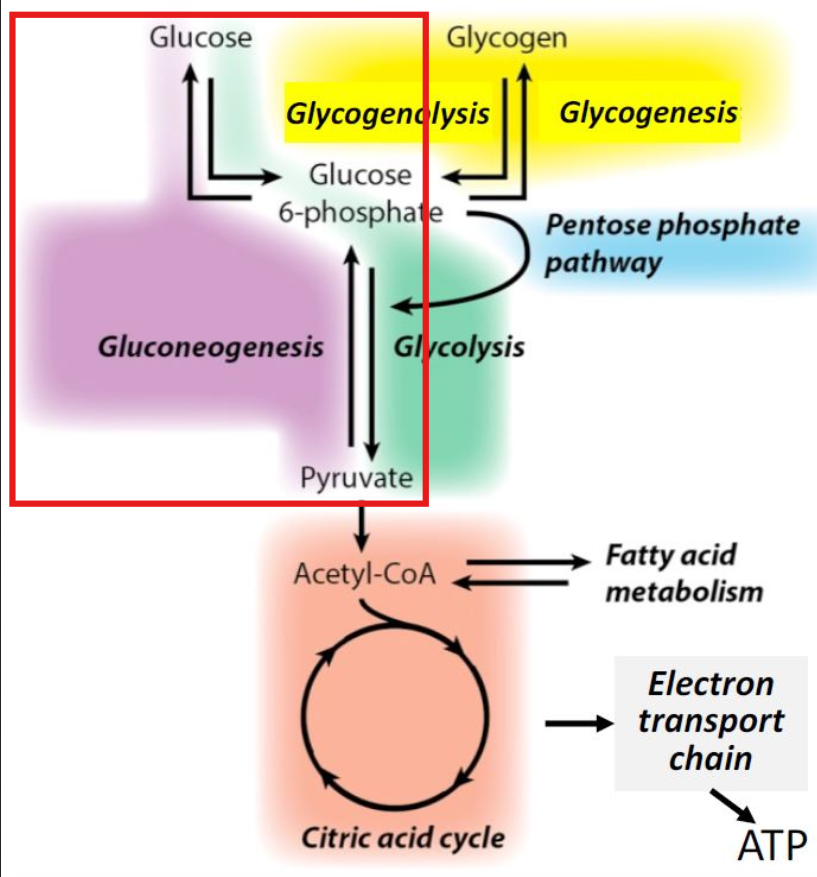
Gluconeogenesis
The conversion of fats or protein into glucose
Neo = new (never been a carbohydrate)
Genesis = building
The Oxidative System
Uses O2 to generate energy from metabolic fuels (aerobic)
Oxidative ATP production takes place in the mitochondria
Greater ATP production compared to anaerobic systems
O2 provides the electron in the electron transport chain. Without O2, the Krebs/Citric Acid cycle doesn’t operate.
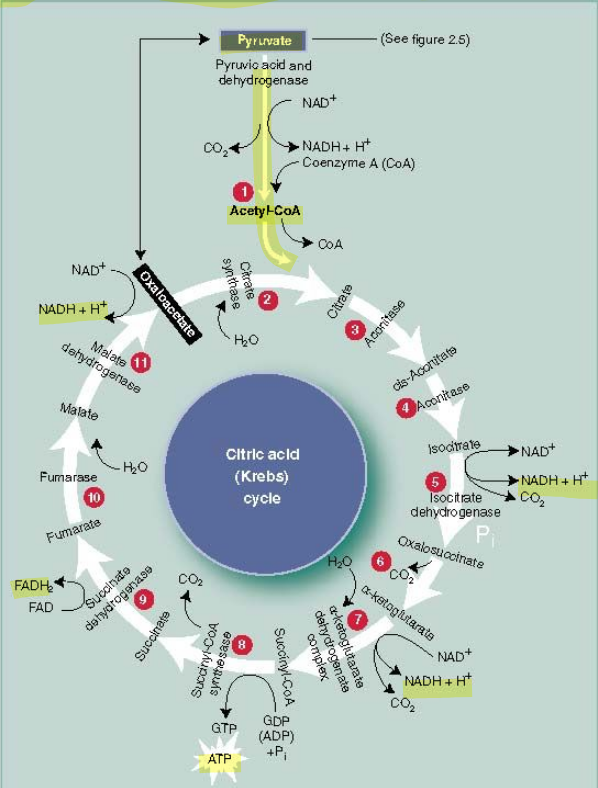
Krebs Cycle (what we need to know)
For every individual acetyl-CoA that enters the krebs cycle, it produces:
1 ATP
3 NADH
1 FADH2
Doubled
2 acetyl-CoAs enter the krebs cycle for every glucose molecule that is broken down
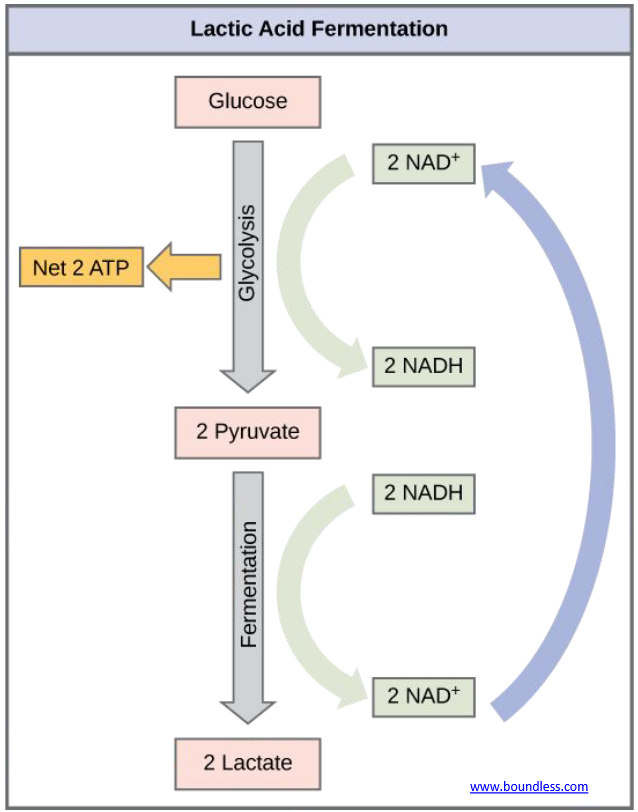
What happens when there isn’t enough O2
Pyruvate starts to build up in the cytosol and undergoes fermentation to lactate
E.g. in high intensity exercise
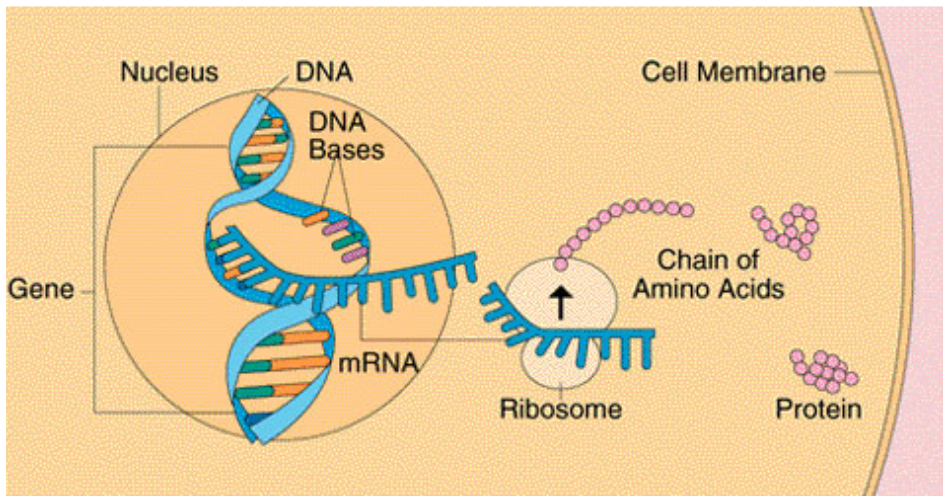
Gene
DNA region/segment containing info to make protein
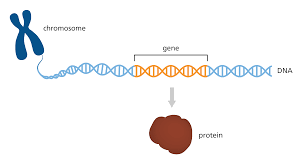
Steps for Protein Synthesis
Gene Activation (nucleus)
Most genes turn on/off as needed (“regulated”)
Genes for proteins are almost always turned on
Transcription (nucleus)
DNA used as a template to create a single strand of messenger RNA (mRNA)
mRNA Processing (nucleus)
Non-coding segments removed
mRNA can be activated or destroyed before a protein is created
Translation (cytoplasm)
mRNA leaves the nucleus (pores) and finds ribosomes in the cytosol
Ribosomes read the mRNA sequence and create the corresponding amino acid chain
Post-Translation Modifications (cytoplasm)
Cleavage of the amino acid chain
Addition of molecules/groups
Cross-linkage formed
Bottom line - secondary + teritary structure created