Affordable Care Act (ACA)
 Call Kai
 Learn
 Practice Test
 Spaced Repetition
 Match
 Flashcards
 Knowt Play
1/59

There's no tags or description
Looks like no tags are added yet.
60 Terms
Why do we have Obamacare?
It has subsidies. So someone who is a freelance graphic designer, stays at home, not affiliated for a company, and does not qualify for other types of insurance, including VA, wouldve had to pay for private insurance. Now they have the option of Obamacare.
Hx of Obamacare
-Enacted in 2010
-Regulates insurance industry and helps to increase the quality, affordability, and availability of private insurance.
How Americans are now covered under ACA
-If you had health insurance you can keep it.
-YA can stay on a parent's plan until 26
Medicaid is expanded
-health insurance marketplace created
Health Insurance Marketplace
Private plan that works on a sliding scale and benefits younger individuals. if they make less, they pay less. Did away with a fee on federal tax return that was placed as a penalty for not having coverage.
ACA and did what with pre-existing conditions
Did away with them and gender discrimination so these factors dont affect the cost of your insurance on or off the marketplace.
Meaning:
-You cant be denied coverage bc of your health status
-You cannot be dropped from coverage when you're sick.
Under ACA can insurers place lifetime limits or annual limits on your coverage?
No
Things that changed for businesses and organizations under ACA
◦All FT workers in companies with > 50 employees had to be offered job-based health coverage by 2015.
◦Small businesses < 50 full-time employees can use a part of the marketplace called the SHOP (small business health options program) to browse plans.
◦Small businesses with < 25 full-time employees can use the marketplace to purchase subsidized insurance for their employees.
What if a business does not offer coverage?
Per employee fee
1912: Teddy Roosevelt
Teddy Roosevelt advocated for national health insurance when he ran for president (father of universal healthcare coverage)
1935: FDR
FDR tried to include national health insurance in legislation establishing Social Security; AMA objected to "socialized medicine."
Harry Truman Post-WWII
Harry Truman proposed compulsory health insurance but was derailed by onset of Korean War.
1965 we got?
Medicare and Medicaid! Under the social security act Lyndon B Johnson
1971 Nixon
Nixon proposed requiring employers to provide minimum level of health insurance
1973
HMO Act & growth of prepaid health plans.
1980s-early 1990s: rates skyrocketed.
1993 Bill Clinton
Clinton proposed universal coverage through "managed competition" health care reform
◦heavily opposed and never came to vote in Congress.
Healthcare as of 2026 is what percentage of GDP?
18.6%
Review diagram of how basic health insurance works
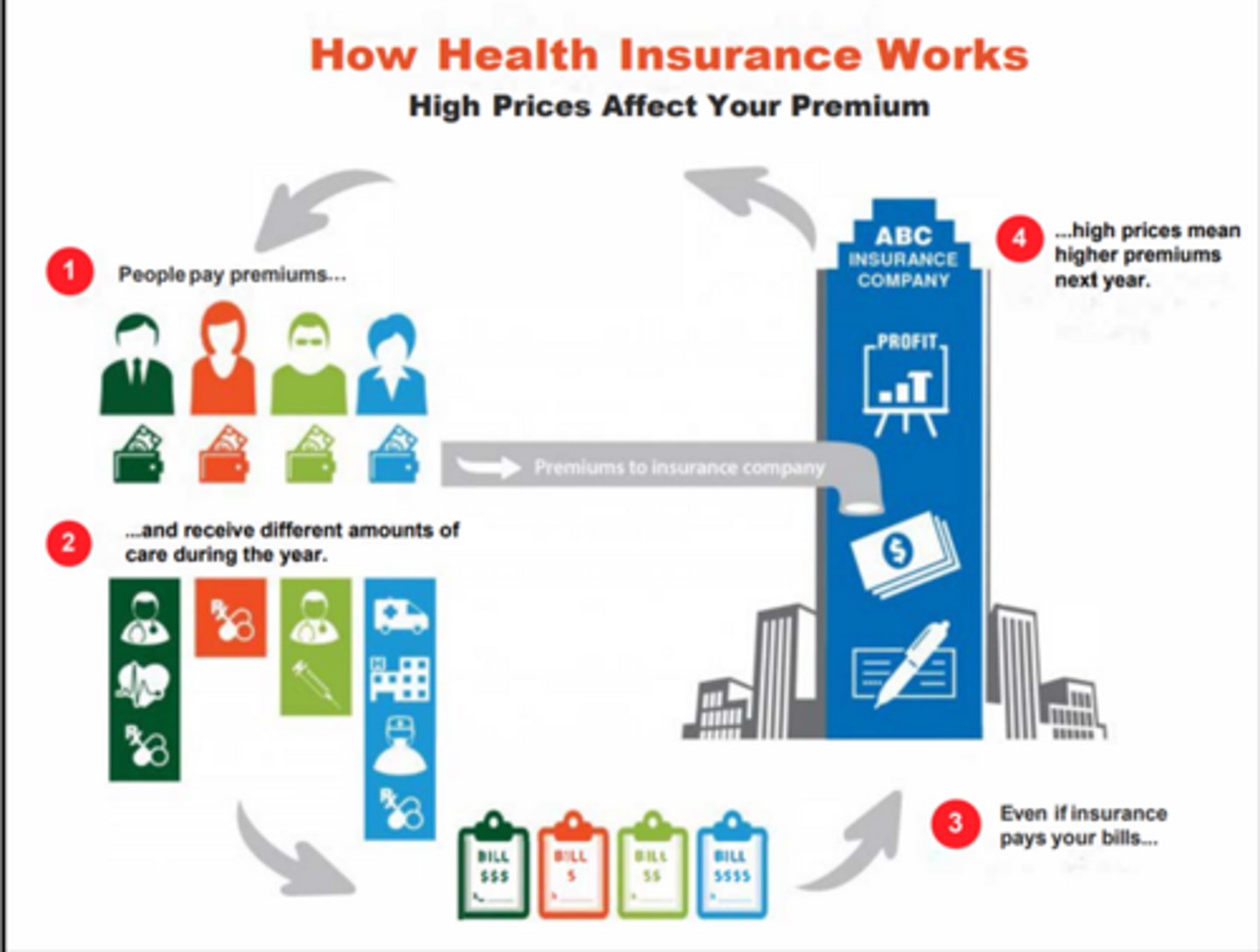
In 2009-
50 million Americans w/out health insurance or 1/6 people
Purpose of ACA
-Expand access to health insurance
-Increase consumer protections
-Emphasize prevention and wellness
-Improve quality and system performance
-Expand the health care workforce
-Curb rising health care costs
President Obama's Eight Guiding Principles of ACA
-Protect families’ financial health
-Make health coverage affordable
-Aim for universality
-Provide portability of coverage
-Guarantee choice
-Invest in prevention and wellness
-Improve patient safety and quality care
-Maintain long-term fiscal responsibility
Key provisions of ACA: Protect financial health
◦Reduce growing premiums/out-of-pocket costs
◦Protect people from bankruptcy due to catastrophic illness
◦Development of Exchanges - policies must cover essential benefits
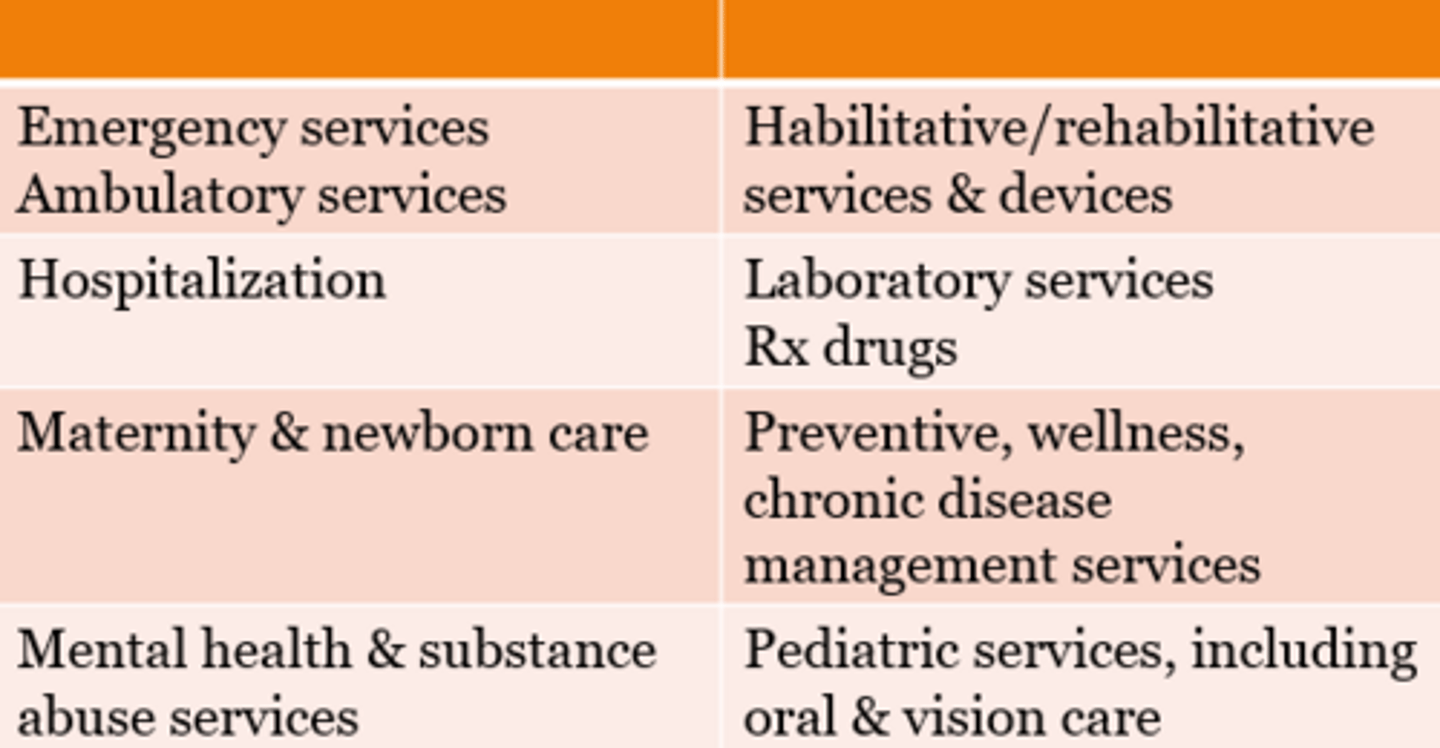
Affordability Standards with ACA
Keep premium cost below 10% of income - subsidies available to individuals and families with income above 100% and below 400% of Federal poverty level ($15,650 in 2026 for individuals and $32,150 for families)
Limit on out-of-pocket expenses annually
2026 limits are $10,600 (single) and $21,200 (family)
Reducing administrative costs
•Limit administrative costs and profits to 15% for large group market, 20% for small group and individual markets
•Encourage competition in insurance marketplace
Affordability encourages what?
Primary care. Including care delivered by APPs. More reimbursement was given and increased residency training slots. It does not fully address need for primary care or coordination of health care services.
2026 ACA costs based on plans
•Average Bronze plan: $573
•Average Silver plan: $752
•Gold Plan: $793
•Platinum: $1012
***92% of people with exchange insurance have either tax credits or premium subsidies
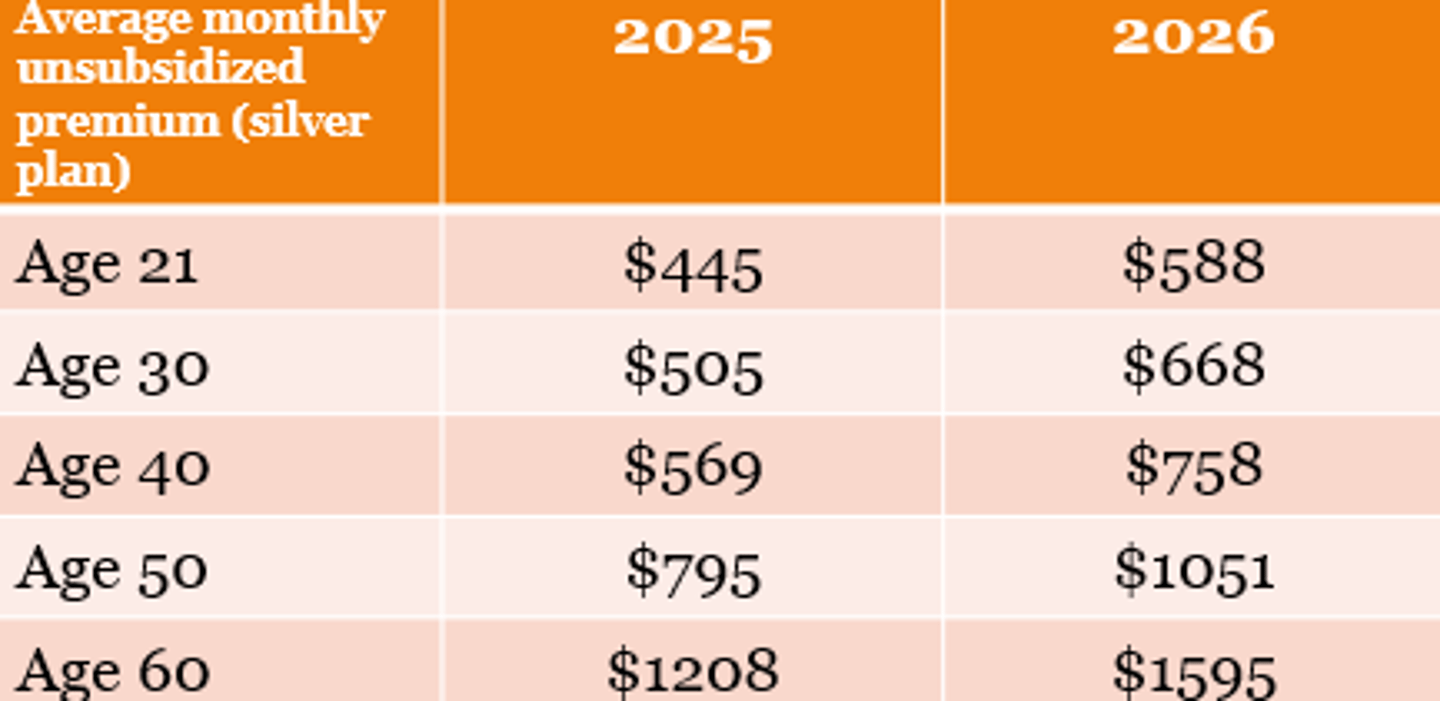
Subsidies today and ACA
•92% on the exchange had either tax credits or premium subsidies in 2025
•88-90% are receiving subsidies in 2026 but those have significantly changed.
•Early 2026 data show 1.5M people did not renew because they lost their subsidy due to the expiration of the Inflation Reduction Act.
-in 2025 anyone could get a subsidy if premiums > 8.5% of income
-in 2026, if your income >400% FPL ($63K), your subsidy is $0 (the "cliff")
Older adults and ACA
The people hit hardest in 2026 are older adults (ages 50–64) with moderate incomes. Because of the "3:1 age rating", a 60-year-old making just over the 400% FPL limit ($63k) is now seeing their full-price premium take up as much as 25–30% of their total income, whereas in 2025, it was capped at 8.5% (KFF)
Aim for Universality
◦Put U.S. on a clear path to cover all Americans
◦Subsidies, mandates, penalties, and increased eligibility for Medicaid
-41 states expanded Medicaid (including DC) and have been getting federal expansion funding
Portability of coverage for universality
◦Ability to retain health insurance when employment status changes - COBRA still available
◦Availability of Exchange coverage if employer coverage is not offered or person is unemployed
◦No preexisting condition exclusions
Guarantee Choice
◦Choice of both health plans and physicians
◦4 basic levels of coverage/cost sharing under Exchange plans:
Platinum: 90% insurance benefit/patient pays 10%
Gold: 80% insurance benefit/patient pays 20%
Silver: 70% insurance benefit/patient pays 30%
Bronze: 60% insurance benefit/patient pays 40%
Invest in prevention and wellness
-Require coverage in health insurance - USPSTF recommendations; immunizations recommended by ACIP; other preventive services for women and children
-Funding for community-based public health efforts
Reduce cost drivers for prevention and wellness
obesity, sedentary lifestyles, smoking
Requirements of restaurant chains and employers
◦Restaurant chains required to provide standardized nutritional menu labeling
◦Employers required to provide reasonable break time and space for nursing mothers
Improving patient safety and quality of care
◦Incentives in delivery system to reduce unnecessary variability in patient care – change payment structures
Pay for episodes of care vs. fee-for-service
Encourage coordination of care
◦Supports widespread use of information technology
◦Supports development of data on effectiveness of medical interventions
◦Implement and evaluate new approaches to medical malpractice to address safety and quality of care while reducing unnecessary testing and treatment
Maintaining long term fiscal sustainability
◦Reduce cost growth
Reduce payments to physicians
Reduce capitated payments to insurance companies for Medicare Advantage Plans
But increases cost of Medicare Part D (prescription drug coverage)
Scrutiny of health insurance rate increases over 10% by states
◦Improve productivity
New fees and new taxes (increase revenues)
New fees - pharmaceutical and medical device companies (nixed), insurance companies, self-funded employer plans
Penalties - individuals and employers
New taxes - Medicare tax increased for higher earners
Expected reduction in federal deficit
>$100B in 1st decade
>$1T in 2nd decade
Long term strategies for reducing costs
Prevention and wellness
Support for community-based approaches to long term care - encouraging non-institutional care
Impact on individuals ACA
-Many uninsured individuals became eligible for coverage through Medicaid expansion and availability of Exchanges.
-Individual mandate deemed unconstitutional
-No preexisting conditions taken into account for offering or pricing health insurance
-Health insurance premiums can be age-adjusted but highest age rate cannot be more than 3 times lowest age rate
-Adults age 18-26 may remain on parents' insurance
-Adults under age 30 eligible for catastrophic plan under Exchange - high deductible, lower premium cost
More individuals qualify for medicaid bc of-
FPL now being 133%
Also more CHIP funding and subsidy available for income between 133-400%
Medicare tax increased on Stakeholders
}Medicare tax increased for individuals earning over $200K, couples earning over $250K
◦3.8% rather than 1.45% over these levels - not adjusted for inflation
ACA and certain conditions
-Those with chronic conditions and acute high-cost conditions will benefit from eliminating limits on lifetime benefits and on annual limits.
-Smokers and others with preventable health conditions may pay up to 1.5 times as much for health insurance.
-Access to free preventive services - examples include well visits, childhood vaccinations, contraceptives, cancer screenings, flu shots, tobacco cessation products
Large employers being impacted by ACA
-“Employer Shared Responsibility Provision” Businesses with over 50 “full-time employees” required to offer “affordable” health insurance that meets ACA “minimum value” requirements to at least 95% of FTEs
-“Full-time employee” works an average of 30+ hours per week during a year
Affordable under large employers meaning-
-"Affordable" means cannot exceed 9.96% of household income for plan years that begin in 2026, based upon the employee's W-2 (Box 1) pay.
-A plan provides "minimum value" if it covers at least 60% of the total allowed cost of benefits that are expected to be incurred under the plan.
Penalities for large employers for failing to do so
◦$3,340 for each full-time employee for failure to offer minimum required coverage
◦$5,010 for each full-time employee who is not offered affordable coverage that meets ACA requirements, gets coverage through Exchange and qualifies for Federal tax credit
◦Government reporting requirements
Other costs for large employers
◦$3,340 for each full-time employee for failure to offer minimum required coverage
◦$5,010 for each full-time employee who is not offered affordable coverage that meets ACA requirements, gets coverage through Exchange and qualifies for Federal tax credit
◦Government reporting requirements
-Out-of-pocket maximum requirement for medical and prescription drugs - $10,600 (single), $21,200 (family) in 2026.
-Provide "summary of benefits and coverages" in standardized format
Health Plan Designs
◦Floor and ceiling, narrower range of plan designs
◦Floor = 60% actuarial value to meet minimum rules
◦Accelerates move to high-deductible plans, value-based arrangements, etc.
How ACA impacts small employers
-Businesses and non-profit organizations with 25 or fewer full-time equivalent employees and average wages of $64K or less
-=No employer mandate here but we want to encourage small businesses to provide coverage
◦get tax credits to help pay for coverage for their employees - up to 50% of premium - sliding scale based on size of business and average wages
-Employees may qualify for Federal subsidies
ACA impact on clinicians: primary care
-Great emphasis on primary care
◦Incentives to expand number of PCP & APPs
funding for scholarships, loan repayments for those working in underserved or health professional shortage areas
◦Increased payments for rural health care providers
ACA impact on clinicians: Change in compensation structure
◦Formation of accountable care organizations (ACOs)
Risk sharing & risk-bearing arrangements
◦Move away from fee-for-service (volume)
◦Move toward pay for performance based on value: quality of care (outcomes) and cost
Patient Centered Medical Home
is a way of organizing primary care that emphasizes care coordination and communication to transform primary care into "what patients want it to be."
◦Medical homes can lead to higher quality and lower costs, and can improve patients' and providers' experience of care.
◦Accountable for meeting the large majority of each patient's physical and mental health care needs, including prevention and wellness, acute care, and chronic care.
Physician Payments Sunshine Act
Requires drug & medical product manufacturers to disclose to CMS any payments or other transfers of value made to physicians, APPs or teaching hospitals.
◦It also requires certain manufacturers and group purchasing organizations (GPOs) to disclose any physician ownership or investment interests held in those companies.
-Such practices may influence clinical decision-making, research and education, leading to compromised clinical integrity and increased health care costs.
Eh impacts on clinicians (not amazing)
-"Documentation Crisis"
-More complex red-tape (e.g. prior authorizations)
-Burnout
ACA Impact on hospitals
-More patients now covered meant a reduction in uncompensated care.
◦Some of these newly insured will seek care from private physicians rather than from hospital ED.
◦Did we have enough providers?
-More bundled payment arrangements.
-Consolidation
◦mergers, acquisitions by health systems to ensure financial viability.
-Outreach programs on wellness and prevention.
ACA impact on Insurance companies
-More individual coverage, not just employer groups.
-New populations to sell insurance
◦Exchanges (139% - 400% FPL)
◦Medicaid (up to 138% FPL)
-Policies that didn't comply with ACA requirements had to be eliminated
-Prescribed set of benefits limited plan designs.
-Required to limit administrative costs to 20% or less of premium, or refund difference to contract-holders.
ACA placing insurance companies at greater exposure to risk
◦Unable to restrict coverage of pre-existing conditions, or to refuse coverage to people who have them
◦Unable to experience rate policies
◦Defined maximum out-of-pocket benefits for patients – insurer pays 100% once annual max is met
◦Preventive benefits covered at 100%
◦Original thought - early on older, sicker people would be attracted with healthier people opting to pay the penalty; BUT now that individual mandate is repealed as of 2019, this is an ongoing concern
What was repealed in 2020?
Additional health insurer fee to help fund Federal ACA costs -passed on in premiums, adding 1.5-3%
Texas vs. US lawsuit filed in February 2018
◦Group of Republican attorneys general and two governors argued that since the U.S. Supreme Court had upheld the ACA in 2012 specifically because it was a valid exercise of Congress' taxing power, taking the tax away makes the entire rest of the law unconstitutional.
◦December, 2019 - 5th Circuit Court of Appeals in New Orleans ruled that requiring individuals to have health insurance is unconstitutional.
◦June 2021 – US Supreme Court ruled that the challengers lacked standing, so ACA continues to be the law of the land.
Sum of ACA in 132 words (lol)
-It stops insurance companies from denying you coverage or raising costs based on pre-existing conditions.
-It stops insurance companies from dropping you when you are sick.
-It protects against gender discrimination.
-It expands free preventative services and health benefits.
-It expands Medicaid and CHIP.
-It improves Medicare coverage.
-It requires larger employers to insure their employees.
-It creates a marketplace for subsidized insurance providing tens of millions of individuals, families, and small businesses with free or low-cost health insurance.
-It aims to curb the growth in healthcare costs.