Urinary System
 Call Kai
 Learn
 Practice Test
 Spaced Repetition
 Match
 Flashcards
 Knowt Play
1/58

There's no tags or description
Looks like no tags are added yet.
59 Terms
Urinary system functions
adjust blood pH, blood volume and BP, regulate electrolytes, conserve nutrients, remove drugs & toxins
kidneys
produce urine, functional unit is the nephron
ureters
lined with transitional epithelium, transport urine to bladder

bladder
lined with transitional epithelium, surrounded by detrusor muscle, stores urine

urethra
transports urine out of the body, shared with the reproductive system in male bodies

nephron
lined with simple cuboidal epithelium, functional unit of the kidney, actual location of urine production

renal corpuscle
consists of glomerulus and Bowman's capsule, location of filtration

glomerulus
knot of capillaries surrounded by Bowman's capsule where filtration of blood occurs

Bowman's capsule
cup-shaped part of the nephron, surrounds glomerulus, includes parietal layer of simple squamous epithelium and visceral layer of podocytes
reabsorption
process by which water and dissolved substances are taken back into the blood
proximal convoluted tubule (PCT)
>99% of nutrients, some electrolytes, and 60% obligatory water reabsorption from tubular fluid, reabsorb sodium and chloride
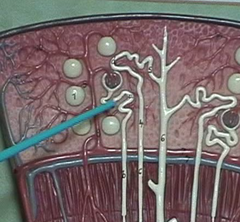
ascending limb of loop of Henle
portion of nephron loop where sodium ion, chloride ion, and potassium ion are reabsorbed
nephron loop (loop of Henle)
establishes osmotic gradient for water reabsorption, reabsorbs water and ions (sodium, chloride)

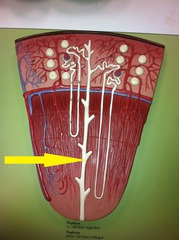
descending limb of loop of Henle
portion of nephron loop where obligatory water reabsorption occurs, secrete sodium and hydrogen
distal convoluted tubule (DCT)
secretion of toxins/drugs
facultative reabsorption of water can occur (controlled by ADH)
reabsorption of Na+ (Na+/K+ exchange pump controlled by Aldosterone OR Na+/H+ exchange pump stimulated by low pH)

afferent arteriole
transports blood INTO the glomerulus, larger diameter than efferent arteriole

efferent arteriole
transports blood OUT (exit) of the glomerulus, smaller diameter than afferent arteriole

peritubular capillaries
capillary network wrapped around the nephron

Juxtaglomular Apparatus (JGA)
endocrine cells located between afferent arteriole and DCT, release renin

macula densa
regulates fluid composition of DCT and flow rate, release ATP, adenosine, and renin
podocytes
visceral layer of glomerular capsule that wraps around glomerulus, form filtration slits

mesangial cells
located between vessels of the glomerulus, controls capillary diameter and thus blood flow
glomerular hydrostatic pressure (GHP)
drives filtration of water, nutrients, electrolytes, and waste out of the glomerulus, blood pressure is higher here than systemic blood pressure

blood colloid osmotic pressure (BCOP)
pressure created by the retention of albumin proteins in the blood, pulls some fluid back into the glomerulus

capsular hydrostatic pressure (CsHP)
pressure exerted by filtrate already present inside the glomerular capsule provides slight opposition to filtration

filtration pressure (FP)
actual pressure that causes filtration
glomerular filtration rate (GFR)
amount of filtrate produced each minute, regulated by local control (autoregulation), endocrine and neural responses
autoregulation of low GFR involves
dilation of afferent arterioles, constriction of efferent arterioles, and contraction of mesangial cells
central regulation of low GFR involves
activation of RAS
Renin-Angiotensin-Aldosterone System (RAS or RAAS)
renin > angiotensin I > (A.C.E) > angiotensin II > aldosterone, neural responses (ADH) > increased systemic BP and glomerular hydrostatic pressure
renin
released by juxtaglomular complex when BP and GHP is low, triggers formation of angiotensin I
angiotensin I
formed in the blood when renin is released, is converted to angiotensin II by angiotensin converting enzyme (A.C.E)
angiotensin II
triggers neural responses (thirst, production ADH, increase sympathetic motor tone) and the release of aldosterone
aldosterone
released by adrenal cortex when angiotensin II is released, causes reabsorption of Na+ at the DCT
ADH
released by neurohypophysis when angiotensin II is released, causes facultative water reabsorption at the DCT and collecting tubule
pathway for formation and excretion of urine
glomerulus > glomular capsule > PCT > loop of Henle > DCT > collecting duct > papillary duct > minor calyx > major calyx > renal pelvis > ureter > urinary bladder > urethra
collecting ducts
facultative water reabsorption can occur (controlled by ADH), concentration of urea, fluid called urine
detrusor muscle
smooth muscle around the wall of the bladder, contracts during micturation reflex to increase pressure (part of positive feedback loop)

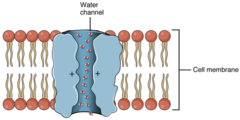
channels in the cells of DCT and collecting duct that allow for rapid reabsorption of water, controlled by ADH
right kidney
identify 1

left kidney
identify 2
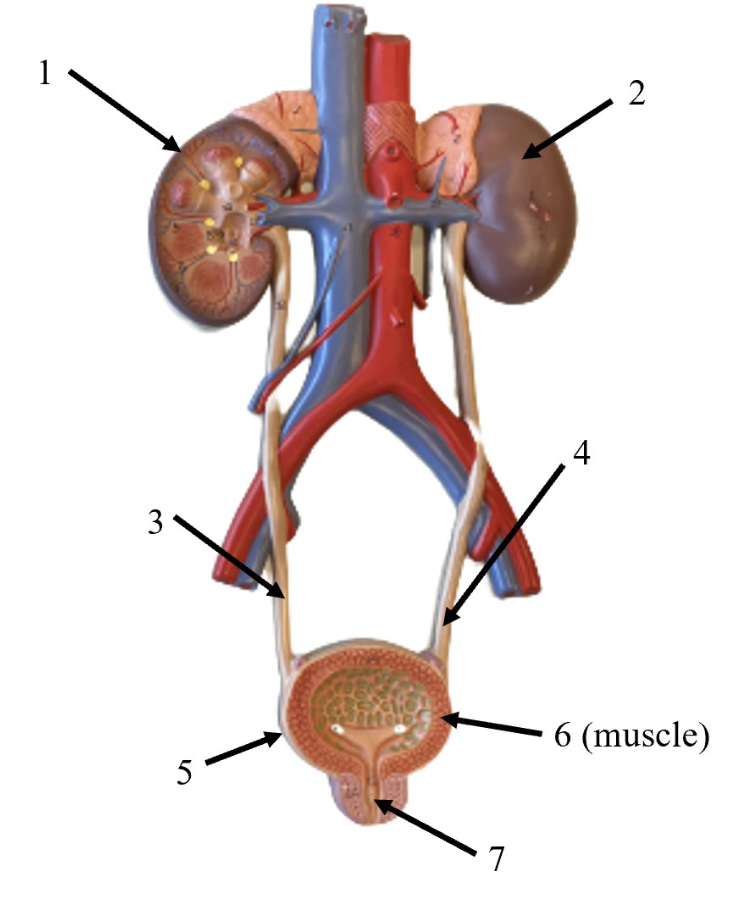
right ureter
identify 3

left ureter
identify 4

bladder
identify 5

detrusor muscle
identify 6 (muscle)

urethra
identify 7

renal capsule
identify 8

renal medulla
identify 10
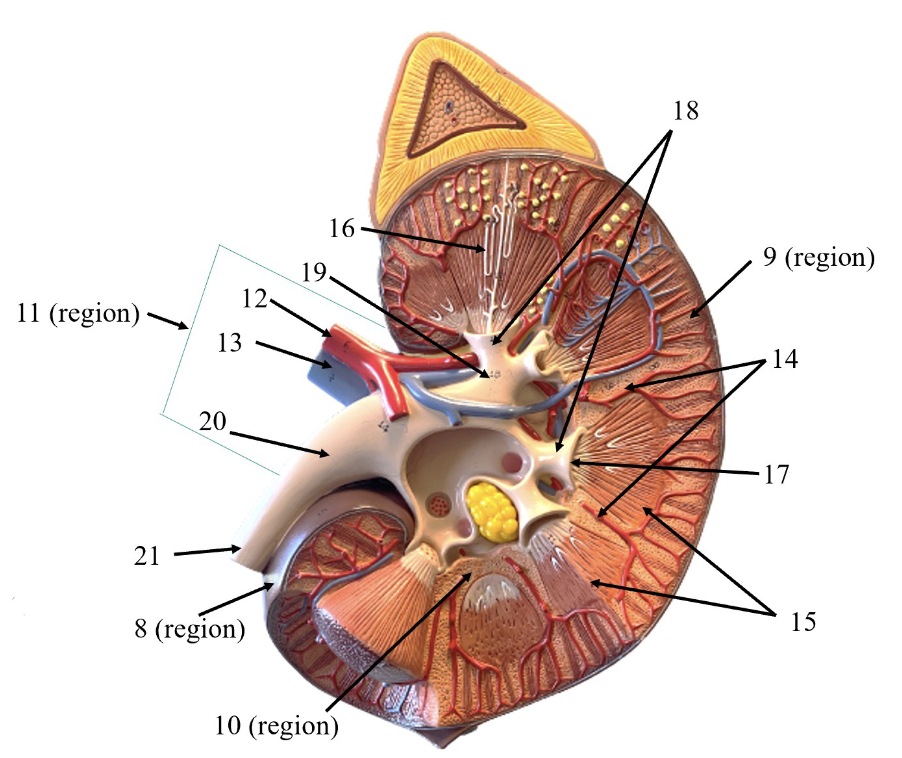
hilum
identify 11

renal artery
identify 12

renal vein
identify 13

renal column
identify 14
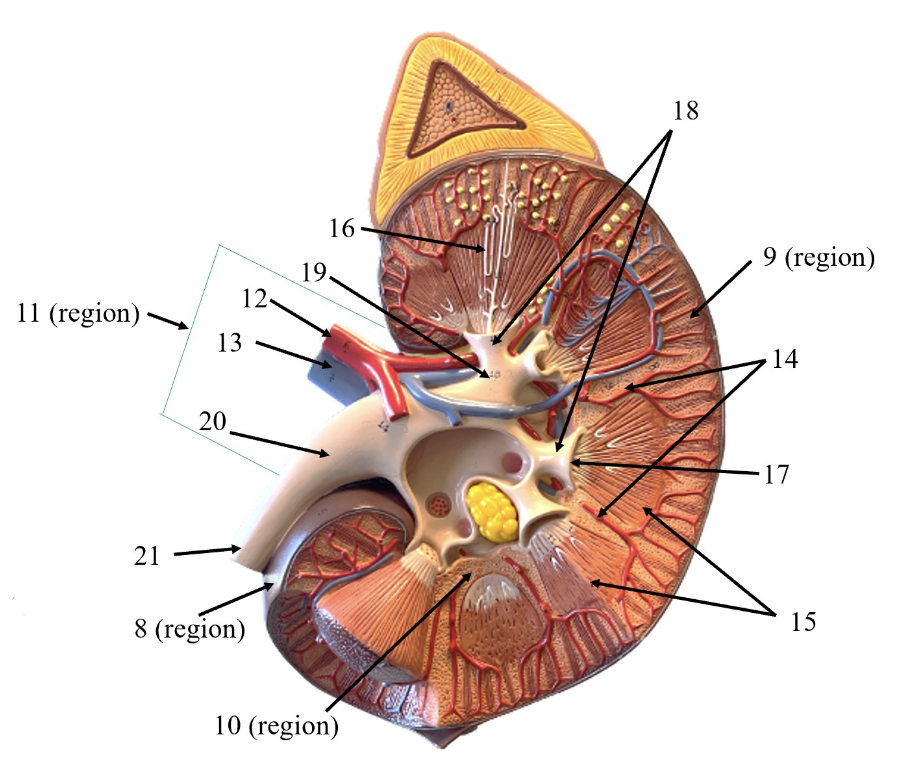
renal pyramid
identify 15

nephron
identify 16
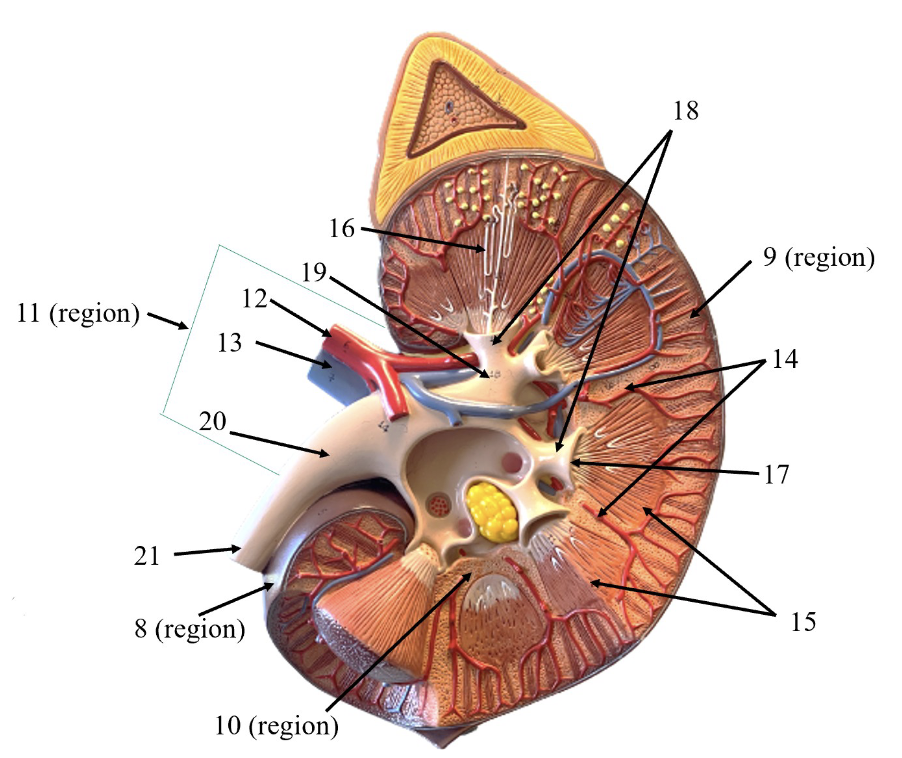
renal papilla
identify 17

minor calynx
identify 18

major calynx
identify 19

renal pelvis
identify 20

ureter
identify 21
