Hypertension
 Call Kai
 Learn
 Practice Test
 Spaced Repetition
 Match
 Flashcards
 Knowt Play
1/62

There's no tags or description
Looks like no tags are added yet.
63 Terms
What is blood pressure?
Blood pressure (BP) is the pressure exerted by circulating blood against the walls of blood vessels, especially arteries.
It is measured in mmHg (millimetres of mercury).
what are the major factors that determine BP
include age, sex, body mass index, and diet (mainly sodium intake
what determines Blood Pressure
Cardiac Output X Peripheral Vascular Resistance
what determines cardiac output
Heart Rate X Stroke Volume

what is Peripheral (systemic) vascular resistance
The “squeeze”
of blood vessels outside heart resisting blood flow
what does Cardiac output mean
A measure of how much blood is pumped out of left ventricle
what is Stroke volume
Blood volume ejected with each heart bea
what is Arterial BP
The pressure exerted on the artery walls. There are two measures of blood pressure
what is Systolic BP:
The pressure in arteries during systole (contraction)
what is Diastolic BP
The pressure in arteries during diastole (rest/filling)
what is Systole
Highest pressure point in cardiac cycle when ventricles
are contracting
what is Diastole
Lowest pressure point in cardiac cycle when ventricles
are filling with blood
what is Normal BP
<120 mmHg (systolic); <80 mmHg (diastolic)
what is Mean arterial pressure
The average arterial pressure throughout cardiac cycle
How is MAP calculated
The normal range for Mean Arterial Pressure (MAP) is 70 to 100 mm Hg

what is Preload
• The tension in the heart muscle or chamber at the end of diastole before the contraction
• It depends on ventricular end diastolic volume
what is Afterload:
The arterial pressure against which the heart must
eject its cardiac output
What is Frank-Starling's law?
• The strength of contraction depends on the initial
length of cardiac muscle fibers before contraction.
• The more stretched the muscle before contraction the
stronger the contraction
The initial length of the heart muscle before contraction
depends on what?
the end diastole volume.
if higher strength of contractions what does it cause to increase
increased stroke volume
frank sterling curve

Three main systems regulate blood pressure
Central nervous system (CNS)
Hormones
Kidneys - Renin-Angiotensin-Aldosterone System (RAAS)
how does Central nervous system (CNS) affect bp
Nervous system | Effect | Blood pressure |
|---|---|---|
Sympathetic (SNS) | ↑ Heart rate, ↑ contractility, usually ↑ vasoconstriction | ↑ BP |
Parasympathetic (PSNS) | ↓ Heart rate | Usually ↓ BP |
important Hormones that impact bp (5)
Hormone | Main action | Effect on BP |
|---|---|---|
Aldosterone | ↑ Na⁺ reabsorption in kidneys; water retention | ↑ |
ADH (vasopressin) | ↑ Water reabsorption in kidneys | ↑ |
Epinephrine | ↑ Heart activity; vascular effects vary by receptor | Often ↑ |
Angiotensin II | Strong vasoconstriction; stimulates aldosterone | ↑ |
Cortisol | Helps maintain vascular responsiveness to catecholamines | Supports BP |
What factors directly affect blood pressure?
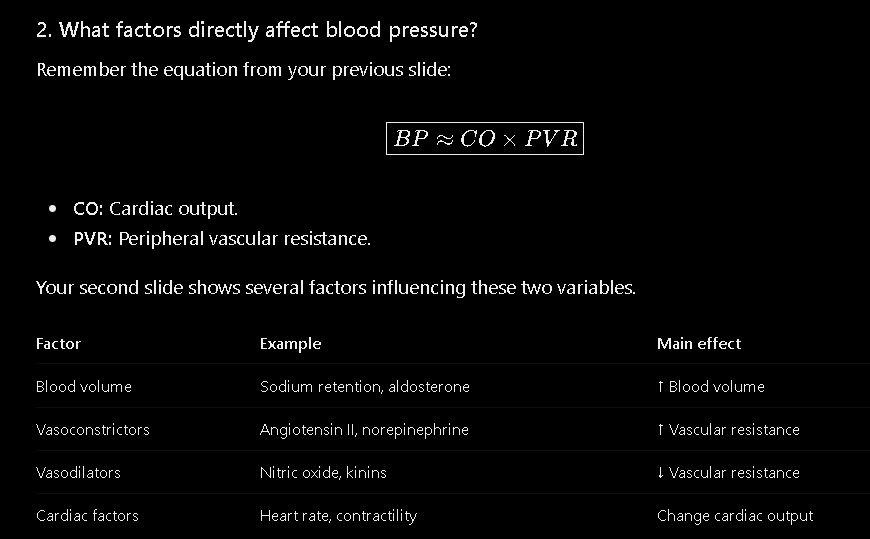
what does Renin-Angiotensin-Aldosterone System (RAAS) do
Low BP → Renin → Angiotensin I → ACE → Angiotensin II
what does Angiotensin II do
Angiotensin II = Two main actions:
Vasoconstriction → ↑ Peripheral resistance → ↑ BP
Aldosterone → ↑ Na⁺ and water retention → ↑ Blood volume → ↑ BP
what is another way Kidneys regulate bp
The kidneys regulate blood pressure mainly by controlling how much sodium and water the body retains.
More Na⁺ and water retained → ↑ blood volume → ↑ BP.
More Na⁺ and water excreted → ↓ blood volume → ↓ BP.
what does Natriuretic hormone do
Natriuretic hormones help lower blood pressure by promoting sodium and water excretion.
- inhibits Na+ /K + -ATPase
- vasodilation
what does Insulin do
Hyperinsulinemia (e.g. insulin resistance state):
- ↑ renal Na+ retention
- acts as growth hormone (vascular smooth muscle and
endothelial hypertrophy)
- vasoconstriction (↑ Ca2+ in vascular smooth muscles)
- ↑ sympathetic nerve activit
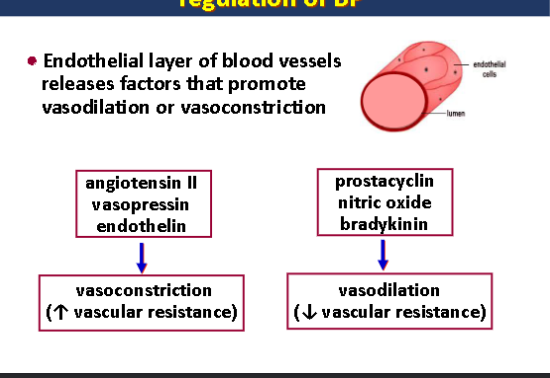
what do Endothelial layer of blood vessels release
releases factors that promote vasodilation or vasoconstriction
name them
what can elevated sodium lvls do
Elevated Na+ intake (e.g. diet) is associated with
hypertension (due to water retention
what can increased Calcium (Ca2+ )
Elevation in intracellular Ca2+ level can result in increased
peripheral resistance (BP = CO X TPR)
what does low Potassium (K +
do
Low K + may increase peripheral vascular resistance
(BP = CO X TPR
how do you Measurement of blood pressure using sphygmomanometer and stethoscope (6)

what is the range of bp to Classify hypertension

what is considered low risk medium risk and high risk

how many ppl world wide are affected by hypertension
• Affects >800 million people worldwide
• About 25% of people in the general population have
hypertension
how many canadians have hypertension
>5 million Canadians have hypertension (1:5
what measurement of bp is more important when determining cardiovascular health
Systolic BP is more important than diastolic BP as a
determinant of cardiovascular risk
what increases complications with hypertension?
Prevalence and vulnerability to complications of
hypertension increase with age
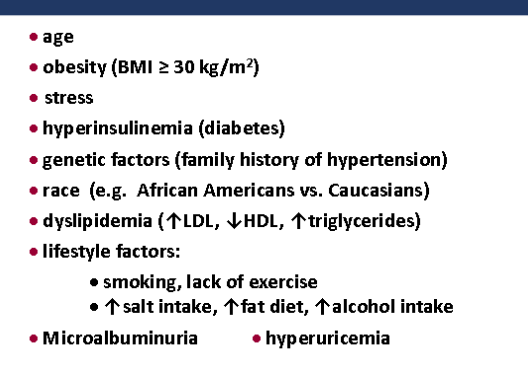
Risk factors for developing hypertension
what are Different types of hypertension
Primary or essential hypertension
Secondary hypertension
Accelerated or malignant hypertension
what is Primary or essential hypertension (5)

what is Secondary hypertension

how is Primary renal disease caused how does it end up causing hypertension
Caused by narrowing of the renal artery due to surgery,
atherosclerosis
Hypertension results from increased activation of
renin- angiotensin-aldosterone pathway
how is Hyperaldosteronism caused
• Caused by overproduction of mineralocorticoids by the adrenal cortex
Elevated aldosterone to renin activity ratio
what does Hyperaldosteronism lead to and how can u diagnose it
Leads to increased Na+ /water resorption and K+
excretion in the kidney.
• Primary hyperaldosteronism can be diagnosed by
measuring blood levels of aldosterone and renin.
what is Cushing’s disease how is it caused and how do you diagnose it

what is Pheochromocytoma and what can it lead to
• Caused by overproduction of adrenaline from adrenal
medulla
• Leads to very high blood pressure that is life-threatening
how do you diagnose Pheochromocytoma
Diagnosis: measurement of adrenaline in blood and 24 h
urine and imaging (X-ray, CT-Scan, MRI)
what are some Drug related causes of hypertension

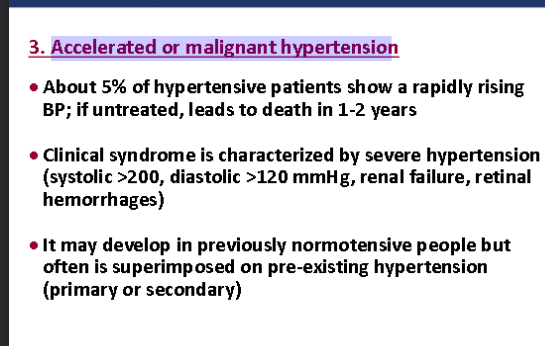
what is Accelerated or malignant hypertension (3)
what are Complications of chronic hypertension
Macrovascular atherosclerosis: - • coronary artery disease (angina, MI, SCD
Myocardial hypertrophy
Renal vascular disease
Peripheral arterial disease
Microvascular atherosclerosis
Hypertensive encephalopathy
what does Myocardial hypertrophy cause
High BP makes the left ventricle work harder.
The heart muscle thickens (left ventricular hypertrophy).
The thickened muscle becomes stiff and cannot relax properly.
This causes diastolic dysfunction, which can lead to congestive heart failure (CHF).
Cor pulmonale is right-sided heart dysfunction caused by pulmonary hypertension, usually related to lung disease, rather than directly by systemic hypertension.
what are affects of Renal vascular disease
• renal artery stenosis
• acute & chronic renal failure & proteinuria
what does Microvascular complications (small blood vessels) do
High BP damages smaller blood vessels, resulting in:
Retinopathy: Damage to retinal blood vessels → possible blindness.
Ischemic stroke: Blockage of a blood vessel supplying the brain.
Erectile dysfunction: Reduced blood flow due to vascular damage.
Cerebral microaneurysms: Weakening of small brain arteries that can rupture → hemorrhagic stroke
what is Hypertensive encephalopathy
(encephalopathy: brain dysfunction or damage that alters how
the brain works)
Main target organs affected by chronic hypertension are (4)
eyes, heart, kidney, brain
Clinical tests for diagnosis of causes on
hypertension

Non-pharmacological strategies
Life-style modifications
• weight loss (normal BMI: 18.5-24.9)
• physical activity (regular exercise)
• dietary sodium restriction
• moderation of alcohol consumptio
Classes of anti-hypertensive drugs
