AP Environmental Science Unit 7: Air Pollution, Smog, and Acid Rain
 Call Kai
 Learn
 Practice Test
 Spaced Repetition
 Match
 Flashcards
 Knowt Play
1/78

There's no tags or description
Looks like no tags are added yet.
79 Terms
What are the six criteria air pollutants identified by the Clean Air Act?
Sulfur Dioxide (SO2), Nitrogen Oxides (NOx), Carbon Monoxide (CO), Ozone (O3), Particulate Matter (PM), and Lead (Pb).
What is the primary source of sulfur dioxide (SO2) emissions?
Coal combustion, particularly for electricity generation.
What health effects are associated with sulfur dioxide (SO2)?
Respiratory irritant, worsens asthma and bronchitis.
What is the main environmental consequence of nitrogen oxides (NOx)?
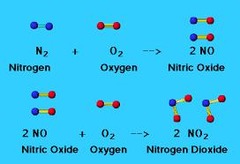
Leads to the formation of tropospheric ozone (O3) and photochemical smog.
What is the difference between primary and secondary air pollutants?
Primary pollutants are emitted directly from sources, while secondary pollutants form from chemical reactions in the atmosphere.
What are volatile organic compounds (VOCs) and their role in air pollution?
VOCs are carbon-based compounds that easily evaporate and contribute to the formation of photochemical smog.
How does coal combustion compare to other fossil fuels in terms of air pollutants released?
Coal combustion releases more air pollutants than other fossil fuels, including CO, CO2, SO2, NOx, toxic metals, and PM.
What is the impact of lead (Pb) as an air pollutant?
Lead is a neurotoxicant that damages the nervous systems of humans.
What is the role of sunlight in the formation of photochemical smog?
Sunlight breaks down NO2 into NO and free oxygen, which then combines with O2 to form ozone (O3).

What conditions contribute to the formation of photochemical smog?
Warm temperatures, sunlight, and the presence of VOCs and NO2.
What happens to ozone (O3) levels at night?
Ozone reacts with NO to form NO2 and O2, leading to a drop in O3 levels overnight.
What are the environmental impacts of photochemical smog?
Reduces sunlight, limits photosynthesis, and damages plant stomata.
How can the number of vehicles on the road affect air quality?
Decreasing the number of vehicles reduces NO2 emissions, leading to lower ozone levels and improved air quality.
What are the health effects of photochemical smog on humans?
Irritates respiratory tracts, worsens asthma, bronchitis, and COPD, and irritates eyes.
What is the significance of the 2007 Supreme Court ruling regarding CO2?
The ruling allowed the EPA to regulate greenhouse gases, including CO2, despite it not being classified as a criteria pollutant.

What is the main source of nitrogen oxides (NOx) emissions?
Combustion of fossil fuels and biomass.
What is the process by which nitrogen oxides (NOx) contribute to acid precipitation?
NOx combines with water and oxygen in the atmosphere to form nitric acid.
How do sulfur aerosols affect visibility and photosynthesis?
They block incoming sunlight, reducing visibility and photosynthesis.
What are the primary pollutants emitted from vehicles?
NOx, CO, CO2, VOCs, SO2, PM, and hydrocarbons.
What are the effects of particulate matter (PM) on human health?
Can cause respiratory issues and carry toxic metals into the lungs.
What is the relationship between temperature and the formation of ozone?
Higher temperatures speed up the evaporation of VOCs and the reactions that lead to ozone formation.
What is the impact of increased electricity production from renewable sources on air quality?
It reduces NOx emissions compared to fossil fuel power plants.
What is the role of catalytic converters in vehicles?
They reduce NOx, CO, and hydrocarbon emissions to prevent lead damage.
What are the environmental consequences of coal combustion beyond air pollutants?
It contributes to acid precipitation and environmental degradation.
How does urbanization impact air quality and smog formation?
Urban areas have higher emissions of NO2 and VOCs, leading to increased smog formation.
What are the main sources of VOCs in the environment?
Gasoline, formaldehyde, cleaning fluids, oil-based paints, and natural sources like coniferous trees.
What is the significance of the Clean Air Act (1970)?
It established regulations for air quality and identified criteria pollutants that must be monitored and controlled.
What is the Urban Heat Island Effect?
Urban areas have higher temperatures than surrounding areas due to lower albedo and less evapotranspiration.
What causes lower albedo in urban areas?
Concrete and asphalt absorb more sunlight than areas with vegetation.
What is thermal inversion?
A phenomenon where cold air is trapped beneath warmer air, preventing convection of pollutants.
What are the typical effects of thermal inversion?
Trapped air pollutants lead to respiratory issues, decreased tourism revenue, and reduced photosynthesis.
What types of air pollutants are commonly trapped during thermal inversion?
Smog, particulate matter (PM), ozone, sulfur dioxide (SO2), and nitrogen oxides (NOx).

What are natural sources of air pollutants?
Lightning strikes, plants (especially conifers), forest fires, and volcanoes.
How do plants contribute to air pollution?
Plants emit volatile organic compounds (VOCs) and convert atmospheric nitrogen to nitrogen oxides (NOx).
What is the difference between PM10 and PM2.5?
PM10 are particles
What are common indoor air pollutants?
Particulates, carbon monoxide (CO), volatile organic compounds (VOCs), radon gas, dust, mold, and lead.
What is carbon monoxide and how is it produced?
CO is produced by incomplete combustion of fuels and is an asphyxiant that binds to hemoglobin in blood.
What are VOCs and where are they found?
VOCs are chemicals that vaporize easily and are found in household products like adhesives, cleaners, and plastics.
How does radon gas enter homes?
Radon gas seeps through cracks in foundations and can also contaminate groundwater.
What health risks are associated with radon gas?
Radon is the second leading cause of lung cancer after smoking.
What is the impact of dust and mold on health?
Dust and mold can worsen respiratory conditions like asthma and COPD.
What is the significance of lead in older homes?
Lead from paint and pipes can damage the central nervous system, especially in children.
What measures can be taken to reduce lead exposure in homes?
Removing lead paint and replacing lead pipes with copper pipes.
What is the role of biomass fuels in indoor air pollution?
Biomass fuels release CO, PM, and VOCs, especially when combusted indoors with poor ventilation.
What are the health effects of particulate matter (PM)?
PM can irritate the respiratory tract and is associated with chronic bronchitis and lung cancer.
What is the main source of PM in urban areas?
Combustion of fossil fuels, especially from vehicles.
How can ventilation help with indoor air quality?
Increasing ventilation can disperse harmful gases like radon and reduce concentrations of indoor pollutants.
What are the consequences of poor indoor air quality?
Increased respiratory issues, decreased quality of life, and higher healthcare costs.
What is the impact of urban surfaces cooling overnight?
It can lead to thermal inversion, trapping pollutants near the surface.
What is the relationship between vegetation and air quality?
More vegetation leads to higher evapotranspiration, cooling the air and improving air quality.
What is the significance of the EPA's recommendations regarding radon?
The EPA advises testing homes for radon and sealing cracks to prevent its entry.
What is the health impact of asbestos exposure?
Asbestos exposure can lead to lung cancer and asbestosis.
How can mold be effectively removed from homes?
By cleaning the mold and fixing the underlying moisture issue.
What is the relationship between reducing emissions and air pollutants?
Reducing emissions leads to a reduction in air pollutants.
What are some methods to reduce emissions?
Drive less, conserve electricity, eat more plants, and use renewable energy.
What does the Clean Air Act allow the EPA to do?
Set acceptable levels for criteria air pollutants.
What do CAFE vehicle standards require?
The entire US fleet of vehicles to meet certain average fuel economy levels.
What is the purpose of pollution credits?
To allow companies that reduce emissions below EPA levels to sell credits to those exceeding levels.
What does a vapor recovery nozzle do?
Captures hydrocarbon VOCs released from gasoline fumes during refueling.
What is the function of a catalytic converter?
Converts NOx, CO, and hydrocarbons into CO2, N2, O2, and H2O.
How does crushed limestone help reduce SO2 emissions?
It reacts with SO2 to produce calcium sulfate, reducing emissions from coal power plants.
What is fluidized bed combustion?
A method that improves combustion efficiency and reduces NOx emissions by introducing jets of air.
What are dry scrubbers used for?
To absorb or neutralize NOx, SOx, and VOCs from exhaust streams.
What is the role of wet scrubbers?
They absorb or neutralize pollutants and trap particulate matter in water droplets.
How does an electrostatic precipitator work?
It gives particles a negative charge to attract them to positively charged collection plates.
What is a baghouse filter?
A large fabric filter that traps particulate matter from air emissions.
What are the primary pollutants that cause acid rain?
NOx and SO2.
How does acid rain affect soil and water?
It displaces nutrients and increases the solubility of toxic metals.
What is the impact of acid rain on aquatic species?
It can lead to population declines as pH levels drop outside of species' tolerance ranges.
What natural substance can neutralize acidic soil and water?
Limestone (calcium carbonate).
How does calcium carbonate react with H+ ions?
It forms bicarbonate and releases calcium ions, neutralizing acidity.
What are the environmental effects of noise pollution on wildlife?
Disruption of communication, migration, and potential hearing damage.
What are common sources of urban noise pollution?
Construction, transportation, industrial activity, and domestic activities.
How does aquatic noise pollution affect marine life?
It causes hearing loss, disrupted communication, and navigation issues.
What physiological stress can noise pollution cause in animals?
Increased heart rates and potential declines in populations of sensitive species.
What is one way to mitigate the effects of acid rain?
Adding crushed limestone to soils and waters.
What is the significance of the Clean Air Act regarding acid deposition?
It has led to a significant decrease in acid deposition since its passage.
What is the role of indicator species in assessing ecosystem health?
They help determine the conditions of an ecosystem based on their population levels.
What can be a consequence of acid rain on human structures?
Corrosion, especially in structures made from limestone.