N410= MS/Headaches/Trigeminal Neuralgia/Bells Palsy
 Call Kai
 Learn
 Practice Test
 Spaced Repetition
 Match
 Flashcards
 Knowt Play
1/44

There's no tags or description
Looks like no tags are added yet.
45 Terms
Multiple sclerosis (MS)
is a chronic disease of the central nervous system (CNS), which includes the brain, spinal cord, and optic nerves. It occurs when the immune system mistakenly attacks myelin, the protective covering around nerve fibers. This damage disrupts communication between the brain and the rest of the body.
is a complex condition: symptoms, severity, and progression vary significantly from person to person. Although there is currently no cure, treatments can reduce relapses, slow disease activity, and help preserve function and quality of life.
What happens in MS?
The disease process generally involves three related changes:
Inflammation: Immune cells attack components of the nervous system.
Demyelination: The myelin sheath is damaged, slowing or blocking electrical signals along nerve fibers.
Neurodegeneration: Over time, nerve fibers themselves may become damaged, contributing to lasting disability.
Areas of damage are often called lesions or plaques. They may occur in different parts of the brain, spinal cord, and optic nerves, explaining why MS can produce many different symptoms.
MS Common Symptoms
depend on the location and extent of nervous system damage. They may fluctuate, develop gradually, or persist over time.
Vision problems= Blurred vision, pain with eye movement, double vision, or temporary loss of vision, sometimes due to optic neuritis.
Sensory changes= Numbness, tingling, burning sensations, or altered sensitivity to touch.
Movement and balance difficulties= Muscle weakness, stiffness or spasticity, tremors, poor coordination, dizziness, and difficulty walking. Fatigue (worsens throughout the day) and cognitive changes. Persistent exhaustion, difficulty concentrating, memory problems, or slower information processing.
Bladder, bowel, and sexual dysfunction= Urinary urgency or retention, constipation, and changes in sexual function.Not everyone experiences all these symptoms. Fatigue, pain, depression, and sleep disturbances can also affect daily functioning.
Relapsing-remitting MS (RRMS)
Type of MS, Most common at diagnosis
Symptoms flare up during relapses, followed by periods of partial or complete recovery (remission). Some people develop new or persistent symptoms over time.
Secondary progressive MS (SPMS)
Usually develops after an initial relapsing-remitting course. Disability gradually increases over time, with or without occasional relapses.
Primary progressive MS (PPMS)
Symptoms and disability gradually worsen from the beginning, rather than following a clear pattern of relapses and remissions.
What causes MS, and who is at risk?
The exact cause is not fully understood. _ is thought to develop through a combination of immune, genetic, and environmental factors.
Factors associated with a higher risk include:
-Age: _ often begins in young adulthood, although it can occur at other ages.
-Sex: It is more common in women than in men.
-Family history: Having a close relative with _ increases risk, but _ is not directly inherited in a simple pattern.
-Epstein–Barr virus (EBV): Infection with this common virus is strongly associated with _.
-Other factors: Smoking, low vitamin D levels, and obesity during adolescence have been associated with increased risk.
How is MS diagnosed?
There is no single test that independently confirms . _A neurologist combines clinical findings and test results to determine whether the evidence fits _and whether another condition could explain the symptoms.
Neurological history and examination= Reviews symptoms over time and evaluates strength, reflexes, sensation, vision, coordination, and balance.
MRI of the brain and spinal cord= Looks for lesions in characteristic locations and may show evidence of inflammation occurring at different times.
Lumbar puncture and blood tests= Cerebrospinal fluid can be checked for markers of inflammation, such as oligoclonal bands. Blood tests help rule out other conditions that resemble _.
Additional tests when needed= Visual evoked potentials, optical coherence tomography, or other tests may help identify damage to specific nerve pathways.
How is MS treated?
Treatment is individualized according to the type of _, disease activity, symptoms, other health conditions, and personal preferences.
Disease-modifying therapies (DMTs) | Reduce relapses, new lesions, and risk of disability accumulation |
Corticosteroids | Speed recovery from certain significant relapses |
Symptom management | Address pain, fatigue, stiffness, bladder problems, and other symptoms |
Rehabilitation | Maintain mobility, balance, strength, and independence |
Psychological and practical support | Help with mood, cognition, work, relationships, and daily activities |
Disease-modifying medications for MS?
Many DMTs are available, including injectable medications, oral medications, and infusions. Examples include interferon beta, glatiramer acetate, dimethyl fumarate, natalizumab, and ocrelizumab. Each has different benefits, risks, and monitoring requirements.
These medications do not cure or reverse all existing damage, but they can substantially reduce disease activity. Certain therapies are also available for specific progressive forms of MS. The best option should be discussed with an _ specialist.
Nursing interventions for a patient with multiple sclerosis (MS)
focuses on maintaining mobility, preventing complications, managing symptoms, promoting independence, and supporting quality of life. Interventions should be individualized based on the patient's symptoms, level of disability, disease progression, and functional abilities.
Priority nursing interventions for MS
Impaired physical mobility= Assess muscle strength, gait, balance, coordination, and range of motion. Assist with ambulation and transfers as needed. Encourage prescribed exercises, stretching, and physical therapy. Provide assistive devices such as walkers or canes when indicated. Reposition regularly if the patient has limited mobility.
Risk for falls= Assess fall risk and observe for dizziness, weakness, and unsteady gait. Keep the bed low, brakes locked, and call light within reach. Keep floors dry and pathways clear. Assist with walking and toileting when necessary. Teach the patient to rise slowly and use prescribed mobility aids.
Fatigue= Assess fatigue severity and its impact on daily activities. Schedule care and activities with rest periods between tasks. Encourage energy conservation and prioritization of essential activities. Promote adequate sleep, hydration, and balanced nutrition. Avoid overheating and encourage activity during periods of higher energy.
Risk for impaired skin integrity= Inspect skin daily, especially over bony prominences.Reposition patients who cannot change position independently. Keep skin clean and dry and manage moisture promptly. Use pressure-redistributing surfaces as indicated.Encourage adequate protein and nutritional intake.
Bladder and bowel dysfunction= Monitor urinary frequency, urgency, retention, and incontinence. Assess bowel habits and constipation. Encourage appropriate fluid intake, fiber, and activity as tolerated. Establish scheduled toileting or a bowel routine as appropriate. Monitor for urinary tract infection and report concerning findings.
Impaired swallowing or risk for aspiration= Assess for coughing, choking, wet-sounding voice, or difficulty swallowing. Keep the patient upright during meals and afterward.Follow the prescribed food consistency and liquid-thickening recommendations.Provide small bites and sips only when safe. Request a speech-language pathology assessment for suspected dysphagia.
Medication-Related Nursing Care MS
Administer prescribed disease-modifying therapies and symptom-management medications as ordered.
Monitor for adverse effects and treatment-specific laboratory abnormalities.
Assess response to medications used for spasticity, neuropathic pain, fatigue, or bladder dysfunction.
Reinforce adherence and explain the importance of follow-up appointments and monitoring.
Do not stop disease-modifying therapy or change medication doses without consulting the prescribing clinician.
Patient Education MS
Recognize new or worsening neurological symptoms and report them promptly.
Avoid excessive heat if it worsens symptoms.
Balance activity with rest to manage fatigue.
Follow an individualized exercise and rehabilitation plan.
Maintain appropriate hydration, nutrition, skin care, and bladder and bowel routines.
Use assistive devices and home safety modifications when indicated.
Seek support for emotional health and changes in daily functioning.
Living with MS
Practical strategies can help support everyday functioning and overall health.
Exercise regularly: Adapted aerobic activity, strength training, stretching, and balance exercises can help maintain mobility.
Prioritize sleep and energy management: Pace activities, schedule rest breaks, and address sleep problems.
Eat a balanced diet: No specific diet has been proven to cure MS. Discuss vitamin D supplementationwith a clinician.
Avoid smoking: Smoking is associated with worse MS outcomes.
Manage heat sensitivity: Hot environments may temporarily worsen existing symptoms in some people.
Attend regular follow-ups: Clinical assessments and MRI monitoring can help evaluate disease activity and treatment effectiveness.
Prognosis and life expectancy for MS?
is a lifelong condition, but its course is highly variable. Some people experience relatively mild symptoms for decades, while others develop substantial disability. Many people with _ have a near-normal life expectancy, and modern treatments have improved the outlook for many patients.
Early diagnosis, appropriate treatment, rehabilitation, and ongoing monitoring can make a meaningful difference. A diagnosis of _ does not automatically mean that someone will need a wheelchair or become unable to live independently
What is Headaches?
is pain or discomfort in the head, scalp, face, or upper neck. It is one of the most common health complaints and can range from mild, temporary discomfort to severe, disabling pain.
Most headaches are not caused by a dangerous condition. However, some can indicate a medical emergency, so it is important to assess the onset, location, severity, associated symptoms, and possible triggers.
Types two main categories: primary- which are conditions in themselves, and secondary- which result from another medical condition.
Tension headache
Most common type of primary headache.
Feels like pressure or a tight band around the head.
Often affects both sides of the head.
May be associated with stress, poor posture, or muscle tension.
Usually does not cause vomiting.
Treatment for Tension Headaches
Prescription options are usually considered when headaches are frequent or persistent.
Amitriptyline: Commonly used to prevent chronic tension-type headaches.
Nortriptyline: Sometimes considered as an alternative preventive medication.
Other treatment may be appropriate depending on contributing factors.
Opioids are generally not recommended for routine tension headaches because of their risks and potential to worsen headaches through medication overuse.
Migraine
Often causes moderate to severe, throbbing pain, sometimes on one side.
May be accompanied by nausea, vomiting, and sensitivity to light or sound.
Physical activity may worsen the pain.
Some people experience an aura, such as flashing lights, blind spots, or tingling, before or during the headache.
Attacks may last 4–72 hours in adults.
Migraine Treatment
are divided into acute treatments and preventive treatments.
Important: Triptans may be unsuitable for people with certain cardiovascular conditions or a history of stroke. The choice of medication depends on individual risks, other medications, and pregnancy considerations.
Cluster headache
Causes extremely severe pain around or behind one eye, usually on one side.
May cause tearing, eye redness, a drooping eyelid, or nasal congestion on the affected side.
Attacks often last 15–180 minutes and can recur several times daily during cluster periods.
Requires medical assessment and specific treatment.
Treatment Cluster headaches
often require specialized treatment because the pain can be extremely severe.
Sumatriptan injection or nasal spray: Rapid treatment for an attack.
High-flow oxygen: A standard acute treatment administered with appropriate equipment.
Verapamil: Commonly used to prevent cluster attacks, with ECG monitoring as prescribed.
Corticosteroids: Sometimes used short-term as transitional treatment while preventive therapy takes effect.
Headache associated with sinus disease will see?
May cause facial pressure or pain around the forehead, cheeks, or eyes.
Often occurs with nasal congestion or thick nasal discharge.
True_ is associated with sinus inflammation or infection; migraine can also cause facial pressure and nasal symptoms.
Secondary Headaches
These headaches occur because of another condition or contributing factor, such as:
Viral illnesses, fever, or dehydration.
Medication overuse or withdrawal, including caffeine withdrawal.
Head injury or concussion.
Very high blood pressure in certain emergencies.
Meningitis or other infections.
Bleeding in or around the brain, or other neurological conditions.
Common Causes and Triggers for Secondary headache?
Stress, anxiety, or muscle tension.
Lack of sleep or irregular sleep patterns.
Dehydration or skipped meals.
Hormonal changes.
Caffeine withdrawal or alcohol use.
Certain medications or frequent use of pain relievers.
Infections, sinus inflammation, or other underlying medical conditions.
Triggers vary from person to person. Keeping a headache diary can help identify patterns
Treatment and management for Secondary Headache?
depends on the type and underlying cause of the headache.
Frequent use of pain medications can itself lead to medication-overuse headaches. Anyone who regularly needs headache medicine several days per week should discuss a management plan with a healthcare professional.
Self-care | Rest, hydration, regular meals, and a quiet environment |
Acute medications | Appropriate pain relievers or migraine-specific medications prescribed or recommended by a clinician |
Preventive treatment | Prescription medications for frequent or disabling headaches |
Lifestyle changes | Consistent sleep, regular exercise, stress management, and identifying triggers |
Treatment of underlying causes | Addressing infection, medication effects, or other medical conditions |
What to do During a Headache
Rest in a quiet, dark room, particularly during a migraine.
Apply a cool compress to the forehead or use gentle heat for neck muscle tension, depending on what helps.
Reduce exposure to bright lights, loud sounds, and strong odors if these worsen symptoms.
Limit strenuous activity if it aggravates the pain.
Follow the prescribed treatment plan and note whether the medication helps.
Keep a Headache Diary
Encourage patients to record:
-Date, time of onset, duration, and pain severity (0–10).
-Location and character of the pain.
-Associated symptoms, such as nausea, visual changes, or light sensitivity.
-Possible triggers, including stress, sleep changes, meals, and caffeine.
-Medication taken, dose, effectiveness, and side effects.
-This information can help the healthcare provider identify headache patterns and adjust treatment.
Common dietary triggers for headaches?
Chocolate= Some people report migraines after eating chocolate. However, cravings for chocolate can also occur during the early stages of a migraine, so it is not always the cause.
Alcohol, particularly red wine= Alcohol can trigger headaches or migraines in some people. Avoiding it may help if a consistent association is observed.
Aged cheeses= Cheddar, blue cheese, and other aged cheeses contain tyramine, which some people identify as a potential trigger, although evidence is inconsistent.
Processed or cured meats= Bacon, salami, and some deli meats may contain nitrates or nitrites, which some individuals report as triggers.
Caffeine= Too much caffeine can trigger headaches in some people, while suddenly reducing regular caffeine intake can cause withdrawal headaches. Keep intake consistent if caffeine is part of your routine.
Foods containing certain additives= Monosodium glutamate (MSG) and some food preservatives are reported triggers in some individuals, but evidence varies. Not everyone needs to avoid them.
Foods and habits that may help prevent headaches
Eat balanced, regular meals
Include vegetables, fruits, whole grains, and adequate protein.
Drink enough water
Maintain hydration throughout the day, adjusting for activity and medical needs.
Include nutrient-rich foods
Nuts, seeds, legumes, leafy greens, and whole grains provide magnesium and other nutrients. Magnesium supplements may help prevent some migraines, but discuss them with a healthcare professional first.
Trigeminal neuralgia (TN)
is a chronic pain condition affecting the trigeminal nerve, the fifth cranial nerve. This nerve carries sensation from the face to the brain and helps control the muscles used for chewing.
It is sometimes described as one of the most severe types of facial pain because attacks can be sudden, intense, and debilitating. Although it can significantly affect quality of life, treatments are available, and many people achieve good pain control.
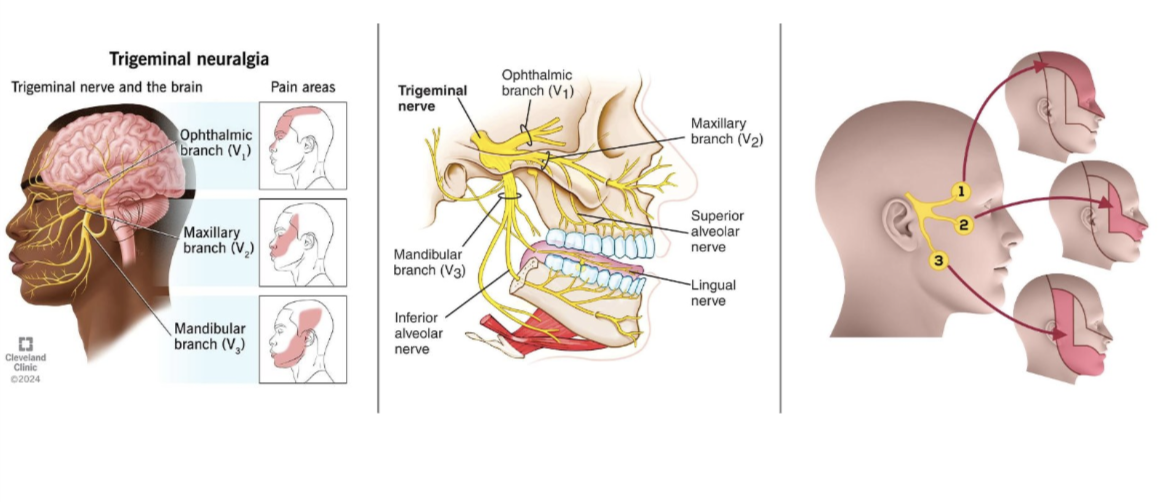
Trigeminal neuralgia (TN) Symptoms and Clinical Presentation
The hallmark symptom is sudden, severe, electric-shock-like pain on one side of the face.
Typical features include: Pain quality: Sharp, stabbing, shooting, or electric-shock-like.
-Location: Usually one side of the cheek, jaw, teeth, lips, or forehead.
-Duration: A fraction of a second to about two minutes per attack, although repeated attacks can occur in clusters.
-Triggers: Light touch, brushing teeth, chewing, talking, shaving, washing the face, or a breeze.
-Pattern: Brief, recurring attacks with pain-free intervals; some people also experience persistent background pain.
-Laterality: Usually unilateral; bilateral disease is uncommon.
Trigeminal neuralgia (TN) pain
follows one or more branches of the trigeminal nerve:
Important clinical clue: A patient may describe the pain as a toothache and undergo dental procedures before the neurological cause is recognized. The facial pain pattern and trigger sensitivity help distinguish TN from dental disease.
Branch | Name | Typical area affected |
V1 | Ophthalmic | Forehead, scalp, and around the eye |
V2 | Maxillary | Cheek, upper lip, upper teeth |
V3 | Mandibular | Lower jaw, lower teeth, chin |
Trigeminal neuralgia (TN) Treatment
aims to reduce attacks, preserve daily function, and minimize adverse effects.
First-line medication= Carbamazepine, Oxcarbazepine
These are commonly preferred because they reduce abnormal nerve firing. Clinicians generally start at a low dose and adjust gradually. Monitoring for side effects and medication interactions is important.
Alternative medications= Depending on response and tolerability, specialists may consider lamotrigine, baclofen, gabapentin, pregabalin, or other treatments. Ordinary painkillers such as ibuprofen are generally ineffective for the classic attacks.
Trigeminal neuralgia (TN) surgical procedure treatment
If medication fails or causes unacceptable adverse effects, options include:
Microvascular decompression (MVD): Relieves pressure on the nerve without intentionally damaging it.
Stereotactic radiosurgery: Delivers focused radiation to the nerve.
Percutaneous procedures: Such as radiofrequency treatment, balloon compression, or glycerol injection, which disrupt pain transmission.
The most suitable option depends on the cause, overall health, MRI findings, and the patient's preferences.
Trigeminal neuralgia (TN) Prognosis and Complications
is often a long-term condition with periods of remission and recurrence. Medication can provide substantial relief, although effectiveness and tolerability vary. Procedures can offer longer-lasting relief for selected patients, but pain may return and some procedures cause facial numbness or other complications.
Severe attacks may lead to difficulty eating, drinking, speaking, or maintaining oral hygiene. Anxiety, social withdrawal, and depression can also occur. Treatment should address these effects as well as the pain itself.
Trigeminal neuralgia (TN) Nursing care plan
The priorities in nursing care are pain relief, trigger management, medication safety, nutrition and hydration, oral hygiene, psychological support, and patient education.
Acute pain | Pain reduced to a tolerable level | Assess pain, administer prescribed pain medication/ anticonvulsant, minimize triggers, avoid touching affected side of face | Patient reports improved pain control |
Inadequate nutritional intake | Maintain adequate nutrition | Offer soft lukewarm foods, monitor intake and weight, schedule meals after pain medication | Intake improves and weight remains stable |
Risk of dehydration | Maintain hydration | Encourage fluids and monitor intake and output | Adequate hydration maintained |
Anxiety | Reduce distress | Provide reassurance, education, and relaxation support | Patient verbalizes reduced anxiety |
Knowledge deficit | Improve self-management | Teach medication safety, trigger management, and follow-up | Patient explains the care plan correctly |
Trigeminal neuralgia (TN) Key takeaways
is a disorder of the trigeminal nerve that causes brief, severe, electric-shock-like facial pain.
Light touch, chewing, talking, and brushing teeth may trigger attacks.
Neurovascular compression is a common cause, but secondary causes must be considered.
Carbamazepine and oxcarbazepine are common first-line treatments.
MRI and specialist assessment help guide diagnosis and treatment.
Effective treatments exist, including surgery for selected patients.

Bell’s Palsy
is a sudden weakness or paralysis of the muscles on one side of the face caused by dysfunction of the facial nerve (cranial nerve VII). It affects facial expressions, eye closure, and sometimes taste and tear or saliva production.
It is the most common cause of acute peripheral facial nerve paralysis. Most people improve significantly, and many recover completely with appropriate treatment.
Risk factors and Association of Bell’s Palsy
Pregnancy, particularly in late pregnancy and the early postpartum period.
Diabetes mellitus.
Recent viral illness or suspected viral reactivation.
A history, is considered idiopathic, meaning no definite cause is identified in an individual case. Facial weakness due to stroke, tumors, Lyme disease, or other identifiable conditions is not classified as _
Signs and Symptoms Bell’s Palsy
Symptoms typically develop rapidly, reaching their maximum severity within 72 hours.
Common clinical features include: Sudden weakness or paralysis of one side of the face.
-Drooping of the mouth and difficulty smiling symmetrically.
-Difficulty closing the affected eye or blinking.
-Flattening of the forehead wrinkles on the affected side.
-Drooling or difficulty keeping liquids in the mouth.
-Altered taste.
-Increased sensitivity to sound in the affected ear.
-Pain around or behind the ear.
-Excessive tearing or dry eye.
Key clinical distinction: affects both the upper and lower face on the same side, including the forehead. However, forehead involvement alone cannot reliably rule out a stroke.
Bell’s Palsy Treatment
Corticosteroids: Oral prednisone or prednisolone, usually started within 72 hours of symptom onset, can improve the likelihood of recovery.
Antiviral medication: May be added to steroids in selected cases, particularly severe paralysis; antivirals alone are not recommended.
Eye protection: Artificial tears during the day, lubricating ointment at night.
Pain relief: Appropriate analgesics when needed.
Facial rehabilitation: Selected patients with persistent weakness may benefit from specialist facial exercises or physiotherapy.
Potential Complications of Bell’s Palsy
Corneal dryness, abrasion, ulceration, and vision damage from incomplete eyelid closure.
Difficulty eating, drinking, and speaking.
Persistent facial weakness or facial muscle tightness.
Anxiety, low self-esteem, and social withdrawal
Key points to remember for Bell’s Palsy
affects cranial nerve VII (facial nerve).
It usually causes sudden, one-sided weakness of the upper and lower face.
Early corticosteroid treatment can improve recovery.
Eye protection is essential if the patient cannot close the affected eye.
Most patients recover, although some have persistent symptoms.