DSG325 - Intro to Forging
 Call Kai
 Learn
 Practice Test
 Spaced Repetition
 Match
 Flashcards
 Knowt Play
1/28

Earn XP
Description and Tags
Lecture 08
29 Terms
what is forging?
shaping and compression of metal to form desired geometry
metal ingot is heated to increase ductility
ductile ingot is forcibly hammered/pressed into its new shape
tempering is often done after to restore desired mechanical characteristics
What are the benefits of forging?
high strength and durability
very little metal waste compared to other metal manufacturing methods
flashing
very little finishing required
very little downtime/human intervention required
varied precision - forging can achieve average tolerances of 0.2%-10% depending on material and part/die complexity
what are the characteristics of hot forging?
material is heated above recrystallization temperature
prevents strain hardening
makes the material more malleable, able to flow into more complex forms
promotes recrystallization
what is the process of hot forging?
die is heated to prevent heat loss during process
cooling complications failure to form, stick, die wear
pressure applied by die to material to form shape
what is the cold forging process?
die and material at room temperature
material is often pre-annealed or chosen for ductility at room temperature
compressive forces squeeze material between punch and die
what are some techniques that are used in cold forging?
rolling
pressing
drawing
spinning
heading
extruding
What are the advantages of hot forging?
increased ductility and more complex parts
what are the advantages of cold forging?
very little waste
near-net production (very little minishing required)
higher dimensional accuracy
what are the disadvantages of hot forging?
risk of warping
less dimensionally accurate
additional cost from supporting heating equipment
what are the disadvantages of cold forging?
less complex geometry possible
risk of residual stress - often requires post-forming heat treat
What is open die forging?
(also known as drop forging)
type of hot forging
shapes the workpiece without fully enclosing the metal within the die
What kind of parts are usually made using an open die forge
very large
fairly simple shapes with low tolerance
custom shaped or hand forged parts
parts with subsequent forging steps or post machining
What is closed die forging?
(also known as impression die forging)
type of hot forging
heated billet is roughly the volume and shape of a finished part
billet placed in bottom die, force on die compressed billet into desired shape
higher up-front cost - shaped dies are expensive and have to hold up to many reptations of high forces and wear
produces fairly precise, complex geometry
usually leaves flash
What is upset forging?
(AKA “heading”)
can be performed hot or cold
shaped die ‘upsets” end of wire that is fed through
commonly used to produce nails, screws, nuts, and bolts

what type of forging likely created this?
open die

what type of forging likely created this?
closed die

what type of forging likely created this?
open die

what type of forging likely created this?
upset die
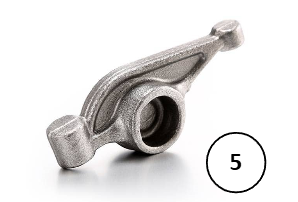
what type of forging likely created this?
closed die
Does hot or cold forging have greater dimensional accuracy?
cold forging
Does hot or cold forging waste less material?
cold forging
Is hot or cold forging at risk of warping?
hot forging
Does hot or cold forging have a risk of retaining residual stress if not heat treated
cold forging
All else held in common (material, geometry, heat treat, etc.) will a forged or machined part be tougher?
A forged part because you are not cutting in the grain, so it is not starting and stopping which makes the part weaker
What happens to a part when it cools in the mold?
shrinkage occurs and part pulls away from walls on the outside, hugs walls on the inside
How do we prevent a part from sticking or getting caught in the mold?
add draft to the sides and increase that draft on the inside surfaces of the part
What are some guidelines for parting lines?
typically, perpendicular to mold pull direction
must intersect part all the way through - no undercuts
draft inflect point lies on this
Why should small radii be avoided?
can case disruption to material flow and “folding”
can cause extreme die loads to force material into tight corners
can cause stress concentration and cracking on exterior corners shortening die life

what plane should the parting line go on and what features should be added to make it better suited for forging?
line c
draft and fillets