Bioprinting: Chapter 6
 Call Kai
 Learn
Learn Practice Test
 Spaced Repetition
 Match
Match Flashcards
 Knowt Play
1/23

There's no tags or description
Looks like no tags are added yet.
Name | Mastery | Learn | Test | Matching | Spaced | Call with Kai | Chat |
|---|
No analytics yet
Send a link to your students to track their progress
24 Terms
2-dimensional (2D) static cell culture TOOLS
cell culture flasks
multiwall plates
petri dishes
2D cell culture
Cells grow as a flat layer on plastic/glass surfaces.
Requires frequent media changes for nutrients and waste removal.
Does not mimic the 3D structure of real tissues.
2D cell culture limitations
Over-simplifies the natural environment of cells.
Cells behave differently in flat 2D culture compared to 3D tissues in the body.
(eg: does not replicate blood circulation and complex tissue structure)
Animal model limiations
ethical
time consuming
animal immunity is not representative of humans
5 different types of 3d cell culture models
scaffold-based
scaffold-free spheroid
gel
bioreactor
microchip
(some say girls bully men)
Scaffold-based 3D cell culture
temporary, artificial ECM to accomodate cells and support tissue regeneration
Hydrogel scaffolds
mimics natural ECM
ex:
alginate (cell transplantation, drug delivery)
PEG/HA (cancer cells, stem cells)
Macroporous hydrogel (3d cancer cell cultures)
Scaffold-free multicellular spheroids
3D structures made from cells naturally coming together to form a cluster
cells organize themselves and therefore do not need a scaffold
Spheroids as other In Vitro Tissue Model Examples
liver tissue models
bone tissue models
smooth muscle tissues
skeletal muscle tissues
fabrication techniques for spheroids
rotating-wall vessels
U-shaped low attachment microwell plates
hanging-drop method
rotating-wall vessels
Cells + ECM-coated beads are placed in a rotating vessel.
Rotation keeps cells suspended and allows 3D tissue formation.
Gas-permeable membrane provides oxygen exchange.
U-shaped, low-attachment microwell
curved bottom glass flask (of sometime)
cells are suspended, floating around
they condense to from a spheroid (because of the slope of the glass)
cells do not adhere to the walls because of some kind of coating
Challenges of spheroids for 3D cell cultures
lack of control over size and structure/shape
lack of nutrient and oxygen supply
not similar to natural tissues
bioreactor
device where biochemical/biological processes develop under a controlled and monitored environment
Types of Bioreactors
spinner flask bioreactor
rotating wall bioreactor
compression bioreactor
strain bioreactor
flow perfusion bioreactor
(some rats can’t stay fat)
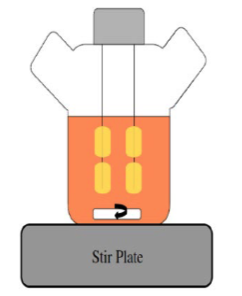
Spinner flask bioreactor
Cells are placed on a scaffold inside a flask containing nutrient-rich culture medium.
A spinner (stirrer) mixes the medium, creating fluid movement around the scaffold.
This movement improves nutrient and oxygen delivery to cells through convection (fluid flow), rather than only diffusion.
Cells grow and produce tissue on the scaffold (commonly used for bone tissue engineering).
Gas exchange occurs through porous covers on the flask.
Spinner flask bioreactor limitation
Nutrients do not reach all areas equally → more cells grow on the outside of the scaffold than the centre.
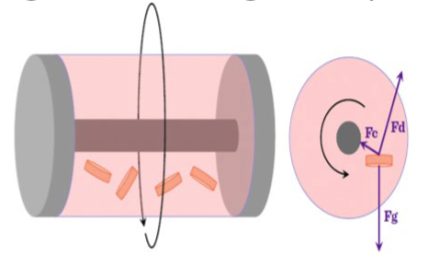
Rotating wall bioreactor
Scaffolds + cells are placed in culture medium between two cylinders.
The outer cylinder rotates, keeping scaffolds suspended and moving.
This creates a low-gravity (microgravity-like) environment.
Cells experience gentle movement and can form more uniform 3D tissues.
Compression bioreactor
A mechanical system compresses the scaffold containing cells.
Compression can be static (constant) or dynamic (repeated).
The pressure pushes fluid through the scaffold, improving nutrient and oxygen delivery.
Helps cells grow and form tissue.
(FLUID FLOWS THROUGH SCAFFOLD)
Strain bioreactor
Cells are grown on a scaffold that is clamped in place.
The scaffold is stretched with cyclic tensile strain (repeated pulling).
Mechanical strain stimulates cells to differentiate and form specific tissues.
Used for tendon, bone, ligament, cartilage, and cardiovascular tissue.
Flow perfusion bioreactor
A pump pushes culture medium through a scaffold containing cells.
Continuous flow provides nutrients and oxygen throughout the scaffold.
Bioreactor advantages & disadvantages
advantages:
high volume cell production
customizable for different physical signals and process
disadvantages:
high cost
engineering and fabrication challenges
Microchips
Miniature devices that mimic human organs/tissues on a chip using human cells.
Recreate tissue–tissue and organ–organ interactions to study diseases and test treatments.
Used as an alternative to animal testing.
Advantages & Disadvantages
Advantages:
More accurately represents human biology than animal models.
Can study diseases that cannot be replicated well in animals.
Reduces the need for animal testing.
Allows drug testing in a controlled environment.
Disadvantages:
Complex and expensive to develop.
Difficult to fully replicate the complexity of a whole human body.
Limited adoption due to technical challenges and standardisation issues