Biology A-Level: The Mitotic Cell Cycle
 Call Kai
 Learn
 Practice Test
 Spaced Repetition
 Match
 Flashcards
 Knowt Play
1/11

There's no tags or description
Looks like no tags are added yet.
12 Terms
What is the structure of a chromosome?
A chromosome consists of a long DNA molecule wrapped around histone proteins, which help it coil and condense. After DNA replication, a chromosome consists of two identical sister chromatids joined at the centromere. The centromere is the region where spindle fibers attach during cell division. Telomeres are repetitive DNA sequences at the ends of each chromatid that protect the ends of chromosomes from damage.
What is the importance of mitosis during the growth of multicellular organisms?
The two daughter cells formed after mitosis have the same number of chromosomes as the parent cell and are genetically identical (they are clones). This allows the growth of multicellular organisms from unicellular zygotes. Growth may occur over the entire body, as in animals, or be confined to certain regions, as in the meristems (growing points) of plants.
What is the importance of mitosis during the replacement of damaged or dead cells & tissue repair?
Damaged tissues can be repaired by mitosis followed by cell division. Cells are constantly dying and being replaced by identical cells. Dead and damaged cells need to be continually replaced by genetically identical cells. In humans, for example, cell replacement occurs particularly rapidly in the skin and the lining of the gut.
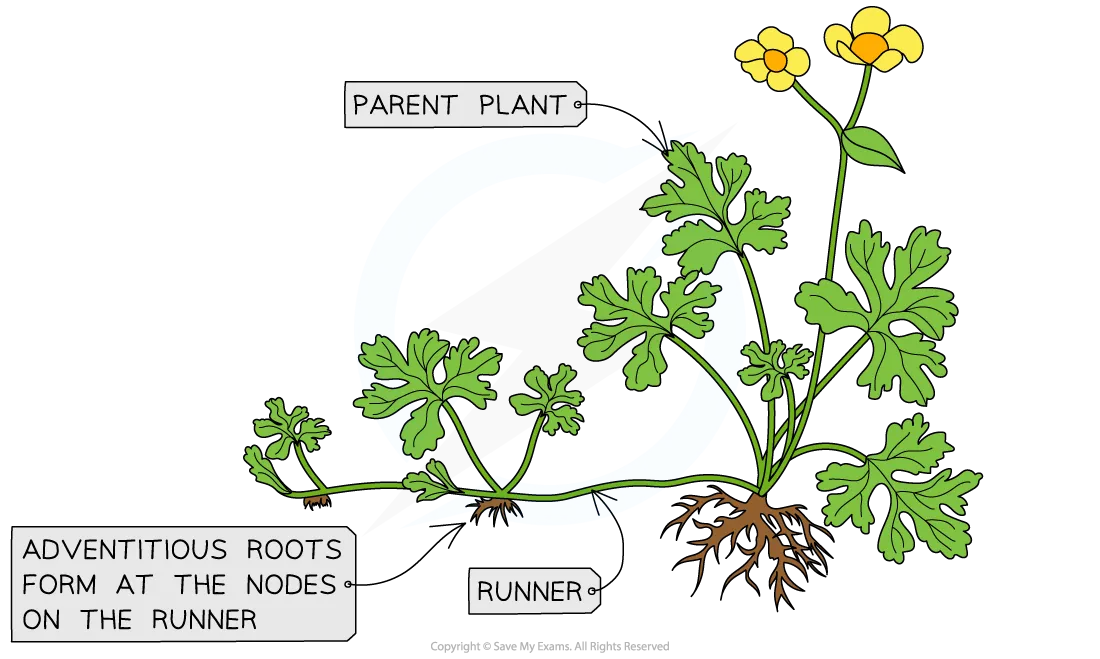
What is the importance of mitosis during asexual reproduction?
Asexual reproduction is the production of new individuals of a species by a single parent organism. The offspring are genetically identical to the parent. For unicellular organisms such as Amoeba, cell division results in the reproduction of genetically identical offspring. For multicellular organisms (as seen with many plant species) new individuals grow from the parent organism (by cell division) and then detach (‘bud off’) from the parent in different ways. Some examples of these are budding in Hydra and yeast and runners from strawberries.
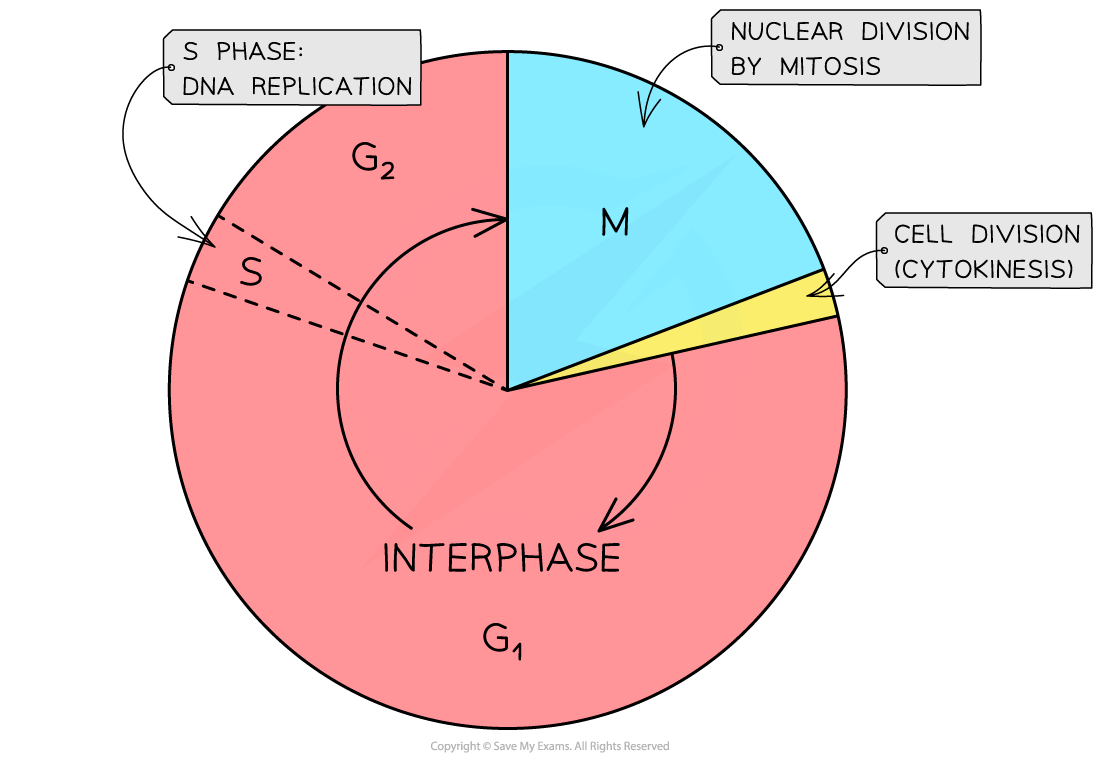
In the mitotic cell cycle, what is interphase?
It consists of 3 phases, G1 phase, S phase, and G2 phase. During Interphase the cell increases in mass and size and carries out its normal cellular functions. In G1, cells make the RNA, enzymes, and other proteins required for growth. At some point in the G1 phase, a signal is received telling the cell to divide again and the DNA in the nucleus replicates (resulting in each chromosome consisting of two identical sister chromatids). That is called the S phase. S standing for the synthesis (of DNA). Next, the G2 phase. During the G2 phase, the cell continues to grow and the new DNA that has been synthesised is checked and any errors are usually repaired. Other preparations for cell division are made, for example there is a sharp production of tubulin protein, which is used to make microtubules for the mitotic spindle.
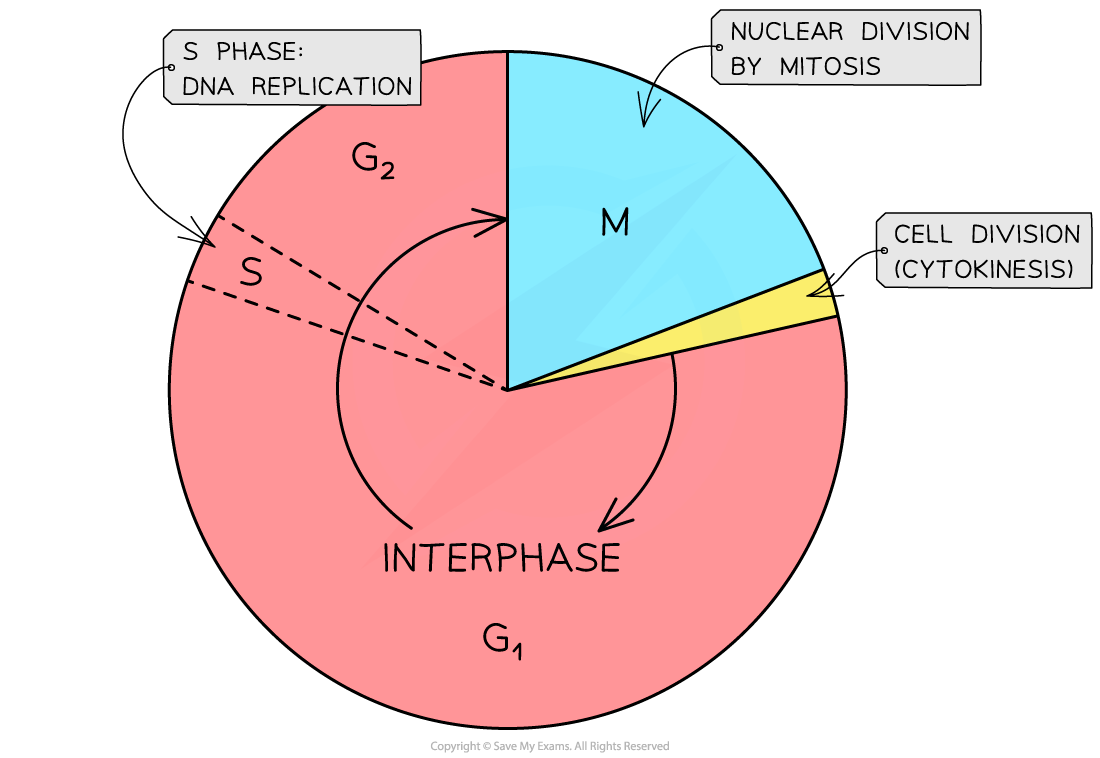
In the mitotic cell cycle, what is mitosis?
It is the stage of nuclear division. Cell growth stops during the M phase. The nucleus divides to form two genetically identical nuclei.
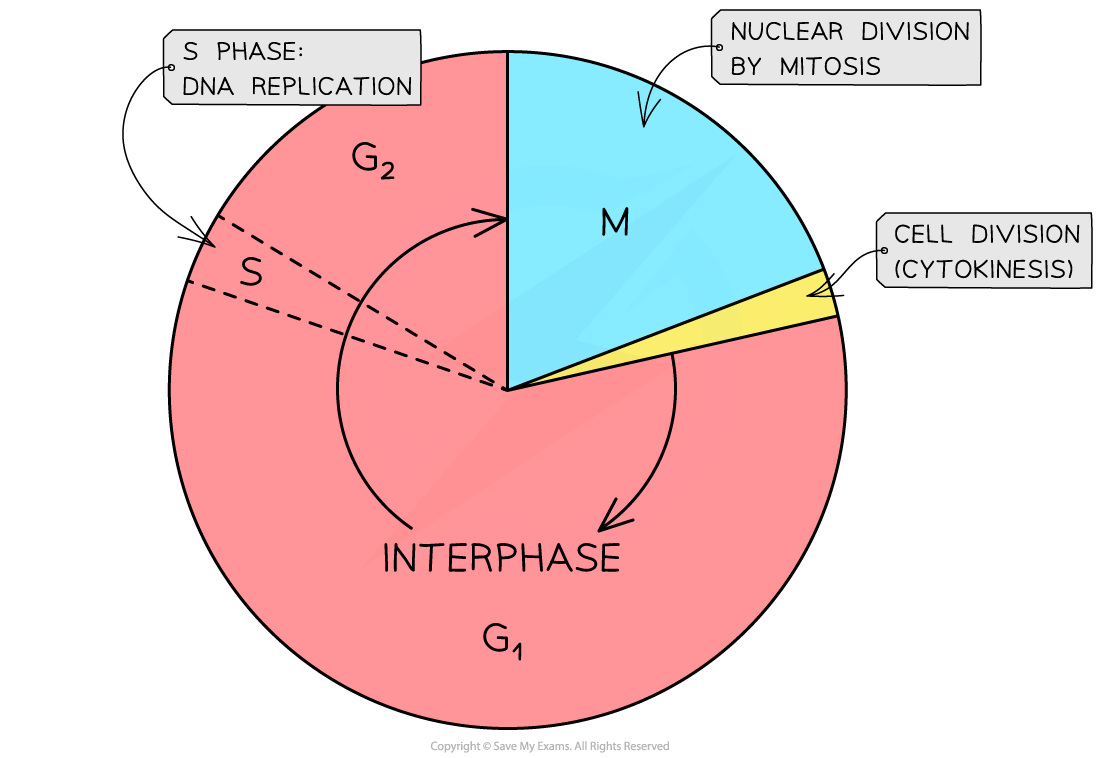
In mitotic cell cycle, what is cytokinesis?
It is when the whole cell divides and one nucleus moves into each cell to create two genetically identical daughter cells, once the nucleus has divided into two genetically identical nuclei in the M phase. In animal cells, cytokinesis involves constriction of the cytoplasm between the two nuclei and in plant cells a new cell wall is formed.
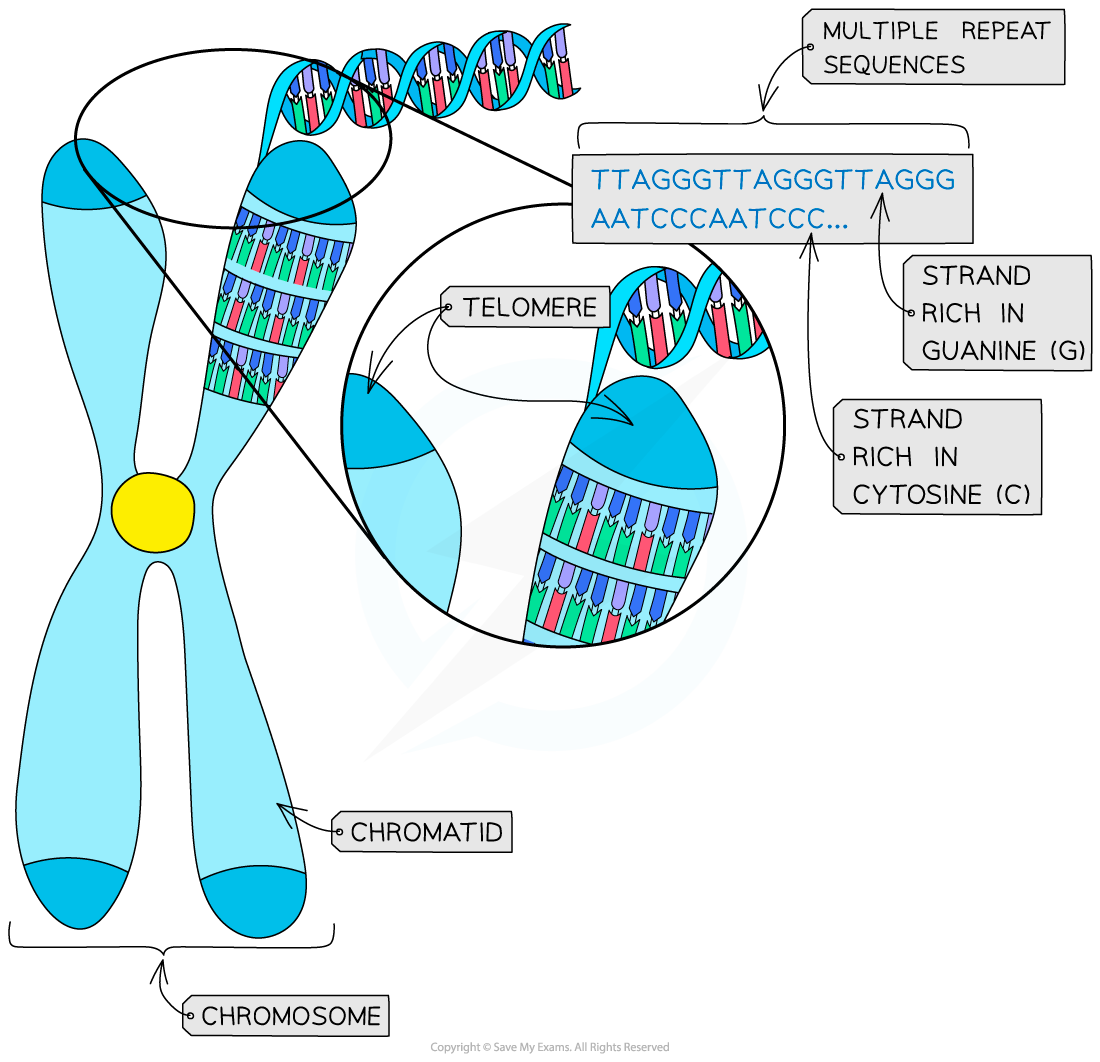
What is the role of telemores?
Telemores made of non-coding DNA (DNA that does not contain genes) that is made up of short base sequences that are repeated many times (multiple repeat sequences). Their main function is to ensure that the very ends of the DNA molecules are included when the DNA is replicated in the S phase of interphase, before the cell divides by mitosis.
This is because the copying enzyme responsible for DNA replication is unable to run right to the very end of the DNA molecule and stops a little short of the end and if this end part of the DNA molecule contained an important gene, that piece of genetic information would be lost during DNA replication, so in each subsequent cell division, a little more genetic information would be lost. Telomeres therefore act as a ‘buffer’ region of non-essential DNA as they ensure that no important coding sections near the ends of the DNA molecules are left out of the replication process. This ensures no genes are lost during cell division and allows for continued replication of a cell.
What is the role of stem cells in cell replacement and tissue repair by mitosis?
Stem cells are cells that can divide by mitosis an unlimited number of times by mitosis. When it divides, the new cells have the potential to either remain as stem cells or to develop/ differentiate into specialized cells such as a blood cell or muscle cell. The power of a stem cell to produce different types of cell is variable and known as potency.
In adults, small numbers of multipotent adult stem cells remain in tissues and organs to produce new cells for growth, cell replacement, and tissue repair. Although they can divide repeatedly, they can only differentiate into a limited range of cell types. For example, stem cells in the bone marrow can differentiate into different types of blood cells to replace old or damaged cells. Stem cells can also help repair damaged tissues, such as the skin, by producing new specialized cells to replace damaged or lost cells.
How does uncontrolled cell division can result in the formation of a tumour?
Cancer develops when mutations occur in genes that control cell division, causing cells to divide repeatedly and uncontrollably by mitosis. A mutated gene that promotes cancer is called an oncogene. The uncontrolled division produces an irregular mass of cells called a tumor. Normally, most mutations either cause the affected cell to die early or result in its destruction by the body's immune system. However, if a mutated cell survives, it can continue dividing and pass the harmful mutation to all its descendant cells, allowing the tumor to grow. Carcinogens, such as UV light, tar in tobacco smoke, and X-rays, are agents that can cause cancer by causing mutations in DNA.
What are the 4 stages of mitosis?
PMAT, Prophase, Metaphase, Anaphase, Telophase

What happens during the 4 stages of mitosis?
Prophase - Chromosomes condense (and are now visible when stained). The chromosomes consist of two identical chromatids called sister chromatids, with each containing one DNA molecule. They are joined together at the centromere. The nuclear envelope (nuclear membrane) breaks down into small vesicles. The two centrosomes move towards opposite poles (opposite ends of the nucleus), where spindle fibres (protein microtubules) begin to emerge from the centrosomes.
Metaphase - Centrosomes reach opposite poles and spindle fibres (protein microtubules) continue to extend from centrosomes. The chromosomes line up at the equator of the spindle (also known as the metaphase plate) so they are equidistant to the two centrosome poles. The spindle fibres (protein microtubules) reach the chromosomes and attach to the centromeres. Each sister chromatid is attached to a spindle fibre originating from opposite poles.
Anaphase - The sister chromatids separate at the centromere (the centromere divides in two). The spindle fibres (protein microtubules) begin to shorten as the separated sister chromatids (now called chromosomes) are pulled to opposite poles by the spindle fibres (protein microtubules).
Telophase - Chromosomes arrive at opposite poles and begin to decondense. The nuclear envelopes (nuclear membranes) begin to reform around each set of chromosomes. The spindle fibres break down.