Functional Groups, etc.
 Call Kai
 Learn
 Practice Test
 Spaced Repetition
 Match
 Flashcards
 Knowt Play
1/65

There's no tags or description
Looks like no tags are added yet.
66 Terms
Alcohols
hydroxyl group attached to sp3 hybridized carbon (four bonds total)

Primary Alcohol
one carbon attached to the carbon attached to the OH

Secondary Alcohol
two carbons attached the the carbon attached to the OH

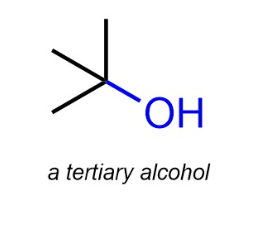
Tertiary Alcohol
three carbons attached to the carbon attached to the OH
Hydrogen bond donor
hydrogen bonded to electronegative atom (the hydrogen is the donor)
Hydrogen bond acceptor
electronegative atom with a lone pair
Ether
a carbon is connected to an oxygen, which is then connected to another carbon

Epoxide
special ether

Aldehyde
a carbon is connected to an oxygen through a double bond and also connected to a hydrogen

Carbonyl
carbon double bonded to oxygen

Ketone
a carbon is connected to an oxygen through a double bond and also connected to two other carbons

Carboxylic Acid
a carbon is connected to an oxygen through a double bond, then also connected to another oxygen which is connected to a hydrogen

Carboxylate
RCOO-

Ester
a carbon is connected to an oxygen through a double bond, then also connected to another oxygen which is connected to a different carbon

Acid Halide
a carbon is connected to an oxygen through a double bond and also connected to a halogen

Alkane
characterized by single bonds between two carbons and between carbon and hydrogen

Alkene
have carbon-carbon double bonds

Alkyne
have carbon-carbon triple bonds

Primary carbon
carbon bonded to one other carbon

Secondary carbon
carbon bonded to two other carbons

Tertiary carbon
carbon bonded to three other carbons

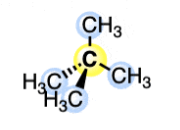
Quaternary carbon
carbon bonded to four other carbons
Terminal alkene
at end of molecule

Internal alkene
inside of molecule

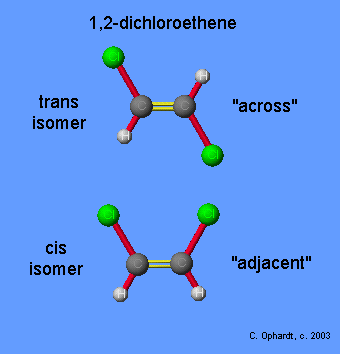
E alkene
High priority groups on opposite side of alkene

Z alkene
High priority groups on same sides of alkene, typically more stable than Cis because electron clouds are more spaced out, less steric strain
Structural/constitutional Isomer
molecules with the same formula but different atom connectivity (atoms bond in different order)

Geometric isomers
molecules with the same molecular formula and atom connectivity, but rigid 3d orientation around a restricted bond

Monosubstituted
one substituent attached to a parent hydrocarbon chain or ring

Disubstituted
two substituent atoms or groups attached to its main structure

Trisubstituted
three substituent atoms or groups attached to its main structure

Tetrasubstituted
four substituent atoms or groups attached to its main structure

Substituent atom
an atom or a group of atoms that replaces a hydrogen atom on the parent chain of a hydrocarbon molecule
Hyperconjugation
interaction between pi molecular orbitals and adjacent C-H sigma bonds

Dienes
2 alkenes, 2 C=C
Conjugated diene
contains two carbon-carbon double bonds separated by one single bond

Cumulated diene
contains two adjacent carbon-carbon double bonds sharing a single central carbon atom

Isolated diene
two carbon-carbon double bonds separated by two or more single bonds

Terminal alkyne
at end of molecule
Internal alkyne
within molecule
Types of Van-deer-walls
London Dispersions, Dipole-Dipole,
Anhydride
Two carbonyl groups (C=O) are connected by an oxygen atom

Thiols

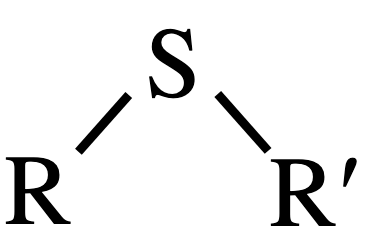
Thioethers
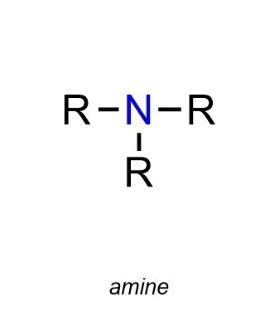
Amine
a nitrogen is connected to carbons and/or hydrogens,
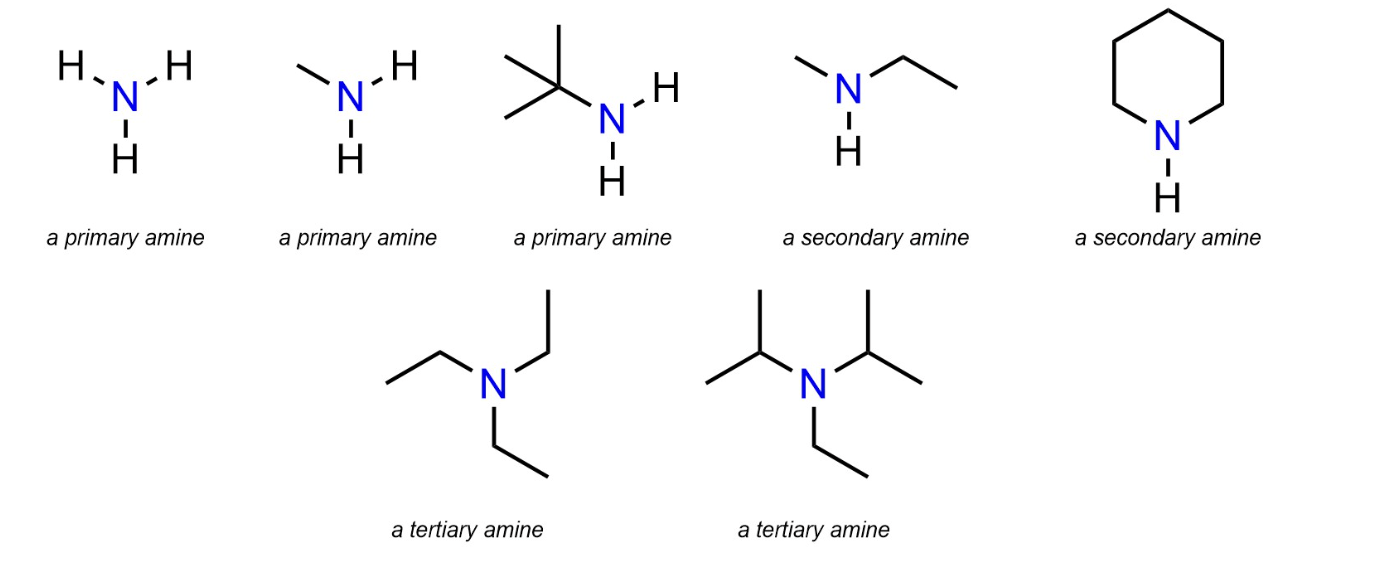
Primary amine
1 carbon attached to the nitrogen

Secondary amine
2 carbon attached to the nitrogen

Tertiary amine
3 carbon attached to the nitrogen
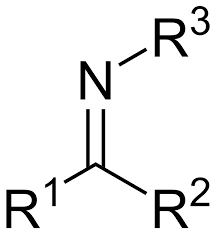
Imine
a carbon is connected to a nitrogen through a double bond

Ketimine
R1 and R2 are carbon

Aldimine
R1 is carbon, R2 is hydrogen

Secondary imine
if R3=C

Primary imine
if R3=H
Amide
a carbon is connected to an oxygen through a double bond and also connected to a nitrogen

Primary Amide
nitrogen connected to one carbon

Secondary amide
nitrogen connected to two carbons

Tertiary amide
nitrogen connected to three carbons

Nitrile
a carbon is connected to a nitrogen through a triple bond

Nitro
a nitrogen is connected to an oxygen through a double bond and also connected to another oxygen

Acid halide
a carbon is connected to an oxygen through a double bond and also connected to a halogen

Alkyl halide
one or more hydrogen atoms in an alkane are replaced by halogen atoms

Benzene
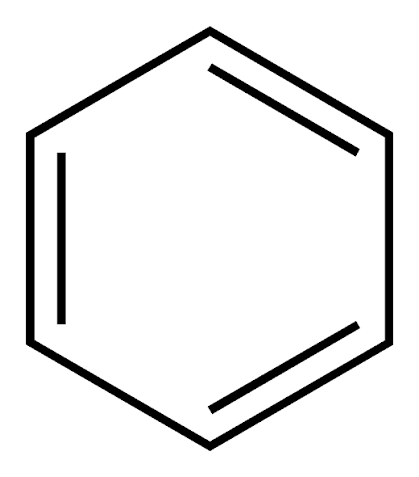
phenyl

benzyl

Trans alkene
similar or main carbon chains are on opposite sides of the double bond
Cis alkene
similar or main carbon chains are on the same side of double bond