Forces and Torques lecture
 Call Kai
 Learn
 Practice Test
 Spaced Repetition
 Match
 Flashcards
 Knowt Play
1/74

Earn XP
Description and Tags
NOT DONE YET
75 Terms
what is kinetics?
causes of motion
what is a force? what is the equation?
a push or a pull that produce, stops, or prevents a motion
F = m x a
what three factors are needed in a force vector?
magnitude, direction, point of application

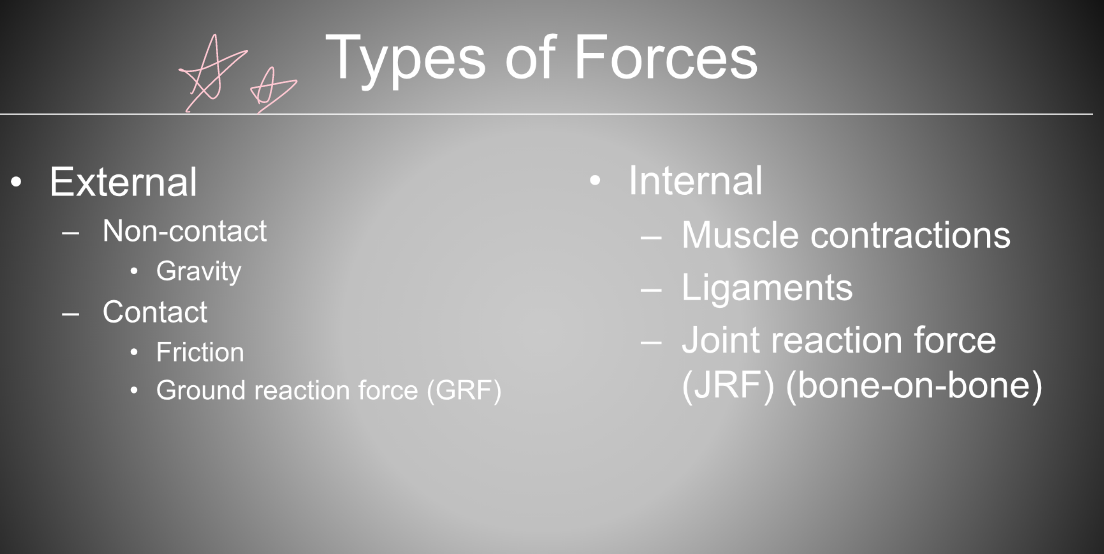
what are the two types of external force? provide examples
non-contact
gravity
Contact
friction
ground reaction force (GRF)

what are some examples of ineternal force?
muscle contractions
ligaments
joint reaction force (JRF) (bone-on-bone)

explain and understand the forces in this picture


explain and understand the forces in this picture


explain and understand the forces in this picture

how to calculate weight? give formula
W = mg

are weight and mass the same thing? why or why not?
no because mass is the amount of mass the object has while weight is a force from the mass and gravity combined
gravity acts on your ______ __ ____.
center of mass

how do you decompose force vectors?
break it down into the vertical and horizontal components and then use SOH CAH TOA to solve

in the SOH CAH TOA triangle, what does the hypotenuse always represent?
force
what does SOH stand for?
sin (θ) = opposite/hypotenuse
what does CAH stand for?
cos (θ) = adjacent/hypotenuse
what is the formula for solving for Fx?
Fx = F x cos(θ)
what is the formula for solving for Fy?
Fy = F x sin(θ)
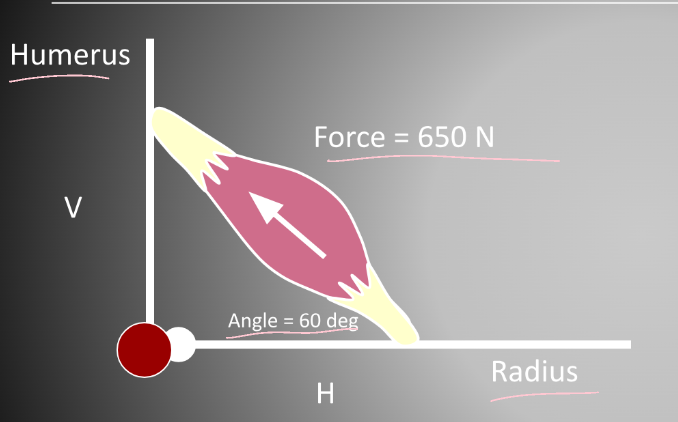
when looking at this picture, how can you tell which one is the stabilizing force and which one is the rotary force?
we have to decompose the force into its vertical and horizontal components
then we will see which one would move the joint if that motion was isolated
in this pic if the vertical force was acting on it, it will cause the rotation so that would be the rotary force. the horizontal is the stabilizing force since it won’t cause a rotation.

MEMORIZE THIS

(braking/propulsion) is always before (braking/propulsion).
Braking; propulsion
which part of the stance phase is braking and propulsion?
braking is the first part of stance phase while propulsion is the second part

in this picture, which phase do we see the braking and which phases do we see the propulsion?
1-3 is propulsion bc the arrow is going anteriorly
5-6 is braking bc the arrow is going posteriorly
* BEGINNING OF STANCE PHASE IS 5-6

what does the vertical loading rate line/slope tell you?
the foot has hit the ground and that is why vertical GRF is going up

when in the stance phase does the active peak happen?
in the MIDDLE of the stance phase

what happens (in terms of gait) when the vGRF hits 0?
it means toe off
there will be no GRF when the foot is off the floor

what is this a graph of?
HORIZONTAL GRF

which phase is the braking and how do you know?
5-6 because the arrow is POSTERIOR and POSTERIOR IS BRAKING

which phase is the propulsion and how do you know?
1-3 because the arrow is ANTERIOR and the ANTERIOR MEANS PROPULSION

why is there less of an impact peak with shoes on vs with shoe off?
the impact peak is less because the shoe foam cushions a lot of the force

the graphs for horizontal forces (A/P shear force) is flipped, which one is always first?
BRAKING IS ALWAYS BEFORE PROPULSION
what is pressure?
a force distributed over an area

what happens to the pressure when the same force is applied over a small area? what happens when it is applied over a large area?
small area = high pressure
large area = low pressure
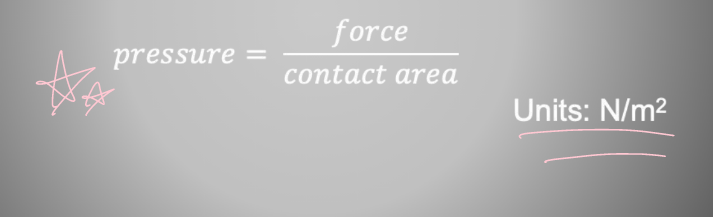
what is the formula for pressure?
pressure = force/contact area

what is the pressure for wearing flats vs wearing high heels (assuming force is the same)?
flats would have a larger contact area which means lower pressure
high heels have a smaller contact area which means higher pressure

when applying it to vertebrae, why is the lumbar vertebrae larger than the cervical vertebrae?
the lumbar vertebrae supports the weight of our whole body so the contact area is greater to decrease pressure
the cervical vertebrae only holds our head and brain weight compared to how lumbar carries majority of our weight
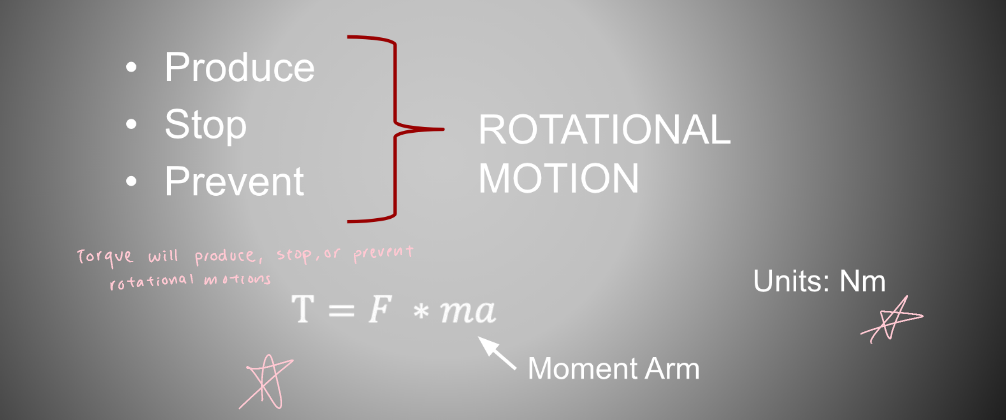
what is torque? what is the formula? units?
a twisting force that tends to produce, stop, or prevent a rotational movement
T = F x ma
unit: Nm
what is a moment arm?
the perpendicular distance between the axis of rotation and the line of action of the force
what are the two ways you can increase torque?
increase moment arm or increase force
what are the three different terms for external torque?
resistance torque, gravitational torque, external torque

what are the four different terms for internal torque?
motive torque, effort torque, muscular torque, internal torque


which one has the greatest external moment arm?
2

which one has the greatest external torque?
2

which position has the greatest force?
all the same force

which position has zero external torque? why?
A
force cannot be 0 because of gravity so MA of 0 will creaste - external torque (bc T = F x MA, anything multiplied by 0 is 0)
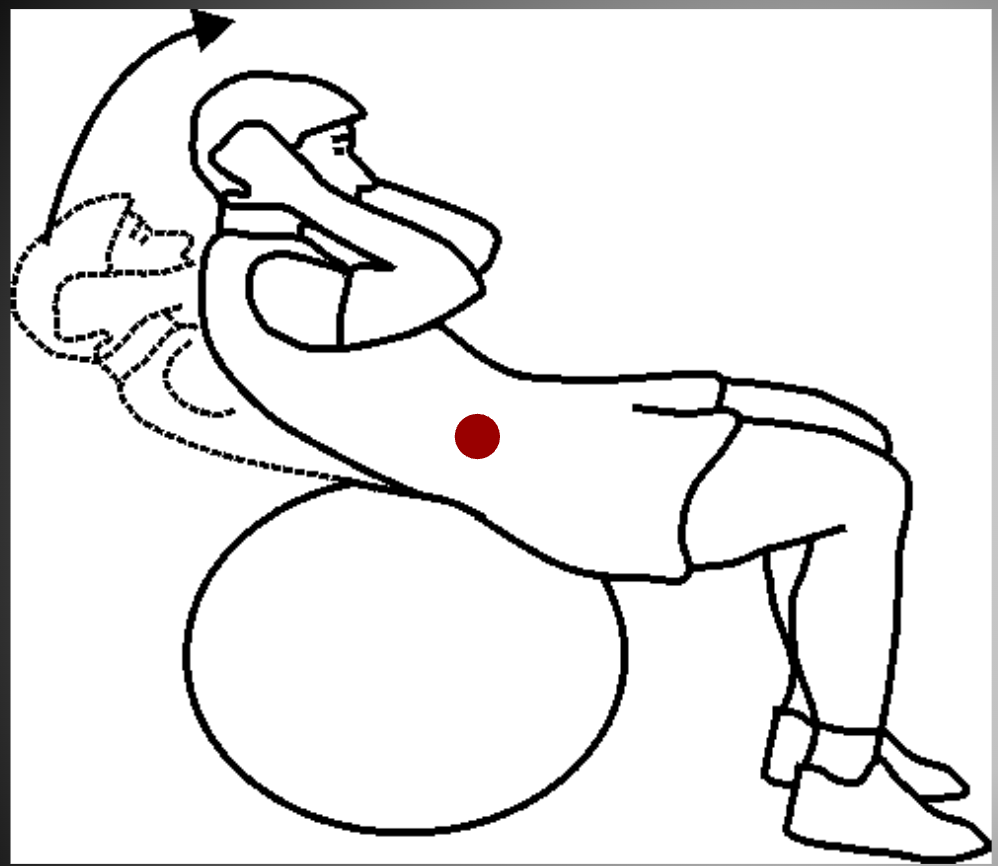
is the body weight the same in each position?
yes


is the external moment arm the same in each position?
no


what happens if the person puts a weight on their chest?
force increases
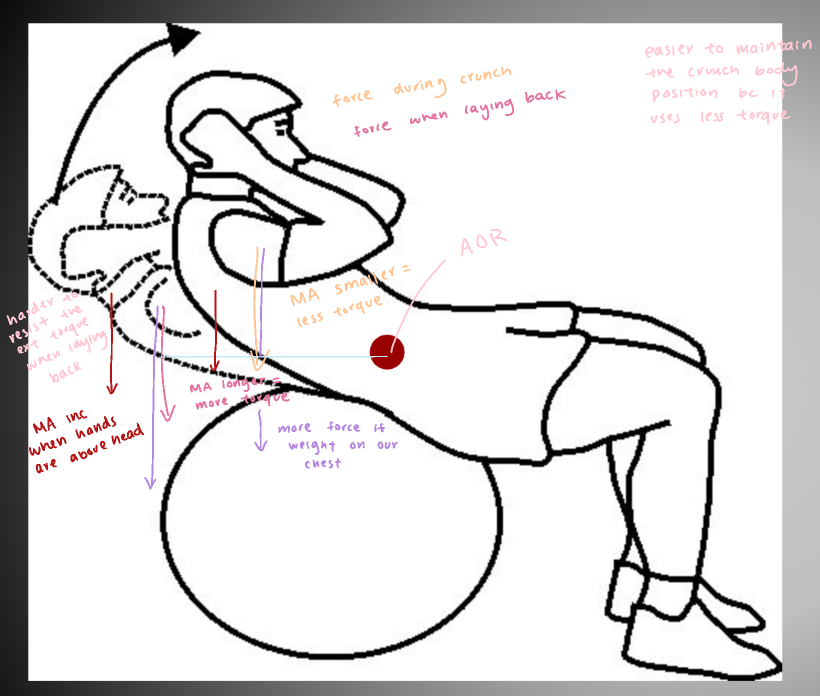

what happens if they put their arms on the top of their head?
makes moment arm further


how to draw where the IMA is?
draw the perpendicular distance between the muscle and the joint center (NOT THE MUSCLE ATTACHMENT)

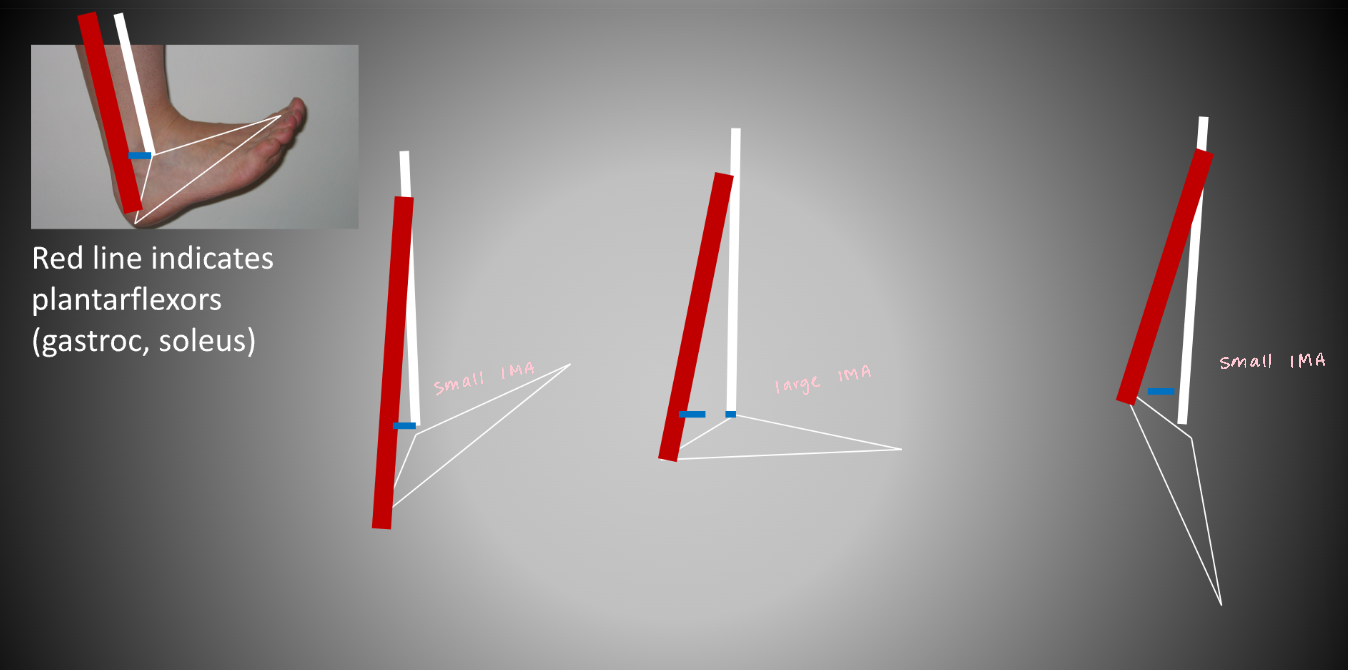
which one has the largest IMA?
largest IMA at 90 degrees

does IMA change as you go through a range of motion?
yes

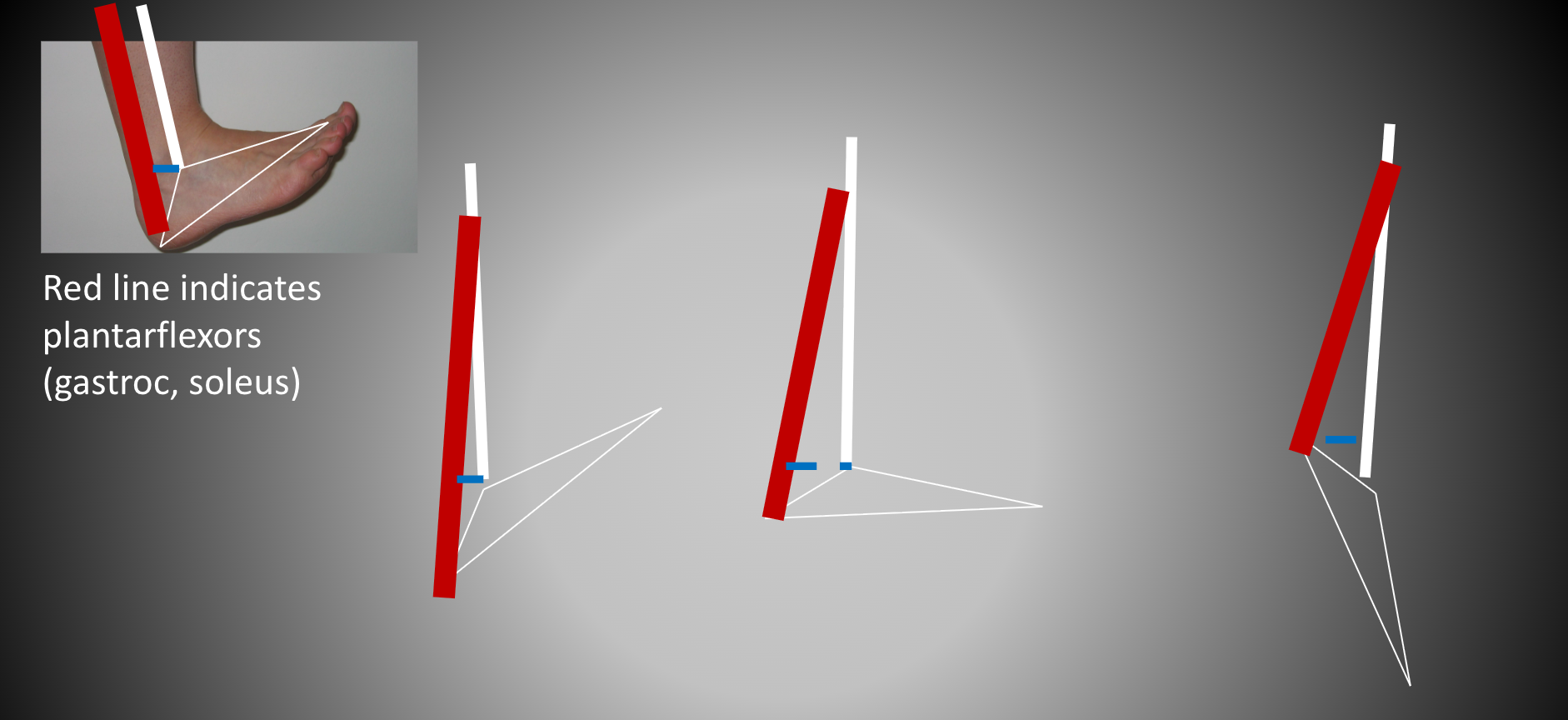
how does the IMA change throughout the range of motion here?
what is a first class lever? give an example
AOR is between the force and resistance
ex: neck

what is a second class lever? give an example
resistance is between AOR and force
ex: rise up on toes

what is a third class lever? give an example
force is between the axis of rotation and resistance
ex: almost all our joints
MOST COMMON LEVER SYSTEM IN THE BODY
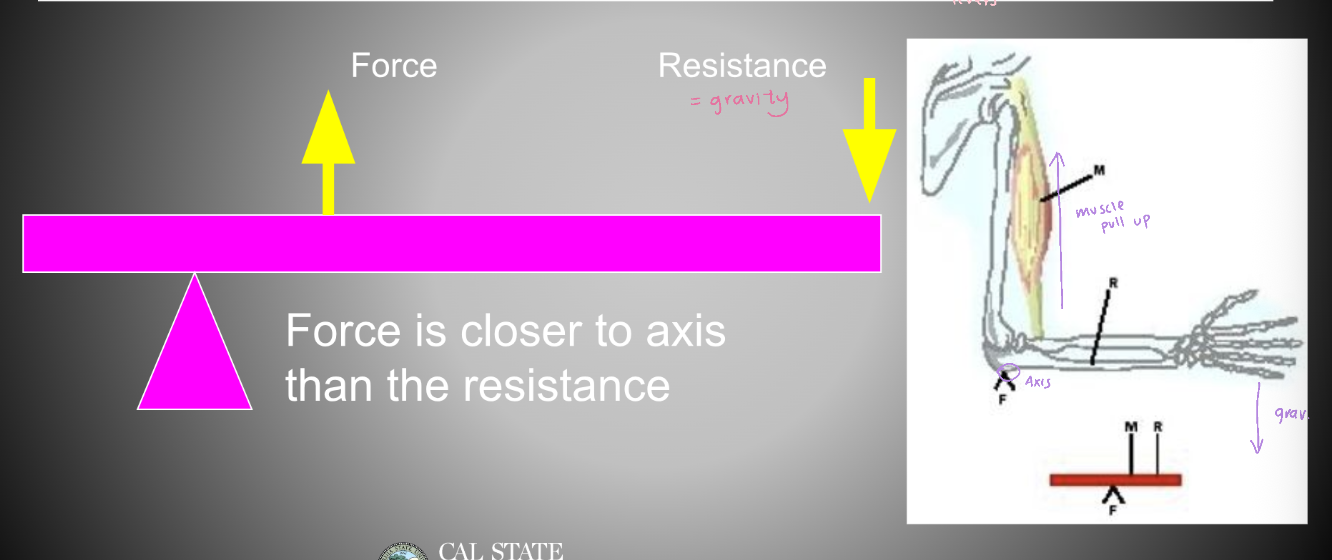
what are the trade offs of the 2nd class/ 1st class levers?
increased force
longer moment arm
less speed
less range of motion
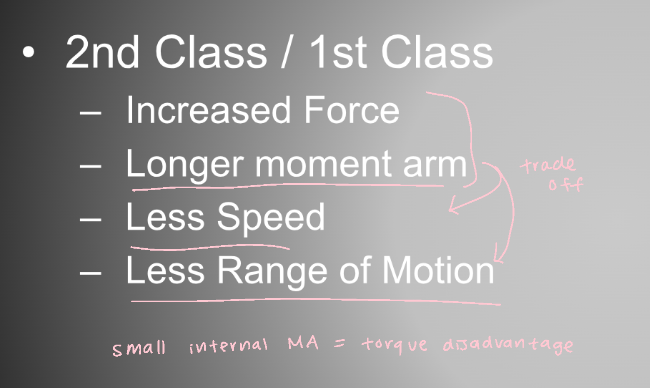
what are the trade offs for the 3rd class levers?
decreased force
longer resistance arm
increased speed
increased range of motion

what does static equilibrium mean?
internal torque = external torque
ex: isometric contraction

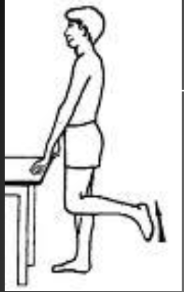
what kind of torque is the internal torque and external torque? (what kind of motion is it trying to do?)
internal torque is a knee flexor torque
external torque is a knee extension torque


what kind of torque is the internal torque and the external torque?
internal torque is a knee extensor torque
external torque is a knee flexion torque

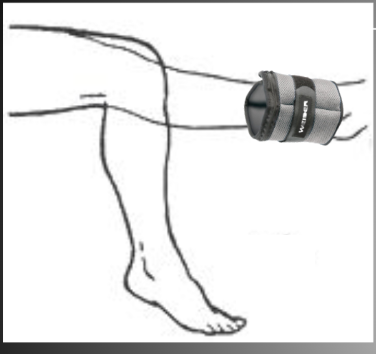
what happens when a weight is added to the ankle?
the EMA increased so external torque increases, muscles have to work harder

what happens when the ankle weight is moved up the leg?
reduced EMA, easier on the muscles
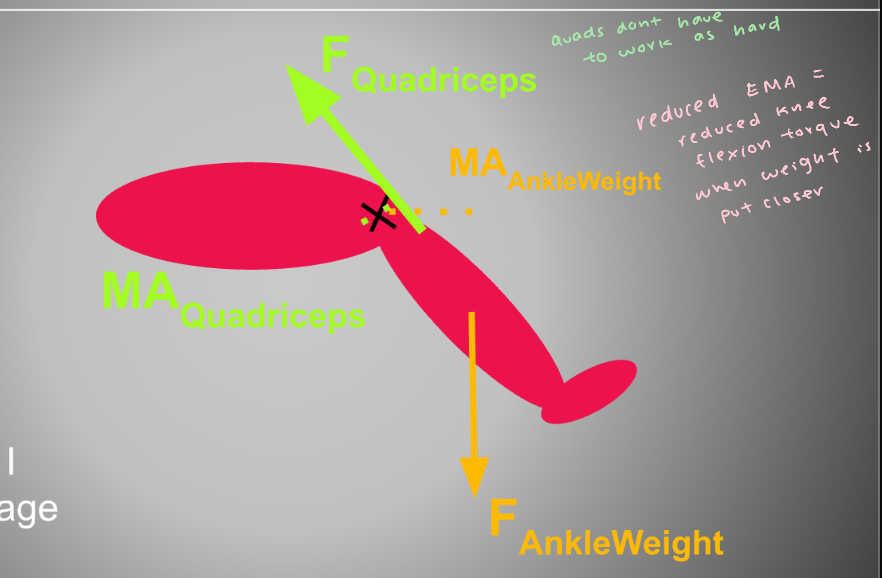

what kind of torque is the internal and external torque?
internal torque is a knee extensor torque
external torque is a knee flexion torque

how is the patella an example of an anatomical pulley? (how does it work)
it increases the moment arm of our quads and helps with the torque production of the quads


how is the greater trochanter an example of an anatomical pulley?
it sticks out to increase the MA of the hip abductor muscles because of how the bony piece sticks out laterally


how is the protuberance on the back of the calcaneal bone an example of an anatomical pulley?
it increases the MA of the calf muscle (achilles tendon)


how is the greater tubercle of the humerus an example of an anatomical pulley?
it increases the MA of the biceps


describe the force vector on the pictures
the black arrow shows the force of the traps pulling up while the red arrow shows the weight of the arm pulling down (due to gravity)


how would you decompose the force vector of the traps line of pull?
the horizontal component of the traps don’t produce torque since it passes through the axis of rotation so there is only a vertical pull


describe this picture and what is happening
only the vertical portion produces torque

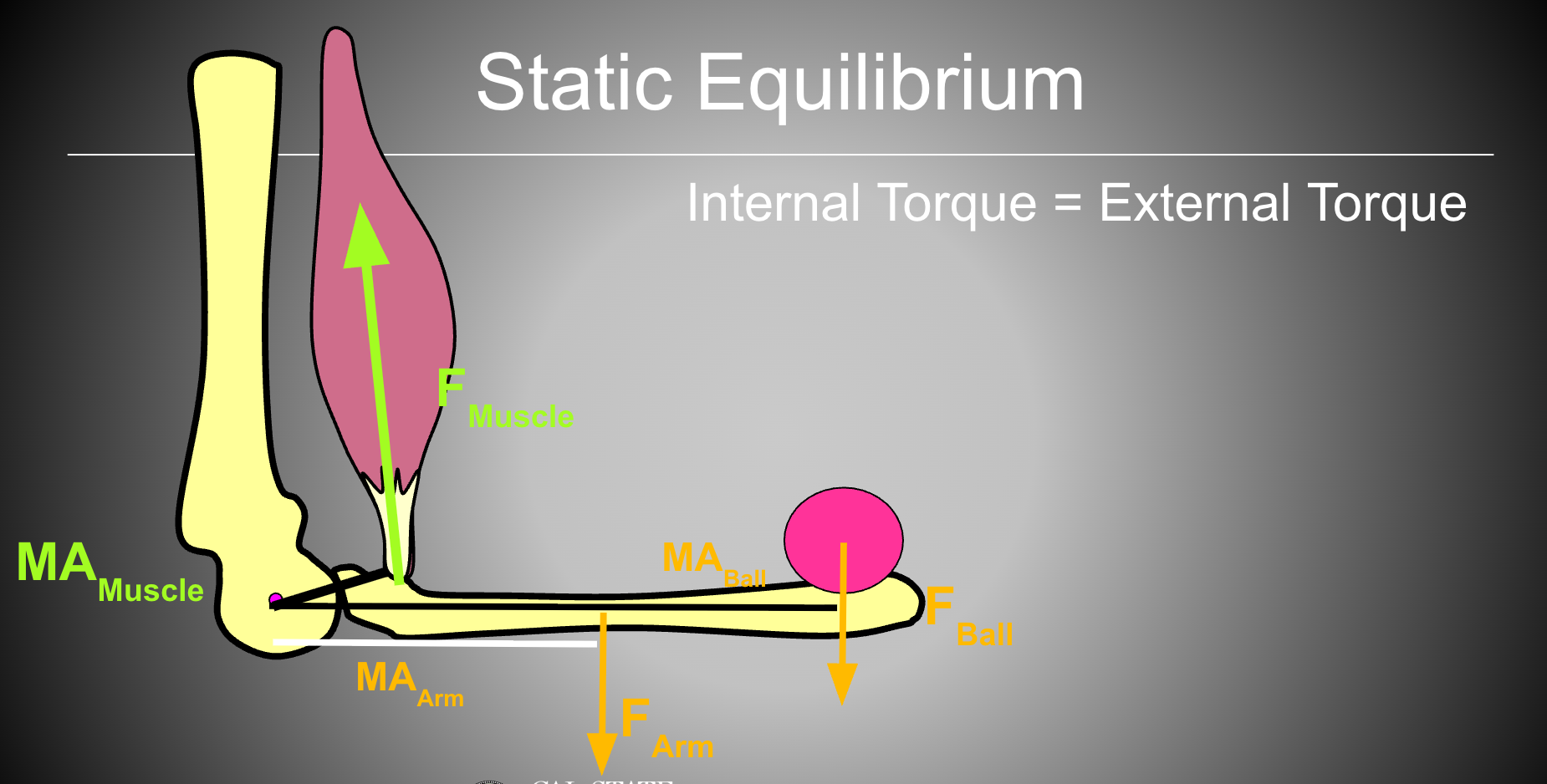
how would you set up this static equilibrium equation using the variables given in the diagram?
look at picture


using these numbers from the pic, calculate the muscle force of the biceps
look at picture


what happened to the muscle force when the force of the ball increased?
higher external torque means that the internal torque is also increased


what happened to the muscle force when the internal moment arm decreased?
the muscle force increased by a lot


what happened to the muscle force when the internal moment arm increased?
muscle force decreased bc larger MA makes torque smaller