TCA cycle - HW Assignment Flashcards (CHEM 3303)
 Call Kai
 Learn
 Practice Test
 Spaced Repetition
 Match
 Flashcards
 Knowt Play
1/23

There's no tags or description
Looks like no tags are added yet.
24 Terms
All enzymes of the TCA cycle are located in the mitochondrial matrix except, succinate dehydrogenase ____________
which is bound to mitochondrial membrane.
Which statement is incorrect for the pyruvate dehydrogenase complex catalyzes reaction?
a) it is an irreversible reaction
b) Pyruvate is oxidized
c) NADH is reduced
d) a thioester bond is created
e) first carbon of glucose is eliminated in this reaction
This TCA cycle intermediate, oxaloacetate _____________
, is found at the beginning as well as at the end of one round of TCA cycle reactions.
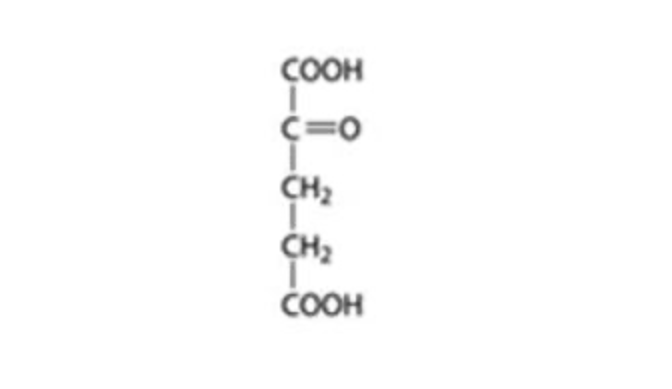
The TCA cycle intermediate shown here is a substrate for which enzyme?
Answer:
Anaplerotic reactions are a set of reactions which directly or indirectly leads to the formation of this molecule________.
Answer:
How many molecules of NADH are produced when one glyceraldehyde-3-phosphate is metabolized through glycolysis and Krebs cycle?
Answer:
Which of the following is a regulatory enzyme of the Krebs cycle?
a) succinate dehydrogenase
b) malate dehydrogenase
c) aconitase
d) succinyl CoA synthase
e) α-ketoglutarate dehydrogenase
De-phosphorylation of pyruvate dehydrogenase complex makes this enzyme
a) Partially inactive
b) inactive
c) partially active
d) active
e) has no effect
Which enzyme catalyzes the first step in the citric acid cycle which result in the loss of CO2.
Answer:
Malonate is a competitive inhibitor of succinate dehydrogenase. If malonate is added to a mitochondrial preparation that is oxidizing pyruvate as a substrate, which compound would you expect to increase in concentration ____________ and which compound expect to decrease in concentration ____________.
Answer 1; Answer 2
Which compound is NOT an intermediate of the citric acid cycle?
a) acetyl-CoA
b) citrate
c) oxaloacetate
d) succinyl-CoA
e) α-ketoglutarate
In the citric acid cycle, a flavin coenzyme is required by which enzyme.
Answer:
The enzyme pyruvate carboxylase converts __________ to ___________.
Answer 1; Answer 2
An increase of which molecule will cause entry of acetyl-CoA into the citric acid cycle to decrease?
Answer:
Which process is NOT a metabolic fate for pyruvate in the cells?
a) reduction to lactate
b) oxidative decarboxylation to acetyl-CoA
c) decarboxylation to acetaldehyde
d) phosphorylation to phosphoenolpyruvate
e) carboxylation to oxaloacetate
How many carbon dioxide molecules are produced from the complete aerobic catabolism of one molecule of 2-phosphoglycerate via catabolic pathways?
Answer:
Acetyl CoA is produced in which subcellular part of the cell?
Answer:
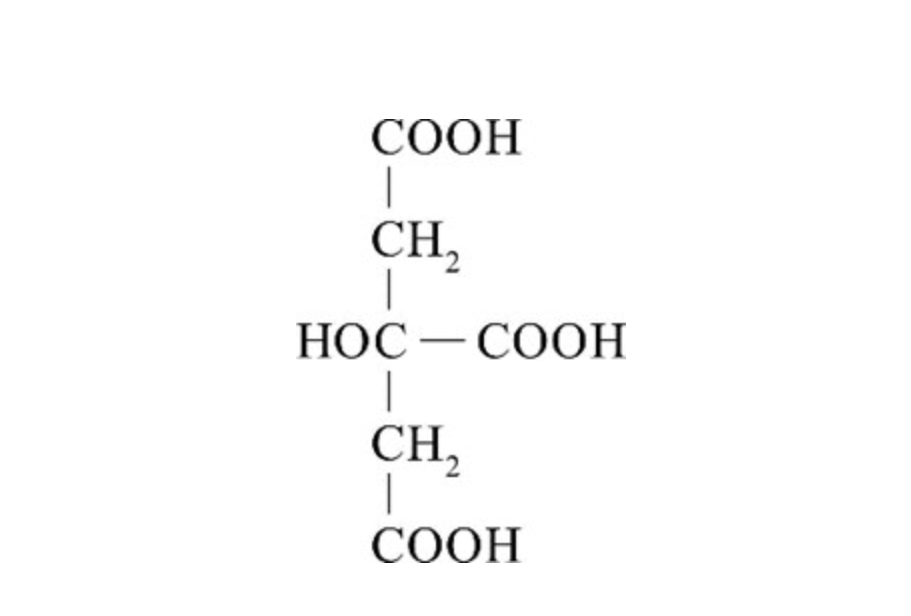
It is one of the molecules formed during the TCA cycle. Identify the molecule.
Answer:
Name the enzyme of TCA cycle enzyme that catalyzes the NADH specific reaction of a C-4 substrate.
Answer:
Because TCA cycle catabolizes acetyl-CoA to produce energy and also makes precursors for anabolic reactions, this pathway is referred as ______________ pathway.
Answer:
How many net ATPs are produced when a pyruvate is metabolized to CO2 and H2O via TCA cycle and ETC?
Answer:

The molecule shown is a substrate for which TCA cycle enzyme?
The reduced form of the electron carrier produced by this enzyme ____________ , which when oxidized at ETC yields 1.5 ATP
Answer:
If a molecule of fructose 1,6-bisphosphate is completely metabolized to via TCA cycle to CO2, how many total NADH will be produced?
Answer: