Herpetology Practical 1
 Call Kai
 Learn
 Practice Test
 Spaced Repetition
 Match
 Flashcards
 Knowt Play
1/19

Earn XP
Description and Tags
20 Terms
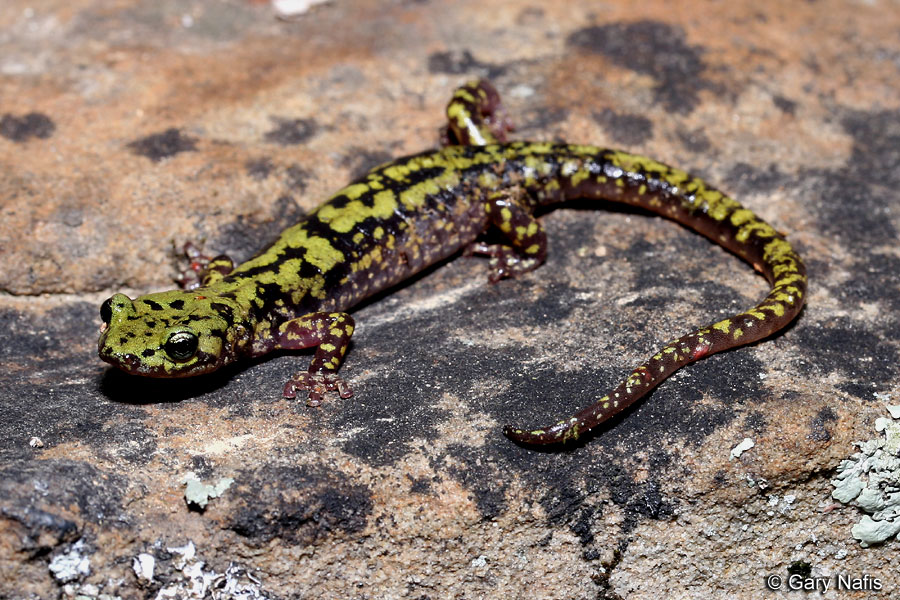
Desmognathus monticola
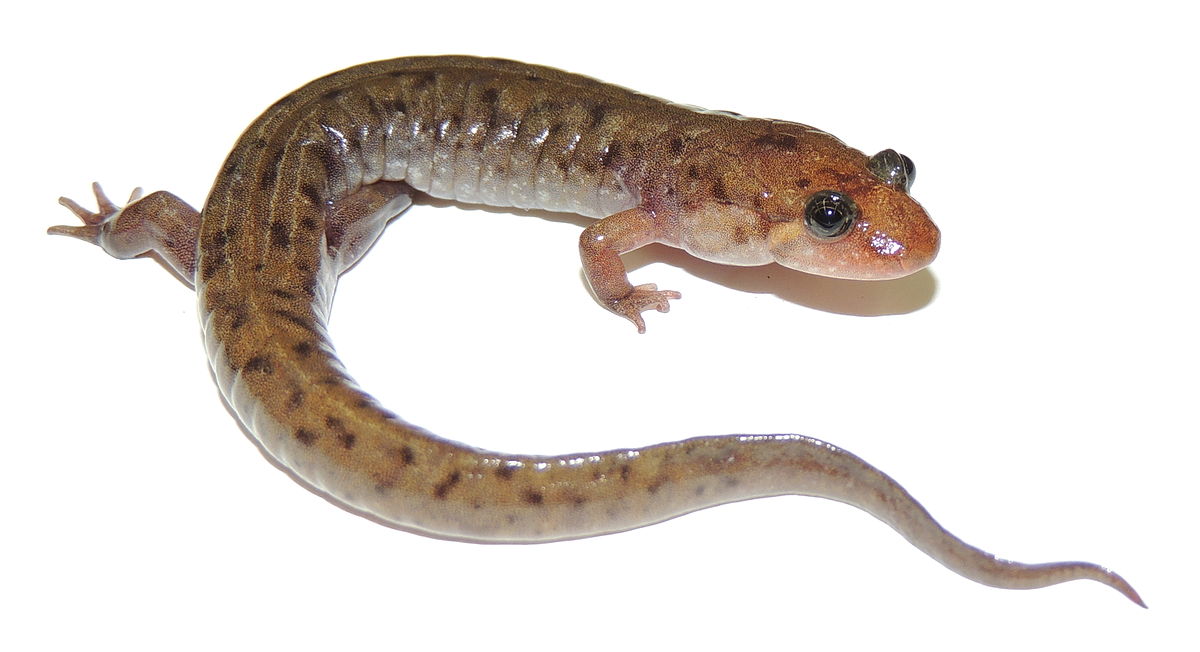
five toes on hind foot; nasolabial grooves present; gular muscles making prominent swelling on either side of the throat; hind limbs usually noticeably larger than forelimbs; often a line running from eye to posterior angle of mouth; dorsal pattern of dark reticular or worm-like markings on a lighter background
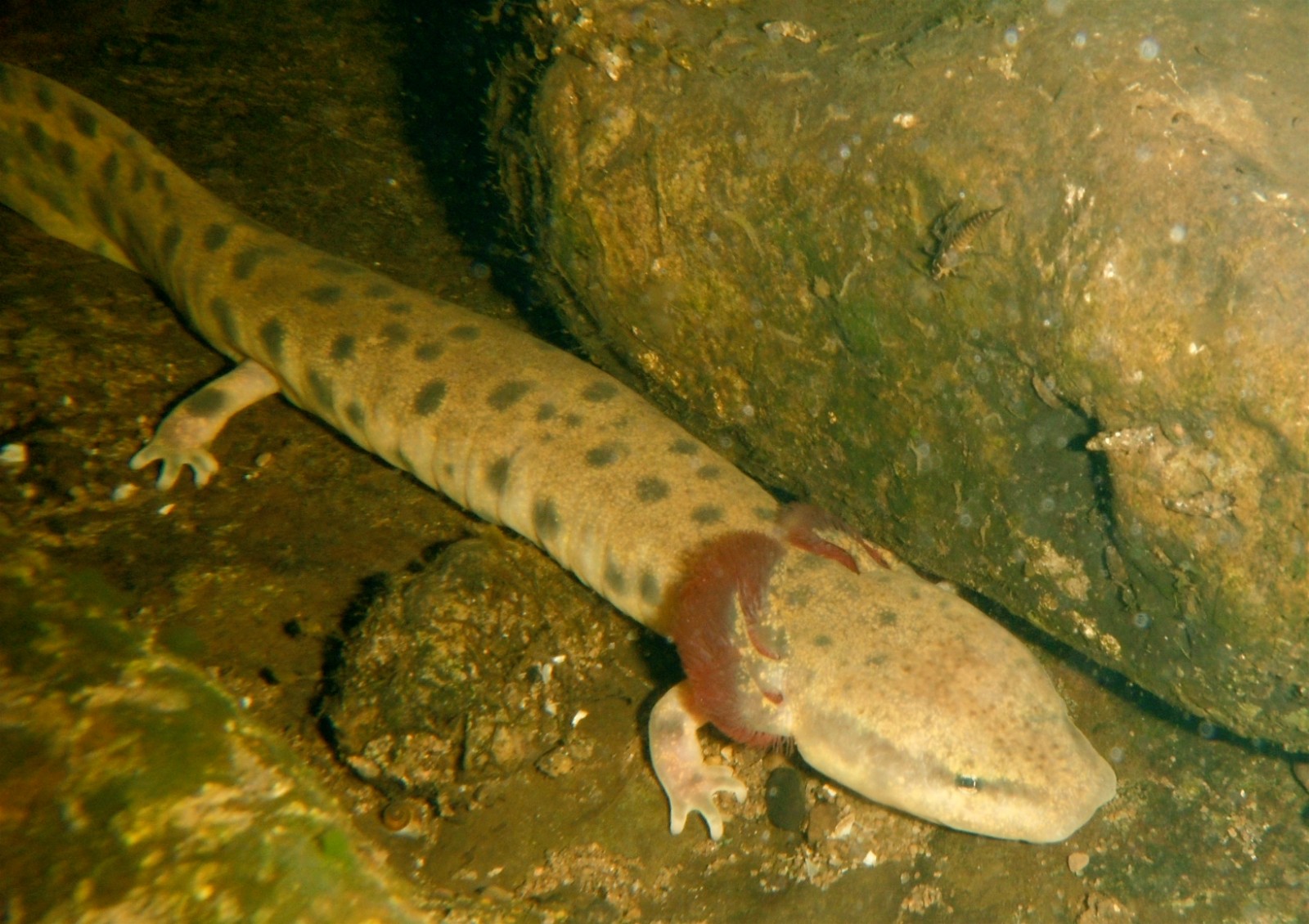
Necturus maculosus
four toes on hind foot; large salamander with three pairs of external gills; never undergoes metamorphosis
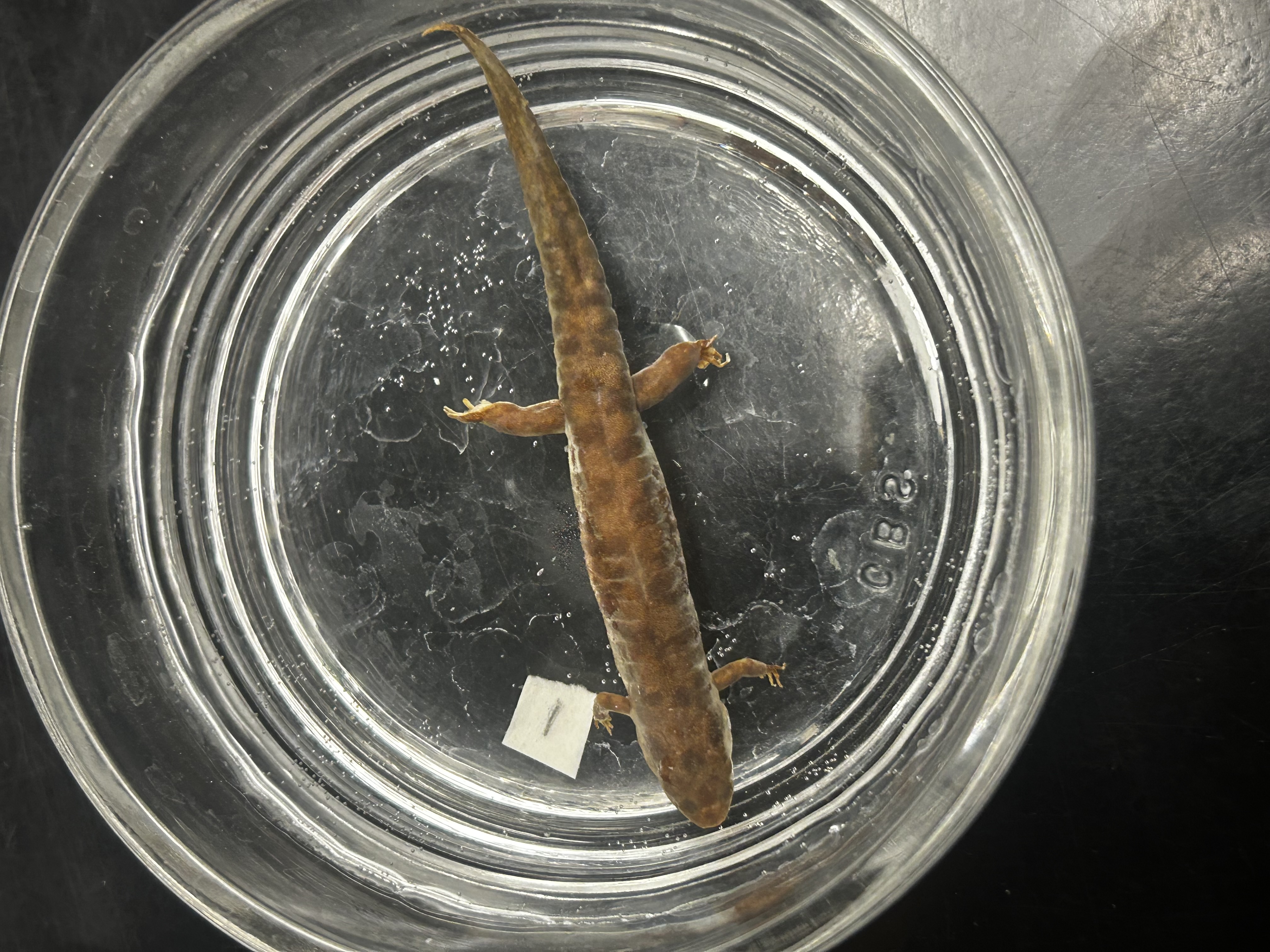
Hemidactylium scutatum
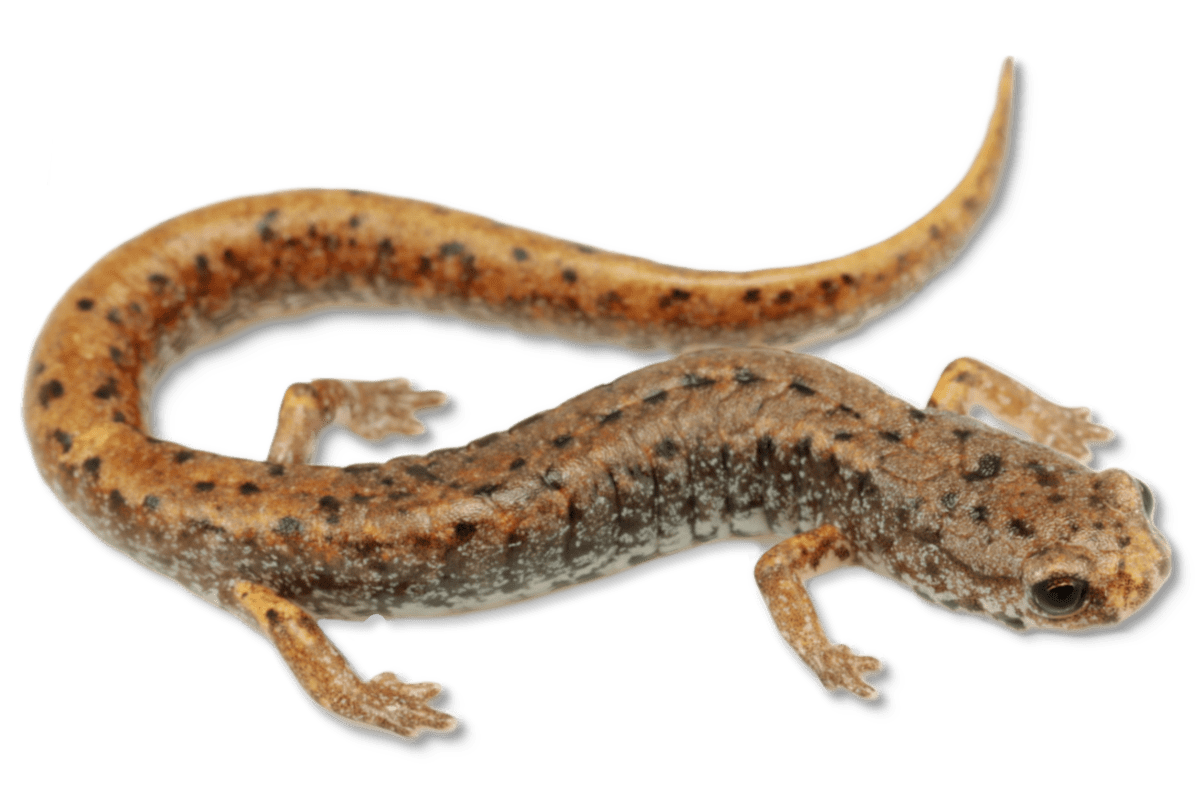
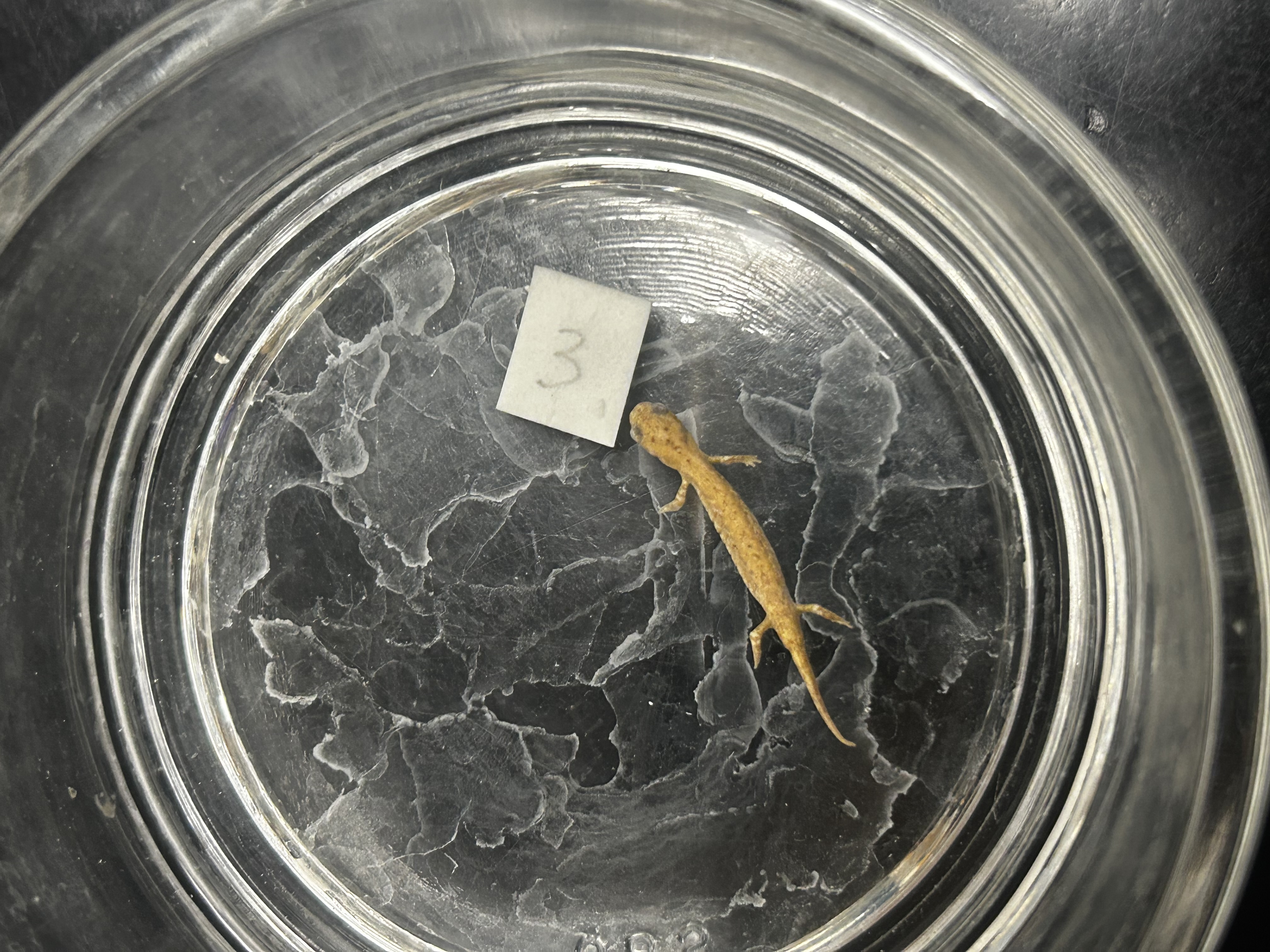
five toes on hind foot; small salamander without external gills; tail with distinct basal constriction; nasolabial grooves present
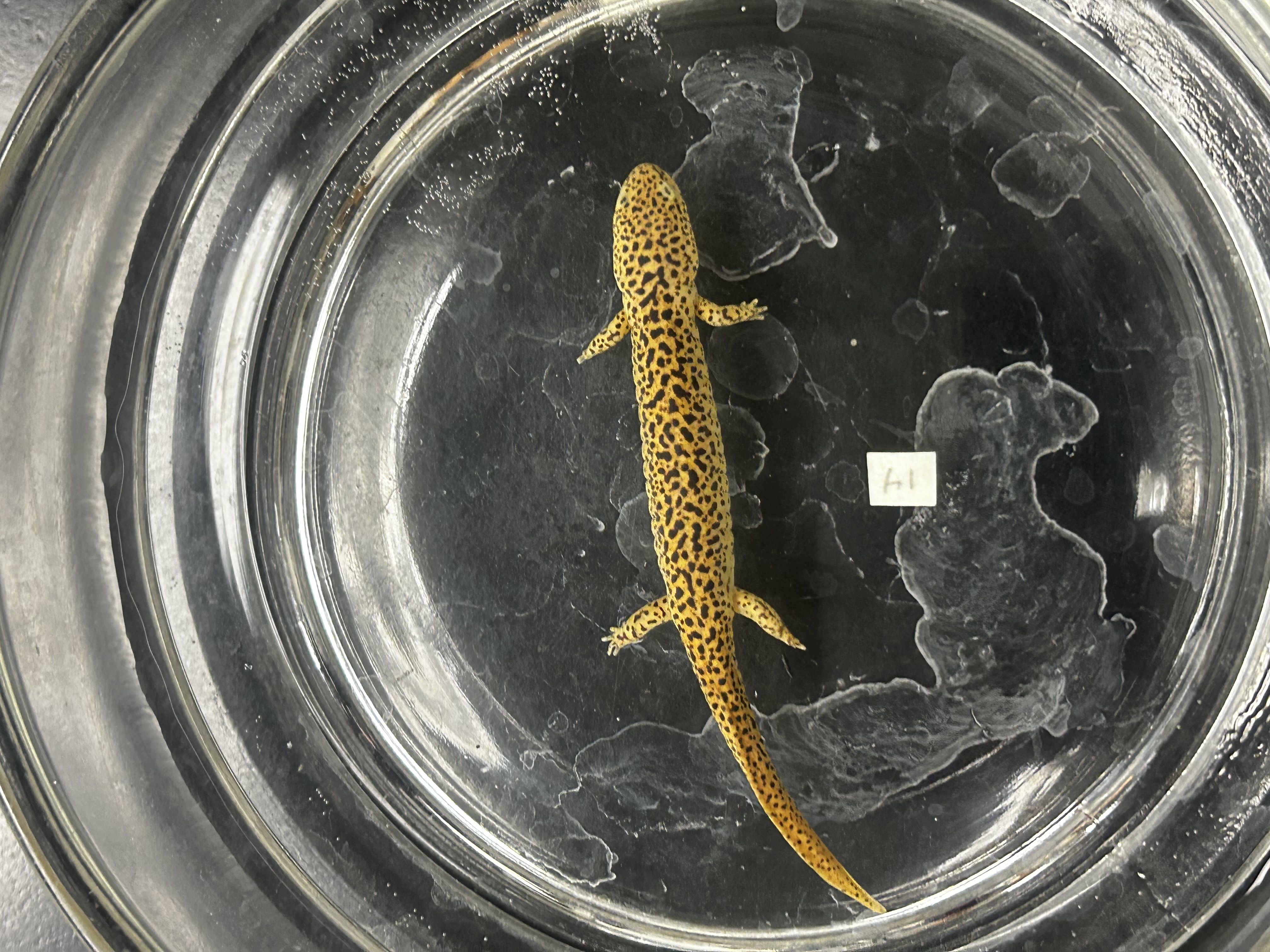
Ambystoma tigrinum
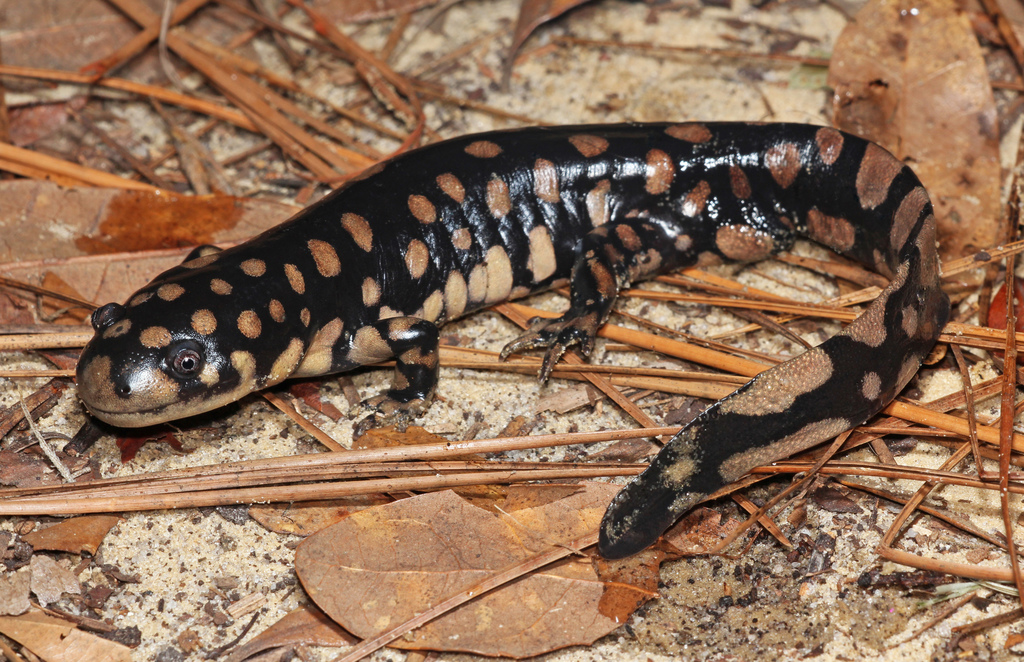
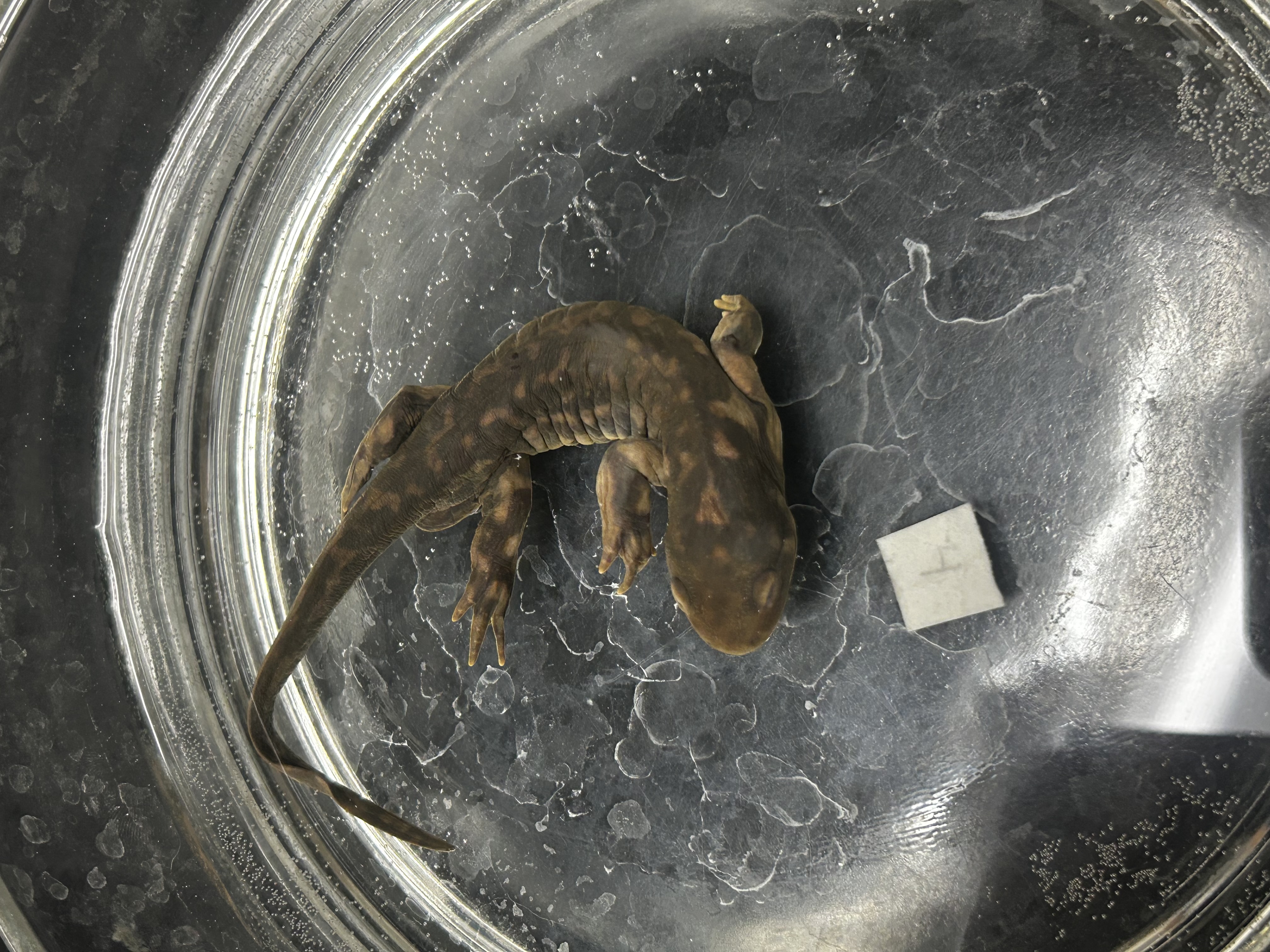
five toes on hind foot; nasolabial grooves absent; costal grooves present, ground color: black, green, or brown; dorsum usually marked with an irregular pattern of white, yellow, or orange markings
Notophthalmus viridescens
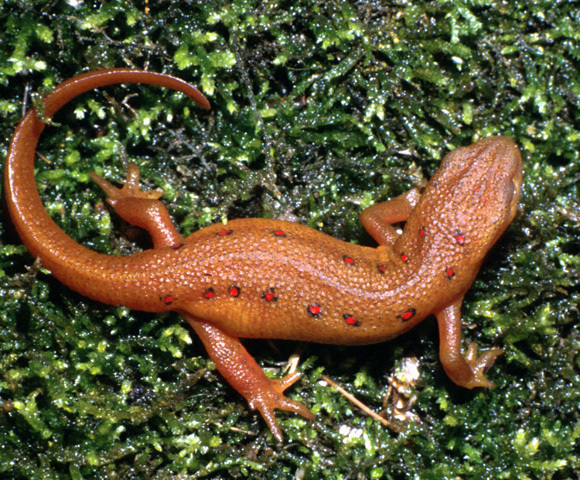
five toes on hind foot; nasolabial grooves absent; costal grooves virtually absent; longitudinal ridges on top of head; two dorsal rows of red spots; skin has small, rounded projections and is bright orange-red, or skin is smooth and green to olive (aquatic)
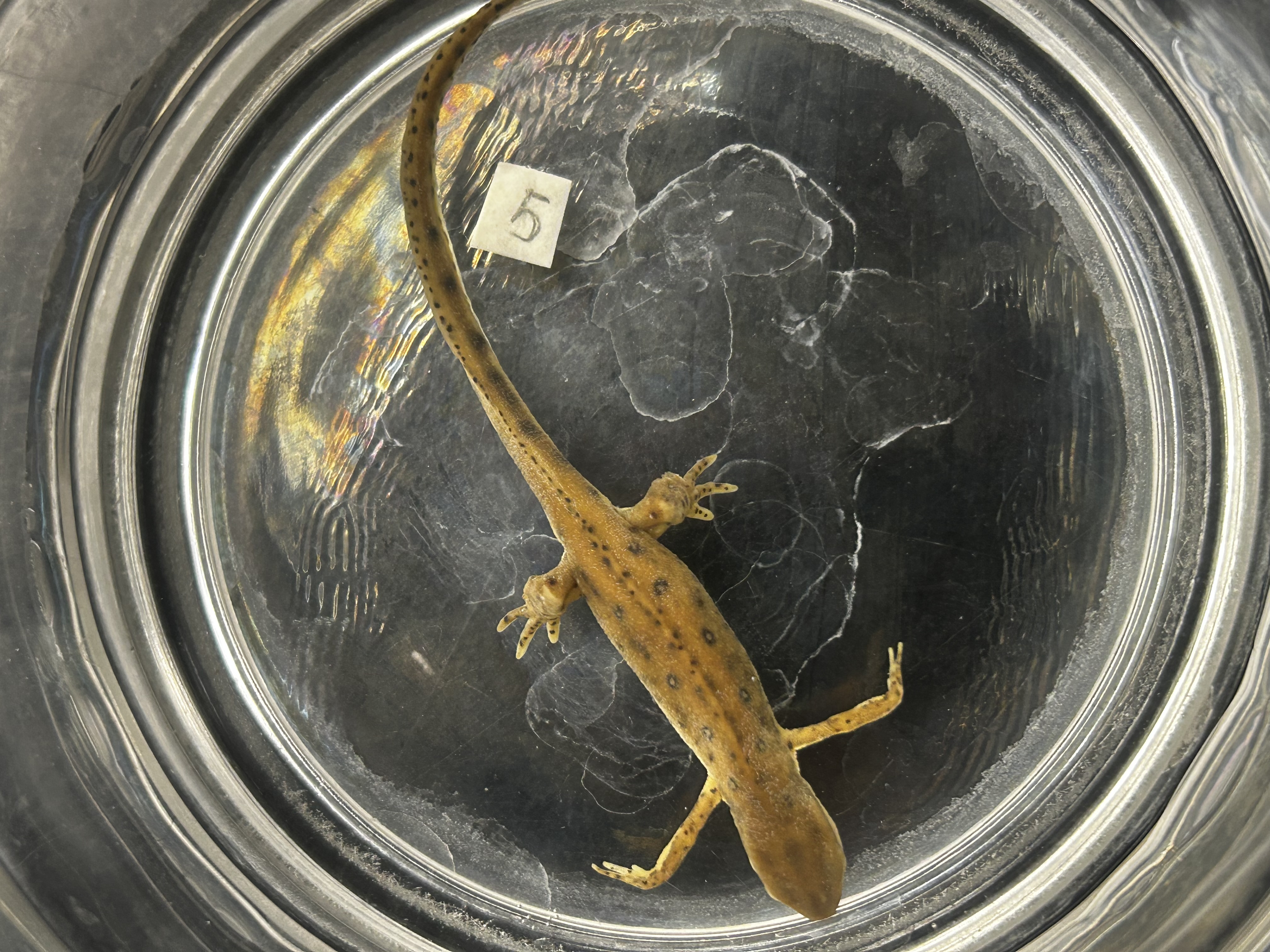
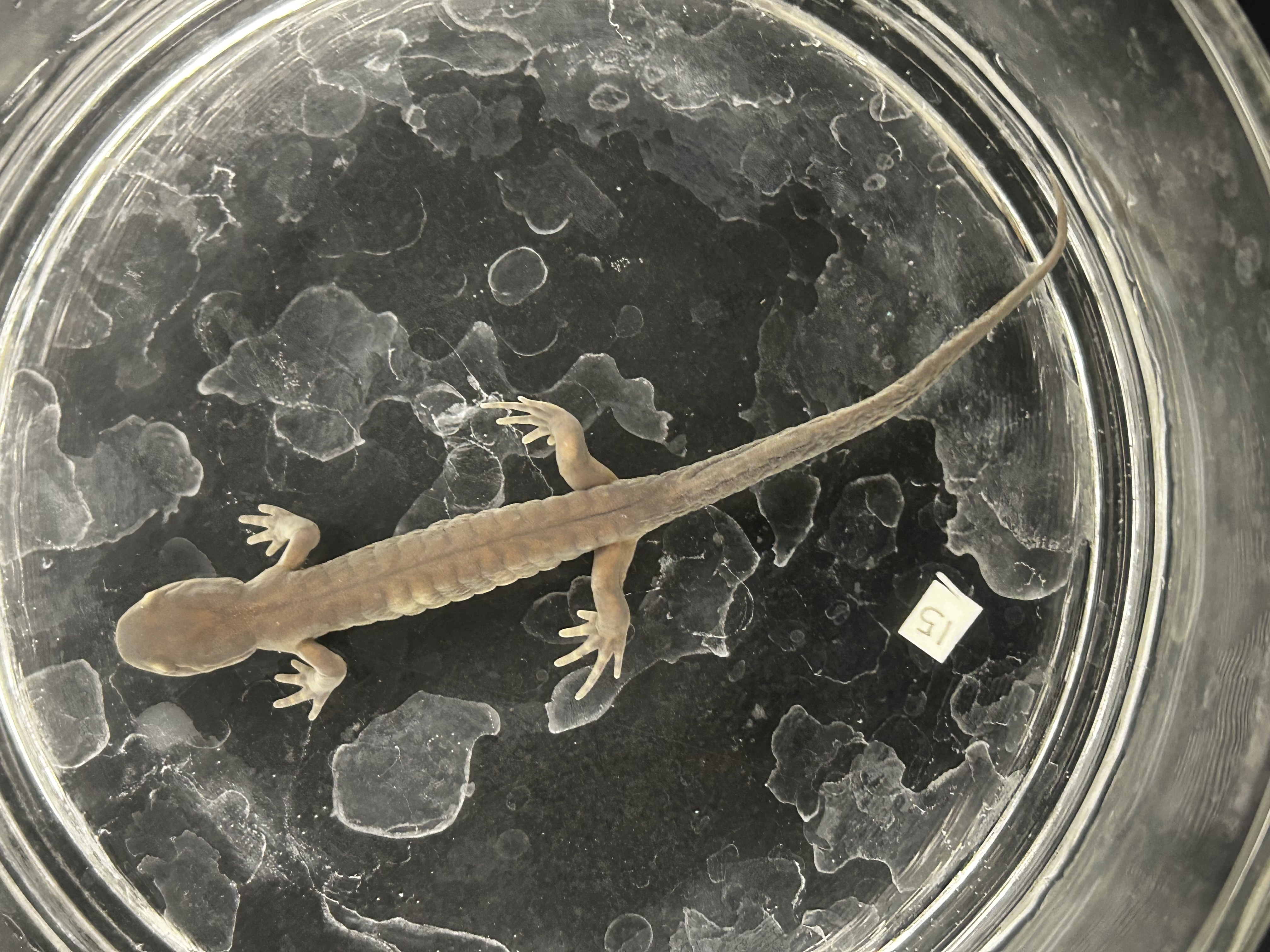
Ambystoma laterale
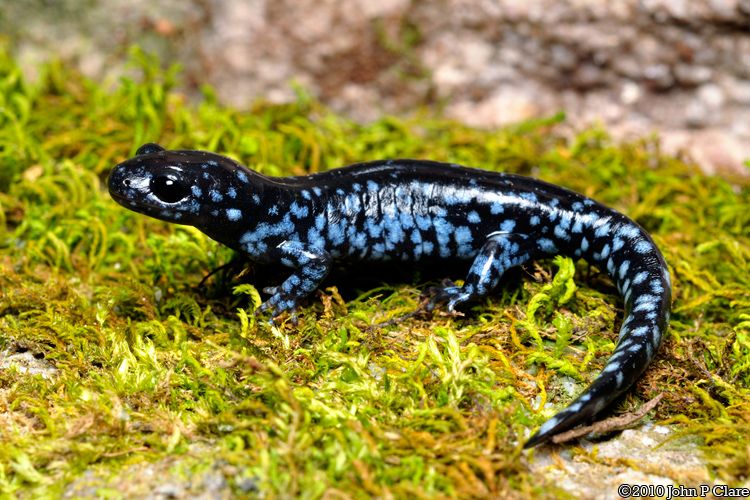
five toes on hind foot; nasolabial grooves absent; costal grooves present; smaller blue-black salamanders with white flecks
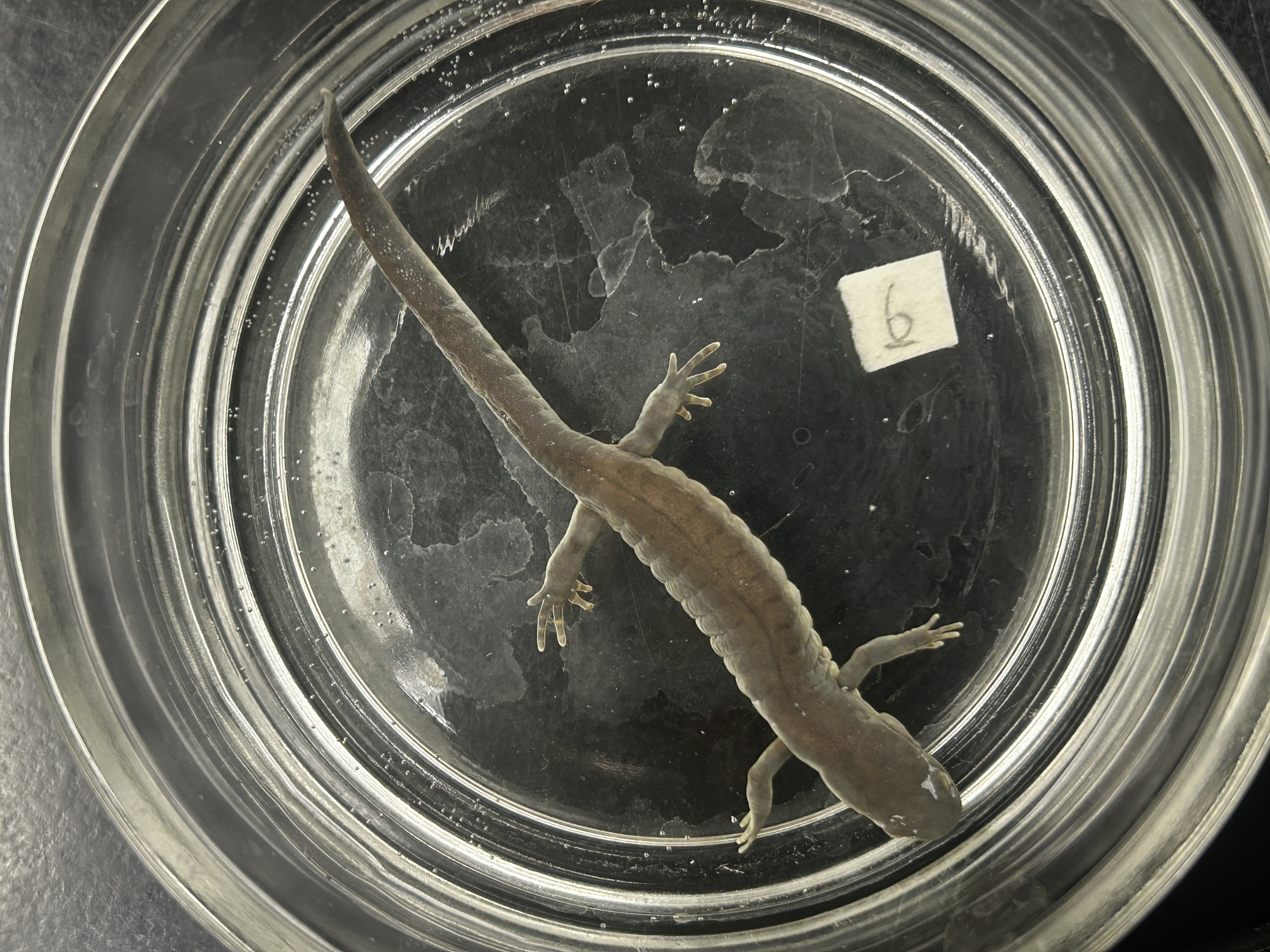
Plethodon cinereus
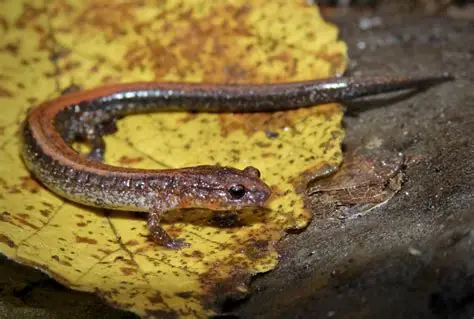
five toes on hind foot; nasolabial grooves present; hindlimbs subequal to somewhat larger than forelimbs; toes normal; tail rounded in section; ground color gray to black; limbs are smaller, seven to ten intercoastal folds between adpressed limbs; broad red stripe down back or belly and chin have the same pattern: uniform salt and pepper effect; 17 to 22 coastal grooves
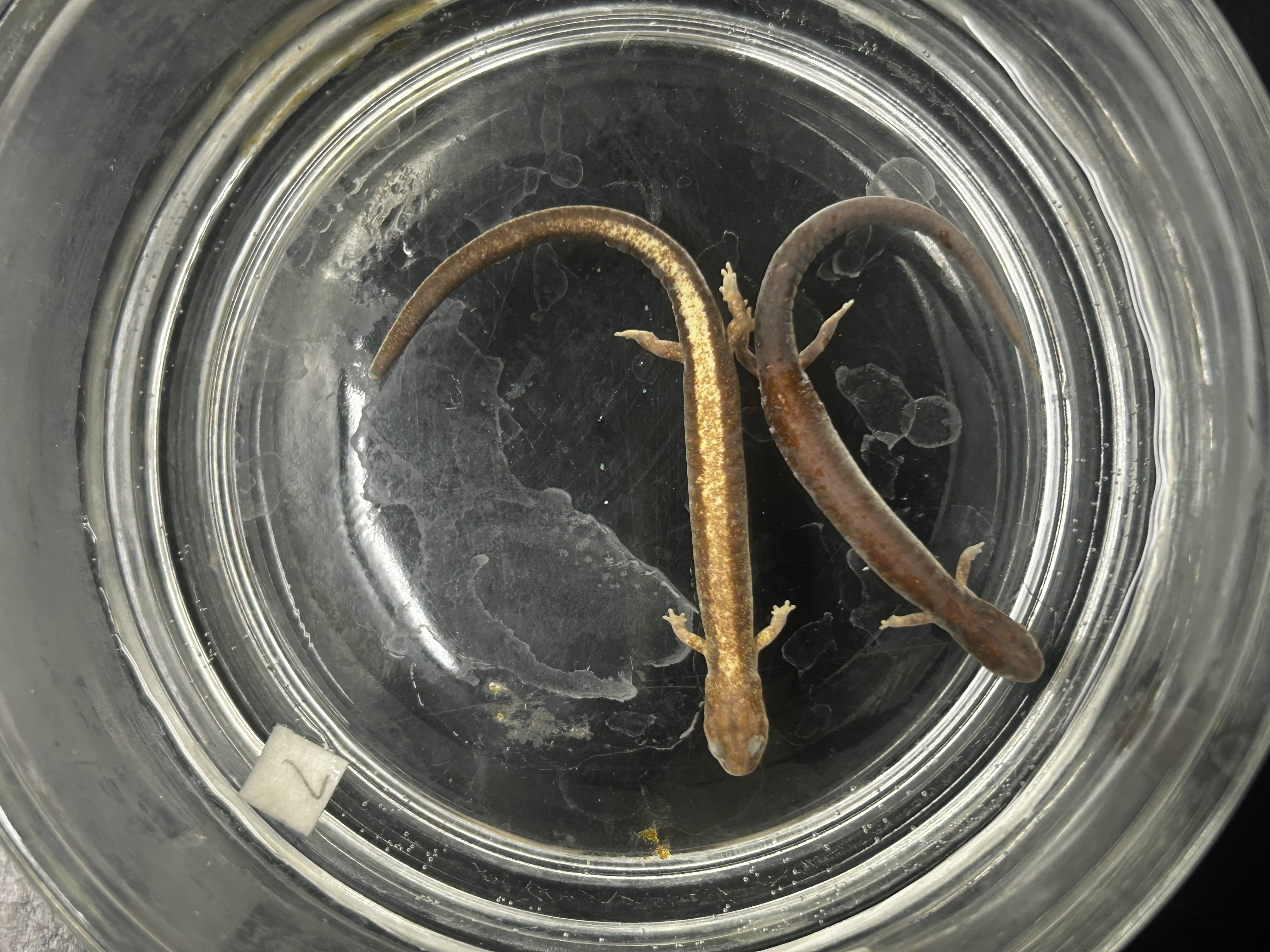
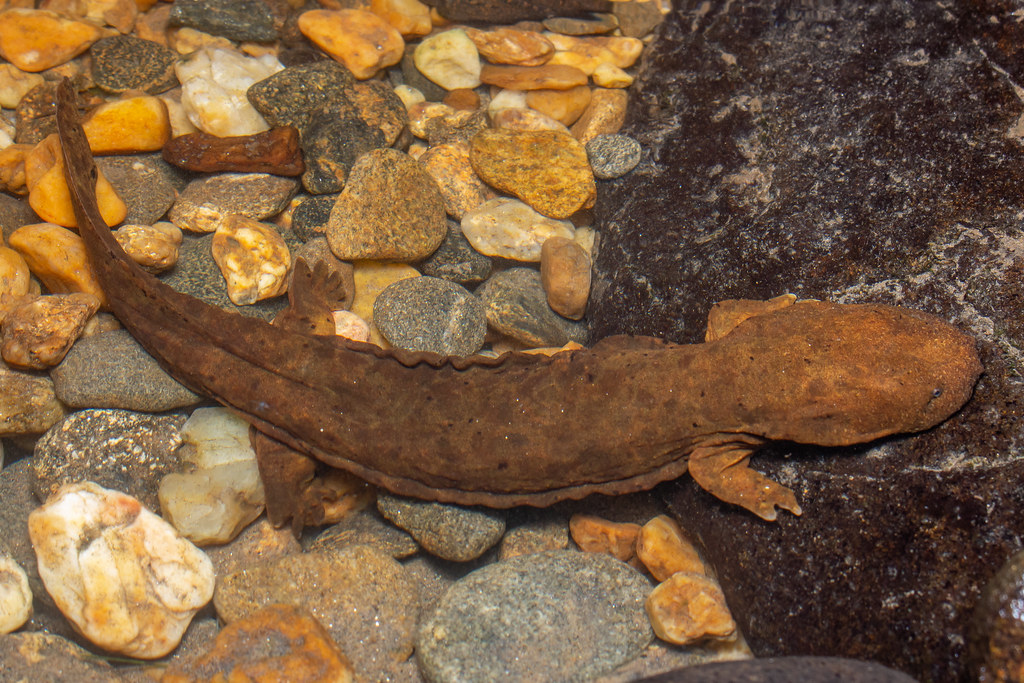
Cryptobranchus alleganiensis
five toes on hind foot; large salamander; flattened body with longitudinal wrinkles; one gill slit with no external gills in adults; toes with free fleshy margins
Gyrinophilus porphyriticus
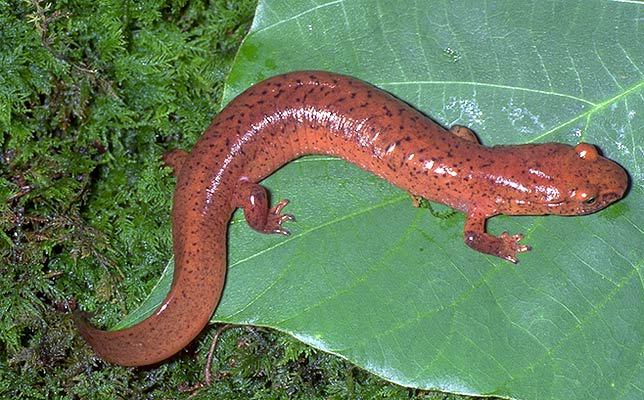
five toes on hind foot; nasolabial grooves present; hindlimbs subequal to somewhat larger than forelimbs; toes normal; large and robust salamanders; 16 or more costal grooves; snout elongate, with canthus rostralis marked by a distinct white line bordered by black; dorsum may have dark flecks, but never rounded dots
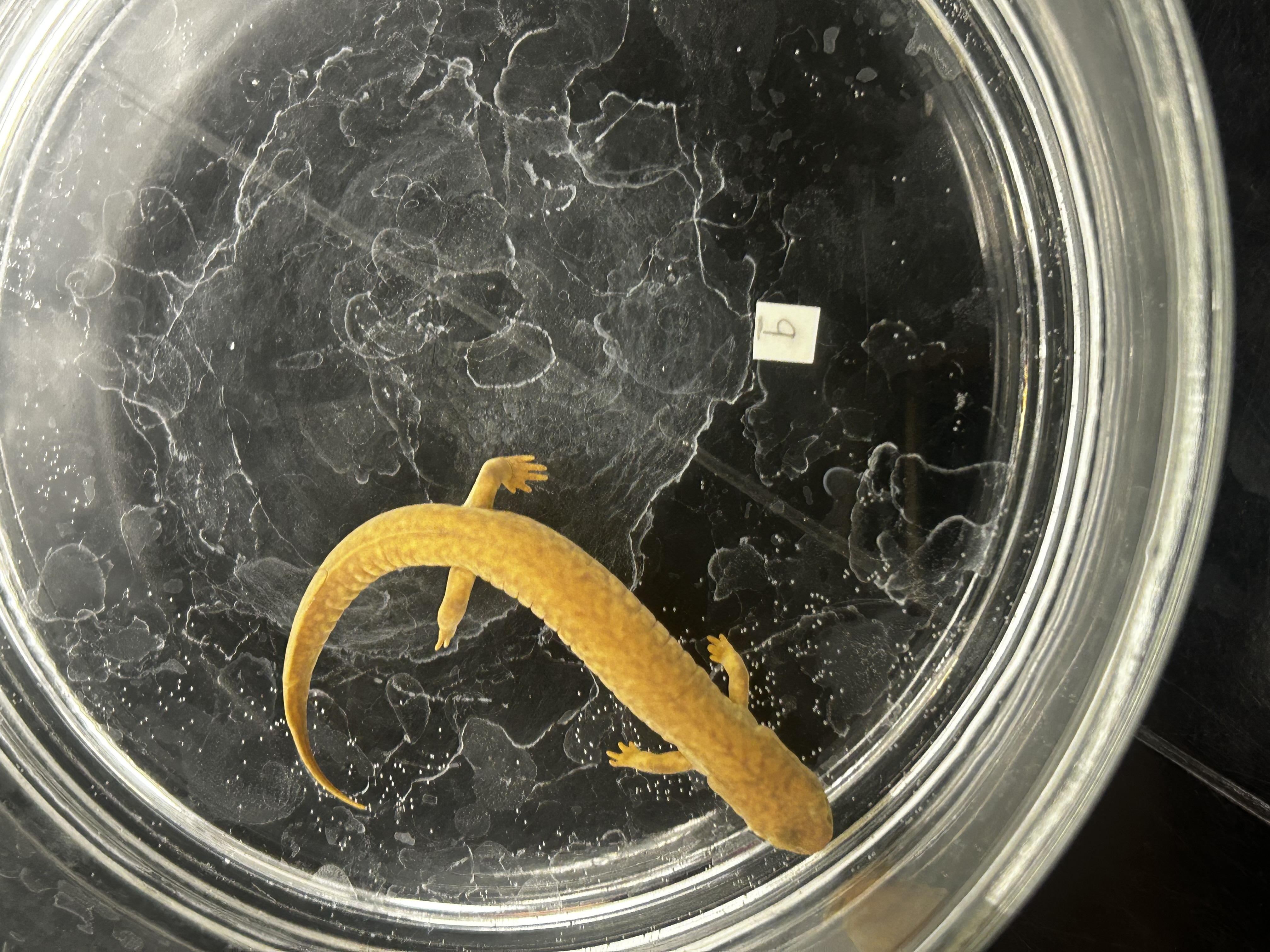
Plethodon glutinosus
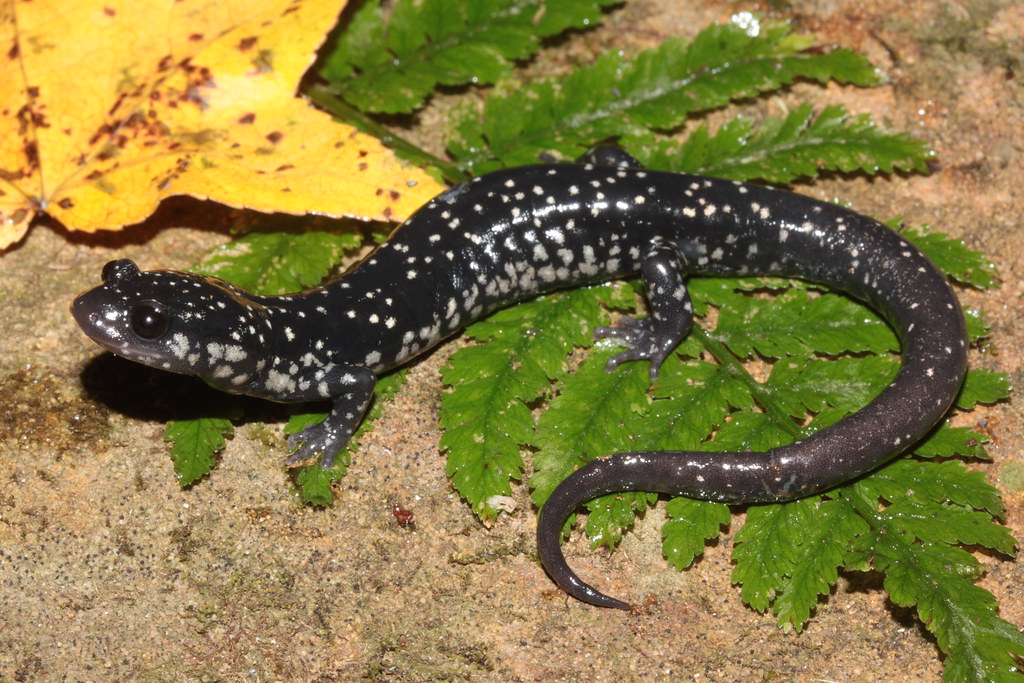
five toes on hind foot; nasolabial grooves present; hindlimbs subequal to somewhat larger than forelimbs; toes normal; tail rounded in section; ground color gray to black; limbs are larger, one to three intercoastal folds between adpressed limbs; Blue-black with white flecks on sides and (usually) back, belly, and gular region uniformly dark gray; usually 16 coastal grooves
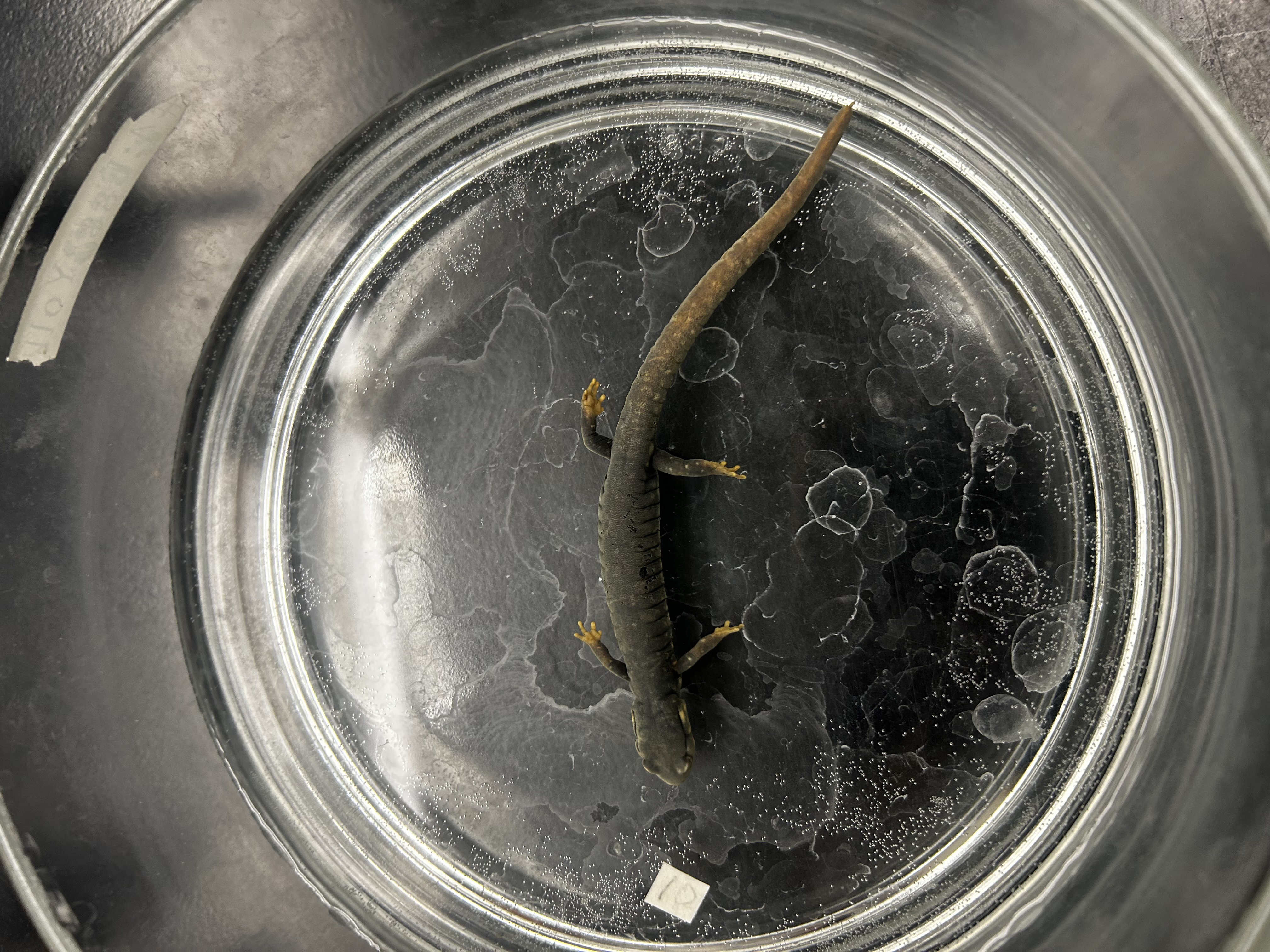
Plethodon electromorphus
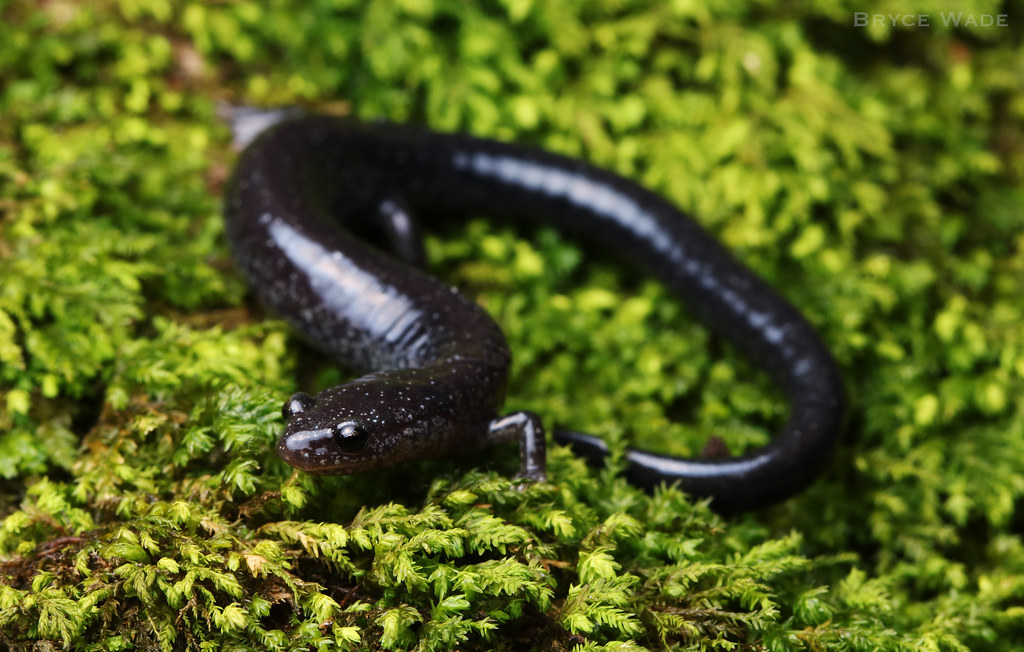
five toes on hind foot; nasolabial grooves present; hindlimbs subequal to somewhat larger than forelimbs; toes normal; tail rounded in section; ground color gray to black; limbs are smaller, seven to ten intercoastal folds between adpressed limbs; back is dark in color, gray or black; belly uniformly dark colored, throat with light colored flecks; 20 to 23 coastal grooves
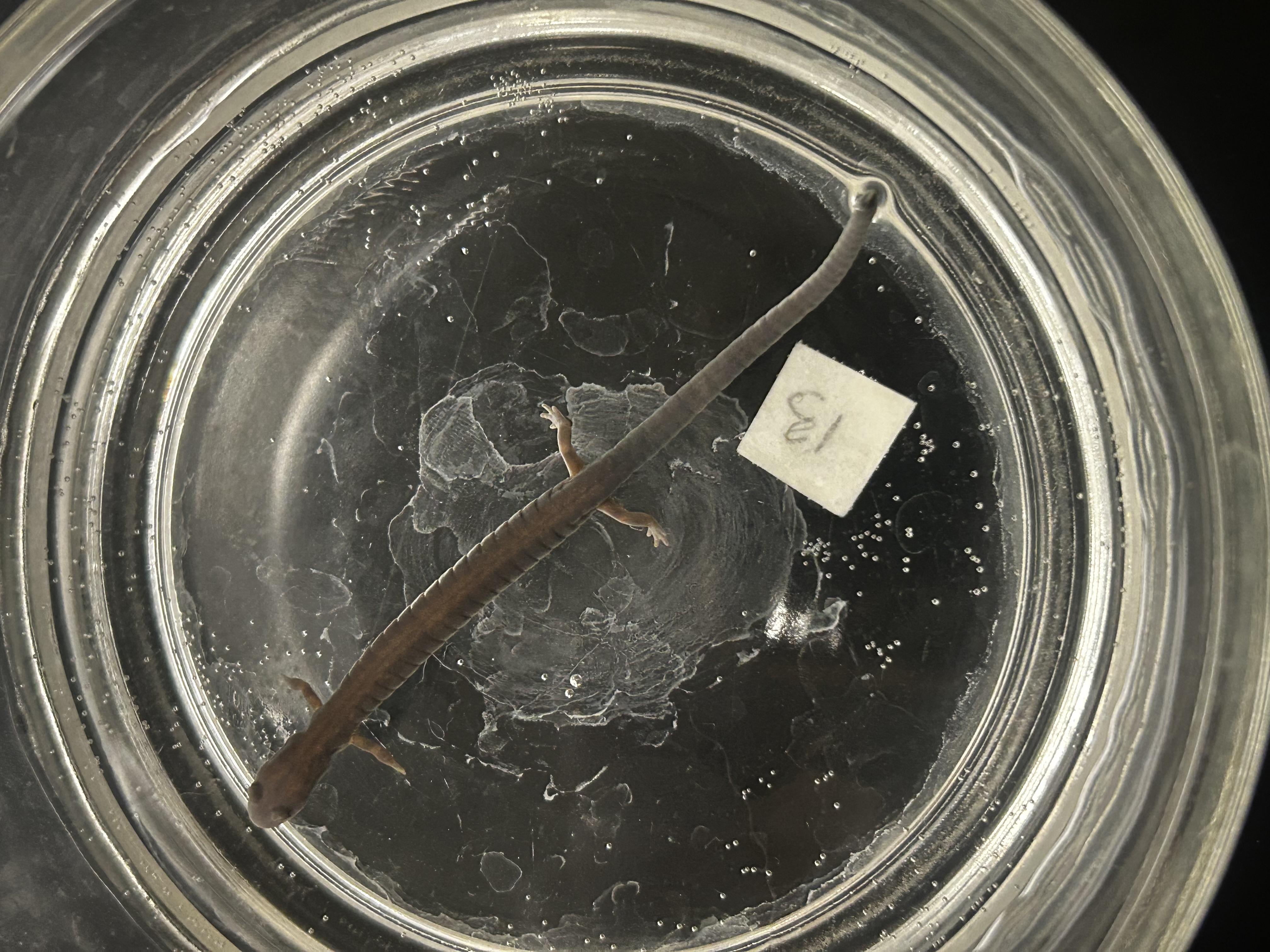
Eurycea bislineata
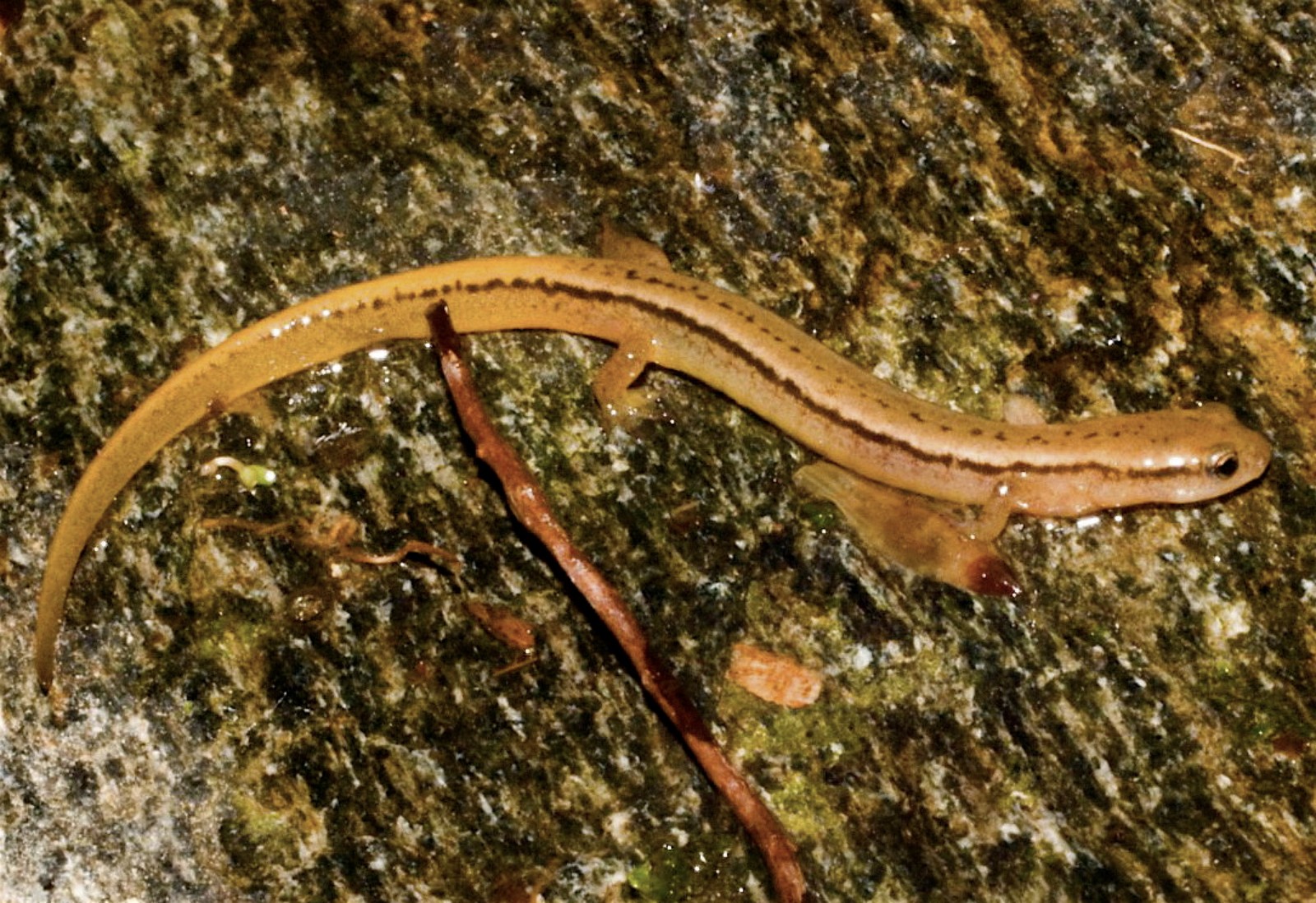
five toes on hind foot; nasal grooves present; hindlimbs subequal to somewhat larger than forelimbs; toes normal; broad dorsal tan or yellow stripe on back bordered by black; tail as long as body; 13 to 16 coastal grooves; small to medium, slender body
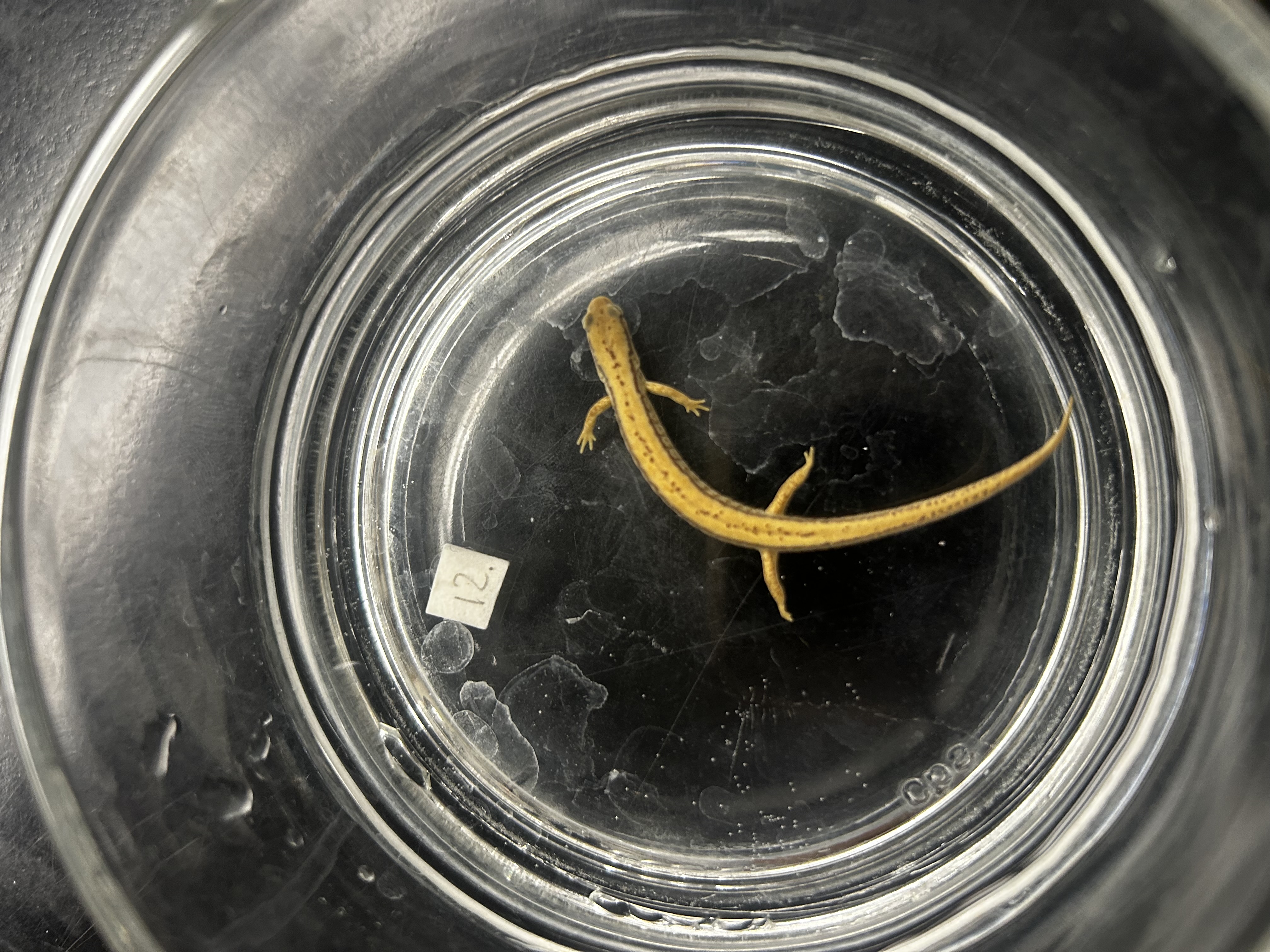
Pseudotriton ruber
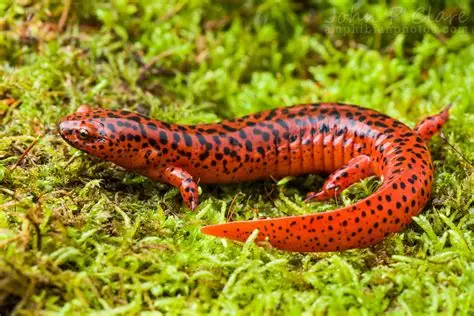
five toes on hind foot; nasolabial grooves present; hindlimbs subequal to somewhat larger than forelimbs; toes normal; tail shorter than body; large and robust salamanders; 16 or more costal grooves; shorter snout; iris yellow in life; dorsal spots small, numerous, and crowded together
Ambystoma jeffersonianum
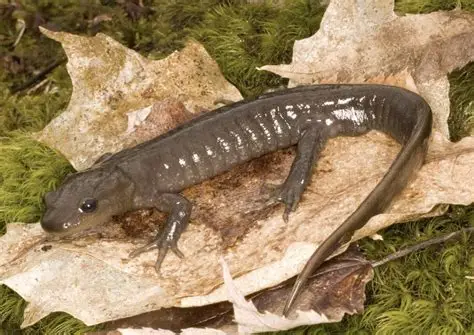
five toes on hind foot; nasolabial grooves absent; costal grooves present; larger, greyish salamanders with white specks
Ambystoma maculatum
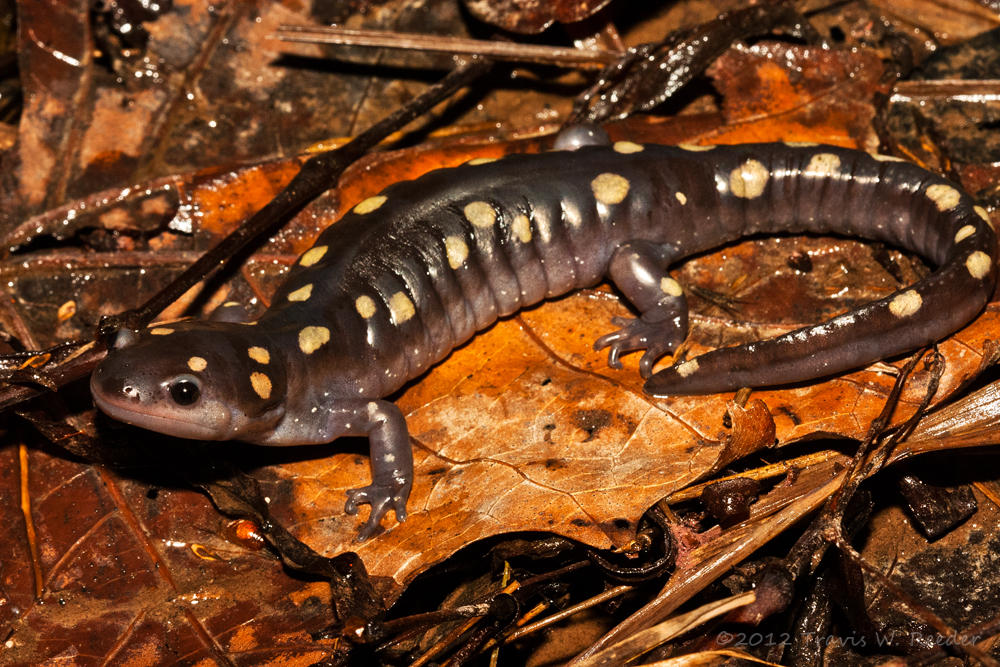
five toes on hind foot; nasolabial grooves absent; costal grooves present, ground color: black, green, or brown; dorsum with two rows of rounded white, yellow, or orange spots
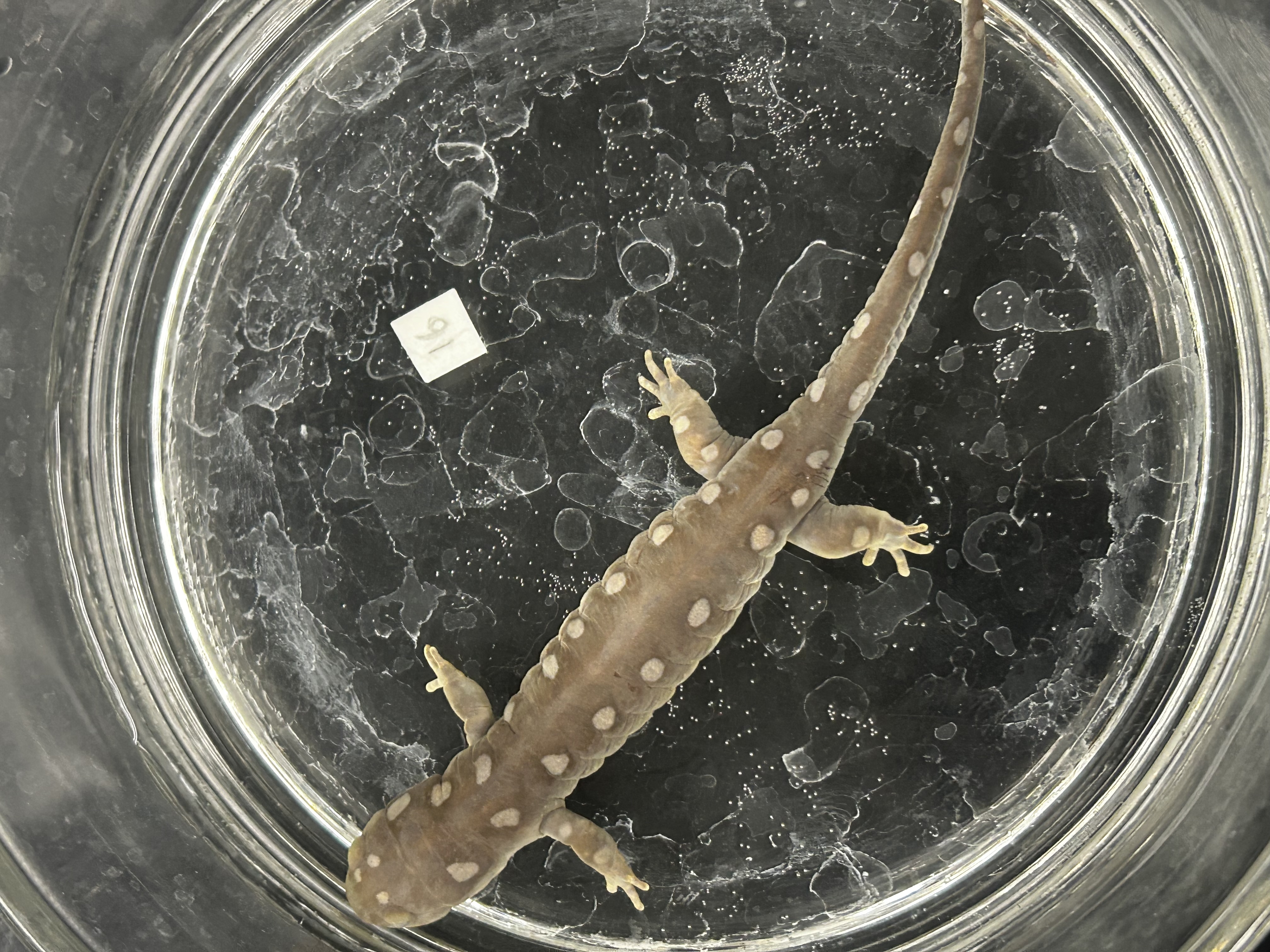
Ambystoma opacum
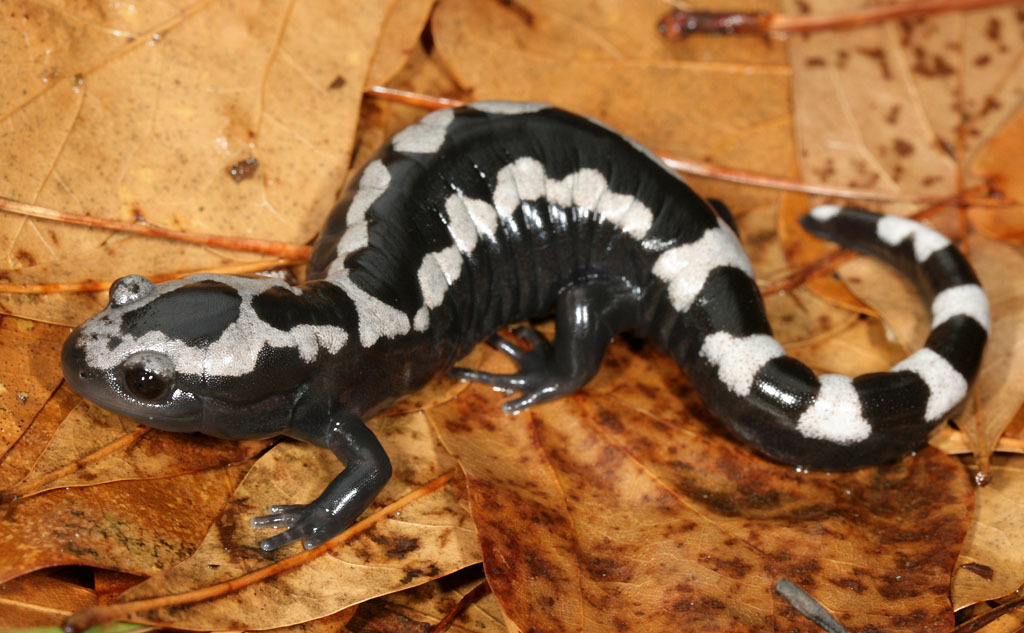
five toes on hind foot; nasolabial grooves absent; costal grooves present, ground color: black, green, or brown; pattern of four to eight silvery white crossbands on dorsum
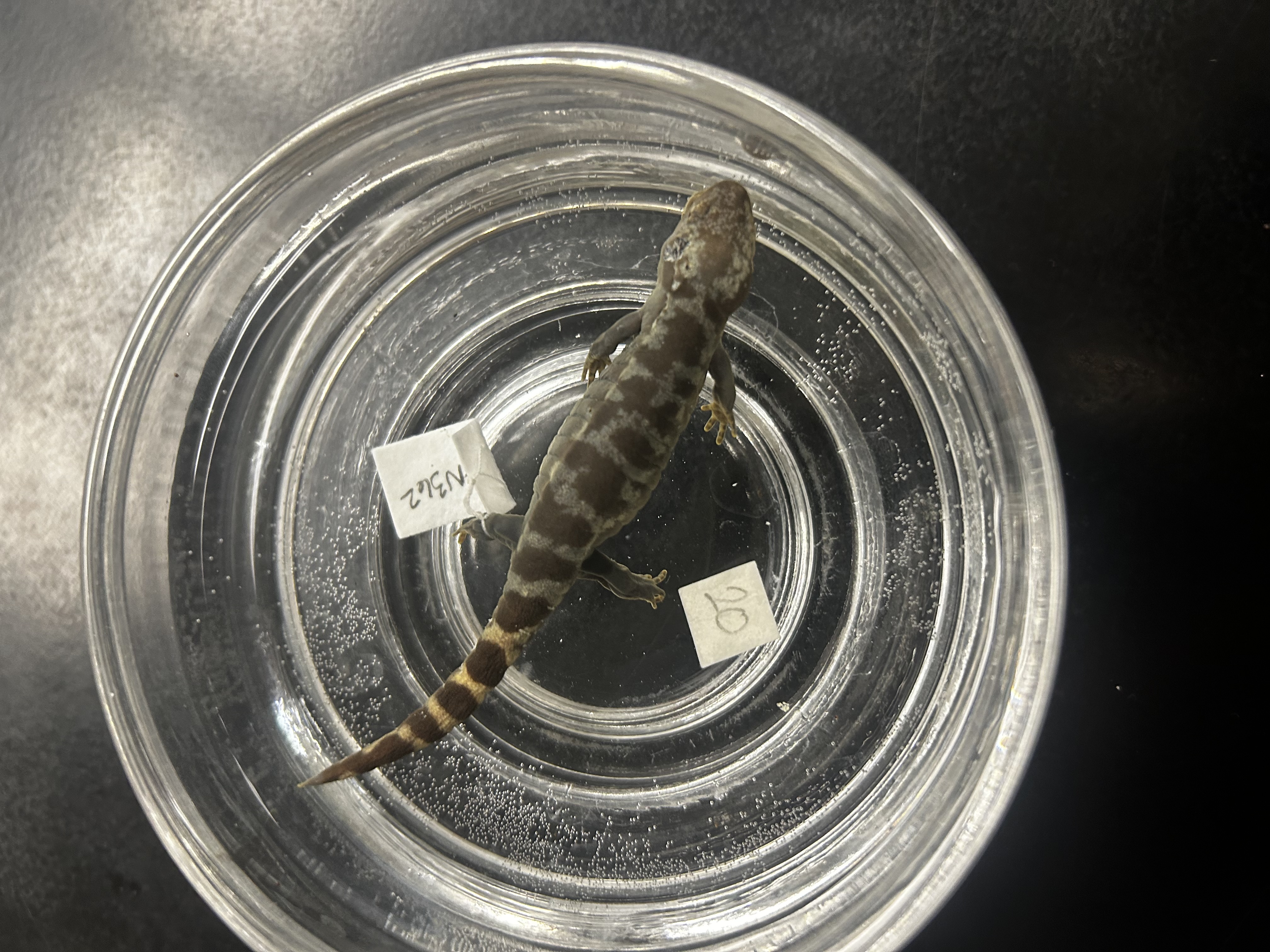
Desmognathus fuscus
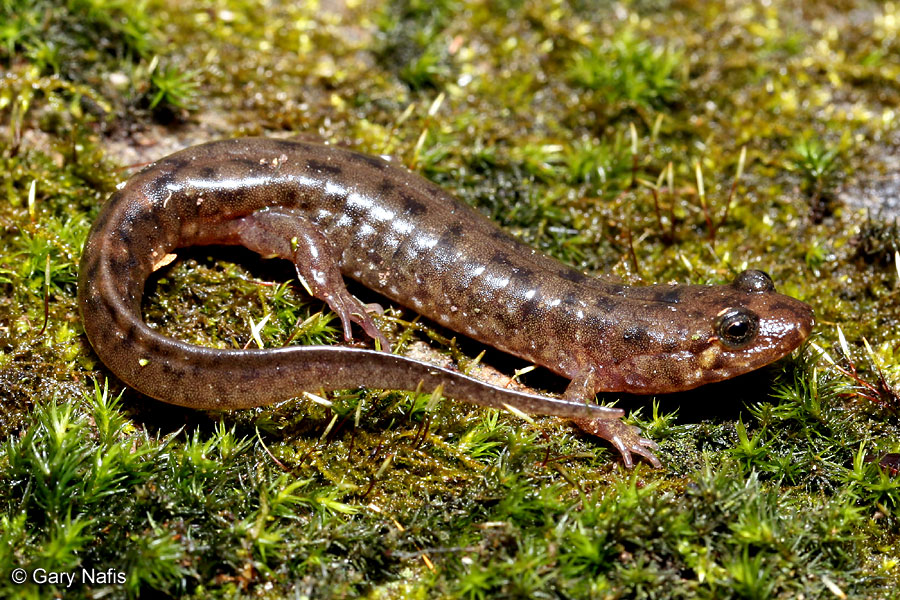
five toes on hind foot; nasolabial grooves present; gular muscles making prominent swelling on either side of the throat; hind limbs usually noticeably larger than forelimbs; often a line running from eye to posterior angle of mouth; dorsal pattern absent, or if present, consisting of irregular spots or blotches, or a broad stripe with wavy, irregular edges
Desmognathus ochrophaeus
five toes on hind foot; nasolabial grooves present; gular muscles making prominent swelling on either side of the throat; hind limbs usually noticeably larger than forelimbs; often a line running from eye to posterior angle of mouth; tail round in cross section proximally; dorsal pattern, when present, usually consists of a broad dorsal light stripe with straight borders
Eurycea longicauda
five toes on hind foot; nasal grooves present; hindlimbs subequal to somewhat larger than forelimbs; toes normal; sides spotted, long tail, with distinctive herringbone pattern; 13 to 16 coastal grooves; small to medium, slender body
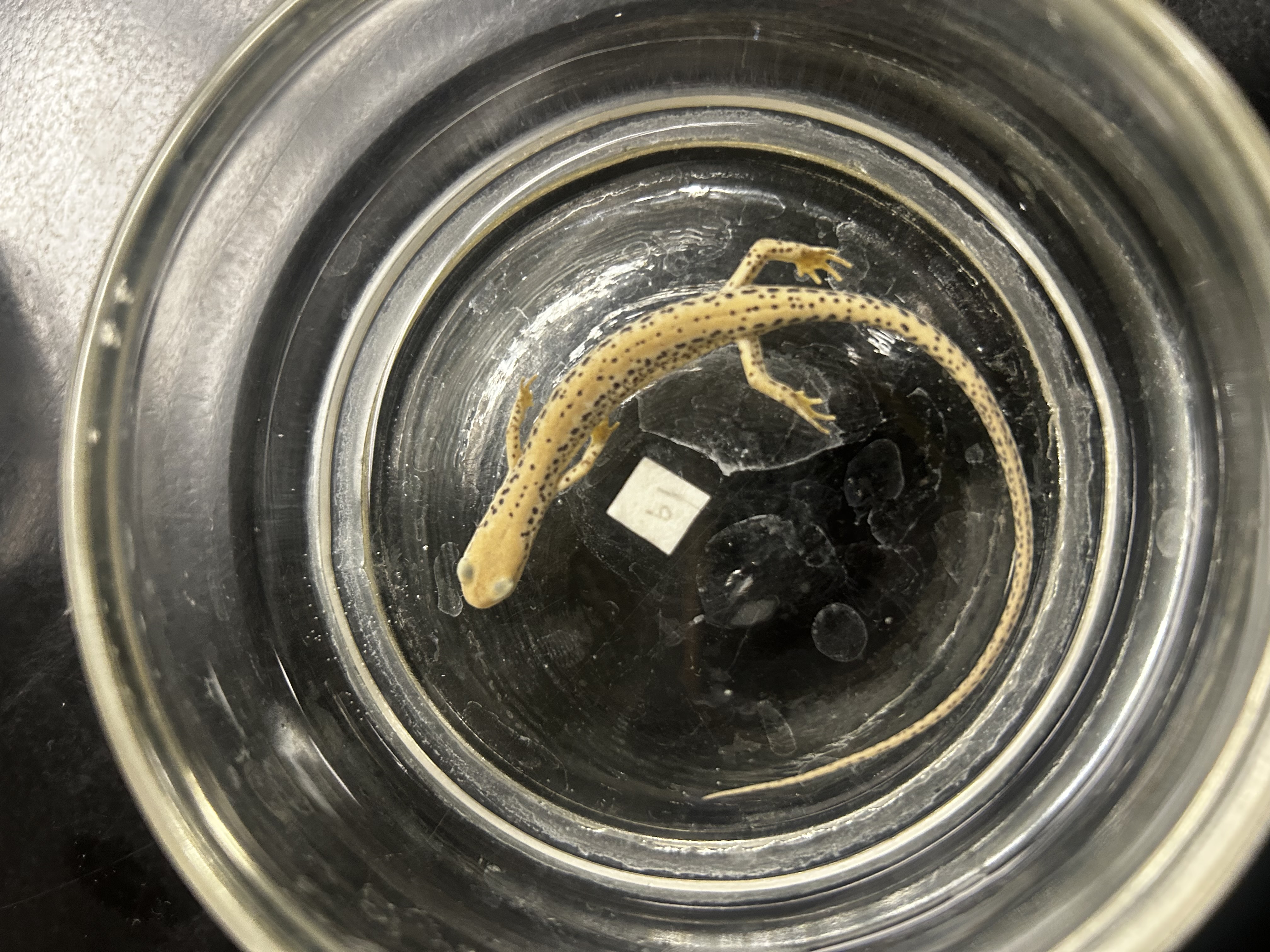
Aneides aeneus
five toes on hind foot; nasolabial grooves present; hindlimbs subequal to somewhat larger than forelimbs; toes with squared tips; green, lichen-like markings in life; flattened body with long limbs