River And Environmental - Unit 2
0.0(0)
Studied by 4 people Call Kai
 Learn
Learn Practice Test
 Spaced Repetition
 Match
Match Flashcards
 Knowt Play
Card Sorting
1/53

Earn XP
Description and Tags
54 Terms
1
New cards
Species
The branch of biology that deals with the relations of organisms to one another and their physical surroundings.
2
New cards
Habitat
The environment in which a species normally lives.
3
New cards
Biotic Factors
The living components of an ecosystem, including organisms and their interactions.
4
New cards
Abiotic Factors
A non-living part of an ecosystem that shapes its environment.
5
New cards
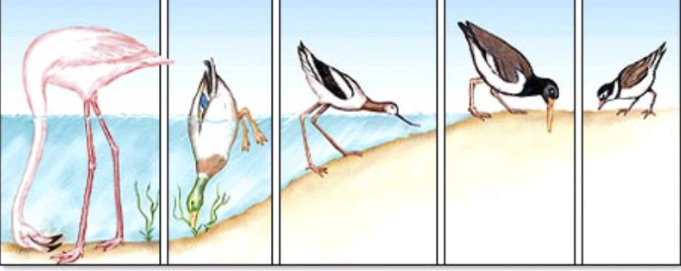
Niche
Describes the particular set of abiotic and biotic conditions and resources to which an organism or population responds.
6
New cards
Fundamental Niche
Describes the full range of conditions and resources in which a species could survive and reproduce.
7
New cards
Realized Niche
Describes the actual conditions and resources in which a species exists due to biotic interactions.
8
New cards
Intraspecific Competition
Exists between member of the same species.
9
New cards
Interspecific Competition
Exists between members of different species.
10
New cards
Predation
The consumption of one organism by another.
11
New cards
Herbivory
The consumption of green plants.
12
New cards
Carnivore
The consumption of both plant and other organisms.
13
New cards
Parasitism
a relationship between two species in which one species lives in or on another, gaining its food from it.
14
New cards
Mutualism
A relationship between two or more species in which all parties benefit and none suffer.
15
New cards
Population Density
The average number of individuals in a stated area.
16
New cards
Population Growth
The natural increase within a population.
17
New cards
Limiting Factors
Factors which slow down the growth of a population as it reaches its carrying capacity.
18
New cards
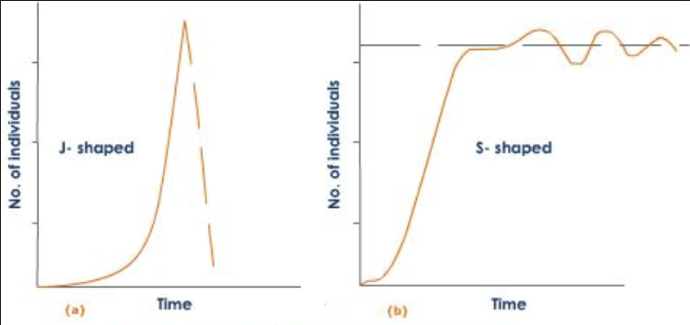
S-curve
Population growth that begins with a slower phase then starts to grow rapidly through the abundance of resources and then stabilizes in a stationary phase when resources become limited.
19
New cards
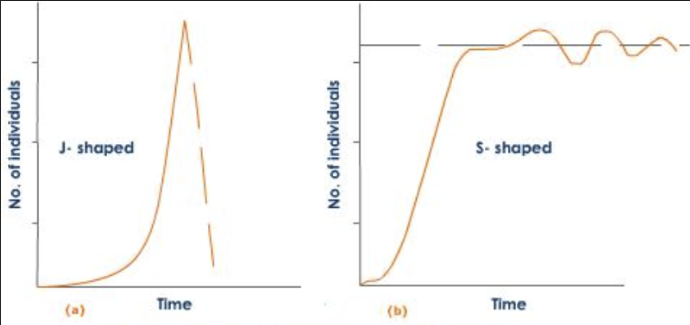
J-curve
A boom and bust population growth pattern; the population grows exponentially until overshooting its carrying capacity, resulting in a collapse or dieback.
20
New cards
Community
A group of populations living and interacting with each other in a common habitat.
21
New cards
Ecosystem
A community of interdependent organisms and the physical environment it interacts with.
22
New cards
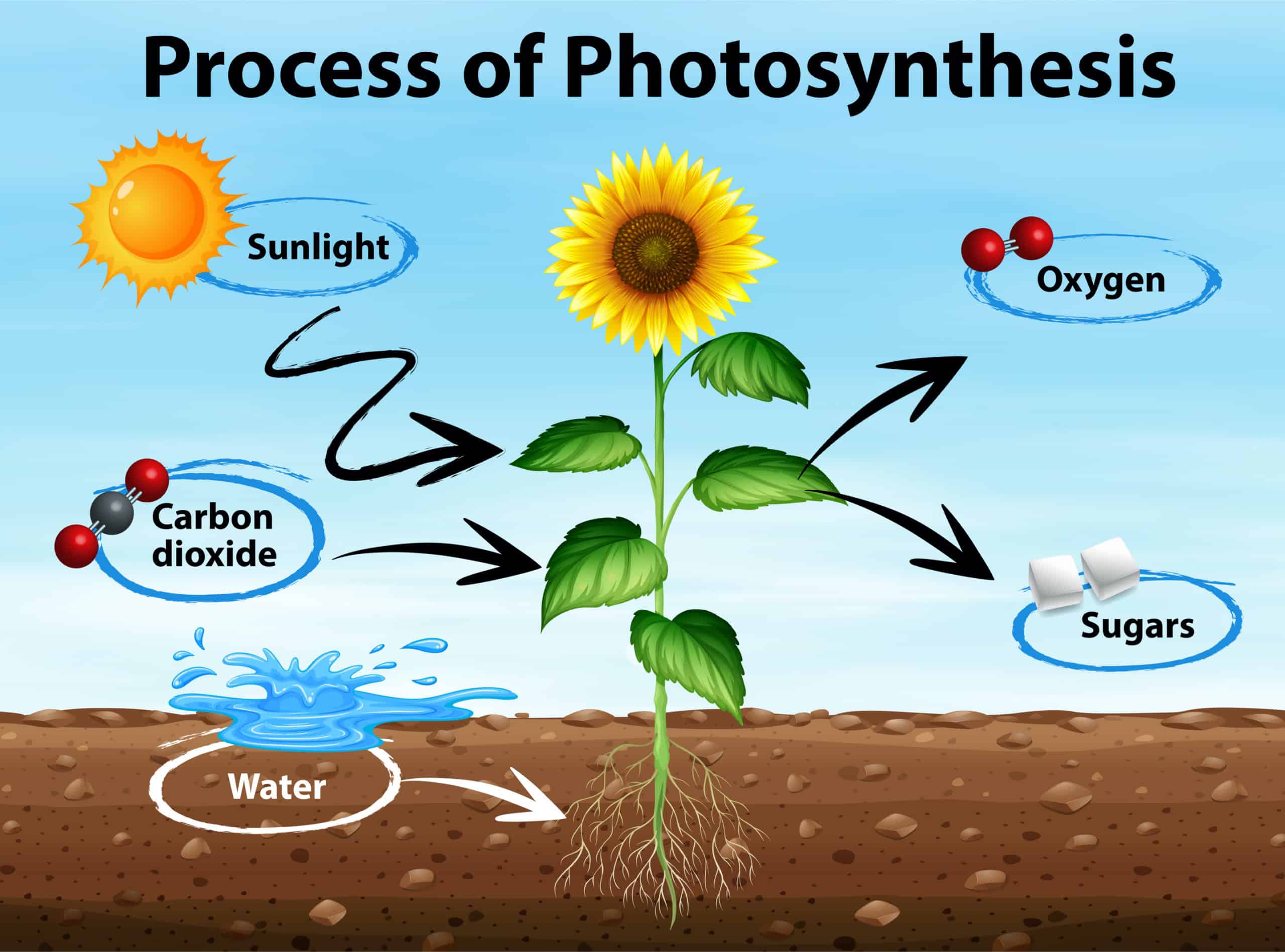
Photosynthesis
The process plants make their own food by converting light energy to chemical energy which is stored in biomass.
23
New cards
Photosynthesis Equation
6 CO2 + 6 H2O + light --> C6H12O6 + 6 O2
24
New cards
Respiration
The conversion of organic matter into carbon dioxide and
water in all living organisms, releasing energy available to living organisms but lost as heat.
water in all living organisms, releasing energy available to living organisms but lost as heat.
25
New cards
Trophic Level
The position that an organism occupies in a food chain.
26
New cards
Producers
Converts abiotic components into living matter.
27
New cards
Autotrophs
Producers that can create their own food using photosynthesis.
28
New cards
Consumers
Pass energy and biomass from
producers through to top carnivores and feed on Autotrophs or other Heterotrophs to obtain Energy.
producers through to top carnivores and feed on Autotrophs or other Heterotrophs to obtain Energy.
29
New cards
Heterotroph
Organisms that cannot make their own food so they must eat organisms.
30
New cards
Decomposers
Obtains food and nutrients from the breaking down of dead organic matter.
31
New cards
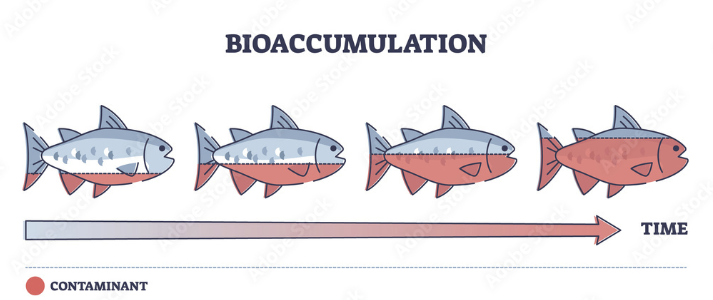
Bioaccumulation
The build up of non-biodegradable pollutant within an organism or trophic level.
32
New cards
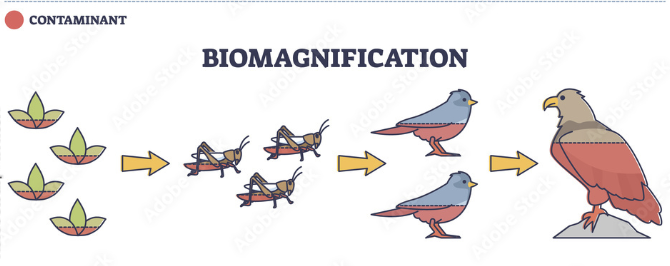
Biomagnification
The increase in concentration of non-biodegradable pollutants in a food chain.
33
New cards
Ecological Efficiency
The percentage of energy transferred from one trophic level to the next.
34
New cards
Productivity
Production of biomass per unit area per unit time.
35
New cards
Primary Productivity
The gain by producers in energy or biomass per unit area per unit of time.
36
New cards
Secondary Productivity
The biomass gained by heterotrophic organisms, through feed and absorption.
37
New cards
Maximum Sustainable Yield (MSY)
Max flow of given resource such that the stock does not decline over time; the highest rate of harvesting that does not lead to a reduction in the original natural capital.
38
New cards
Eutrophication
Excessive nutrients in a lake or other body of water, usually caused by runoff of nutrients from the land, causes a dense growth of plant life.
39
New cards
Biome
A major biotic community characterized by the dominant forms of plant life and the prevailing climate.
40
New cards
Latitude
The measurement of distance north or south of the Equator.
41
New cards
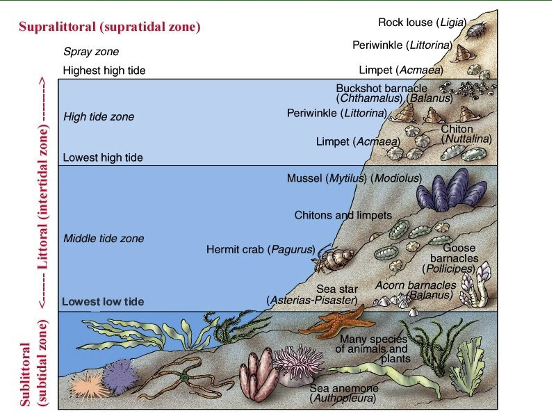
Zonation
The distribution of plants or animals into specific zones according to such parameters as altitude or depth, each characterized by its dominant species.
42
New cards
Sere
The change in communities from the earliest Pioneer community to the final Climax community.
43
New cards
Pioneer Community
The first Seral Stage of a succession; contains hardy species able to withstand difficult conditions; the simplest of all succession communities.
44
New cards
Climax Community
The final Seral Stage of a succession; much more complex and stable than earlier Seral Stages; in a State of Equilibrium.
45
New cards
Plagioclimax
Altered succession of an ecosystem resulting from human interferences such as footpath erosion, agriculture, hunting, deforestation, fire, or grazing.
46
New cards
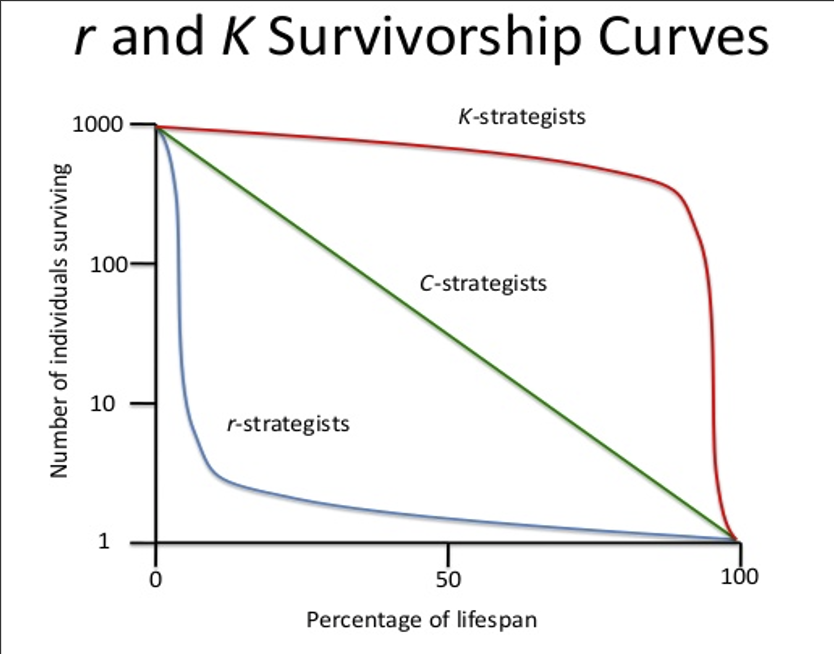
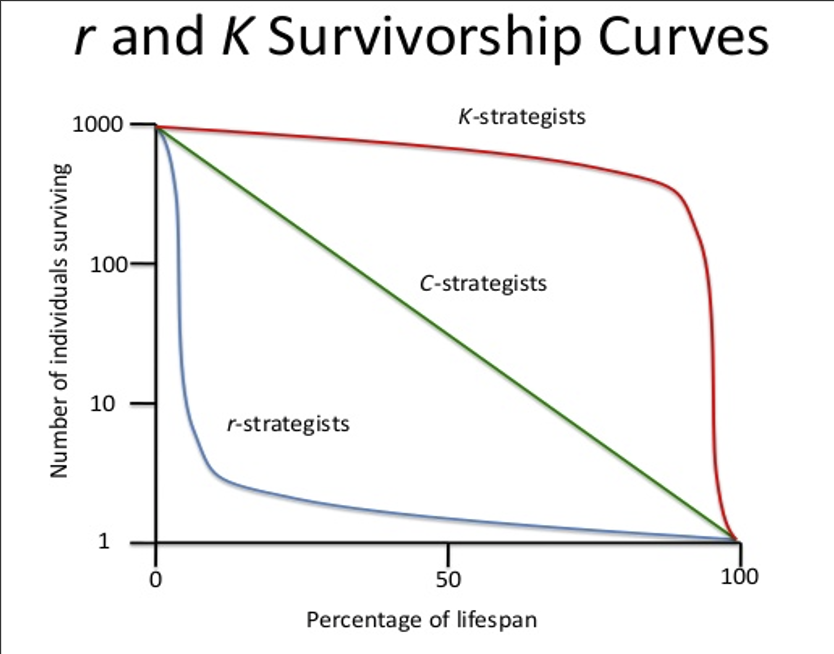
K strategist
Few offspring, long gestation period, long parental care period, and long period of sexual maturity.
47
New cards
R Strategist
Lots of offspring, short gestation, short period of parental care, short period of sexual maturity.
48
New cards
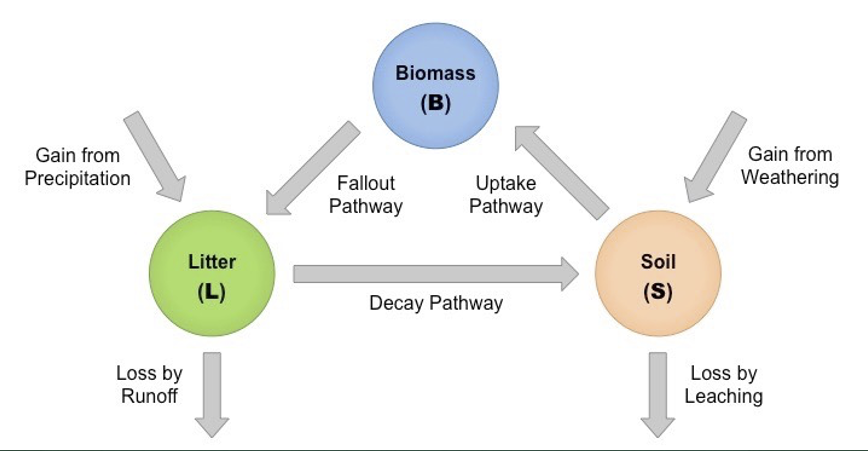
Gershmel Nutrient Cycle
A model shows the amount of nutrients that are flowing around an ecosystem as well as the sizes of different stores.
49
New cards
Boreal Forest Biome
Warm, rainy summers; very cold winters with heavy snow; trees produce cones with seeds that are eaten by many animals.
50
New cards
Deciduous Forest Biome
Warm summers, cold winters; receives at least 50cm of rain each year; trees shed their leaves and grow new ones each year.
51
New cards
Desert Biome
Hot during the day, cool and cold during the night; very dry; organisms are adapted to extreme dry conditions.
52
New cards
Grassland Biome
Receives between 25 and 75cm per year; populated by grasses and large herbivores.
53
New cards
Rain Forest Biome
Warm temp. all year; very wet and humid; greatest amount of species in any biome.
54
New cards
Tundra Biome
Extremely cold winters, warmer summers; windy; very dry; no trees, only low-growing plants.