Form 3 Science Deck

0.0(0)
Studied by 0 people
call kaiCall Kai
learnLearn
examPractice Test
spaced repetitionSpaced Repetition
heart puzzleMatch
flashcardsFlashcards
Card Sorting

1/104

flashcard set

Earn XP

Description and Tags

Chapter 1:

Last updated 9:00 AM on 10/5/26
Name
Mastery
Learn
Test
Matching
Spaced
Call with Kai
Chat

No analytics yet

Send a link to your students to track their progress

105 Terms

1
New cards

Name 2 organs that belongs to human central nervous system.

  1. Brain

  2. Spinal cord


2
New cards

State the 2 parts of a human’s nervous system.

  1. Central nervous system

  2. Peripheral nervous system


<ol><li><p><span style="color: yellow;"><strong>Central </strong></span>nervous system</p></li><li><p><span style="color: blue;"><strong>Peripheral </strong></span>nervous system</p></li></ol><p></p>
3
New cards

What is a voluntary action?

Actions that are under conscious control.


********

Voluntary = 自愿

Action = 行动

4
New cards

What is an involuntary action?

Actions that are not under conscious control.


********

Involuntary = 非自愿

Action = 行动

5
New cards

State 5 sensory organs in human.

Eye

Nose

Mouth

Skin

Tongue

6
New cards

State the 5 senses of human.

Sense of sight

Sense of hearing

Sense of smell

Sense of taste

Sense of touch

7
New cards

What stimuli is detected by the eye?

Light

8
New cards

What stimuli is detected by the ear?

Sound

9
New cards

What stimuli is detected by the nose?

Chemicals in the air

10
New cards

What stimuli is detected by the tongue?

Chemicals in the food

11
New cards

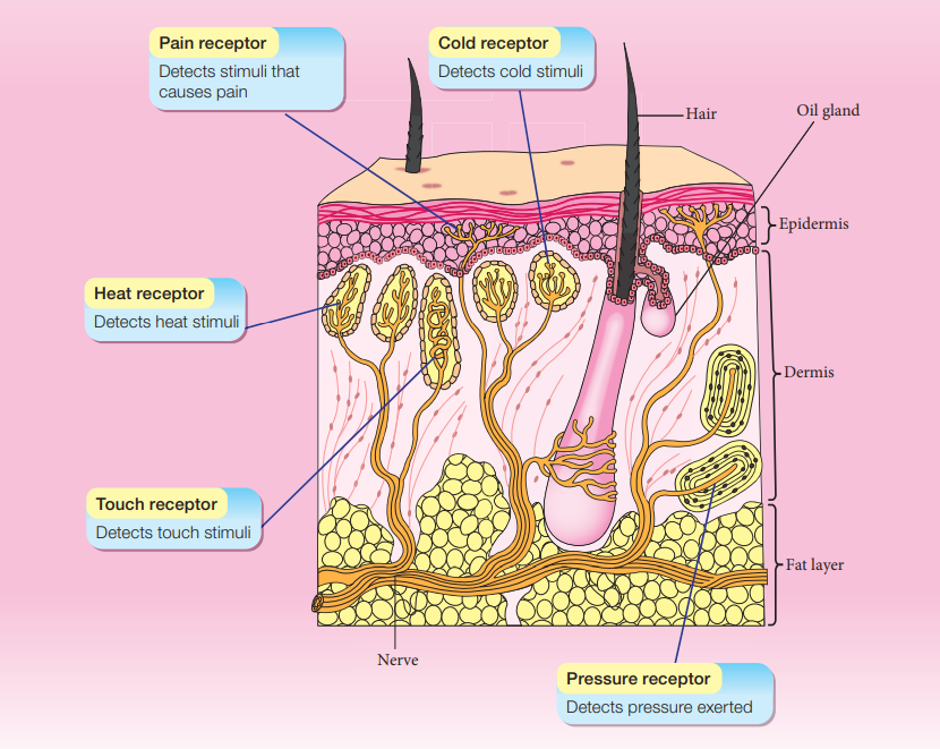
What 5 stimuli are detected by the skin?

Pain

Touch

Heat

Cold

Pressure

<p>Pain</p><p>Touch</p><p>Heat</p><p>Cold</p><p>Pressure </p>
12
New cards
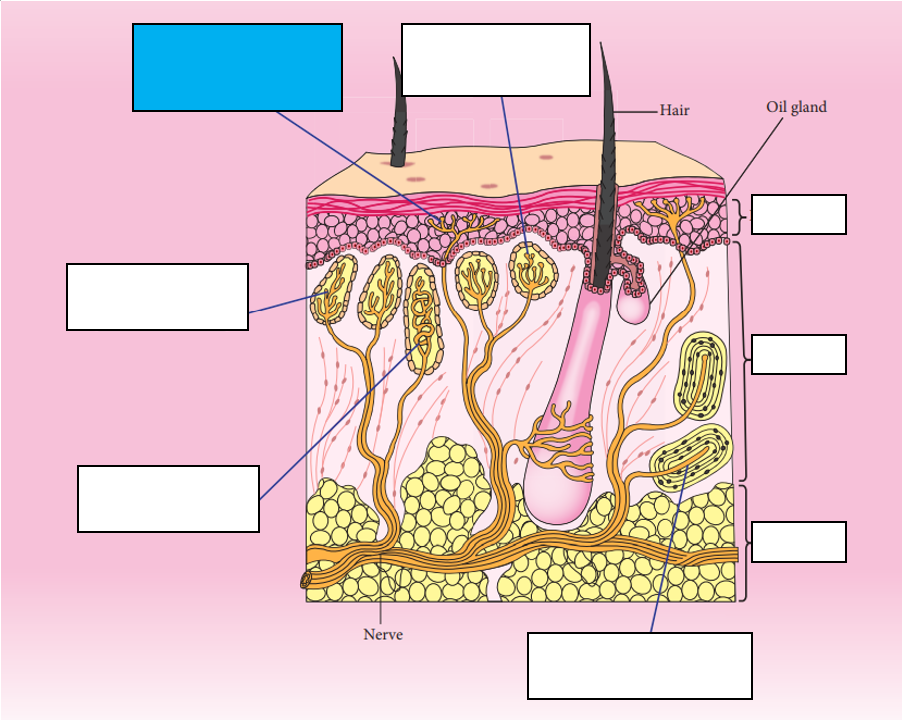
<p><strong>Name </strong>the structure indicated in <span style="color: rgb(0, 147, 255);"><strong>blue</strong></span>.</p>

Name the structure indicated in blue.

Pain receptor
13
New cards
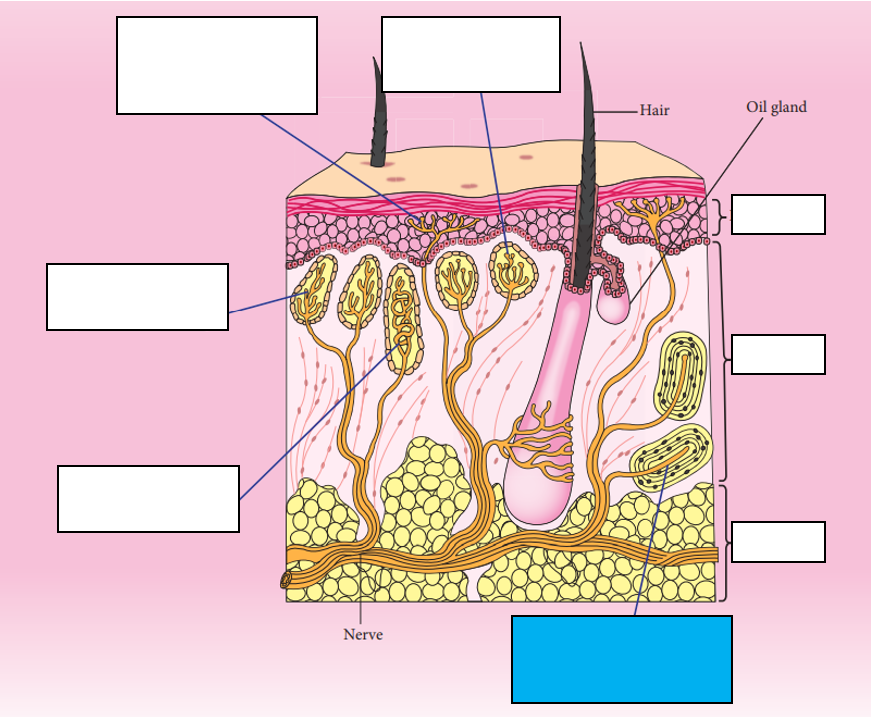
<p><strong>Name </strong>the structure indicated in <span style="color: rgb(0, 147, 255);"><strong>blue</strong></span>.</p>

Name the structure indicated in blue.

Pressure receptor
14
New cards
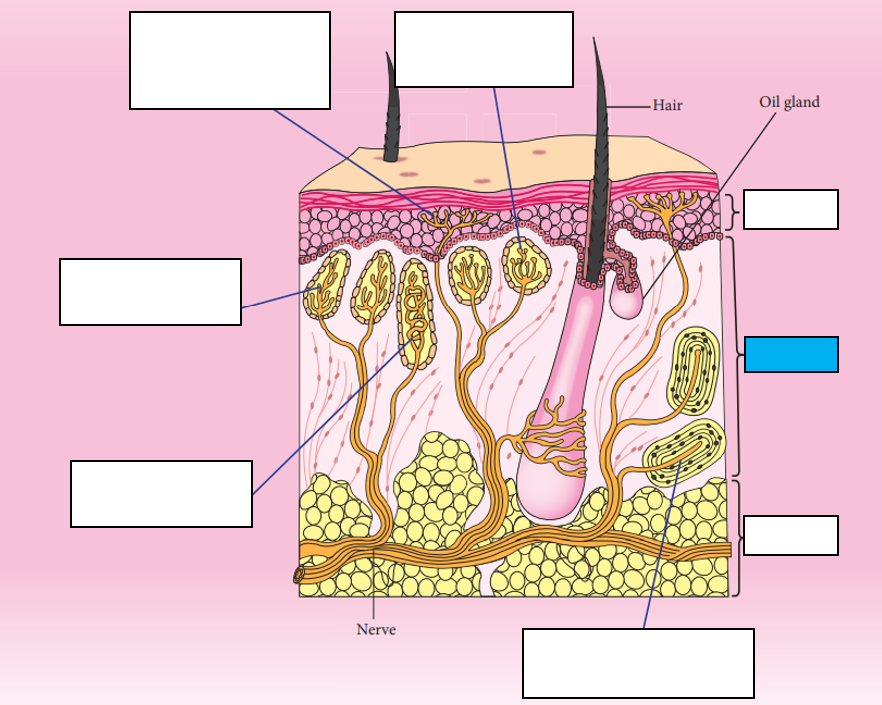
<p><strong>Name </strong>the structure indicated in <span style="color: rgb(0, 147, 255);"><strong>blue</strong></span>.</p>

Name the structure indicated in blue.

Dermis

15
New cards
<p><strong>Name </strong>the structure indicated in <span style="color: rgb(0, 147, 255);"><strong>blue</strong></span>.</p>

Name the structure indicated in blue.

Epidermis

16
New cards

Why do human feel pain easily compared to touch and pressure?

The pain receptor is nearest to the surface of skin.

17
New cards
<p><strong>Name </strong>the structure indicated in <span style="color: rgb(0, 147, 255);"><strong>blue</strong></span>.</p>

Name the structure indicated in blue.

Earlobe

18
New cards

What is the function of the earlobe in the ear?

Collects sound waves and send them into ear canal.

19
New cards
<p><strong>Name </strong>the structure indicated in <span style="color: rgb(0, 147, 255);"><strong>blue</strong></span>.</p>

Name the structure indicated in blue.

Ear canal

20
New cards

What is the function of the ear canal in the ear?

Direct sound waves from earlobe to eardrum.

21
New cards
<p><strong>Name </strong>the structure indicated in <span style="color: rgb(0, 147, 255);"><strong>blue</strong></span>.</p>

Name the structure indicated in blue.

Eardrum

22
New cards
<p><strong>Name </strong>the structure indicated in <span style="color: rgb(0, 147, 255);"><strong>blue</strong></span>.</p>

Name the structure indicated in blue.

Ossicles

23
New cards
<p><strong>Name </strong>the structure indicated in <span style="color: rgb(0, 147, 255);"><strong>blue</strong></span>.</p>

Name the structure indicated in blue.

Oval window

24
New cards
<p><strong>Name </strong>the structure indicated in <span style="color: rgb(0, 147, 255);"><strong>blue</strong></span>.</p>

Name the structure indicated in blue.

Cochlea

25
New cards
<p><strong>Name </strong>the structure indicated in <span style="color: rgb(0, 147, 255);"><strong>blue</strong></span>.</p>

Name the structure indicated in blue.

Auditory nerve

26
New cards
<p><strong>Name </strong>the structure indicated in <span style="color: rgb(0, 147, 255);"><strong>blue</strong></span>.</p>

Name the structure indicated in blue.

Semicircular canal

27
New cards
<p><strong>Name </strong>the structure indicated in <span style="color: rgb(0, 147, 255);"><strong>blue</strong></span>.</p>

Name the structure indicated in blue.

Eustachian tube

28
New cards

What is the function of the eardrum in the ear?

Vibrates when sound wave reaches it, and transfers the vibration to the ossicles.

29
New cards

What is the function of the ossicles in the ear?

Amplify vibrations, and transfers the vibration to the oval window.

30
New cards

What is the function of the oval window in the ear?

Transfers vibrations from ossicles to the cochlea.

31
New cards

What is the function of the cochlea in the ear?

Convert vibrations into nerve impulses. ⚡⚡

32
New cards

What is the function of the auditory nerve in the ear?

Sends nerve impulses from cochlea to the brain.

33
New cards

What is the function of the semicircular canal in the ear?

Help to balance the body.


34
New cards

What is the function of the Eustachian tube in the ear?

Help to balance the air pressure on both sides of the eardrum.

🛫🛫🛫

35
New cards
<p><strong>Name </strong>the structure indicated in <span style="color: red;"><strong>red</strong></span>.</p>

Name the structure indicated in red.

Ciliary muscle

36
New cards
<p><strong>Name </strong>the structure indicated in <span style="color: red;"><strong>red</strong></span>.</p>

Name the structure indicated in red.

Eye lens

37
New cards
<p><strong>Name </strong>the structure indicated in <span style="color: red;"><strong>red</strong></span>.</p>

Name the structure indicated in red.

Sclera

38
New cards
<p><strong>Name </strong>the structure indicated in <span style="color: red;"><strong>red</strong></span>.</p>

Name the structure indicated in red.

Choroid

39
New cards
<p><strong>Name </strong>the structure indicated in <span style="color: red;"><strong>red</strong></span>.</p>

Name the structure indicated in red.

Retina

40
New cards
<p><strong>Name </strong>the structure indicated in <span style="color: red;"><strong>red</strong></span>.</p>

Name the structure indicated in red.

Yellow spot

41
New cards
<p><strong>Name </strong>the structure indicated in <span style="color: red;"><strong>red</strong></span>.</p>

Name the structure indicated in red.

Optic nerves

42
New cards
<p><strong>Name </strong>the structure indicated in <span style="color: red;"><strong>red</strong></span>.</p>

Name the structure indicated in red.

Blind spot

43
New cards
<p><strong>Name </strong>the structure indicated in <span style="color: red;"><strong>red</strong></span>.</p>

Name the structure indicated in red.

Vitreous humour

44
New cards
<p><strong>Name </strong>the structure indicated in <span style="color: red;"><strong>red</strong></span>.</p>

Name the structure indicated in red.

Conjunctiva

45
New cards
<p><strong>Name </strong>the structure indicated in <span style="color: red;"><strong>red</strong></span>.</p>

Name the structure indicated in red.

Aqueous humour
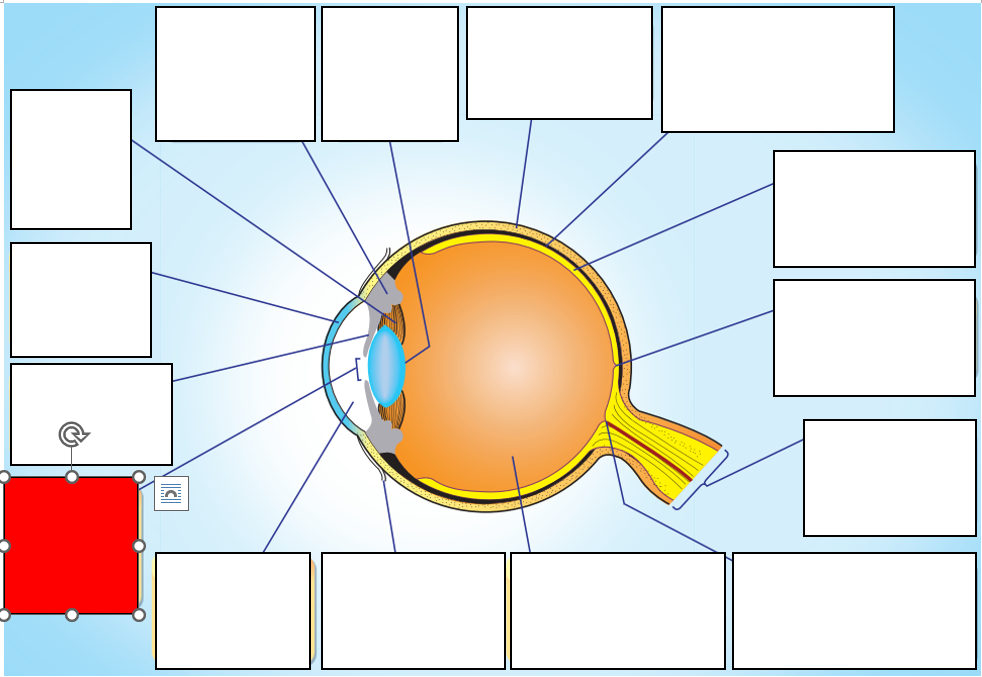
46
New cards
<p><strong>Name </strong>the structure indicated in <span style="color: red;"><strong>red</strong></span>.</p>

Name the structure indicated in red.

Pupil

47
New cards
<p><strong>Name </strong>the structure indicated in <span style="color: red;"><strong>red</strong></span>.</p>

Name the structure indicated in red.

Iris

48
New cards
<p><strong>Name </strong>the structure indicated in <span style="color: red;"><strong>red</strong></span>.</p>

Name the structure indicated in red.

Cornea

49
New cards
<p><strong>Name </strong>the structure indicated in <span style="color: red;"><strong>red</strong></span>.</p>

Name the structure indicated in red.

Suspensory ligament

50
New cards

What is the function of suspensory ligament of the eye?

Holds the eye lens in its position.

51
New cards

What is the function of ciliary muscle of the eye?

Changes the thickness of the eye lens.

52
New cards

What is the function of retina of the eye?

Converts light into nerve impulses. ⚡⚡

53
New cards

What is the function of pupil of the eye?

Controls the amount of light entering into the eye.

54
New cards

What is the function of iris of the eye?

Control the size of the pupil.

55
New cards

What is the function of cornea of the eye?

Focus light onto the retina.

56
New cards

What is the function of aqueous humour of the eye?

Focus light onto the retina.

57
New cards

What is the function of vitreous humour of the eye?

Focus light onto the retina.

58
New cards

What is the function of conjunctiva of the eye?

Protects the sclera.

59
New cards

What is the function of optic nerve of the eye?

Sends nerve impulses from the retina to the brain.

60
New cards

State the 2 types of photoreceptors in the eye.

Rod cell

Cone cell

<p>Rod cell</p><p>Cone cell</p>
61
New cards

Which photoreceptor in the eye can detect colour?

Cone cell


(remember Cone = Colour)

<p>Cone cell</p><p></p><p>(remember <span style="color: rgb(0, 248, 255);"><strong>C</strong></span>one = <span style="color: rgb(0, 217, 255);"><strong>C</strong></span>olour)</p>
62
New cards

Which photoreceptor in the eye can see things even when the light is not strong? (for example, at night)

Rod cell

<p>Rod cell</p>
63
New cards

Describe how our nose detects smell.

  1. Chemicals in the air dissolve in the mucus of our nose.

  2. The chemicals stimulate smell receptors at top of the nose.

  3. The receptor produces impulse.

  4. The impulse is sent to the brain.

  5. The brain interprets the impulse as smell.


<ol><li><p><span style="color: rgb(0, 255, 5);"><strong><u>Chemicals </u></strong></span><span style="color: rgb(0, 255, 5);"><u>in the air</u></span> <span style="color: yellow;"><strong>dissolve </strong></span>in the <span style="color: yellow;"><strong>mucus</strong></span><strong> </strong>of our nose.</p></li><li><p>The chemicals <span style="color: rgb(0, 248, 255);"><strong>stimulate </strong></span><span><strong><u>smell receptors</u></strong><u> at top of the nose</u></span>.</p></li><li><p>The <span style="color: rgb(234, 255, 0);"><strong>receptor produces impulse</strong></span>.</p></li><li><p>The impulse is sent to the <span style="color: rgb(0, 255, 231);"><strong>brain</strong></span>.</p></li><li><p>The brain <span style="color: yellow;"><strong>interprets </strong></span>the impulse as smell.</p></li></ol><p></p>
64
New cards

What are the 5 basic taste that our tongue detects?

Sweet

Sour

Salty

Bitter

Umami

<p>Sweet</p><p>Sour</p><p>Salty</p><p>Bitter</p><p>Umami</p>
65
New cards

Describe how our tongue detect taste.

  1. Chemicals in the food dissolve in the saliva (口水) of our mouth.

  2. The chemicals stimulate taste receptors on the papilla of the tongue.

  3. The receptor produces impulse.

  4. The impulse is sent to the brain.

  5. The brain interprets the impulse as taste.


66
New cards

Describe how our ear detect sound.

  1. Sound reaches the earlobe, ear canal and hits the eardrum.

  2. Eardrum converts sound into vibration.

  3. The vibration stimulate receptors in the cochlea.

  4. The receptor produces impulse.

  5. The impulse is sent to the auditory nerve and to the brain.

  6. The brain interprets the impulse as sound.


67
New cards

Describe how our eye detect light.

  1. Light from an object reaches the retina.

  2. The light stimulate photoreceptors on the retina.

  3. The receptor produces impulse.

  4. The impulse is sent to the optic nerve and to the brain.

  5. The brain interprets the impulse as the object we see.


68
New cards
69
New cards
70
New cards
71
New cards
72
New cards
73
New cards
74
New cards
75
New cards
76
New cards
77
New cards
78
New cards
79
New cards
80
New cards
81
New cards
82
New cards
83
New cards
84
New cards
85
New cards
86
New cards
87
New cards
88
New cards
89
New cards
90
New cards
91
New cards
92
New cards
93
New cards
94
New cards
95
New cards
96
New cards
97
New cards
98
New cards
99
New cards
100
New cards