Cardiac; CAD and ACS
 Call Kai
 Learn
 Practice Test
 Spaced Repetition
 Match
 Flashcards
 Knowt Play
1/40

There's no tags or description
Looks like no tags are added yet.
41 Terms
chronic endothelial injury
1st sequence in plaque buildup
injury to inside of the vessel

fatty streak
2nd sequence in plaque buildup
lipids accumulate and migrate into smooth muscle cells
starts to narrow vessel

fibrous plaque
3rd sequence in plaque buildup
vessel becomes even more narrow & blood flow is reduces
fissures (breaks in vessels) can develop
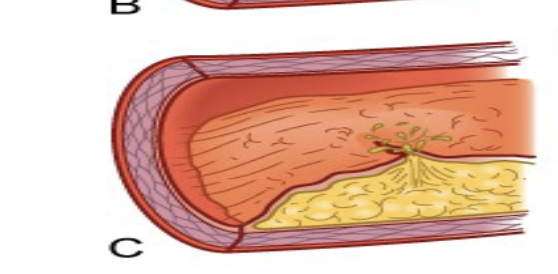
complicated lesion
final stage in plaque buildup
plaque ruptures and blood clot forms as platelets swarm the area
clot can also break off and travel

collateral circulation
arterial anastomoses (connections) the body makes in the coronary circulation
may be more functioning and have less symptoms bc body compensates
may not be adequate enough for rapid onset CAD

what can angina pain be
pressure “elephant on my chest” and increased WOB
squeezing, heavy
choking or suffocated
indigestion/burning - easily brushed off
rarely sharp or stabbing
where can angina pain occur
mid sternum and subternum
shoulders, down the arms
epigastric pain
dental pain in women
intrascapular
stable angina
oxygen demand ?
ischemia is ? pt can take ?
angina occurs when ?
hypoxic within ?
progressive disease
oxygen demand is greater than the supply = myocardial ischemia
reversible ischemia (can take nitro and usually calms down )
angina happens when arteries are blocked 75%
hypoxic within 10 seconds of occlusion
chronic stable angina
is ?
duration
EKG?
control with
Intermittent chest pain that occurs over a long period with the same pattern of onset, duration, and intensity of symptoms
5 to 15 minute duration
EKG may show ST segment depression (doesn't return to isoelectric line) and/or T-wave inversion (goes down instead of up)
Control with nitro and decreased movement

managing angina
first line of med?
what does it do
when to call EMS
how many doses? how much time in between
may also use ?
nitroglycerin - first line (short acting)
dilates blood vessels & increases O2 supply
if no relief in 5 minutes, call EMS
if some relief repeat q5min for max of 3 doses
may also use prohpylactially before physical activity
long acting nitrates
reduces angina incidene
may cause headache and orthostatic hypotension
always assess BP before and after administering
hold if systolic BP is under 90
silent ischemia
associated with?
confirmed by ?
ischemia w/o subjective symptoms
associated w/ diabetic nueropathy
confirmed with ECG changes at yearly physical
prinzmetals (variant ) angina is when ?
common cause ?
s/s ?
occurs at rest from spam of a major coronary artery (cocaine common cause)
can occur w/ or w/o CAD
not precipitated by increased O2 demand
chest pain with marked transient ST segment elevation (comes and goes)

what are the first organs affected by CAD
signs ?
labs ?
kidneys, decreased blood flow = renal failure
decreased UO
increased BUN and creatine
what is ordered for someone coming in with angina
baseline vitals and assessment first
start IV
12 lead ECG
possible CXR
cardiac labs (troponin and CKMB)
ECHO - looks at ejection fraction and valve function
calcium-score screening heart scan - not emergent, looks at calcium deposits
cardiac catheterization
what is troponin
how long does troponin stay high
cardiac enzyme that is released in blood when the heart is damaged
rises in first 1-3 hours after
stays high in first 1-2 weeks
other meds for angina
beat blockers
calcium channel blocker s
aspirin
lipid lowering drugs
statins - inhibit cholesterol synthesis, decrease LDL, increase HDL
- monitor for liver damage and myopathy (check liver enzymes and muscle function )
Zetia - decrease absorption of dietary and biliary cholesterol
acute coronary syndrome
is ?
occurs when?
women ?
how do we dx
3 categories
any condition caused by a sudden, reduced blood flow to the heart muscle
occurs at rest
symptoms may be atypical in women
must do ECG to determine what kind it is:
unstable angina
Non-ST elevation MI - partial blockage
ST elevation MI - full blockage , emergency!

how do we treat STEMI vs Non STEMI
STEMI - immediately goes to Cath lab
Non-stemi - treat according to symptoms , give O2 if less than 92%, if symptoms are severe then go to Cath lab
clinical manifestations of MI
initially raised HR and BP, then BP drops in response to drop in CO
crackles
JVD
abnormal heart sounds - S3 or S4, or new murmur
GI symptoms
low grade temp
cardiac angiography
dx test used to visualize blood flow in the heart
same nursing implications at Cardiac catheterization
post catheter care
what are we checking how often ?
force?
bed? position?
V/s , and check distal pulses q15 min for first hour
check insertion site for bleeding or hematoma formation
force fluids PO or IV to clear out contrast dye
bed rest and supine, keep extremity straight for 2-6 hrs, after 2-6hrs
after 2-6 hrs HOB above 30 degrees
if percutaneous seals used can be out of bed earlier (2 hours)
why are the initial interventions for someone coming in with ACS
12 lead ECG within first 10 min
get IV access
semi fowlers
MONA (morphine, oxygen if less than 92%, nitro, aspirin)
what can be placed in the Cath lab
if chest pain worsens
percutaneous coronary intervention (stent)
ballon angioplasty- inflates and opnes stent
if chest pain worsens, it may mean the stent failed and vessel becomes reoocluded

what dysrhythmias can occur post ACS?
most common is afib - quivering atria
watch for V-tach and V- fib , life threatening, call code !
treat with antidysrythmIc meds

what can be done for unstable angina and NSTEMI
aspirin, heparin, glycoprotein inhibitors
coronary angiography with PCI (stent) once stable
tx for STEMI
what procedure ? in what time frame ?
meds ?
last resort ?
emergent PCI
goal - within 90 minutes of admission
ballon angioplasty
anticoagulants to decrease chance of clot formation (stent increases chance of clot forming bc its a foreign object)
last resort CABG
thrombolytic therapy
only done for ? if what is not available
how does it work
may cause ?
route
time frame
C/I
monitor for ?
done for certain STEMI patients only if PCI not available
meds that stop infarction process by dissolving the thrombus
may cause significant bleeding issues
given IV
done within the first hour of admission
C/I - GI ulcer , causes GI bleeding
monitor for bleeding, check Iv site, and filet
what happens to the myocardium after a MI
ventricular remodling
muscle hypertrophy and the chambers become smaller in attempt to compensate for dead muscle
what other meds are given for ACS
beta blockers
ACE inhibitors
statins
stole softeners to avoid straining - bearing down may cause rupture of stent or incision
complications after MI
heart failure from damage to muscle
ECHO needs after MI to asses EF and valve function
also asses kidney function, those are affected by HF first
cariogenic shock - heart not pumping and not perfusing body
acute pericarditis - edema in pericardial space from damage
when would someone need a Coronary Artery Bypass Graft
presence of left main coronary artery disease
three vessel disease (all main 3 coronary arteries are blocked )
PCI won’t work b lesions are too long or difficult to access
failed PCI with ongoing chest pain
diabetes
when long term benefits of CABG are better than a PCI
Coronary Artery Bypass Graft
what is it ?
requires ?
other option ?
complication ?
veins and arteries are used as grafts to creates new vessels in the heart for blood flow
requires sternotomy (cuts sternum) and cardiopulmonary bypass (pumps and oxygenates blood during surgery)
also a minimally invasive option
high BP can rupture sutures after surgery

post CABG
where is the patient
hemodynamic monitoring ?
cardiac monitoring ?
respiratory?
urinary ?
GI?
ICU for first 24-36 hour because ….
A-line - checks Bp every minute
chest tubes monitored hourly for drainage
pulmonary artery catheter
continuous ECG
ET tube with mechanical vent
epicardial pacing wires
foley
NG tube - surgery causes Gi slowing , tube relives pressure and can also start enteral feeding if needed
epicardial pacing wires
wires placed in the heart that come out thru the chest wall and are isolated by gauze
monitors dysrryhthmias and can be hooked up to a pacing machine to manually pace heart
complications from cardiopulmonary bypass
bleeding / anemia from damage to RBCs and platelets
fluid and electrolyte imbalances , especially K+
hypothermia bc blood is cooled as it passes through bypass machine - pt should be warmed
infection
post op CABG nursing care
monitor for dysrhythmias - fib common
asses for any bleeding, fluid & electrolyte status, temp
monitor surgical site for any edema
monitor donor site
pain management, DVT prevention, CDB/ spirometer , same for any surgery
try to reorient if confused, use mittens to avoid pt ripping out any lines
Physical activity post CABG
METs or Borg scale to asses ability to do ADLs
monitor HR
low level stress test before d/c
isometric vs isotonic (taught by pt)
resumption of sexual activity
include when teaching about physical activity
can resume in 7-10 days post MI or when pt can climb 2 flights of stairs
nitrates can be taken before prophylactically
ED drugs contraindicated with nitrates - both drop BP drastically
Sudden Cardiac Death is ?
loss of?
causes?
what test
unexpected death from cardiac causes (and brought back)
abrupt disruption in cardiac function → loss of CO and cerebral blood flow
most commonly caused by dysrhythmias
can also be caused by structural heart disease and conduction disturbances (pacemaker)
no signs or symptoms if not occurring with MI
Electrophysiologic study done - cardiac catheterization that tests the heart electrical signals