HOA Test 2
 Call Kai
 Learn
 Practice Test
 Spaced Repetition
 Match
 Flashcards
 Knowt Play
1/86

There's no tags or description
Looks like no tags are added yet.
87 Terms
Sanctuary
Space for the worship of deities; includes altars, temples, and other structures and monuments
Peristyle
Series of columns surrounding an enclosed space
Cella
Inner chamber of a temple, usually houses a statue of a deity
Kore
Freestanding Archaic Greek Statue of a clothed young woman
Kouros
Freestanding Archaic Greek statue of a naked young man
Contapposto
Posture of the human body that shifts most weight suggesting east and potential movement
Black-Figure
Style of pottery with black decoration on a lighter ground
600-480 BCE
Archaic period in Greece, stone temples and monumental sculpture develop
499-479 BCE
Greco-Persian wars
480 BCE
Early Classical Period begins

Entablature
Cornice, Frieze, Architrave, Metope
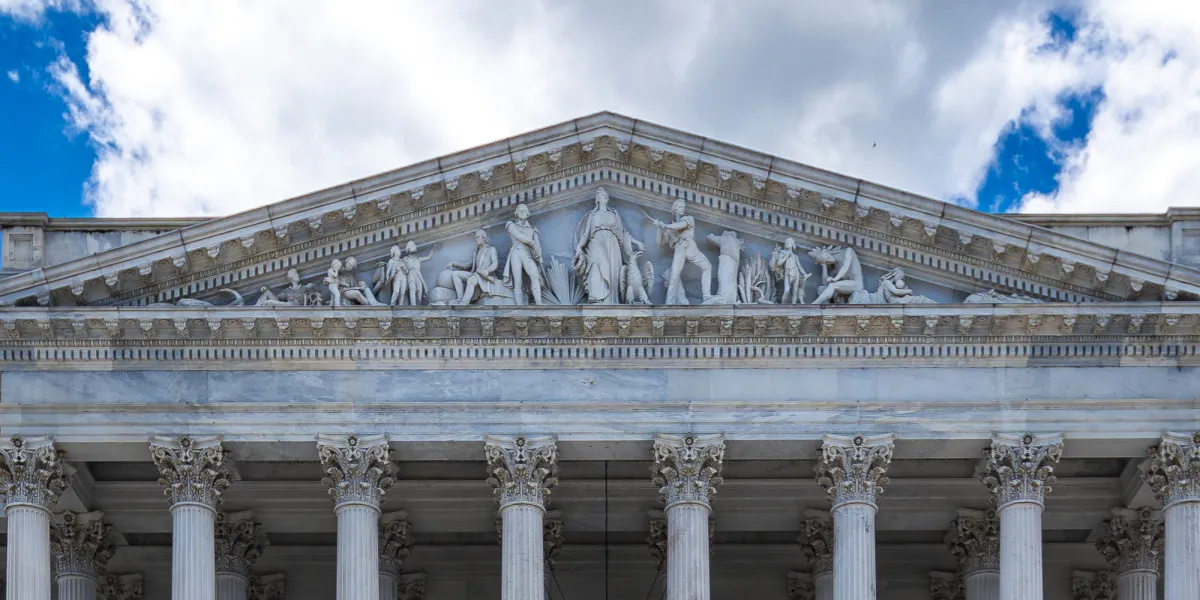
Pediment
triangular roof with sculpture inside the triangle that shows a single story

Frieze
Continuous narrative on the inside of the temple behind the metope and cornice

Metope
Each has its own contained story, inbetween cornice
Cornice
Layer between metope and pediment
Architrave
Support layer between columns and entablature
Ranking Cornice
Roof on top of the pediment

Capital
Top of the column, sometimes has decoration and is wider than shaft

Shaft
Main body of column, ridges are called fluting

Base
Ionic and Corinthian, sometimes has decoration

Doric Style
Oldest column style, plain with a slight taper upwards, no base, flat topped capitals
Ionic Style
Second oldest style, scroll motif on the capital, slimmer and taller than doric, has a base
Corinthian Style
Youngest style, taller and slimmer than ionic, capital looks like flowers, has a base
Anatomy of a temple from top to bottom
Pediment, entablature, column, and base
Greek Orders
Doric from mainland Greece, Ionic from Ionia, Corinthian from Corinth
Kouros from Attica
Archaic Style, Greece, Marble
Rigid Egyptian pose, block-like
idealized style, large head and eyes, no beard showing youth
little negative space, but foot moving forward shows evolution of style

Peplos Kore
Akropolis, Athens, Archaic Greek, marble with trace paint
heavy garment obscures her figure because women were not supposed to be nude
fabric can also be seen as showing how women’s value was textile making
holes in head were for metal elements, could imply the statue was actually Artemis

Korous from Anavysos
Attica, Archaic Greek, marble
more muscular, softer features, archaic smile
idealized and inaccurate anatomy, short torso
naturalistic hair, follows curve of shoulders
Archaic Smile
Small smile used to show controlled emotion (virtue) in sculpture, seen as creepy now
Ajax and Achilles playing a Board Game
Made my Exekias, Athens, Archaic Greek, black fig ceramic
first piece with an artist (“Exekias made me“)
Black fig was very time consuming and difficult, later switched with red fig
Highlights the lulls during wartime
foreshadows Ajax losing his mind at the end of the story when he loses to Achiles, shows public knowledge of mythology and does not need to explain itself
Kritios Boy
Akropolis, Athens, Early Classical, marble
naturalistic pose, step forward and resting on back leg
Naturalistic proportions, sad face, soft body yet also muscular
Zeus in Warrior Pose
Found off Cape Artemision, Early Classical, Bronse
Bronze is a lighter material and allows for more negative space
naturalistic pose with weight on ball and outside of feet
stylized face with stoic expression and hair
Chryselephantine
Figure made of gold and ivory
Karyatid
Stone statue of a young woman used like a column to support the entablature of a Greek/Greek-style building
Red Figure
Style of pottery from Athens, red decoration with a black background
Naturalism
Mode of representation that mimics perceptual experience
452
Delian League (league of city states) moves from Delos to Athens, makes Athens wealthy
323-31
Hellenistic period, generals splits Alexander’s empire (Anatolia, Egypt, West Asia, Bactria, NW India)
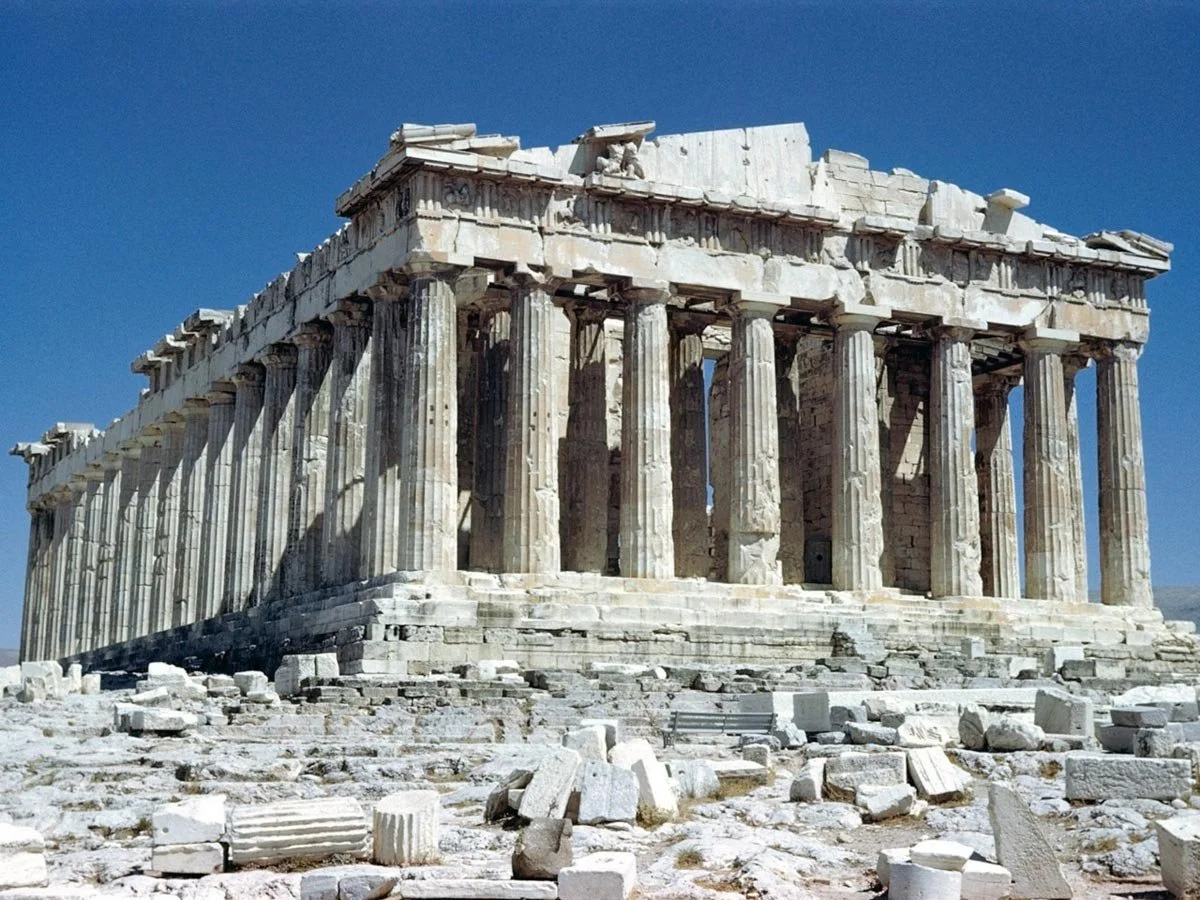
Iktinoss and Kallikrates, Parthenon
Temple of Athena, Parthenos Greece, High Classical, marble
step elevation, doric columns
pediment (new destroyed) shows birth of Athena

Central Scene Frieze from Parthenon, East end
Peplos Scene, Akropolis Athens, High Classical, marble
4 large figures, probably gods, surrounded by humans
Interpreted as women dressing statue of Athena as yearly ritual
Alt interpenetration is Erectus being given the burial shroud for this daughter after he sacrificed her to save Athens

Polykleitos of Argos, Spear Bearer
Roman marble (copy of Greek Bronze), High Classical
Example of contrapasto and naturalism
Bars between limbs is a work around to have more negative space while supporting heavy marble

Dying Gaul
Roman copy of bronze, Hellenistic Greek, marble
identified as Gaul by mustache, necklace, and hair
very emotional and expressive → requires viewer to walk around the work to understand it fully
brings into question who is the victim and victor in this story (Gauls were enemies)
Gigantomachy, Athena Battling Alkyoneos
Great Altar of Zeus in Pergamon (Turkey), Marble, Hellenistic Greek
Athena pulling giant from Gaia and Nike corwning her to show victory
References the real victory of Greeks over Gauls
Diagonal lines used to show action, very emotional
Buddha/ The Buddha
The Buddha is the one who achieved enlightenment, was Siddhartha Gautama or Shakyamuni. Anyone can reach Buddhahood through enlightenment.

Stupa
Mound/hemisphere structure containing Buddhist relics

Torana
Gateway making the entrance to a Buddhist, Hindi, or Jain shrine
Pradakshina
Hindu, Buddhist, and Jain practice of walking around a sacred place/structure (circumbulating)
Bohisattva
Early Buddhism and Theravada Buddhism, a being with potential to become the Buddha. In Mahayana Buddhism, an enlightened being who vows to remain in this world in order to aid all sentient beings towards enlightenment
Aniconic
The indirect visual representation of a divine being through symbols or abstract images
Linga
An abstract representation of the Hindu god Shiva that denotes divine generative energy

Mudra
Symbolic gesture in Hinduism and Buddhism usually involving the hand and fingers
Four Noble Truths
1) Life is Suffering
2) Suffering is caused my desire
3) To stop suffering you must extinguish desire and liberate yourself from attachment
4) To achieve liberation you must follow the eight-fold path of right views, right intention, right speech, right action, right livelihood, right effort, mindfulness, and concentration

Lion Capital from Ashokan Pillar
Sarnath, India, Mauryan period, sandstone
4 lions pointing in cardinal directions to show the spread of Buddhism
Wheel iconography reps time and the cycle of life
base is an inverted lotus flower which grows in a marsh, showing anyone can rise to become a Buddha

The Great Departure
Architrave of eastern torana, Great Stupa; Sanchi, India; Shuga period; relief carving
Buddha represented by umbrella, leaving the palace on his horse and dismounting horse
reps Buddha multiple times to show movement through relief

The Buddha
Mathura, India; Kushan period; red sandstone
yogic pose showing divinity
long ear lobes and full figure references noble background
hand up → “fear not“ pose

Jain Tirthankara Parshvanatha
India, Gupta period, sandstone
detachment represented through nudity
Jainism is about line of enlightened ones and Jain is the most recent

Eternal Shiva (three faced linga)
Flanked by guardian figures, Shiva Cave temple,; Elephanta, India; Kalachuri kingdom
Different faces represent different genders (anger = male, calm = female)
long ear lobes, headdress, downward gaze signals divinity
Barrel Vault
Aka tunnel vault, a semi-cylindrical ceiling that consists of a single curve
Lost-wax casting
A method of creating metal sculpture in which a clay mold surrounds a wax model and it is then fired, the wax melts away, molten metal is poured in to fill the space
Verism
Preferring realism especially in portraiture, to the heroic or ideal, comes from Latin virus meaning “true“
Mosaic
A picture or pattern made from the arrangement of small colored pieces of hard material, such as stone, tile, or glass
Illusionism
Making objects and space in tow dimensions appear real, achieved through using foreshortening, shading, and linear perspective

Chimera of Arezzo
Etruscan, Classical, Bronze, 51 in
Lost wax casting, shown through thin and intricate details
Chimera is from Greek myths → Romans adopt Greek culture
Writing on the statue shows it is for Etruscan god
The animal being injured makes the viewer appear to be the hero/ question their morals

L’Arringatore (The Orator)
Recovered from Lake Trasimeno, Italy, Etruscan, Roman Period, bronze
“Orator pose“, shows Roman value of being well spoken
Roman iconography merges with Etruscan writing on hem → merging of cultures

Tomb of Rabirii
Via Appia, Republican, Rome, marble, 6’8”
Tomb of freed slaves shown through names
heavy drape shows modesty and female work, ring show marriage
Daughter is a devotee of Isis, shows family rising from enslavement

Augustuss as Imperator
Villa of Livia, Prima Porta, Italy; Roman, 1 century CE, marble, originally painted
many portraits of him made for all over the empire to unite empire
orator pose
Cupid figure shows relation to Venus → her support of him
Armor = powerful military

Gardenscape, Second Style wall painting from Villa of Livia
Prima Porta, Rome, first century BCE
idealistic → variety of plants in bloom and animals that would not be at the same time
foreshortening through arch forms and atmospheric perspective in mountains

Ara Pacis Augustae (Altar of Augustan Peace)
Rome, 2-1 century BCE, Carrara marble
Shows prosperity of the empire

Relief of Tellus or Pax
Ara Pacis Augustae, Rome, 1-2 century BCE, marble, relief
Could be a story about creation or peace
Wind, Earth, Sea → sources of power

Alexander Mosaic
House of the Faun, Pompeii, 2-1 century BCE; copy painting by Philoxenos of Eretria 4th century BCE
Battle of Issus by Philoxenos → retelling of how Alexander defeated the Persians
arcade
cvered walkway made of a series of arches supported by piers
forum
an open area at the center of a Roman town where people shopped, worshiped, and participated in political or judicial activities
basilica
a longitudinal building with multiple aisles and an apse, typically located at the east end → coopted by christian architecture later
oculus
a round, eye-like opening in a ceiling or roof
iconoclasm
the intentional destruction or rejection of images on religious or political grounds
triumph arch
a freestanding archways that often spans a road or marks an entrance, decorated with relief carvings alluding to a historical, often military victory

Exterior of the Colosseum (Flavian Amphitheater)
Flavian, Rome, Flavian Dynasty, Tufa and concrete faced with travertine
entertainment, execution, and political space → if people are entertained they are controllable
very large with large entrances/exits → less likely to burn down
center used to hold stage, now we can see stalls where animals would be held
seating level = social status

Arch of Titus
Rome, Flavian Dynasty, marble
makes the parade after a victory permanent by marking area where people would walk + records history of victory

Spoils of Jerusalem
Arch of Titus, Early Empire, Rome, marble
Titus enters the Jewish wars and sacks the Temple of Jerusalem
Detail shows him bringing back menorah and ritual table

Column of Trajan
Rome, dedicated 110 CE/ Nerva-Antonine Dynasty,
relief of the campaign against the Dajans from modern day Romania
doors at the bottom hold Trajan’s ashes
Statue at the top was Trajan, now St Peter
Dajans have pants and beards, disorganized; Romans are clean shaven and uniform

Pantheon
Rome, Italy, Nerva-Antoine Dynasty, commissioned by Hadrian
temple to all Roman gods + imperial lineage
Columns shipped from Egypt → shows extent of empire
Partial Porch makes it a frontal building, controls how it is viewed
dome behind was the largest at the time, made with concrete, had oculus
Lower levels covered in marble
Roman concrete has material that heals its own cracks when exposed to rain

Septimius Severus, Julia Domna, Caracalla, Geta intentionally erased
Roman, Severan, Egypt, Tempera on wood, 14 in
Septimius has a “philosopher’s beard“ shows he is smart and militaristic
2 sons, 1 erased → could be Geta who was killed by Caracalla, or Caracalla after he was disgraced
Damnation Memoria, destruction of an image of someone who is disgraced
Portraits of the Tetrarchs