Public Health 162A Midterm 2
 Call Kai
 Learn
Learn Practice Test
 Spaced Repetition
 Match
Match Flashcards
 Knowt Play
1/135

There's no tags or description
Looks like no tags are added yet.
Name | Mastery | Learn | Test | Matching | Spaced | Call with Kai | Chat |
|---|
No analytics yet
Send a link to your students to track their progress
136 Terms
Immunity
ability of an individual during a lifetime to make proteins that target a pathogen
there's Adaptive and innate immunity
Synonyms: resistance, defense, protection, etc
living organisms and immune systems
all living organisms have an immune system
pathogens and nonpathogens can be similar with slight differences
sterile
things that are free of living germs and microorganisms
ex: blood, organs
nonsterile
things that have living germs and microorganisms
facing outside environment
ex: digestive system
microbes compete with pathogens for space inside the body, more nonharmful microbes --> higher dose of pathogen needed to get an infection since they compete for resources within the body to establish a niche
challenges facing the immune system
microbes replicate and evolve quickly
immune system has to react to virtually any pathogen but not react to itself
immune responses have to clear infected tissues without causing to the host
innate immunity general features
recognizes infection, alerts rest of the immune system, holds infections in check
timing: rapid (minutes- hours)
specificity: germline encoded
cell involved: most if not all cells
functions: hold pathogens in check, stimulate adaptive immune responses
adaptive immunity general features
more powerful and tailored response that eliminates infection
timing: slower (days)
specificity: somatically generated, highly specific
cells involved: primarily B and T cells (selectively absent in SCID)
functions: b cells make antibodies, cytotoxic t cells kill infected cells, helper t cells make cytokines, memory
allows vertebrates to counter newly evolving pathogens
hematopoietic stem cell
located in bone marrow
becomes either common myeloid progenitor or common lymphoid progenitor
common myloid progenitor becomes...
red blood cell, platelets, masts, neutrophils, monocytes
common lymphoid progenitor becomes...
natural killer (NK) cells (innate cells), t cells and b cells (adaptive immunity cells)
bone marrow and immunity
stire of hematopoiesis and b cell development
thymus
site of T cell development
spleen
where T cells and B cells are activated when infection is in the blood, filters blood and removes damaged RBCs
lymph nodes
sites where B and T cells are activated when infection occurs in tissues
mechanical barriers to infection
mucus, tight junctions, skin, flow of fluid
mucus
hard for bacteria to push through and get through thick polysaccharides
lysosimes in tears
breaks down peptidoglycans
chemical
acitidy, eznymes, lysosimes
microbiological
normal biological flora
response from bacterial pathogen entering through a cut in the skin
redness, swelling, pain, heat, inflammation (innate immune system)
influenza virus enters through respiratory tract
fever, muscle aches, cytokines/ prostaglandins (innate immune system)
intestinal parasite enters through the mouth and takes up residence in gut mucosa
abdominal cramping, smooth muscle contractions for parasite expulsion (innate immune system)
phagocytes
Initiate inflammatory response
Initiate and influence adaptive immune response
kill pathogens
3 types: dendritic cells, macrophages, neutrophils
macrophage
phagocytosis and killing of microorganisms, activation of T cells and initiation of immune responses
neutrophil
phagocytosis and killing of microorganisms
lyososome
protective mechhanism
protons acidify the environment and activate hydrolases
antimicrobial peptides are found in the lysosome and are active at acid pH
metabolite transporter pump essential metals and other nutrients out of the lysosome

proteases in lyososome
digest cell wall proteins
glycosidases in lysosome
cleave cell wall sugars
lipases in lysosome
cleave cell wall lipids
antimicrobial peptides
make holes in pathogen membranes
electrostatic attraction and transmembrane electric field bring the defensin into the lipid bilayer
defensin peptides form a pore

oxidative burst of macrophages and neutrophils
neutrophils kill microbes by producing reactive oxygen species

neutrophils
kill pathogens with extruded nets composed of DNA and protein
Differentiated cells that can decondense part of the DNA, extrude it and pump it out of the cells and make a net
And can catch DNA
Good at concentrating antibacterial enzymes, more likely to kill bacteria to prevent them from hurting human cells
complement
set of protein made by hepatocytes in the liver and pumped into the blood that combats pathogens
chemotaxis: Get activated and deposited on membrane
Membrane attack complex which pokes holes
Signal for phagocytes and immune cells to arrive
Activated a little all the time to protect ourselves

regulation
prevents host cells from activating complement system

transformation
bacteria capsule (thick layer of polysaccharide, we have mucus they have a capsule) where its slippery hard to bind sugars to protect the bacteria
slipper capsule of S. pneumoniae helps these bacteria avoid being eaten by neutrophils
if you can't grab bacteria you can't engulf it
inflammation
promotes entry of immune cells into infected tissues
increase blood flow: redness, heat
increased vascular permeability: swelling
easier for plasma proteins and cells to pass out of the blood and into site of the infection

damage model sensing pathogens
sense damage or alterations to host physiology induced by pathogens
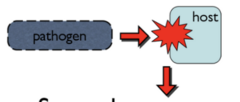
self-nonself discrimination
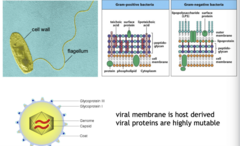
sense specific features found on pathogen that are not present on normal self
receptors to these things to notice the bacteria
Flagellum receptors
Viral detection can be done by finding nucleic acids or double stranded RNA in the cytosol
Don't really detect viral membranes because the virus is in the host
Surface proteins are hard to catch on to
pathogen associated molecular patterns (PAMPs)
invariant components of pathogens recognized by the innate immune system
conserved among many pathogens
not found on human cells
difficult for pathogen to alter
alert the immune system that a microbe is present
toll like receptors (TLRs)
survey extracellular space and endosomes/ lysosomes
sense PAMPs

cytokines
soluble proteins that diffuse through blood and activate other cells
can be produced after sensing PAMPs
canonical inflammatory cytokine: tumor necrosis factor alpha (TNF-alpha)

inflammatory cytokines and immune response
proteins (chemokines) are produced that attract immune cells: macrophages, neutrophils
blood vessels become sticky for specific immune cells
vasodialation increases blood flow to the inflamed site (heat, redness)
blood vessels become leaky and plasma enters tissues (swelling)

recognition of viral PAMPs activate the Type I Interferon
virus infected cell --> activate IFN alpha and beta --> interferon response
3 outcomes: induce resistance to viral replication in all cells, increase expression of ligands for receptors on NK cells, activate NK cells to kill virus infected cells
Type I Interferon
group of signaling proteins (cytokines) that your body makes to fight viruses and control the immune system
transcriptional targets of type I IFN
include intrinsic antiviral factors

worm recognition
recognition of worm components (ex: chitin) that initiate effector functions that act to kill and expel worms
weep and sweep: increased mucus production, smooth muscle contraction
macorphages secrete chitinases and proteases
esoinophils degranulate toxic granules onto surface of the worm
make environment less hospitable
2 main branches of adaptive immunity
humoral and cellular
many pathogens require both arms for elimination
humoral immunity
where B cells produce antibodies to target and neutralize extracellular pathogens like bacteria and toxins in body fluids
Pathogen Target: Extracellular pathogens (like free-floating bacteria or parasites) and extracellular toxins floating in body fluids.
Responding Lymphocyte: B cells (B lymphocytes).
Effector Mechanism: Activated B cells differentiate into plasma cells that secrete antibodies. These antibodies bind to the pathogens or toxins, neutralizing them and marking them for destruction/elimination
cellular immunity (microbes in macrophages)
targets pathogens inside host cells and is split into two primary mechanisms mediated by T cells (T lymphocytes)
Pathogen Target: Microbes that have been engulfed (phagocytosed) by macrophages but survive inside the cell's vesicles.
Responding Lymphocyte: Helper T cells (CD4+ T cells).
Effector Mechanism: The T cell activates the macrophage (via cytokines like IFN-γ), inducing the macrophage to destroy the ingested microbes.
cellular immunity (virus infected cell)
Pathogen Target: Intracellular pathogens replicating inside host cells (such as viruses).
Responding Lymphocyte: Cytotoxic T lymphocytes (CTLs / CD8+ T cells).
Effector Mechanism: The T cell directly induces lysis (destruction) of the infected host cell, destroying the viral reservoir and stopping viral replication.
active immunity
a type of immune protection that occurs when your own immune system produces antibodies and memory cells in response to direct contact with a disease-causing pathogen or antigen
naive t and b cells require a series of signals to become active
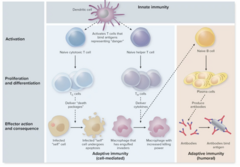
adaptive immunity steps
activation: dendritic cell captures pathogens and presents foreign antigen, activates naive cytotoxic T cell who has a receptor that binds to the antigen signaling danger
proliferation and differentiation: naive t cell proliferates and matures into functional effector cytotoxic T cells (Tc cells)
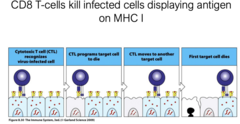
effector action and consequence: Tc cells recognize infected cells that display the foreign antigen and then delivers death packages into the infected cell and apoptosis ensues
what's inside death packages?
cytotixc molecules like perforin and granzymes
dendritic cells
pick up microbes/ pathogen fragments at site of infection and carry them to lymph nodes
bring it to the circulating b and t cells that meet antigen presenting cells
activation of t cells during immune response
activate naive T cells
some activated T cells help B cells become activated
activated T cells leave lypmph node and travel to the site of infection
activation of b cells during immune response
b cells receive signal from antigen via antigen receptors
b cells process antigen and present it on MHC-II molecules
activated T helper cells help B cells activate
activated B cells produce antibody at the lymph nodes and at the site of infection
lymphocytes
constantly recirculate in blood and lymphatic system
enter tissues and lymph

plasma cells
differentiation of B cells that secrete large quantities of antibodies
lymph exchange in capillaries
blood travels from the heart through arteries to systemic and pulmonary blood capillaries
plasma leaves capillaries into tissues as interstitial fluid
lymph drainage
excess interstitial fluid with antigen-presenting cells and extracellular antigens enter lymphatic capillaries to become lymph
lymph node transit
lymph flows through one way lymphatic vessels (valves) into lymmph nodes
lymph to blood
cleaned lymph exits through the lymphatic duct and drains into the subclavian vein returning fluid and lymphocytes back into bloodstream
effect of toll like receptor (TLR) on dendritic cells
increased presentation of antigen on cell surface: peptides complexed with MHC molecules
expression and secretion of cytokines that influence the differentiation and activation of T cells
migration from tissues to draining lymph nodes through a lymphatic vessel
antibody structure
shaped like a Y
top part has specificity for antigens and antigen binding sites
bottom part (heavy chains) interact with diseases
top binds bottom tells other cells they have the target

how is diversity generated to account for all antigens?
theres a lot of specificity in b cell receptors
in normal DNA the gene that codes for the one light chain and one heavy chain of the antibody contains multiple redundant parts
VDJC are spliced together in B and T cells randomly to produce a unique sequence characteristic of that cell
key innovation in adaptive immunity
generate diversity through randomly splicing DNA in B and T cells

antigen
any molecule that specifically binds either a B cell receptor or T cell receptor leading to activation of the cell
T cell antigens are peptides
T cell receptor (TCR) diversity
allows for recognition of virtually any pathogen
diversity is generated at the antigen binding site by genetic recombination events targeted to the TCR gene
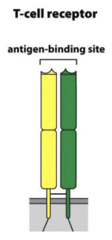
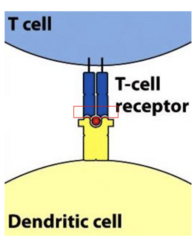
T cells recognize protein antigens presented by MHC (HLA) molecules
each t cell has a unique receptor with specificity for a particular antigen presented by MHC
T cells specific for an antigen find dendritic cells presenting that antigen
more than 1bil T cells
MHC I
expressed in almost every cell type in the body
binds and presents antigens derived from the cytosol

MHC II
expression of MHC II is restricted to immune cells: macrophages, dendritic cells, B cells
MHC II binds and presents antigens derived from the endosomal/ lysosomal network

t cell function
makes contact with other cells and induces change

CD8 (kiler) T cell
specific additional molecules on it
CD8 is a protein on killer cells
important because kills infected cells displaying antigens on MHC I
viruses replicate in cytosol and MHC I pressents antigens from cytosol
CD4 (helper) T cells
CD4 t cells once activated if they recognize an B cell with their matching antigen is if the antibody is specific for the antigen
master regulators of immune response
once activated secretes cytokines
important for activating B cells and macrophages (extracellular pathogens)
MHC II presents antigens from endocytosis and only presents on Dendritic cells, B cells, and macrophages
CD4 Helper T cell cytokine function
required for B cell production of antibodies
aid in activation of immune effector cells
help activate CD8 T cells

MHC activation of specific T cell subsets
CD8 cells --> MHC I
CD4 cell --> MHC II

B cell receptor (BCR)
membrane bound antibody molecule
diversity generated at the antigen binding site by genetic recombination events targeted to the BCR
antibodies are released upon B cell activation as extracellular molecules

dendritic cells
specialized immune cells that act as the crucial bridge between the innate immune system and the adaptive immune system
antigens and B cell receptors directly bind antigen
b cells can recognize virtually any type of antigen (protein, nucleic acid, carbohydrates) on the surface of a pathogen or soluble antigens such as protein toxin
lock and key
way of binding of antibody to antigenic epitopes
b cell receptor/ antibody recognizes only one antigen
unique shape that goes into other shape that matches it

B cell activatoin
activated when binding to antigen to receptor but requires CD4 T cell to help
requires 2 signals
signal 1: b cell binds a specific antigen using its b cell receptor
signal 2: t cell recognizes antigen presented by the b cell and sends a signal
purpose of a b cell
make an antibody
upon activation B cells differntiate into plasma cells or memory cells
plasma cells secrete large amounts of antibody
memory cells are long lived and respond if the infection is encountered again
antibody neutralization
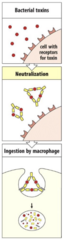
antibodies bind directly to the toxin which block them from interacting with host receptors
neutralized toxin-antibody complex is recognized and ingested by a macrophage for degradation via phagocytosis
antibody opsonization
antibodies coat surface of the bacterial cell, stem regions project outward where they're easily recognized by Fc receptors on phagocytes like macrophages
binding to Fc receptors triggers phagocytosis, leading to internal degradation of the bacterium by the macrophage

antibody complement activation
antibodies coat the surface of a bacterium in plasma and recruit complement proteins
triggers 2 mechanisms: forms membrane attack complex, deomposition of complement fragments onto the bacterium enhancing ingestion and digestion by macrophages

membrane attack complex
creates pores in bacteria cell membrane and induses lysis
types of B cell antibody
IgM,IgG, IgD, IgA, IgE
makes IgM first
isotype switching occurs later and changes the isotype
class switching pathway A
changes isotype of antibody produced by a B cell without altering its specificity
steps:
naive b cell programmed to express IgM and IgD on its surface, rearrange heavy-chain gene loci in its DNA
if no class switching signals occur, the B cell DNA remains intact b cell continues to produce IgM antibodies using the intact gene sequence

class switching pathway B
activated helper T cells and cytokines instruct the B cell to switch to a different isotype IgG
enzyme activation induced cytodiine deaminase (AID) introduced double-stranded breaks at specific conserved DNA called Switch (S) regions located upstream of the constant gene segments
the intervening DNA segment containing the unwanted constant regions is looped out, excised, and permanently deleted from the B cell's genome
outcome: the B cell now expresses and excretes IgG, variable region DNA remains unaltered

distribution of Ig in adult tissue
IgG and IgA: in the vascular system and fluid compartments of body tissues
IgM: localized in bloodstream/ heart and major vessels
Dimeric IgA: concentrated at mucosal surfaces (GI tract, respiratory tract, urogenital lining)
IgE: found primarily beneath epithelial surfaces associated with mast cells in skin, gut, and respiratory linings (orange)

transfer of antibodies from mother to child
maternal IgG is transported across placenta via neonatal Fc receptors into fetus
gives passive immunity to developing fetus
mothers milk delivers dimeric IgA to infants gastointestinal tract

adult serum immunoglobulins
as you grow the amount of antibodies increase

neutralizing IgA
prevents infection of mucosal surfaces in the pharynx by preventing bacteria from adhering

lymphoid tissue
germinal centers form within lymphoid tissue in lymph node
lymph nodes are like a meeting place for antigen presenting cells, dendritic cells, circulating B and T cells

marbug 2024 virus outbreak rwanda
filovirus, negative strand RNA virus
primary reservoir is fruit bats
causes hemorrhagic fever and multiorgan failure
transmission via contact with body fluid
front line workers are at the most risk
really deadly
history of marbug houtbreaks
number of cases is usually not very big
large outbreak in early 2010s in africa
lower fatality rate because rwanda signed up for a vaccine rollout

marbug vaccine trial in rwanda
enrolled frontline worker into trial for vaccine quickly
successful because earlier you catc the outbreak then the higher chances of good contact tracing and combating it
how to know if vaccine works
precilinical trials (animals) to see if its safe and effective in animals
measure antibodies, rate of disease, and mortality
shows if it works in monkeys

human phase I
look at safety of vaccine
looking at possible side effects
higher dose of vaccine --> greater symptoms
determine optimal dosage

human phase II
efficacy
may need to wait for outbreak to test it
memory cells (T cell)
differentiate during the primary immune respones to infection
naive T cell is activated by pathogen
clone of pathogen specific effector and memory t cells is produced (many)
effector t cells outnumber memory t cells during primary infection
get new transcriptional program that maintaines them longterm without new antigen stimulation and become memory cells to protect your body
