Physical Properties of Water, pH, and Chemical Reactions
 Call Kai
 Learn
 Practice Test
 Spaced Repetition
 Match
 Flashcards
1/23

Earn XP
Description and Tags
with EL Supports
24 Terms

Dehydration Synthesis
A chemical reaction in which two molecules covalently bond to each other with the removal of a water molecule.

Hydrolysis
A chemical reaction that splits a molecule by adding water.

Exothermic
A chemical reaction where energy is released and heat exits

Endothermic
A chemical reaction where energy is absorbed and heat enters

Reactant
A substance at the START of a chemical reaction; left side of the arrow

Product
A substance at the END of a chemical reaction; right side of the arrow

Catalyst
A substance that speeds up the rate of a chemical reaction

Substrate
A specific reactant acted upon by an enzyme

Active Site
A pocket or groove (area) on the surface of the enzyme that binds with the substrate

Solvent
A liquid substance capable of dissolving other substances

Heat of Vaporization
The amount of energy required for the liquid at its boiling point to become a gas

Heat of Fusion
The amount of energy required to a solid at its melting point to turn into liquid
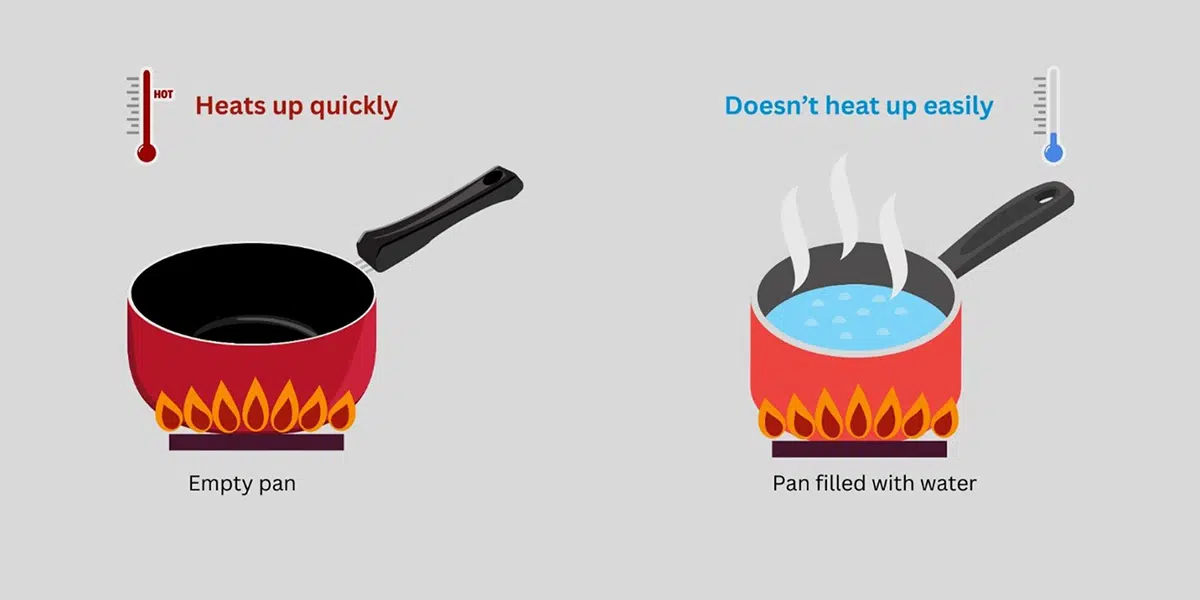
Specific Heat
The amount of energy required to raise the temperature of 1 gram of a substance by 1 degree Celsius

Capillary Action
The combined force of attraction among water molecules and with the molecules of surrounding materials

Surface Tension
Cohesion forces that act on the surface of a liquid and that tend to minimize the area of the surface

pH
The hydrogen ion concentration in a solution. It tells whether the solution is acidic or alkaline (basic)

polarity
property of water where hydrogen is slightly positive and oxygen is slightly negative

Cohesion
Attraction between molecules of the same substance

Adhesion
Attraction between molecules of another substances

peptide Bond
covalent bond formed between amino acids
buffer
a range where the body needs to work harder in order to maintain homeostasis to resist changes.

*to bind or to bond(v.)
to stick together

*to dissolve (v.)
a solid substance mixing with a liquid you can't see it
*speed (n.)
how fast something is