Integumentary System Anatomy and Physiology
 Call Kai
 Learn
 Practice Test
 Spaced Repetition
 Match
 Flashcards
 Knowt Play
1/66

There's no tags or description
Looks like no tags are added yet.
67 Terms
integumentary system
Consists of the skin, mucous membranes, hair, and nail, largest organ of the human body.

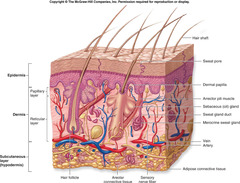
epidermis
The outer layer of the skin.

dermis
A layer tissue underneath the epidermis of the skin which contains blood vessels, lymphatic vessels, nerves, sensory receptors, and oil and sweat glands.

hypodermis
Also called a subcutaneous layer, this is a layer of fat is located under the dermis of the skin; helps to insulate the body and protects underlying muscles and blood vessels.

melanin
A pigment that gives the skin, hair and eyes color and helps protect the body from harmful UV radiation that causes skin cancer.

hair follicle
A small tubular cavity in skin containing the root of a hair and is attached to oil glands.

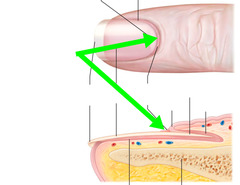
nail cuticle
Dead, colorless tissue attached to the natural nail plate.
hair root
The part of the hair located below the surface of the epidermis.

Ist degree burn
the Epidermis has been effected
2nd degree burn
The Dermis has been effected
3rd degree Burn
All three layers have been effected
Sebaceous Glands
found in the dermis, secrete the oil sebum
Sweat Glands
also called sudoriferous glands, found through the body
Apocrine Glands
in the pubic and underarm areas that secrete a thicker sweat
Epidermis
Most superficial layer of skin. Replaced every 4-6 weeks

Keratinocytes
The most abundant epidermal cells, they function mainly to produce keratin.

Melanocytes
Spidery black cells that produce the brown-to-black pigment called melanin.

Dermis
Dense, irregular connective tissue consisting of two regions - the papillary and the reticular areas.

Sebaceous Glands
Ducts that empty into hair follicles, excreting oily substances.

Sebum
The product of sebaceous glands. It is a mixture of oily substances and fragmented cells that acts as a lubricant to keep the skin soft and moist.
Eccrine Glands
These glands produce sweat.

Apocrine Glands
Secrete milky protein that acts as a nutrient medium for the microorganisms found on the skin.

Keratin
Fibrous protein that is responsible for the strength and water resistance of the skin surface.
Collagen
A protein that is a main constituent of connective tissue.
Melanin
A natural pigment that protects the cells in the skin and in deeper layers from the hazardous effects of UV radiation by absorbing sunlight.
Hypodermis
Layer of the skin made up of connective tissue and fat that acts as insulation and padding for the skin.
Pore
Made:Tiny openings on top of skin with sweat and oil glands
Function: Let sweat and oil come out of skin.
Erector Pilli/Arrector Pilli
Made:Muscles attached to hair
Function:makes the hair on a person's arm stand up to keep them warm
Nerve
Made:Sensory receptors
Variety of nerve receptors
Function:Sense change and information about outside environment
Adipose tissue (fat molecule)
Made:fat
Function:Insulate the body from heat and cold
provides padding
an energy storage area
athlete's foot
contagious; fungal infection
acne
bacterial infection of sebaceous glands
subcutaneous layer
fat layer
direct sunlight
primary cause of skin cancer
third degree burn
involves destruction of epidermis, dermis and subcutaneous layer
Epidermis
Most superficial layer of skin. Replaced every 4-6 weeks

Keratinocytes
The most abundant epidermal cells, they function mainly to produce keratin.

Melanocytes
Spidery black cells that produce the brown-to-black pigment called melanin.

Dermis
Dense, irregular connective tissue consisting of two regions - the papillary and the reticular areas.

Sebum
The product of sebaceous glands. It is a mixture of oily substances and fragmented cells that acts as a lubricant to keep the skin soft and moist.
Eccrine Glands
These glands produce sweat.

Apocrine Glands
Secrete milky protein that acts as a nutrient medium for the microorganisms found on the skin.

Keratin
Fibrous protein that is responsible for the strength and water resistance of the skin surface.
Collagen
A protein that is a main constituent of connective tissue.
Melanin
A natural pigment that protects the cells in the skin and in deeper layers from the hazardous effects of UV radiation by absorbing sunlight.
Hypodermis
Layer of the skin made up of connective tissue and fat that acts as insulation and padding for the skin.
Epidermis
Outer layer. Protects against pathogens:
Integumentary system
2 layers. Epidermis and dermis
Hair
Made of keratin. Protects scalp from light from sun
Hair follicles
Tube like pockets of epidermal cells that extend into the dermis
Nails
Grow from area of rapidly dividing cells known as nail roots. Fingernails grow 3 times faster than toe nails
Excretion
Small amount of sweat release constantly from sweat glands
Melanoma
Cancers that develop from melon gets
Acne
Sebum and dead skin cells form plugs in hair follicles. Bacteria trapped in
Joints
Where bones meet. Joints contain connective tissues that hold bones together.
Immovable joints/ fixed joints
Interlocked. Skull meets bone
*PURPOSE of integumentary*
-protects deeper tissues
-blocks UV
-prevents infection from entering body
-temperature regulation
-prevents dehydration
-makes Vitamin D from sunlight
-excrete wastes (sweating)
-sensory organ
epidermis
outer layer; site of rapid mitosis; production of keratin and melanin
Melanocytes
give skin pigmentation and protects from UV rays
dermis
inner layer, contains major structures of skin: collagen, blood vessels, nerve endings, glands, sensory receptors, hair follicles
subcutaneous fat
adipose tissue, proves insulation for body
layers of skin

Macrophage
Large white blood cell that removes bacteria, foreign particles, and dead cells. Usually found in the dermis and hypodermis as a clean up cell to fight infection

Merkel Cell
Receptor cells in the stratum basale of the epidermis that respond to the sense of touch. Used primarily for light touch.

List all structures that extend into the dermis layer that are created by the epidermal stratum basale
Sabaceous glands, hair shaft and all of hair bulb, eccrine glands, apocrine glands, ceruminuous glands
What three primary things are contained in sweat?
Mostly water with some urea (1/130th of urine concentration), some metabolic wastes, and some antibodies to control bacteria

Functions of sebum produced by the sebaceous gland
Moisturize the skin with oils, some antibodies to regulate bacteria, lubricate the hair shaft, can add waterproofing properties to skin
