BIO 101- EXAM 2 MATERIAL
 Call Kai
 Learn
 Practice Test
 Spaced Repetition
 Match
 Flashcards
 Knowt Play
1/63

There's no tags or description
Looks like no tags are added yet.
64 Terms
hydrolysis
a chemical reaction in which a molecule of water is used to break one or more chemical bonds in a compound, resulting in the formation of two or more simpler product. opposite of dehydration synthesis
explain hydrolysis process
-water is consumed as a reactant and splits into a hydrogen ion and hydroxyl group to then be incorporated into resulting fragments
-reaction requires a catalyst to speed up the process. could be an acid, base, or enzyme.
dehydration synthesis
a chemical reaction that joins two smaller molecules (monomers) to form a larger molecule (polymer) with the removal of a water molecule. This process is also known as a condensation reaction
describe dehydration synthesis process
-hydroxyl group is removed from one monomer
-hydrogen atom is removed from second monomer
-these removed pieces combine to form a molecule of water, which is released as a byproduct
-The remaining parts of the monomers then form a new covalent bond, creating larger more complex molecule.
why is dehydration synthesis important
crucial for forming the four major macromolecules
What are the 4 major macromolecules
carbohydrates, proteins, nucleic acids, lipids (fats)
4 major macromolecules, subunits, and bond types.
carbohydrates- bond type: glycosidic linkage subunit: monosaccharides
nucleic acids- bond type: phosphodiester bonds subunit: nucleotide
protein- bond type: peptide bonds subunit: amino acids
lipids (fats)- bond type: ester linkage subunit: fatty acids
compare dehydration synthesis and hydrolysis
-dehydration synthesis: builds molecules up by removing water
-hydrolysis: breaks large molecules down by adding water
What is a common cellular structure to all three domains of life?
ribosomes
Inert element has how many electrons?
8 valence electrons
Elements located in the same row:
have the same valence shell.
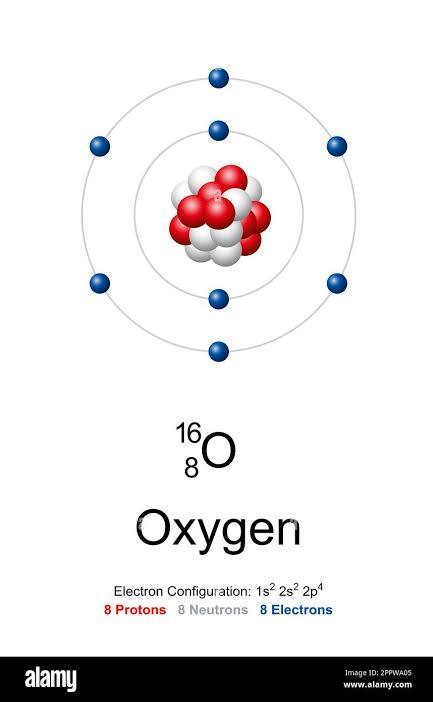
Construct an element with atomic number 8
Oxygen. 2 electrons in inner shell, 6 in valence shell. 8 protons, neutrons, and electrons
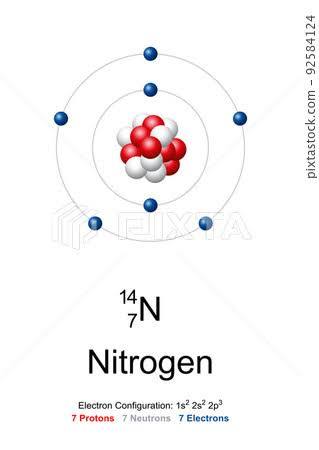
construct an element with atomic number of 7
Nitrogen, 2 electrons in inner shell, 5 in valence. 7 protons, neutrons, and electrons
How do you construct a Bohr model (atom of element)
find atomic number
atomic mass, round if needed
neutron total is mass number - atomic number
draw nucleus
draw electron shells depending on number of electrons (first shell holds max 2, second max is 8, third max is 8
fill in electrons, distributing them evenly
polar molecule
a neutral molecule, its negative and positive charges are separation within the molecule. Uneven distribution of electron density across the molecule. This imbalance creates two poles, a slightly positive and negative end. ex. water
nonpolar molecule
a chemical compound with an even distribution of electrical charge across its structure, resulting in no net positive or negative poles ex. oxygen, nitrogen, hydrogen, chlorine
hydrophobic molecules
repelled by water, typically nonpolar, and since water is polar, hydrophobic molecules do not dissolve in it.
example of hydrophobic molecules
lipids (fats)
hydrophilic molecules
substances that have a strong affinity for water and readily interact with or dissolve in it. typically polar or ionic, meaning they have positive or negatively charged regions. water is polar and forms hydrogen bonds with other molecules, allowing them to mix and dissolve
Which polar functional groups does water contain?
hydroxyl, carboxyl, amino, and phosphate groups
which molecules pass through a membrane easier?
hydrophobic molecules, since the membrane is a fatty nonpolar lipid bilayer, and these molecules can dissolve in the nonpolar lipid core and diffuse across the membrane, down their concentration gradient. The smaller the molecule, the faster it will pass through.
Can hydrophilic molecules enter through the cell membrane?
not on their own, they are repelled by the nonpolar interior of the membrane, as they are highly insoluble in the lipid core. they require specific protein channels to cross.
an oxygen is likely to form what type of chemical bond with a carbon atom?
polar covalent, electron sharing in unequal, so charge is partially positive and negative.
why is it that an atom with 4 electron in its valence shell most likely to form a covalent bond?
sharing electrons is the most energetically favorable way for it to achieve a stable, full valence shell (an octet of eight electrons). so it forms 4 covalent bonds to share electrons.
diffusion
a passive process in which molecules move from a region of higher concentration to region of low concentration
hypotonic
has a lower concentration of solutes compared to another solution, causing water to move into the cell from the surroundings. hypo- low. as a result, animals may swell and burst while plant cells become firm and rigid.
hypertonic
has a higher concentration of solutes compared to another solution, leading water to move out of the cell into the surrounding solution. hyper- high. this causes animal cells to shrink and plant cells, the cell membrane pulls away from the cell wall.
why is carbon the main skeletal backbone of many macromolecules?
its unique bonding properties allow for the formation of diverse, complex, and stable molecules essential for life.
What is cell size limited to?
surface area-to-volume ratio
where are enzymes responsible for biosynthesis of membrane lipids be located in the cell?
In the ER, particularly the membrane of the smooth ER. Because lipids are highly hydrophobic molecules, its better for their synthesis to occur within the membrane rather than the aqueous environment on the outside.
Where are proteins synthesized? and which ones?
in the Rough ER. secreted proteins (like insulin) bound for the Golgi, membrane proteins bound for the membrane (like receptors)
do proteins synthesize somewhere other than the rough ER?
produced by ribosomes, located in the cytoplasm and these proteins are needed for other organelles
How did the endomembrane system evolve in eukaryotes?
from prokaryotic ancestors, this lead to the nuclear envelope being part of the endomembrane system in eukaryotes
describe secondary level of protein structure
secondary: shapes formed by hydrogen bonding between the amino and carboxyl groups of nearby amino acids (common shapes: alpha-helices (coiled spring) and beta pleated sheets (flattened skirt)
tertiary level of protein structure
the three dimensional shape of a single polypeptide chain. results from interactions (hydrophobic interactions, ionic bonds, hydrogen bonds) between the side chains of different amino acids, stabilizing the entire structure.
quaternary level of protein structure
highest level of protein organization, applies to only proteins composed of two or more separate polypeptide subunits. these subunits fit together to form the complete protein complex (ex. hemoglobin)
how are secondary, tertiary, and quaternary levels of protein structure held together?
by hydrogen bonds, ionic bonds, and hydrophobic interactions
nucleus function
stores DNA
mitochondria function
generate energy in the form of ATP
chloroplast function
makes glucose
smooth ER function
synthesizes lipids, detoxifies. stores and releases calcium ions, break down glycogen into glucose.
rough ER function
synthesizes, packages and transports proteins destined for secretion into the cellular membrane
lysosome function
digestive system of cell, break down polymers (proteins, lipids, carbohydrates, and nucleic acids)
Golgi function
shipping and receiving center of the cell. modifies and packages lipids synthesized by the ER.
ribosome function
synthesizes proteins via translation. read genetic instructions by mRNA and assemble amino acids into polypeptide chain
what type of bond must be present between two atoms for hydrogen bonding between molecules to be possible
highly polar covalent bond
phospholipid bilayer
boundary of the cell that separates internal organelles of the cell and extracellular space. also known as the fluid mosaic model.
What forces are responsible for maintaining integrity of the phospholipid bilayer
interaction of fatty acid tails (hydrophobic) and surrounding heads that allow it to be semi-permeable
State the three properties of water and why they are significant in a biological system
cohesion: water molecules attach to each other, allow things to float
specific heat capacity: water has a certain degree to be hot, fish can live under ice
water vaporization: why we sweat to stay cool
why are the 3 properties of water significant
its role as a universal solvent, high heat capacity, and cohesive and adhesive forces
where are the nonpolar and polar regions of the phospholipid bilayer
polar region: hydrophilic heads
nonpolar region: hydrophobic tails
where are peripheral proteins located?
bonded to the surfaces of the membrane
what is the pathway of a protein embedded in the membrane from nucleus-membrane.
DNA is used to make RNA in the nucleus
The RNA exits the nucleus and finds a ribosome to begin protein synthesis
The ribosome attaches to the rough er and synthesizes the protein into the RER
-The protein attaches to the end of the RER to be packaged into a vesicle
vesicle moves to golgi
the golgi packages the protein into a transport vesicle to exit the cell
explain how the sodium potassium pump and the sodium glucose symporter are linked in the cell, and why it is to the cells advantage to continue to run it
The sodium-potassium pump and the sodium-glucose symporter work together in a linked process called secondary active transport. This system creates an efficient mechanism for cells, particularly those in the kidneys and intestines, to actively absorb essential glucose.
sodium potassium pump (primary active transport)
uses direct energy from ATP hydrolysis to actively transport three Na+ ions out of the cell and two potassium ions into the cell. this creates a high concentration of sodium outside the cell and low inside the cell.
sodium-glucose symporter (secondary active transport)
Uses the potential energy stored in the Na+ concentration gradient to move glucose into the cell. The high sodium concentration outside the cell drives the sodium ions to flow back in, down their concentration gradient
advantages of the sodium potassium pump
maintain cellular homeostasis, regulating the cells environment
How much does it cost or gain to move glucose molecules
when glucose moves from an area of high concentration to an area of low concentration, it moves down its concentration gradient. this has no energy cost, has a net gain of free energy used to make ATP
-moving glucose against it concentration gradient using primary active transport requires energy. must hydrolyze ATP to pump glucose across the membrane
-in secondary active transport, the sodium glucose symporter uses ATP to power the sodium potassium pump
how are the mitochondria and chloroplasts similar to each other
have a common evolutionary origin, both produce energy (atp and glucose)
why are hydrogen and ionic bonds considered weak chemical bonds while covalent bonds are considered strong chemical bonds?
hydrogen and ionic bonds (weak): rely on different methods of attraction and require less energy to break
covalent bonds (strong): involves sharing electrons, so their valence shells fill and stabilize. breaking this bond requires more energy.
why can fats store more energy than carbohydrates?
due to their different chemical compositions and structure. fats have fewer oxygen atoms. carbohydrates are highly oxidized, they already have many oxygen atoms bonded to their carbon atoms.
-fats are stored without water, making them denser and more for long term energy storage. carbohydrates bind to water when stored, adding mass without adding useable energy.
what would happen to the cell if the golgi stops working?
-golgi only modifies lipids (packaging and sorting) and does not produce, so things would not be secreted from the cell as lipids and proteins would not be prepared for distribution.
2 structures specific to plant cells
chloroplasts and cell wall
how many molecules of water are needed to completely hydrolyze a polysaccharide that is 10 monomers long?
9 molecules of water. monomers are linked by a single covalent bond called a glycosidic linkage. in a chain of 10 monomers, there are only 9 linkages connecting them, and each require one molecule to be broken