Greek and Roman Art
 Call Kai
 Learn
 Practice Test
 Spaced Repetition
 Match
 Flashcards
 Knowt Play
1/68

Earn XP
Description and Tags
Midterm 1
69 Terms
What item is this?
Lefkandi hero's grave (10th c. BC) — Homeric burial that predates Homer. The heroic age was real
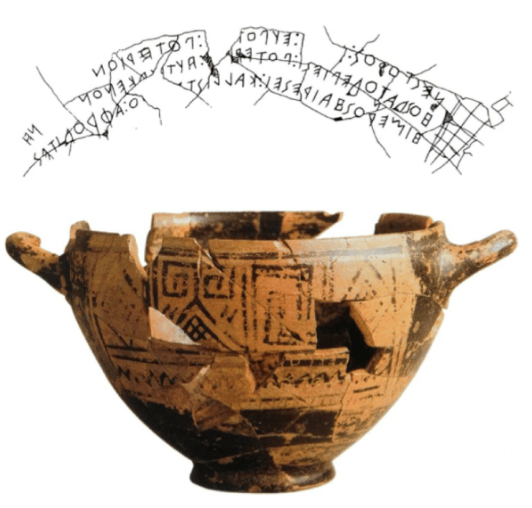
Which item is this?
East Greek kotyle (drinking cup) with inscription, known as “Nestor’s Cup,” 720 BC - Tiny cup in a child's grave in Italy. Quotes Homer. Proves alphabet + epic traveled together.
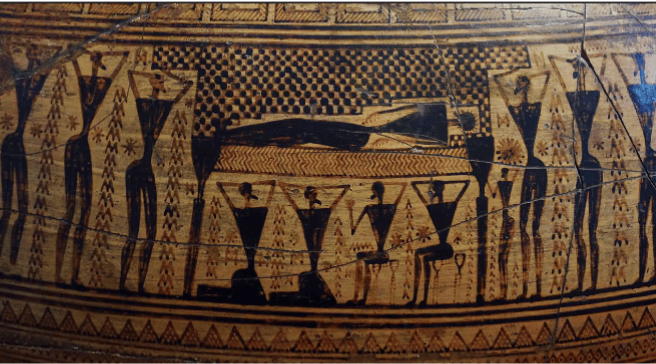
Which item is this?
Attic Geometric amphora with prothesis (lamentation), known as the “Dipylon Amphora”, 760-735 BC - Man's grave. Shows ekphora.
Chariots = warriors departing? or funeral games? Ambiguous.

Which item is this?
Attic Geometric krater with ekphora (procession to the grave) and chariots, 760-735 BC - Man's grave.
Naval battle added. Myth or real life? The debate at its most intense.
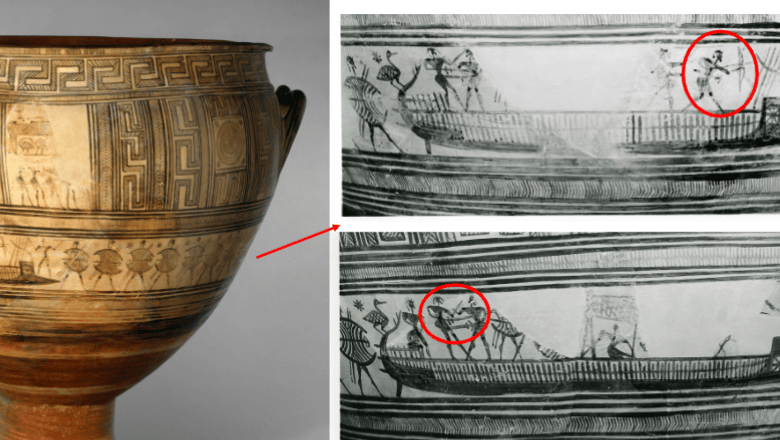
Which item is this?
Attic Geometric krater with prothesis and battle scene, 760-735 BC - Man's grave. Naval battle added. Myth or real life? The debate at its most intense.
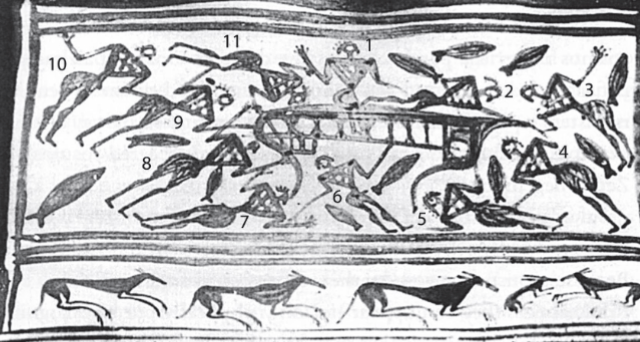
Which item is this?
Attic Geometric oinochoe (wine pouring vessel) with shipwreck scene, ca. 740–720 BC - NOT a grave marker — symposium vessel. Shipwreck may depict Odyssey. Context changes everything.
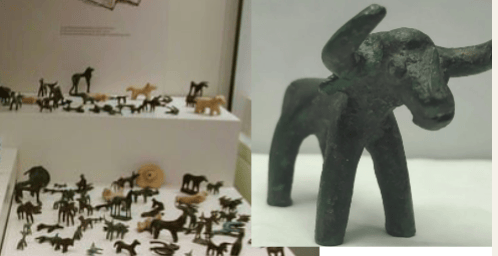
Which item is this?
Terracotta and bronze offerings to Zeus from the ash altar at Olympia, 9th-7th centuries BC - Thousands of tiny figurines at the ash altar. Panhellenic religion before temples.

Which item is this?
Bronze tripod leg showing the struggle for the tripod(?), Olympia, 8th c. BC - Herakles vs. Apollo fighting over a tripod (probably). Possibly the first mythological scene in art.

Which item is this?
Bronze figurine of Apollo dedicated by Mantiklos, 700 BC - "I gave a tithe, Apollo — now you give back." Do ut des. First-person votive inscription. Homeric epithets.

Which item is this?
Protoattic amphora by the Analatos Painter with chariots, dancers, sphinxes, 700-680 BC - Hinge-point: Geometric + lotus + sphinxes. Old and new at once.

Which item is this?
Protocorinthian alabastron (perfume vessel) with griffin, lotuses, tree of life, 660-650 BC - Remember it as: tiny vessel, big technique. Griffin + lotus + black-figure = Near East meets Corinth.

Which item is this?
Protocorinthian aryballos with lion head and battle scene, 640 BC - Remember it as: smallest object, most staggering craftsmanship — the Corinthian technique pushed to its limit

Which item is this?
Phoenician silver bowl, 750-600 BC - This hammered silver bowl found in a Cyprus tomb—featuring battle, hunting, and mythological scenes that blend Egyptian, Assyrian, and Phoenician styles—serves as the quintessential portable luxury good carried by Phoenician traders, acting as a crucial artistic link that transmitted motifs from Near Eastern palace reliefs to Protocorinthian pottery and Greek artists.

Which item is this?
Chigi olpe (wine jug) with judgment of Paris, hoplite battle, riders, hunt, 650-640 BC - Greatest Protocorinthian vessel: hoplite phalanx + Judgment of Paris with named inscriptions.

Which item is this?
Kore known as the “Lady of Auxerre,” 650-600 BC - Canonical Daedalic kore: triangle face, wig hair, hand on chest. The agalma.

Which item is this?
Kore dedicated by Nikandre to Artemis, from near the Temple of Apollo, Delos, mid-7th century BC - First large marble dedication with named dedicant. Nikandre to Artemis. First-person inscription.

Which item is this?
Attic black figure dinos signed by Sophilos with the wedding of Peleus and Thetis, known as the “Sophilos Dinos”, 580-570 BC - First signed Athenian painter. "Sophilos painted me." Wedding of Peleus and Thetis.

Which item is this?
Attic black-figure krater, known as “The François Vase”, with scenes from the life of Peleus and Achilles, signed by Kleitias as painter and Ergotimos as potter, 570 BC - 270 figures, 121 inscriptions. 5 scenes: Peleus to death of Achilles. Found in Etruscan tomb.
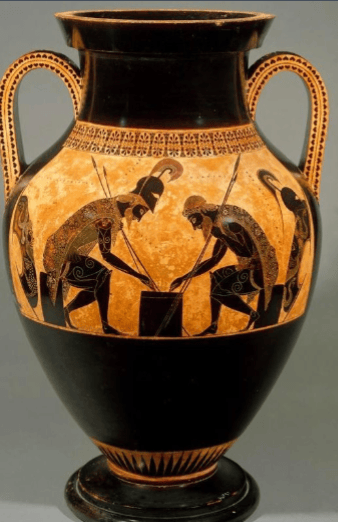
Which item is this?
Attic black figure amphora with Achilles and Ajax gaming, signed by Exekias, 540-530 BC - Scene not in any text. Heroes at leisure. Achilles winning, shadowed by what comes next for Ajax.

Which item is this?
Attic black figure amphora with the suicide of Ajax, signed by Exekias, 550-540 BC - Same artist completes Ajax's arc. Moment of deliberation. Personal artistic investment.
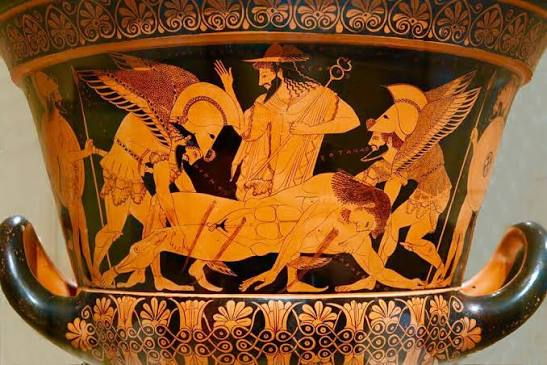
Which item is this?
Attic red figure krater with Sarpedon being carried to the underworld by Sleep and Death, signed by Euphronios, known as the “Euphronios krater” or the “Sarpedon krater”, 515 BC - Red figure masterpiece. Sarpedon carried by Hypnos + Thanatos. Hermes as psychopomp.

Which item is this?
Attic red figure amphora signed by Euthymides, with dancing revelers, with the inscription “as never Euphronios”, late 6th century BC - "As never Euphronios." First artistic boast in history. Three-quarter body poses prove the claim.

Which item is this?
Attic kouros, known as the “New York kouros”, 590 BC

Which item is this?
Calf-bearer from the Athenian Acropolis, 560 BC
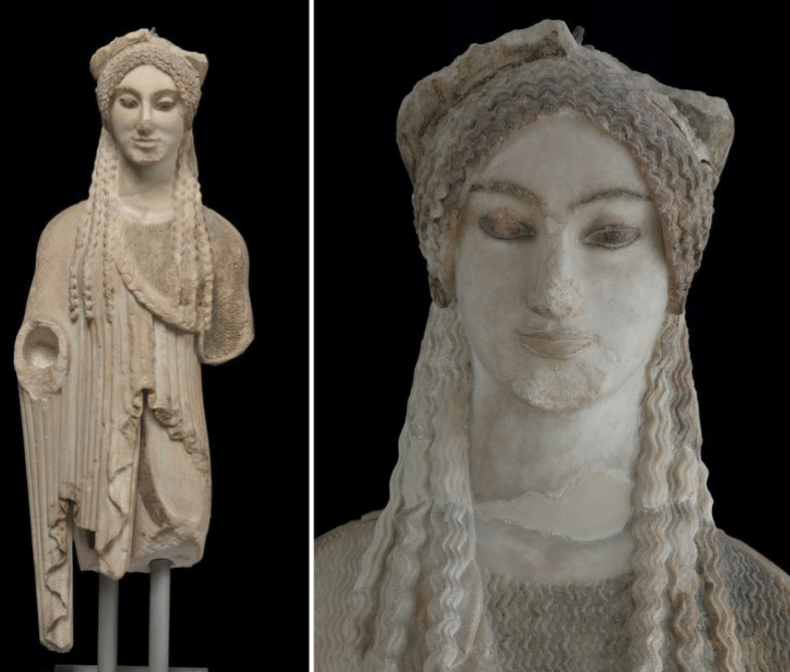
Which item is this?
Kore from the Athenian Acropolis, 520-500 BC

Which item is this?
Grave monument (kore) of Phrasiklea, 540 BC

Which item is this?
Grave monument (kouros) of Kroisos, known as the Kroisos kouros or Anavysos kouros, 530 BC

Which item is this?
Archaic grave stelai of warriors and athletes, 550-510 BC (various)

Which item is this?
Siphnian Treasury at Delphi, 525 BC (north frieze: Gigantomachy; east frieze: assembly of gods and Trojan war; pediment: Apollo and Herakles struggle for the tripod)

Which item is this?
Siphnian Treasury at Delphi, 525 BC - North frieze: Gigantomachy

Which item is this?
Siphnian Treasury at Delphi, 525 BC - East frieze: assembly of gods and Trojan war

Which item is this?
Siphnian Treasury at Delphi, 525 BC - Pediment: Apollo and Herakles struggle for the tripod

Which item is this?
Kritios Boy from the Athenian Acropolis, 480-460 BC
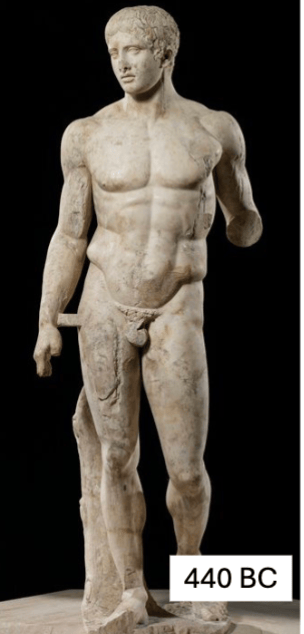
Which item is this?
Doryphoros (spear-barer), Roman marble copy from a Greek original, 440 BC

Which item is this?
Parthenon (metopes: Gigantomachy, Centauromachy, Sack of Troy, Amazonomachy; frieze: Panathenaic procession with gods and “peplos” scene), 447-432 BC

Which item is this?
Parthenon - metopes: Gigantomachy

Which item is this?
Parthenon - Centauromachy
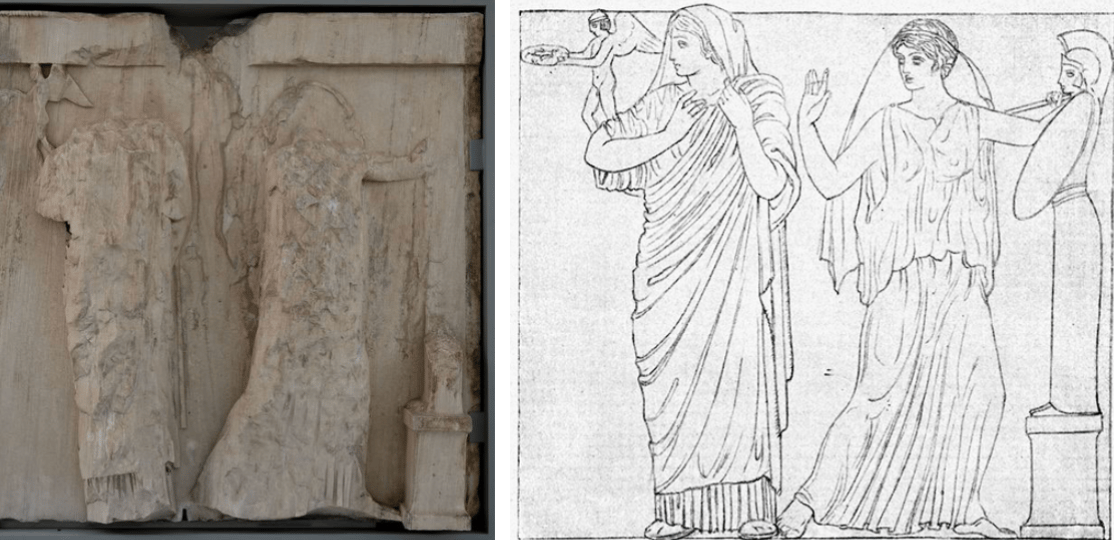
Which item is this?
Parthenon metopes: Sack of Troy
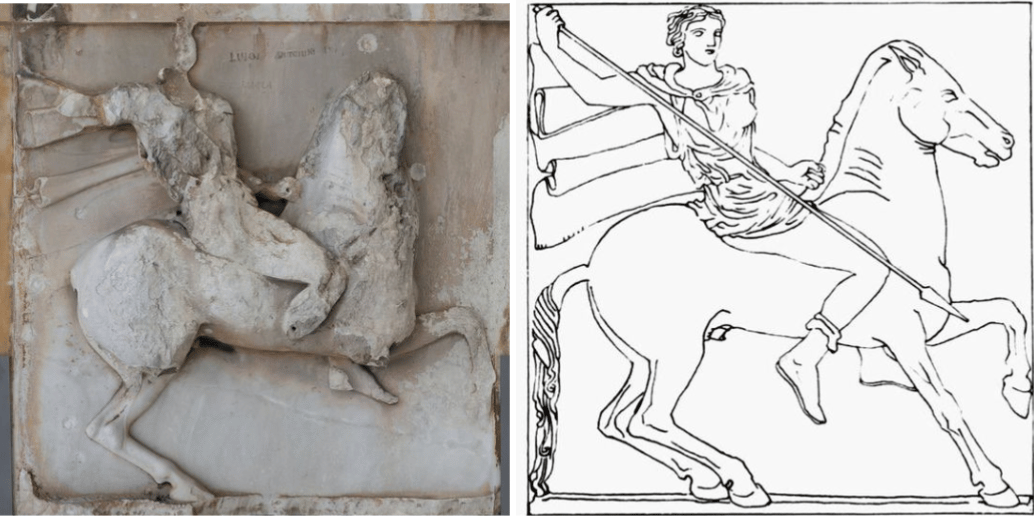
Which item is this?
Parthenon metopes: Amazonomachy
Which item is this?
Parthenon: Frieze: Panathenaic procession with gods and “peplos” scene), 447-432 BC

Which item is this?
Classical Athenian grave stelai with women and children, 430-330 BC (various)

Which item is this?
Attic red figure lebes gamikos (wedding vase) with preparations for wedding, 410 BC

Which item is this?
Classical Athenian grave stele of Hegeso with maid, end of 5th c. BC

Which item is this?
Attic black figure loutrophoros (wedding/funeral vase) with prothesis scene, late 6th c. BC

Which item is this?
Attic white ground lekythos (oil vessel) with preparations to visit the grave, 440 BC

Which item is this?
Attic black figure lekythos (oil vessel) with weaving scenes, 550-530 BC

Which item is this?
Attic red figure hydria (water vessel) with domestic scene of woman spinning, 450-425 BC

Which item is this?
Temple of Apollo at Bassae, late 5 th c. BC (frieze: Centauromachy and Amazonomachy)
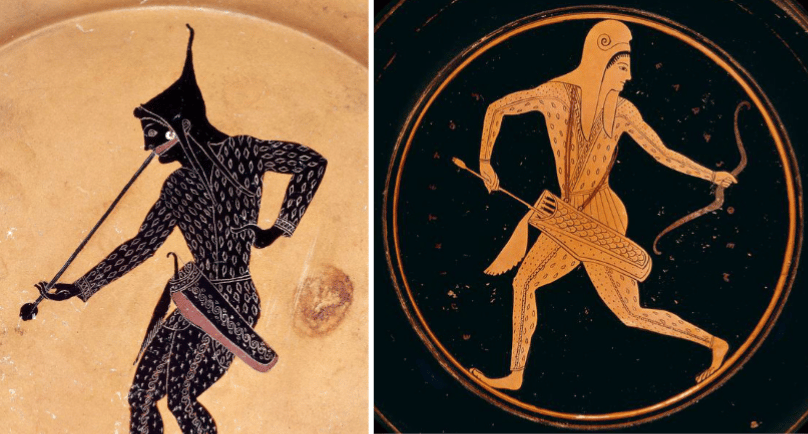
Which item is this?
Attic black figure and red-figure plates with Scythians, 520-500 BC

Which item is this?
Attic red figure kylix (cup) with Greek defeating Persian, 480 BC
Attic red figure amphora (wine storage jar) by Myson with abduction of Amazon queen Antiope, 490 BC

Which item is this?
Attic red figure amphora (wine storage jar) by Myson with abduction of Amazon queen Antiope, 490 BC

Which item is this?
Attic red figure kantharos (drinking cup) with Greek and Amazon, 430-420 BC

Which item is this?
Attic red figure krater (wine-mixing vessel), with fleeing Persian, 460 BC
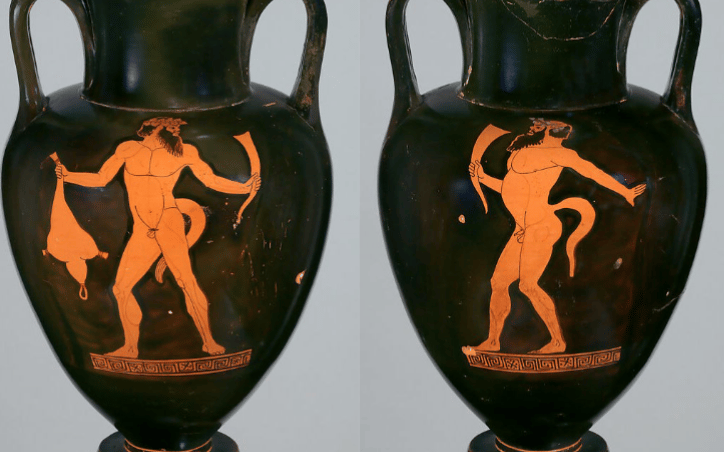
Which item is this?
Attic red figure amphora (wine storage jar) with satyr holding wine skein and rhyton, 490-480 BC

Which item is this?
Attic red figure kylix (cup) with maenads and satyrs reveling, 490-480 BC
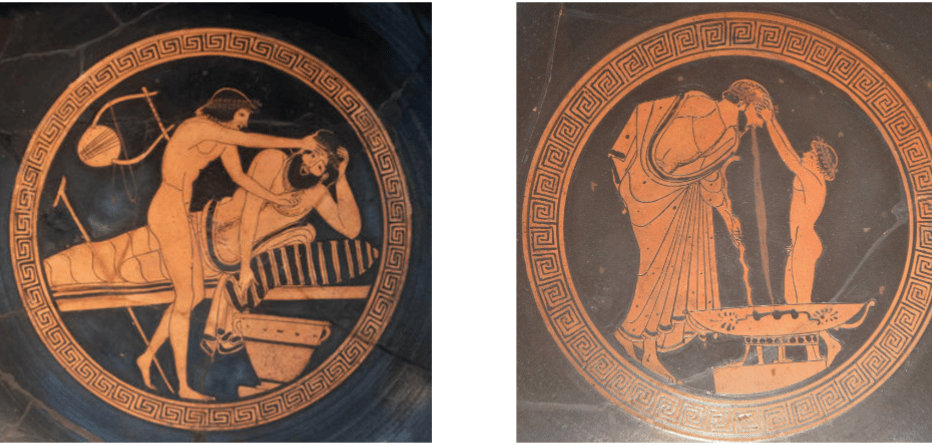
Which item is this?
Attic red figure tondo scenes from interior of cups, late 6 th and early 5th c (various)

Which item is this?
Temple of Athena Nike (frieze: battle of Greeks and Persians)
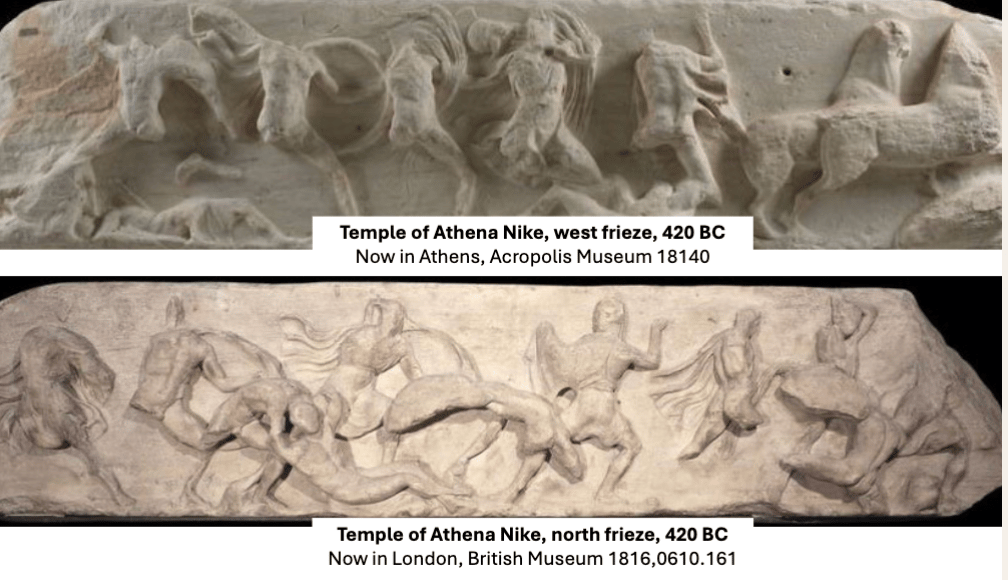
Which item is this?
Temple of Athena Nike (frieze: battle of Greeks and Persians

Which item is this?
Bronze boxer from Olympia, 350 BC
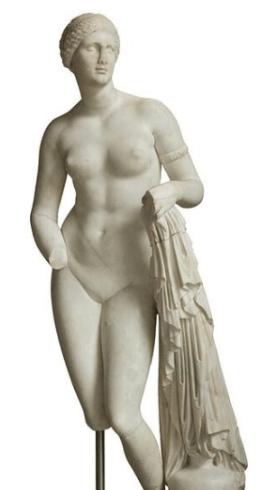
Which item is this?
Aphrodite of Knidos by Praxiteles, Roman marble copy of an original from 350-340 BC

Which item is this?
Tomb of King Erbinna from Xanthos in Lycia, known as the “Nereid Monument”, with battle scenes and Erbinna holding court, 390-370 BC

Which item is this?
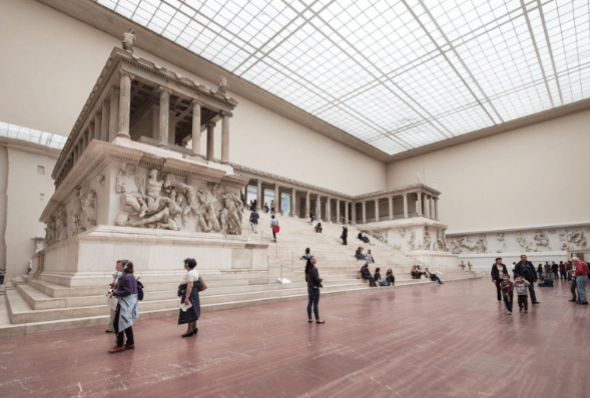
Great Altar at Pergamon
Which item is this?
Great Altar at Pergamon with Gigantomachy, 160 BC

Which item is this?
Portrait of Alexander the Great, 336 BC or Roman copy

Which item is this?
The Alexander Mosaic (Roman mosaic copy of Greek painting) of the 4th c. BC

Which item is this?
Sarcophagus of King Abdalonymos of Sidon (the Alexander Sarcophagus), last quarter of the 4th c. BC

Which item is this?
Statuette of Serapis, Roman marble copy of a Greek original, 3rd c. BC

Which item is this?
Silver coin with the head of Herakles or Alexander the Great as Herakles, 336-323 BC

Which item is this?
Coin of King Lysimakhos of Thrace with the head of Alexander with the horns of Zeus Ammon, 305-281 BC