Learn: Ohm's Law, Series & Parallel Circuits
 Call Kai
 Learn
 Practice Test
 Spaced Repetition
 Match
 Flashcards
 Knowt Play
1/32

There's no tags or description
Looks like no tags are added yet.
33 Terms
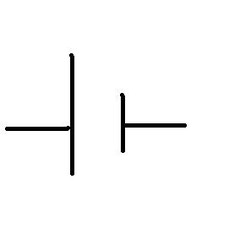
Symbol for battery
Circuit that has one path: current must flow through each component.
Series Circuit
Circuit with several different paths for the electricity to travel.
Parallel Circuit
Explain how voltage acts in a parallel circuit.
Voltage stays the same throughout.
Explain how current acts in a series circuit.
Current stays the same throughout.
Ohms symbol

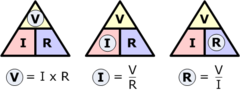
Voltage Formula
V=IR

What are the advantages of parallel circuits?
The lamps (components) are brighter in parallel than when connected in series. One lamp (components) will continue working even if the other does not. If one of the parallel paths is broken, current will continue to flow in all the other paths
What is the electricity going round the circuit?
Current
What is the strength of push called that is provided by the power source?
Voltage
Unit for Voltage
Volts
What is the symbol for amp?
A
Multi-Meter
Used to measure volts, amps, & ohms
Ohms Law
A law that states current/ voltage and resistance are mathematically related

Resistance
The opposition to the flow of electrical charge

A resistor has a voltage of 5 volts and a resistance of 15 ohms. What is the power consumed?
1.67 Watts
Battery, motor, generator are examples.
Power Source
Resistance Formula
R=V/I

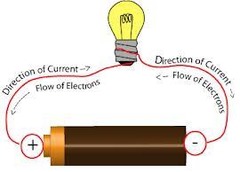
Current
The flow of charge, Rate at which charges pass a given point, or movement of electrons
Current Formula
I=V/R
Voltage
the amount of potential energy between two points (difference in charge)

Unit for Resistance
Ohms

Resistance symbol
R

Amps
The unit for current
Voltage symbol
V
Wires that are good (conductors/ insulators) have high resistance
Insulators
Wires that are good (conductors/ insulators) have low resistance
Conductors
If you increase resistance what happens to current?
Decreases
If you increase voltage what happens to current?
Increases
Current symbol
I

Unit for Current
Amps

Light bulb, microwave, radio are all examples of what?
Load
Electron flow is another name for?
Current