RESP 210 quiz 5 study gude
 Call Kai
 Learn
 Practice Test
 Spaced Repetition
 Match
 Flashcards
 Knowt Play
1/49

There's no tags or description
Looks like no tags are added yet.
50 Terms
Desired RR
= (Current PaCO2 x current RR) / desired PaCO2
Chapter 12: case study slides
decision making and ventilating patients with metabolic acidosis (lab and lecture)
Common causes include:
Multiorgan failure
Intoxication/overdose
Severe trauma with shock and ventilatory failure
Cardiopulmonary arrest
Chapter 12: case study slides
decision making and ventilating patients with respiratory alkalosis (lab and lecture)
excessive alveolar ventilation
Common causes include:
Hypoxia w/compensatory
hyperventilation
Anxiety
Medications
xanthines
salicylate
CNS disorders
head trauma
meningitis
encephalitis
Metabolic issues
sepsis
hepatic
Chapter 13: ARDS ventilation
1. Oxygenation versus oxygen delivery
Understand the roles of hemoglobin, cardiac output, and arterial oxygen content in determining oxygen delivery.
PaO2 is not oxygen delivery
PaO₂ reflects dissolved oxygen, not total arterial oxygen content.
CaO₂ depends primarily on hemoglobin and SaO₂.
DO₂ = cardiac output × CaO₂ × 10
A satisfactory PaO₂ does not guarantee adequate tissue oxygen delivery.
Evaluate
Hb
QT
perfusion
SvO₂/ScvO₂
C(a-v)O₂
alongside the ABG
PaO₂ tells us about pulmonary oxygenation; DO₂ tells us how much oxygen reaches the tissues
Why Excessive PEEP Can Reduce Oxygen Delivery
Excessive PEEP can improve PaO₂ while making systemic oxygen delivery worse
1. Higher PEEP recruits alveoli and reduces shunt
2. PaO₂ and SpO₂ improve
3. Excessive intrathoracic pressure reduces venous return
4. Stroke volume and cardiac output fall
5. Because DO₂ = cardiac output × CaO₂, tissue oxygen delivery may decrease despite the improved PaO₂
Differentiate hypoxemia from tissue hypoxia.
low PaO₂
requires sufficient
Hb
QT
cellular oxygen utilization
2. PEEP and optimal PEEP: Understand how PEEP improves oxygenation through alveolar recruitment, increases FRC, and reduces shunting.
Maintain PaO2 > 60 mmHg
or SpO2 > 90% at acceptable pH
2. Recruit alveoli and maintain them in an aerated state
3. Restore FRC
4. Enhance tissue oxygenation
Recognize complications of excessive PEEP, including hypotension, reduced cardiac output, and overdistention
Complications
Untreated pneumothorax (contraindicated)
Hypovolemia or hemodynamic instability
Significant right-ventricular failure
Elevated intracranial pressure
Bullous lung disease/high barotrauma risk
Evidence PEEP is excessive
complications decrease from overdistention
increased plat
dead space and increased PaCO2
BP, QT, urine output
or SvO2 decreases
barotrauma or pneumothorax develps
increasing PEEP no longer improves oxygenation
Be able to interpret an optimal PEEP study.
It’s the level where benefits of PEEP
lead to increased
DO2
FRC
static compliance
decreased
QS/QT
It’s also optimal b/c not associated with profound C/P side effects like
Decreased
cardiac output
BP
• Increased
shunting
barotrauma
volutrauma
VD/VT

Physiologic effects of PEEP (Pulmonary effects)
Pulmonary effects
Increases FRC
Recruits collapsed alveoli
Reduces intrapulmonary shunt
Improves compliance when recruitment occurs
May redistribute lung water
Physiologic effects of PEEP (Cardiovascular effects)
Cardiovascular effects
Increases intrathoracic pressure
Decreases venous return and preload
May decrease QT & BP
May increase PVR and R ventricular afterload
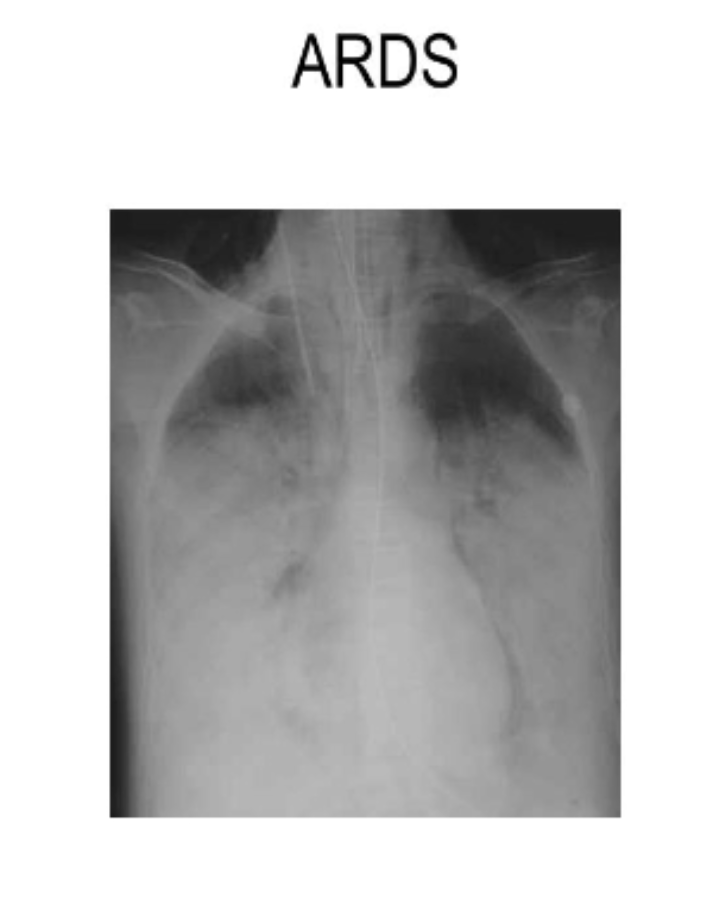
What is ARDS?
Severe dyspnea
Tachypnea
Refractory hypoxemia despite O2 therapy
Stiff, low-compliance lungs
Bilateral opacities on CXR
P/F ratio ≤300 with PEEP ≥5 cmH₂O
ARDS pathophysiology
Capillary leak → alveolar flooding and collapse → decreased compliance, intrapulmonary shunting, and refractory hypoxemia
1. Inflammation of pulmonary capillary and alveolar epithelium increased permeability
2. Injury to the lung parenchyma leads to protein rich plasma leaking out of the capillaries
• First to interstitial space next onto alveolar space
3. Gravity dependent, ‘ground glass’ appearance on CT scan part of the active inflammatory process in the interstitium and alveoli of both lungs
4. Inflammation produces abnormal thickening of the alveolar epithelium and incomplete filling of alveolar space w/inflammatory cells, cellular debris, and edema
5. Some alveoli are collapsed/atelectatic but can be positively recruited
For ARDS, what makes oxygenation so hard?
Oxygenation is hard because…
Many alveoli are perfused but not ventilated because they are fluid-filled or collapsed produces a severe intrapulmonary shunt
Blood passes through the lungs without being adequately oxygenated
Because it is a true shunt, hypoxemia may respond poorly to simply increasing the FiO₂
PEEP required to recruit & stabilize usable alveoli
Blood is still reaching alveoli—but many alveoli are flooded or collapsed, so O2 cannot reach the blood.
Turning up the FiO₂ won’t fully solve the problem unless we can get more alveoli open
Major causes of ARDS (direct lung injury)
Originates in the lungs
Pneumonia
Pulmonary contusion
Aspiration of gastric contents
Near-drowning
Smoke or toxic-gas inhalation
Major causes of ARDS (indirect lung injury)
Systemic process injures the lungs
Massive transfusion/TRALI
Major burns
Acute pancreatitis
Drug overdose
Sepsis
Severe trauma or shock
ARDS: diagnosing with Berlin diagnostic criteria
pt must meet four requirements:
Timing: onset within one week of a known clinical insult or new/worsening respiratory symptoms
Imaging: bilateral opacities not fully explained by effusions, lobar collapse, or nodules
Origin of edema: respiratory failure is not fully explained by cardiac failure or fluid overload
Oxygenation: severity is based on the P/F ratio while receiving at least 5 cmH₂O of PEEP or CPAP
ARDS: P/F ratio severity classifications
Mild: >200–300
Moderate: >100–200
Severe: ≤100
3 phases of ARDS image

ARDS: know the exudative phase
The lung floods
Capillaries leak
Protein-rich alveolar edema
Surfactant dysfunction and collapse
Shunt → refractory hypoxemia

ARDS: know the proliferative phase
The lung attempts to repair
Type II pneumocytes proliferate
Edema begins clearing
Alveolar epithelium begins healing
Patient may improve—or develop early fibrosis
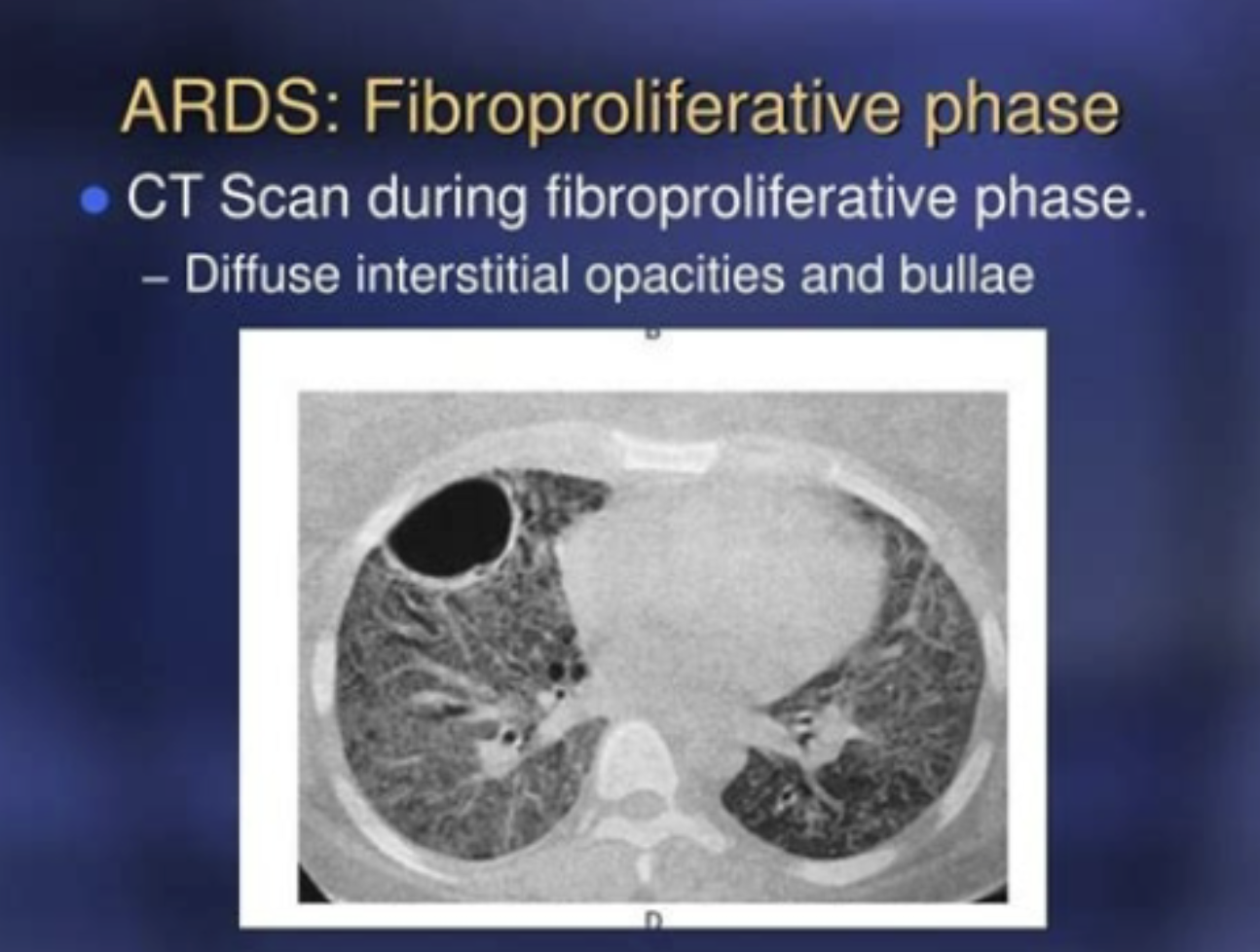
ARDS: know the fibrotic phase
Some lungs scar
Not experienced by every patient
Collagen deposition and fibrosis
Very low compliance and increased dead space
Prolonged ventilation and difficult weaning
4. Lung-protective ventilation:
low tidal volumes based on predicted body weight
plateau pressure limits
permissive hypercapnia
oxygenation targets.
Driving pressure and lung mechanics
7. Clinical application: Be able to evaluate ABGs, P/F ratios, ventilator settings, plateau pressure, driving pressure, and hemodynamic changes to recommend appropriate ventilator adjustments in ARDS patients.
Vt
6 mL/kg predicted body weight, not actual weight
Adjust Vt within 4–8 mL/kg PBW to meet pressure and pH goals
Maintain plateau pressure
≤30 cmH₂O
Use an FiO₂/PEEP table to support oxygenation while limiting oxygen toxicity
Use enough PEEP to prevent recruitable alveoli from repeatedly collapsing, but avoid excessive PEEP that overdistends the remaining open lung
Target PaO₂ , SpO2
55–80 mmHg or
SpO₂ 88–95%
Accept permissive hypercapnia when necessary to protect the lung
Goal is adequate gas exchange without causing additional VILI
Accept imperfect ABG to prevent more lung injury
Monitor driving pressure
ARDSnet Driving pressure
Pplat − PEEP - if rising,
lower Vt
allow for hypercapnia
its relationship to compliance
limits plateau pressure to 30 ml/cmH2O, but plateau pressure includes both PEEP and the pressure used to deliver the Vt. This brings us to driving pressure
ΔP= Pplat−PEEP
Represents the pressure required to deliver through the respiratory system
Relates VT to respiratory-system compliance
Lower driving pressure is associated with better ARDS outcomes
Reduce it primarily by reassessing and optimizing PEEP 30
Common practical goal: Δ ≤ 15 cmH2O
ARDSNet criteria
PaO2/FiO2 ≤ 300
• Bilateral (patchy, diffuse, or homogenous) infiltrates consistent with edema
• No clinical evidence of L atrial HTN
Understand the ARDSNet protocol (initiation)
Calculate predicted IBW
Pick any vent mode
Select vent settings that initially deliver 8 ml/kg IBW
Reduce settings by 1 ml/kg IBW every ≤ 2 hours until 6 ml/kg IBW
Set initial RR to match min. vol. needs
Adjust RR and Vt to achieve ARDSnet goals
6. Oxygenation strategies in ARDS: Understand the use of PEEP/FiO₂ tables and prone positioning to improve oxygenation while minimizing ventilator-induced lung injury.
ARDSNet Lower-PEEP/Higher-FiO₂ Table
• Move stepwise through paired PEEP and FiO₂ combinations
• Target PaO₂ 55–80 mmHg or SpO₂ 88–95%
• Some facilities call their approach “ARDSnet,” but only follow parts of it
• Use the table as a starting framework, then reassess:
• Oxygenation Plateau and driving pressures Compliance * Blood
pressure
How to interpret lower and upper inflection points on pressure-volume loops.
Upper inflection point = pressure above which the lung becomes overdistended
lung compliance begins to decrease again.
• Beyond the UIP, increasing airway pressure produces relatively little additional volume, because the recruitable alveoli have largely been opened and further pressure mainly causes overdistension.
How to read the P–V loop
Below the LIP
Many alveoli remain collapsed
Increasing pressure → recruitment
LIP → UIP
More alveoli open
Lung compliance is relatively higher
Above the UIP
Most recruitable alveoli = already open
Further pressure → overdistension
Goal in ARDS: recruit the lung while avoiding excessive distension


Chapter 15: ICU pharm
1. Sedation versus analgesia: Understand the difference between sedation, pain control, and paralysis. Know why treating pain before increasing sedation is important.
sedation
amnesia
hypnosis
anxiolysis
analgesia
sx of pain (sedation)
HTN
tachycardia
lacrimation
sweating
pupillary dilation

characteristics of sedation
Complex problem
All approaches have potential side effects
Agitated patients require more nursing care, increased stress hormones, can be hypertensive
Pt indications
Anxiety
Pain
Confusion
Mechanical ventilation
Psychological response to stress
Diagnostic or treatment procedures
goals & challenges of sedation
goals
Patient comfort
Control of pain
Facilitate mechanical ventilation
Avoid self-extubation
Anxiolytic and amnesia
Facilitate nursing management
challenges
Tolerance
Withdrawal
Drug interaction
Ability to assess sedation level
2. Assessing sedation: Understand the purpose of the Ramsay Sedation Scale

Understand the purpose of the Richmond Agitation-Sedation Scale (RASS)
Just know that 0 to -2 is a typical range
RASS of +1 = mild restlessness
Clinical target depends on the patient
A typical light-sedation goal =around 0 to −1 or −2
What is the importance of avoiding excessive sedation.
titrated to pt
better outcomes
decreased
use of sedatives
delirium
cognitie dysfunction
shorter
ICU stay
hospital length of stay
time on vent
lighter levels better than deep
3. Common sedatives: Know the primary characteristics, clinical uses, and important adverse effects of benzodiazepines
Valium (brand) → diazepam
onset
2-5 min
peaks
5-30 min
duration
>20 hrs
Versed → midazolam
onset
2-3 min
peaks
5-10 min
duration
30-120 min
Ativan → lorazepam
onset
5-20 min
peaks
30 min
duration
10-20 hr
3. Common sedatives: Know the primary characteristics, clinical uses, and important adverse effects of propofol
Rapid onset, short duration
Can be interrupted for neural assessment
Significant hemodynamic effects
Reduces cerebral blood flow
Can help control (intracranial pressure), but hypotension is a significant concern
Good sedative for TBI patients
“Mother’s Milk”
onset
30-60 sec
peaks
2-5 min
duration
short
3. Common sedatives: Know the primary characteristics, clinical uses, and important adverse effects of dexmedetomidine “dex“
Alpha-2 adenoreceptor agonist
Used for short-term sedation and analgesia
Onset = 15 minutes
Peak action = 1 hour
Hypotension and bradycardia common side effects
Reduces time to extubation – Offers light, cooperative sedation and potential reduction in delirium
4. Opioid analgesics: Understand how opioids such as fentanyl provide analgesia, their effects on respiratory drive
morphine
lipid solubility
+/-
histamine release
+++
potency
1
hydromorphone
lipid solubility
+
histamine release
+
potency
5
fentanyl
lipid solubility
++++
histamine release
-
potency
50
Understand their clinical uses, major safety concerns, and the purpose of train-of-four monitoring for Succinylcholine (paralytis
clinical use
Used to facilitate intubation or select procedures
Facilitate mechanical ventilation w/ high airway pressures, dyssynchrony, etc.
May facilitate mechanical ventilation in severe dyssynchrony/high airway pressures; sometimes used with HFV or severe ARDS
Reduce ICP (some circumstances)
Reduce oxygen consumption
Lower metabolic demand
Understand their clinical uses, major safety concerns, and the purpose of train-of-four monitoring for Rocuronium
Compare to succinylcholine
6. Intubation medications: Understand the roles of induction agents (etomidate and ketamine) including considerations for hemodynamically unstable patients.
Understand the roles of induction agents paralytics (succinylcholine and rocuronium), including considerations for hemodynamically unstable patients.
Know the primary actions and clinical applications of phenylephrine
Know the primary actions and clinical applications of epinephrine
Know the primary actions and clinical applications of norepinephrine
Know the primary actions and clinical applications of milrinone
Know the primary actions and clinical applications of vasopressin
Define isotropic & chronotropic effects
Define vasoconstrictive effects