N245: Alterations in Motor Function
 Call Kai
 Learn
Learn Practice Test
 Spaced Repetition
 Match
Match Flashcards
 Knowt Play
1/75

There's no tags or description
Looks like no tags are added yet.
Name | Mastery | Learn | Test | Matching | Spaced | Call with Kai | Chat |
|---|
No analytics yet
Send a link to your students to track their progress
76 Terms
Motor system function
Plans and executes smooth/purposeful/coordinated body movements, maintains posture
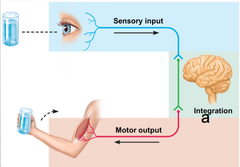
Motor cortex
Primary motor cortex, premotor cortex, and supplementary motor cortex --> controls precise/skillful/and intentional movements

Cerebellum
"Little brain"; coordinates timing/accuracy of movement and balance

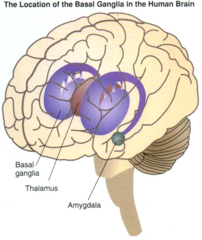
Basal ganglia
Structures in the brain that help to control graceful movement
Brainstem
Relays information from the brain down to the spinal cord; responsible for automatic survival functions

Spinal cord
Nerves that run up and down the length of the back --> transmit messages between the body and brain

Upper motor neurons
Extend from the motor cortex --> brainstem or the ventral horns of the spinal cord (cell bodies and axons located in the CNS)

Lower motor neurons
Extend from the brainstem or the ventral horns of the spinal cord --> skeletal muscles (cell bodies in CNS, axons in PNS)

Descending pathways
The systems of two neurons that bring motor information from the brain down to the correct spinal level

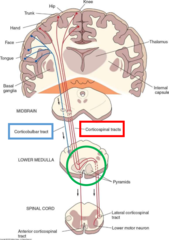
Pyramidal tracts
Location: Motor cortex --> medullary pyramids
Function : Voluntary control of the head, face, and body muscles

Corticobulbar tracts
Location: Carry motor fibers from the cortex to the brainstem
Function: Control head and face movements

Corticospinal tracts
Location: Carry motor fibers from the cortex to the spinal cord
Function: Control limb and trunk movements

Lateral corticospinal tract
Fibers cross --> control limb movements (related to ALS)

Anterior corticospinal tract
Fibers do not cross --> control trunk movements
Extrapyramidal tracts
Location: Brainstem
Function: Involuntary and automatic control of body muscles (regulate balance and posture)
Carry motor fibers from different parts of the brainstem to the spinal cord

Where do UMNs and LMNs synapse?
At the termination of the pyramidal and extrapyramidal tracts
Motor unit
A single motor neuron plus the skeletal muscle fibers it innervates

Spinal reflexes
What: Simple involuntary responses that rapidly generate muscle contractions
Function: Buys time for the brain to plan more intentional movements

Muscle spindle reflex
Proprioceptors in skeletal muscles monitor length changes --> muscle spindle is stretched --> reflex contraction of muscle (monosynaptic)

Golgi tendon organs
Proprioceptors in tendons monitor length changes --> Golgi tendon is is stretched when muscle contracts --> reflex relaxation of tendon --> protects against excessive tension

Sequence of events in spinal reflex
Sensory (afferent) neurons relay information about muscle length and tone to the dorsal horns of the spinal cord--> Info is relayed from the dorsal horns to the ventral horns --> LMNs initiate reflex

Paresis
Weakness in muscles

Paralysis
Loss of movement in muscles

Hypotonia/Atonia
Reduced/absent muscle tone
Hyporeflexia/Areflexia
Reduced/absent spinal reflexes
Myopathies
Diseases of muscle
Endplate disorders
Affect neuromuscular junctions

Peripheral neuropathies
Affect axons of LMNs
Ventral horn cell disorders
Affect cell bodies of LMNs
Muscle Atrophy
Reduction in the diameter of muscle fibers due to a loss of actin and myosin filaments

Disuse atrophy
Muscle wasting in people experiencing temporary disabling circumstances (ex: prolonged bed rest)

Denervation atrophy
Muscle wasting in disorders that deprive muscles of their normal innervation (ex: Poliovirus damages the LMNs)

Muscular Dystrophy
Group of genetic disorders --> progressive degeneration and necrosis of skeletal muscle fibers

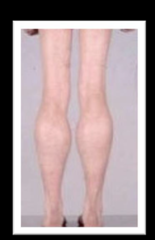
Pseudohypertrophy
Affected muscle fibers are replaced with fat and connective tissue --> increased size of corresponding muscles
Two forms of muscular dystrophy
Duchenne Muscle dystrophy (most severe)
Becker Muscular Dystrophy (less severe)
Etiology of Muscular Dystrophy
Mutations in the dystrophin gene on X chromosome; normally gene codes for dystrophin protein (maintain the structural integrity of skeletal/cardiac muscle cells)

S+S of Muscular Dystrophy
Asymptomatic at birth --> muscle weakness and falls --> hypertrophy of calf muscles --> wheelchair --> scoliosis --> death?

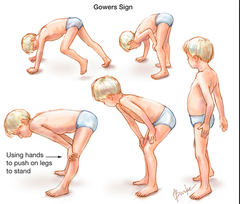
Gower's maneuver
MD --> lack of hip/thigh muscle strength --> use arms to push on legs to stand up
Scoliosis
An abnormal lateral curvature of the spine

Treatment of Muscular Dystrophy
1. Splints: Provide support, prevent deformities
2. Steroids: Reduce fibrosis, improve muscle regeneration
Myasthenia Gravis
Disorder of the neuromuscular junctions; affects the transmission of impulses between the LMNs and innervated skeletal muscle fibers

Pathophysiology of Myasthenia Gravis
Antibodies directed against acetylcholine receptors on the muscle surface --> receptor destruction --> weakness
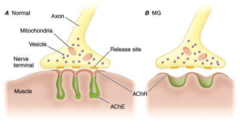
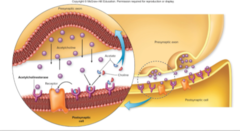
Acetylcholine function
Binds to ACh receptors --> allows muscles to contract

Acetylcholineesterase (AChE)
An enzyme that breaks down acetylcholine
S+S of myasthenia gravis
Ptosis, diplopia, difficulty chewing and swallowing, speech impairment, difficulty walking

Myasthenia crisis
Complication of myasthenia gravis --> worsening of S+S due to stress, difficulty breathing
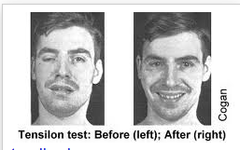
Tensilon test
Used to diagnose MG --> injection of tensilon --> inhibits acetylcholinesterase --> more acetylcholine in NMJ --> improves muscle strength in MG patients
Peripheral neuropathy
Disorder of the peripheral nerves that carry information to and from spinal cord

Mononeuropathies
Local disorders that affect only a single peripheral nerve --> caused by compression/trauma/tumor

Pure sensory neuropathy
Sensory disturbances (pain); function remains intact
Pure motor neuropathy
Function (muscle movement) impaired; no pain
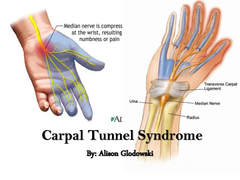
Carpal Tunnel Syndrome
Overuse --> swelling nd inflammation of the flexor tendon sheaths --> compression of the median nerve within the carpal tunnel --> pain/tingling/numbness of hand and fingers
Polyneuropathies
Immune system disturbances/toxins/diabetes --> systemic degeneration of axon and myelin of many peripheral nerves

Guillain-Barré Syndrome (demyelinating polyneuropathy)
Flu-like illness --> inflammation of the myelin sheath of peripheral nerves --> rapidly worsening muscle weakness --> temporary paralysis

Spinal Muscular Atrophy
Low levels of survival motor neuron (SMN) protein --> progressive degeneration of LMN cell bodies in spinal ventral horns --> hypertonia (floppy baby syndrome)

Cerebellar Disorders
Cerebral ataxia
Damage to cerebellum or excess alcohol --> loss of coordination --> wide/unsteady gait

Cerebellar tremor
Slow tremor of the extremities that occurs while performing a purposeful movement

Dysmetria
The inability to estimate distances and control the range of a movement

Basal Ganglia Disorders
Drug overdose, head injury, or infection --> will impair ability to move gracefully during slow and sustained movements

Dystonia
Repetitive muscle contractions --> abnormal body movements

Chorea
Jerky, unpredictable movements in shoulders and hips

Hemiballismus
Rapid, flinging movements of the limbs on one side of the body

Parkinson's Disease
Degeneration of neurons that synthesize dopamine in substantia nigra (basal ganglia) --> tremors, rigidity, bradykinesia, stooped posture

Lewy bodies
Abnormal protein collections in cytoplasm of affected neurons

Spasticity
Stiffness of muscles
Clonus
involuntary muscle contractions and relaxations
Hypertonia
Increased muscle tone
Hypereflexia
Exaggerated spinal reflexes
Babinski sign
Used to test for brain damage or upper motor neuron damage --> positive if the toes flare up upon stroking the plantar aspect of the foot

Amyotrophic Lateral Sclerosis (ALS)
Degeneration of LMN cell bodies in ventral spinal horns --> atrophy of muscle fibers --> degeneration/sclerosis of axons in lateral corticospinal tract --> weakness/stiffness of muscles, involuntary contractions, dysphagia, slurred speech

Multiple Sclerosis (MS)
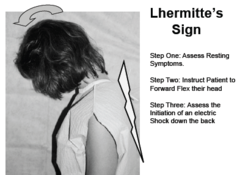
Low Vit D, stress? --> destruction of myelin in UMNs in brain and spinal cord --> slow nerve impulses --> weakness, stiffness of muscles, abnormal gait, slurred speech, diplopia, sharp/tingling sensation down back/legs when flexing neck (Lhermitte's sign)
Spinal Cord Injuries
Fracture/dislocation/compression of vertebrae, hyperflexion, hyperextension --> damage to the UMNs in the spinal cord --> loss of sensory or motor function

Tetraplegia (quadriplegia)
Damage to cervical UMNs --> Paralysis of all four limbs

Paraplegia
Damage to thoracic/lumbar/sacral UMNs --> Paralysis from the waist down

Spinal shock
Spinal injury --> complete but temporary loss of motor, sensory, reflex, and autonomic function