Marketing Midterm 2
 Call Kai
 Learn
 Practice Test
 Spaced Repetition
 Match
 Flashcards
 Knowt Play
1/143

There's no tags or description
Looks like no tags are added yet.
144 Terms
Product
Anything that can be offered to a market for attention, acquisition, use, or consumption that might satisfy a want or need
Service
An activity, benefit, or satisfaction offered for consumption or sale that is essentially intangible and does not result in customer’s ownership of anything
Customer solutions
Carefully though-out bundles of products and services that are designed to comprehensively solve customers’ problems
Customer experiences
Market offerings with a strong sensory or emotional component that play out for the customer over time
Consumer products
Products brought by final consumers for personal consumption
Convenience products
Consumer products that customers usually buy frequently, immediately, with low customer involvement, and with minimal comparison and buying effort
Shopping products
Consumer product that the customer, in the process of selecting and purchasing, usually compares on such attributes as suitability, quality, price, and style
Speciality products
Consumer products with unique characteristics or brand identifications for which buyers are willing to make a special purchase effort
Unsought products
Consumer products that the consumer either does not know about or knows about but does not normally consider buying
Industrial products
products bought by individuals and organizations for further processing, use in conducting a business, or resale
Social marketing
the use of traditional marketing concepts and tools to encourage behaviors that will create individual and societal well-being
Individual product decisions
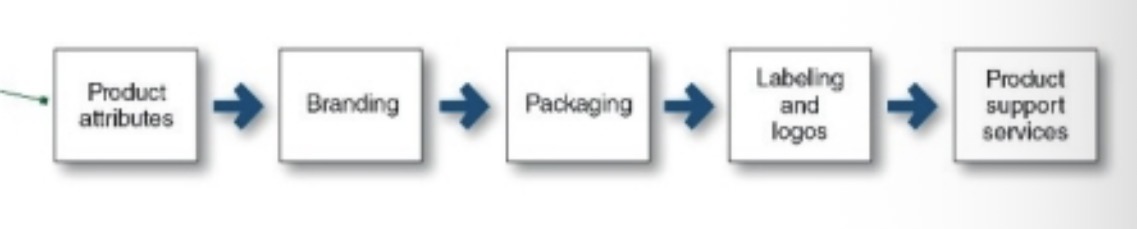
Product quality
the characteristics of a product or service that bear on its ability to consistently and reliably satisfy stated or implied customer needs
Total quality management
All employees are involved in constantly improving the quality of products, services, and business processes
Customer-driven quality
Companies taking an approach to create quality that matters to the customer
Return-on-quality
Companies take an approach to hold quality-improvement investments accountable for bottom-line results
Brand
A name, term, sign, symbol, or design, or a combination of these that identifies the products or services of one seller or group of sellers and differentiates them from those of competitors
Packaging
Designing and producing the container or wrapper for a product
Product line
A group of products from a company that are closely related because they function in a similar manner, are sold to similar customer groups, serve similar customer needs, are marketing through the same types of outlets, or fall within given price range
Product line length
The number of items in the product line
Product line filling
adding items within the present range of the line. Can yielded extra profits, satisfy dealers, use excess capacity, help the company become a full line provider, and plug holes to keep out competitors
Product line stretching
A company lengthens its product line beyond its current range. The company can stretch line downward, upward, or both ways.
Product mix (product profolio)
The set of all product lines and items that a seller offers for sale
Four service characteristics
Intangibility
Inseparability
Variability
Perishability
Service intangibility
services cannot not be seen, tasted, felt, heard, or smelled before purchase
Service inseparability
services are produced and consumed at the same time and cannot be separated from their providers
Service variability
The quality of services may vary greatly depending on who provides them and when, where, and how they are provided
Service perishability
services cannot be stored for later sale or use
Service profit chain
the chain that links customer satisfaction and profits for service firms within employee satisfaction
internal service quality
Satisfied and product employees
Greater service value
Satisfied and loyal customers
Healthy service profits and growths
Brand equity
the differential effect that knowing the brand name has on a customer’s emotions, attitudes, and behaviors related to the product or its marketing
Brand value
The total financial value of a brand
Customer equity
The sum of total value of customer relationships that the brand creates
Store brands (or private labels)
Brands created and owned by a reseller of a product or service
Licensing
Some companies have other companies pay a fee for the use of names, symbols, names of well-known celebrities, or characters from popular movies and books
Co-branding (or brand collaborations)
the practice of using the established brand names of two different companies on the same product
Brand development strategies

Line extensions
extending an existing brand name to new forms, colors, sizes, ingredients, or flavors of an existing product category
Brand extension
extending an existing brand name to new product categories
Major stages in new product development
Idea generation → idea screening → concept development and testing → marketing strategy development → business analysis → product development → test marketing → commercialization
Idea generation
the systematic search for new product ideas
Crowdsourcing
inviting broad communities of people — customers, employees, independent scientists and researchers, and even the public at large — into the new product innovation process
Idea screening
Evaluating new product ideas to spot good ones and drop poor ones
Product concept
a detailed version of the new product idea stated in terms that are meaningful to the consumer
Concept testing
testing new products concepts with a group of targeted consumers to find out if the concepts have strong consumer appeal
Marketing strategy development
Designing an initial marketing strategy for a new product based on the product concept
Business analysis
A review of the sales, costs, and profit projections for a new product to find on whether these factors satisfy the company’s objectives
Product development
developing the product concept into a physical product or a detailed service blueprint to ensure that the product idea can be tuned into a workable market offering
Testing marketing
the stage of new product development in which the product and its proposed marketing program are tested in realistic market settings
Commercialization
Introducing a new product into the market
Customer centered new product development
New product development that focuses on finding new ways to solve customer problems and create more customer-satisfying experiences
Team-based new product development
New product development in which various company departments work closely together, overlapping the steps in the product development process to save time and increase effectiveness
Product life cycle(PLC)
The course of a product’s sales and profits over its lifetime
Product development
Introduction
Growth
Maturity
Decline
Style
A basic and distinctive mode of expression
Fashion
A currently accepted or popular style in a given field
Fads
a temporary period of unusually high sales or interest driven by consumer enthusiasm immediate product or brand popularity
Introduction stage
The PLC stage in which a new product is first distributed and made available for purchase
Growth stage
The PLC stage in which a product’s sales start climbing quickly
Maturity stage
The PLC stage in which a product’s sale growth slows or levels off
Decline stage
The PLC stage in which a product’s sales fade away
Price
The amount of money charged for a product or service, or the sum of the values that customers exchange for the benefits of having or using the product or service
Customer-based value pricing
setting pricing based on buyers’ perceptions of value rather than on the seller’s cost

Good value pricing
offering an attractive combination of quality goods and service at a fair price
Value added pricing
attaching value added features and services to differentiate a company’s offers and charging higher prices
Cost based pricing
setting prices based on the costs of producing, distributing, and selling the product plus a fair rate of return for effort and risk
Fixed costs (overhead)
Costs that do not vary with production or sales level
Variable costs
costs that directly vary with the level of production
Total costs
the sum of the fixed and variable costs for any given level of production
Experience curve
the drop in the average per-unit production cost that comes with accumulated production experience
Cost-plus pricing (or markup pricing)
Adding a standard markup to the cost of the product
Break even pricing (target return pricing)
Setting price to break even on the costs of making and marketing a product or setting price to make a target return
Competition based pricing
Setting prices based on competitor’s strategies, prices, costs, and market offerings
Target costing
pricing that starts with an ideal selling price and then targets costs that will ensure that the price is profitably met
Demand curve
A curve that shows the number of units the market will buy in a given time period at different prices that may be charged
Price elasticity
A measure of the sensitivity of demand to changes in price
Market-skimming pricing (price skimming)
Setting a high price for a new product to skim maximum profits layer by layer from costumer segments in line with their willingness to pay
Product line pricing
Setting the priced across various products in a product line based on cost differences between the products, customer evaluations of different features, and competitors’ prices
Optional-product pricing
The pricing of optional or accessory products along with a main product
Captive-product pricing
Setting a price for products that must be used along with a main product, such as toner cartridges for a printer and games for a video game console
By-product pricing
Setting a price for and selling by-products to improve profits and help offset the costs of disposing of them
Product bundle pricing
Combining several products and offering the bundle at a recused price
Discount
A straight reduction in price on purchases made during a stated period of time or in larger quantities
Allowance
Promotional money paid by manufacturers to retailers in return for an agreement to feature the manufacturer’s products in some way
Segmented pricing
Selling a product or service at two or more prices, where the difference in prices is not based on differences in costs
Psychological pricing
Pricing that considers the psychology — and not just the economics — behind how consumer evaluate price and value
Reference prices
Prices that buyers carry in their minds and refer to when they look at a given product
Promotional pricing
Temporarily pricing products below the list price, and sometimes even below cost, to increase short-run sales
Geographical pricing
Setting prices for customers located in different parts of the country or world
FOB-origin pricing
Pricing in which goods are placed free on board a carrier; the customer pays the freight from the factory to the destination
Uniform-delivered pricing
Pricing in which the company charges the same delivered price, including freight, to all customers regardless of their location
Zone pricing
Pricing in which the company sets up two or more delivery zones. All customers within a zone pay the same total price; the more distant the zone, the higher the price
Basing-point pricing
Pricing in which the seller designates some city as a basing point and charges all customers the freight cost from that city to the customer
Freight-absorption pricing
Pricing is which the seller absorbs all or part of the freight charges in order to get or keep the desired business
Dynamic pricing
Adjusting prices continually in real time to meet changing conditions and situations in the marketplace
Personalized pricing
Adjusting prices in real time to fit individual customer needs, situations, locations, and buying behaviors
Value Delivery Network
A network composed of the company, suppliers, distributors, and, ultimately, even customers — all of whom partner together to improve the performance of the entire system in delivering customer value and driving profits
Marketing channel (distribution channel)
a set of interdependent intermediary organizations that help make a product or service available for use or consumption by the consumer or business user
Channel level
A layer of intermediaries that performs some work in bringing the product and its ownership closer to the final buyer
Direct marketing channel
a marketing channel that has no intermediary levels, with the producer selling directly to the consumer
Indirect marketing channels
A marketing channel containing one or more intermediary levels between the producer and the consumer
Channel conflict
disagreements among marketing channel members on goals, roles, and rewards — who should do what and for what rewards